
Peng Mahjong Meaning and Points: American vs. Asian Rules
Last updated: Nov 23, 2026
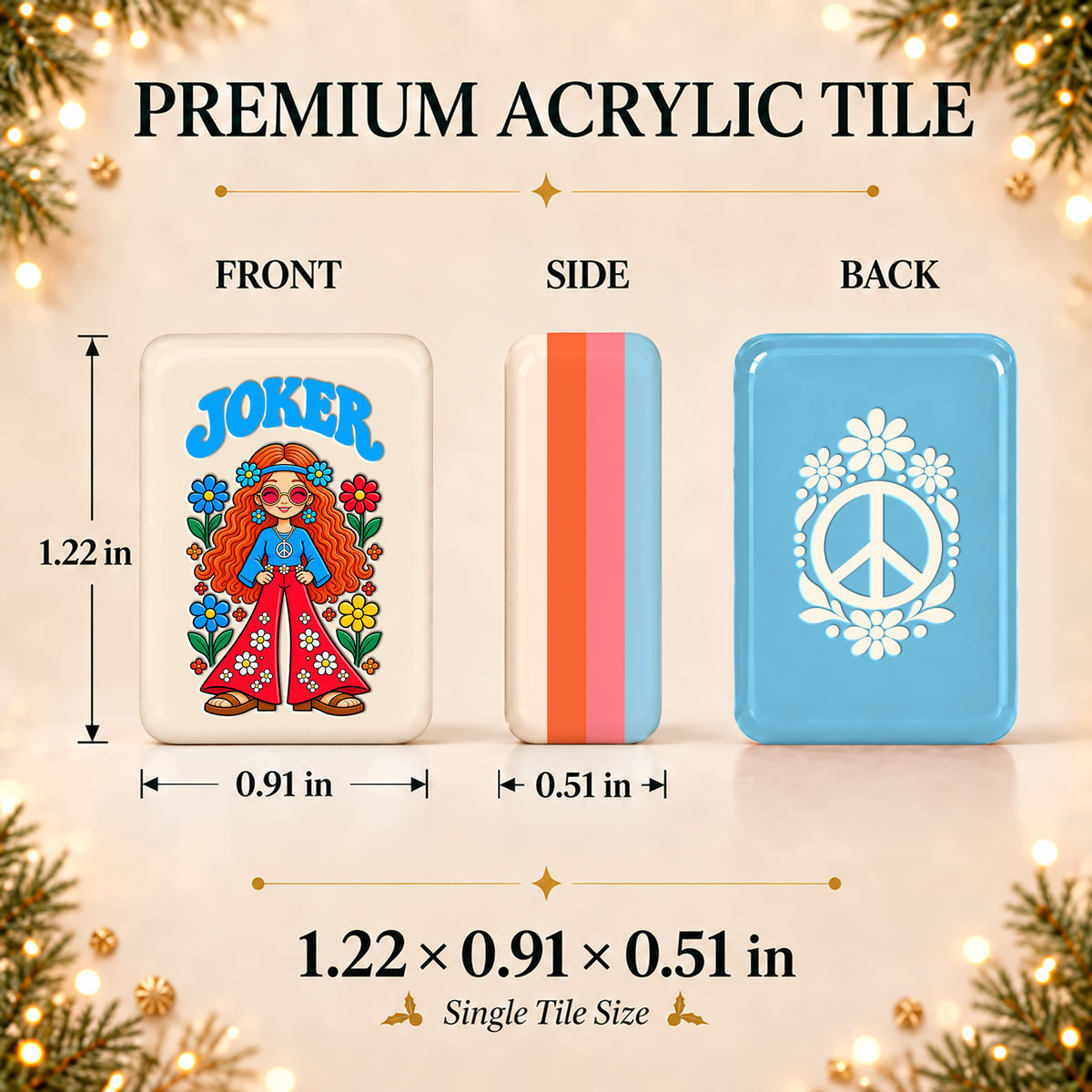
In American mahjong, "peng" (from Mandarin 碰) is called a pung: a meld of three identical tiles (e.g., three 5 Dots, or three East Winds) that you declare when another player discards one of those tiles. You expose the pung face-up on the table and draw a replacement tile from the wall. Pungs contribute to your hand but score only as part of a completed hand matched to the current year's National Mah Jongg League card; there's no separate point value for a pung alone. In Chinese mahjong, peng earns no points but unlocks the right to declare a kong (four identical tiles) or win immediately if the next tile completes your hand. Asian variants treat peng as a free announcement, whereas American play keeps all melds private until hand is declared. A pung cannot contain jokers or mixed numbers—only four identical tiles count as a kong (five or six tiles form a quint or sextet in American play).
In American mahjong, "peng" (pronounced like "pung") is a meld of three identical tiles that you call when another player discards one you need. You expose it on the table, and it counts toward your hand only when you achieve a complete hand pattern from the current year's National Mah Jongg League card. Unlike Chinese and Hong Kong variants, American pung has no intrinsic point value—the hand itself scores.
What's the difference between peng in American and Chinese mahjong?
American mahjong and Chinese mahjong treat peng fundamentally differently. In American play, a pung (three identical tiles) is called when someone discards a tile you need; you expose it and immediately draw a replacement from the wall. The pung remains exposed on your rack or mat for the rest of the hand. In Chinese mahjong, peng also means taking a discarded tile to form three identical tiles, but no points attach to the peng itself—it's simply a building block toward winning. The critical difference: American pungs must form part of a hand pattern listed on the Mah Jongg League card; a Chinese player can form pungs and kongs freely and win on their own timer based on chows (sequences of 1-2-3) and pungs alone. American play forbids chows entirely—all melds must be pungs, kongs, quints, or sextets of identical tiles. In Chinese play, chows are core to every hand.

How do you score a pung in American mahjong?
A pung by itself scores nothing in American mahjong; it has no independent point value. The hand scores only when you achieve a complete hand pattern from the current year's National Mah Jongg League card. A typical hand contains a pair (two identical tiles) plus four melds of three or more identical tiles—pungs, kongs, quints, or sextets. Once you call "Mahjong" and reveal your hand, the card determines your points. Some hands are worth 30 points, others 40, 50, or more, based on the hand pattern's rarity and composition. Exposed pungs don't change the score—the card does. The player who won pays the other three players according to the points shown. For example, if your hand scores 40 points, you receive 40 points from each of the three other players. If someone else wins, you pay them.
When can you call peng, and what happens after?
You can call peng only when another player has just discarded the tile you need, and only if you're the next player in turn order (or if multiple players want the same tile, a higher-priority call like kong or mahjong overrides peng). When you call peng, you immediately take the discarded tile, expose your three identical tiles on the table in front of you, and draw a replacement tile from the wall (called the "live end"). This tile stays exposed for the rest of the hand and cannot be hidden. If your pung completes a hand pattern before your turn to discard comes around, and another player then discards your winning tile, you can call Mahjong. Exposing melds speeds up the game but also shows opponents which tiles you hold—a strategic cost. Many players delay calling peng if they're fishing for a more valuable hand pattern. The trade-off: a peng locks your strategy in place; a hidden hand keeps options open longer.
What tiles can form a pung?
Any three identical tiles form a pung: three 1 Bams, three Red Dragons, three North Winds, three Flowers, or any repeated tile. The only restriction is that jokers cannot be used alone in a pung; if you use a joker in a pung, you must substitute it for one of the three identical tiles (e.g., two 5 Craks plus one joker acting as a 5 Crak). A pung must contain only identical tiles—never mixed numbers like 1-2-3, which is a chow (forbidden in American mahjong). The tiles come from your hand or from a discard. Once exposed, a pung remains locked: you cannot split it or remove tiles from it. If your pung contains a joker and your hand pattern no longer requires that pung, you're stuck—jokers cannot be reclaimed or moved. Always confirm your hand pattern on the Mah Jongg League card before calling peng.
How does peng compare to kong and other melds?
A pung is three identical tiles; a kong is four identical tiles. Both require an identical-tile rule—no sequences allowed. A quint (five identical tiles) and sextet (six identical tiles) are American variations rarely seen in standard hands, but they appear on the card and score accordingly. In Chinese mahjong, a chow (three consecutive numbered tiles like 1-2-3) is fundamental; American mahjong forbids chows entirely. A pair is two identical tiles and appears in every winning hand—it's not a meld, but it's the distinguishing part of a hand. The table below summarizes the key differences:
Meld Type | Tiles | Exposed? | Joker Allowed? | American Play | Chinese Play |
Pung | 3 identical | Yes | Yes (as substitute) | Yes, core meld | Yes, building block |
Kong | 4 identical | Yes | Yes (as substitute) | Yes, worth more | Yes, high score |
Chow | 1-2-3 (sequence) | Yes | Sometimes | Forbidden | Core meld |
Pair | 2 identical | No | No | Required in hand | Optional |
Quint | 5 identical | Yes | Yes | Rare; on card | Uncommon |
The key takeaway: American play revolves around pungs and identical-tile melds; Chinese play blends identical melds with sequences and rewards them differently.
🀄 Shop best-selling mahjong sets →

Why do you expose a pung, and when should you avoid it?
You expose a pung the moment you call it because that's the rule: American mahjong requires all called melds (pung, kong, quint, sextet) to be face-up on the table. Hiding a called pung is illegal. However, strategic players often don't call pung if they can avoid it, because exposure reveals your strategy and limits flexibility. If you're fishing for a high-scoring hand that requires a pung in a specific suit, exposing an early pung in a different suit telegraphs your direction and gives opponents time to protect their tiles. A hidden hand keeps all four melds secret until you win—at that moment, you reveal all four melds plus your pair at once. If your hand is nearly complete and a pung would lock you into one pattern, wait. If another player discards a tile that would complete your pung and your hand simultaneously, call Mahjong immediately (mahjong overrides peng, and you skip the exposure step—you reveal everything together). The strategic rule: call peng only when you're confident the hand will complete before other patterns emerge or when you're forced to draw from the wall and risk a dead tile.
What happens if you call peng by mistake?
If you accidentally call peng on a tile that doesn't match your hand or you misidentify the tile count, you must acknowledge the error immediately and return the tile to the discarder. The hand restarts from that point; most groups treat this as a dead hand (all players discard a penalty tile or skip a turn, depending on house rules). If you call peng and later realize your hand cannot win with that meld, you're stuck—you cannot undo a called peng. This is why checking your hand against the Mah Jongg League card before calling is essential. Many experienced players lay out the card beside the mat and reference it during play, especially when exposed melds multiply. Mistakes are costly, so players often pause and double-check with the scorekeeper or rule moderator before calling.
What to check before you call peng
Confirm the tile match: Is the discarded tile truly identical to two tiles in your hand? (Count Bams, Craks, Dots by number and suit; winds and dragons by symbol; flowers by count.)
Check your hand pattern: Does your hand pattern on the Mah Jongg League card still work with this pung exposed?
Verify turn order: Is it your turn, or did a higher-priority call (kong, mahjong) override your peng?
Assess remaining draws: How many tiles are left in the wall? Can you complete your hand before the game ends?
Consider exposure risk: Are you telegraphing a weak strategy, or is this pung essential to win?
🎁 See our most-loved mahjong sets & accessories →
How does peng fit into a complete American mahjong hand?
A complete American mahjong hand consists of a pair (two identical tiles) and four melds: four pungs, three pungs and one kong, two pungs and two kongs, four kongs, or rarer combinations like pungs and quints. Each pattern is listed on the annual Mah Jongg League card; only hands that match the card are legal. For example, a hand might be: a pair of East Winds + pung of 1 Bams + pung of Red Dragons + pung of 3 Dots + kong of 7 Craks. When you've called pungs and assembled your four melds plus pair, you're ready to win. If the next discard matches any of your four melds or completes your pair, you call Mahjong. If no one discards the tile you need before the wall empties, the hand is dead (no one scores). The Mah Jongg League card changes every year, so hand patterns shift; what was a winning hand in 2025 may not exist in 2026. This annual refresh keeps the game fresh and prevents memorization.
For how to read the mahjong card, consult the card's layout: each section shows a hand pattern with symbols indicating which melds are exposed (pungs, kongs) and which stay hidden. Many cards color-code by suit or pattern family, making it easier to spot your hand during play.
How do you practice calling peng without mistakes?
Start by learning American mahjong from the basics. Before your first game, shuffle a set of 160-tile acrylic tiles, deal a sample hand, and practice identifying tiles by suit and number. Lay out a Mah Jongg League card and try to spot hand patterns. Call peng out loud when you spot matching tiles, expose them face-up on a mahjong mat, and confirm the pattern matches the card. Play a few low-stakes practice rounds with experienced players who'll catch your errors and explain why. Many community centers, libraries, synagogues, and country clubs host beginner mahjong circles; ask if you can observe a game before joining. Watching pung calls in real time—seeing when players call versus hold back—teaches timing better than any rule book. Your first few mistakes are normal; the game rewards patience and repeated play.
✨ Find your Mahstead set — free US shipping →

FAQ
Can you call peng on your own discard in American mahjong?
No. Peng requires another player to discard the tile. Your own discards are never called; they're placed on the discard wall and available to all players for subsequent turns, but calling them peng is illegal.
What's the difference between peng and quint in American mahjong?
Peng is three identical tiles; quint is five. Both must be identical tiles (no sequences). Quints appear rarely on the Mah Jongg League card. A quint scores higher than a pung because it's a rarer, more constraining pattern.
If I call peng incorrectly, do I lose points?
Yes, in most house rules. You either forfeit your turn, pay a penalty tile to each player, or sit out the next hand. Some groups void the entire hand. Clarify penalty rules with your group before play starts.
Can a joker substitute for a tile in a peng?
Yes. If you have two 5 Craks and one joker, you can call peng using the joker as a third 5 Crak. However, if another player later challenges the hand, the joker's position is visible and may affect scoring or legality depending on your group's rules.
In Chinese mahjong, does peng score points like it does in American?
No. In Chinese mahjong, peng (taking a discard to form three identical tiles) is free—no points attached. Points come from your final hand when you win, based on the melds and winning combination. American mahjong reserves all scoring for the complete winning hand matched to the card.
Why can't American mahjong include chows (sequences) like Chinese mahjong does?
American mahjong evolved separately and adopted a rule set that forbids chows (1-2-3 sequences). Only identical-tile melds (pung, kong, quint, sextet) are legal. This keeps American hands tighter, more strategic, and easier to verify against the annual card. Chinese mahjong prioritizes chows as core building blocks, creating a different metagame.


View More
View More
View More
