
Modern Mahjong Tote: How to Pick the Right Bag for Your Set
Last updated: Nov 23, 2026
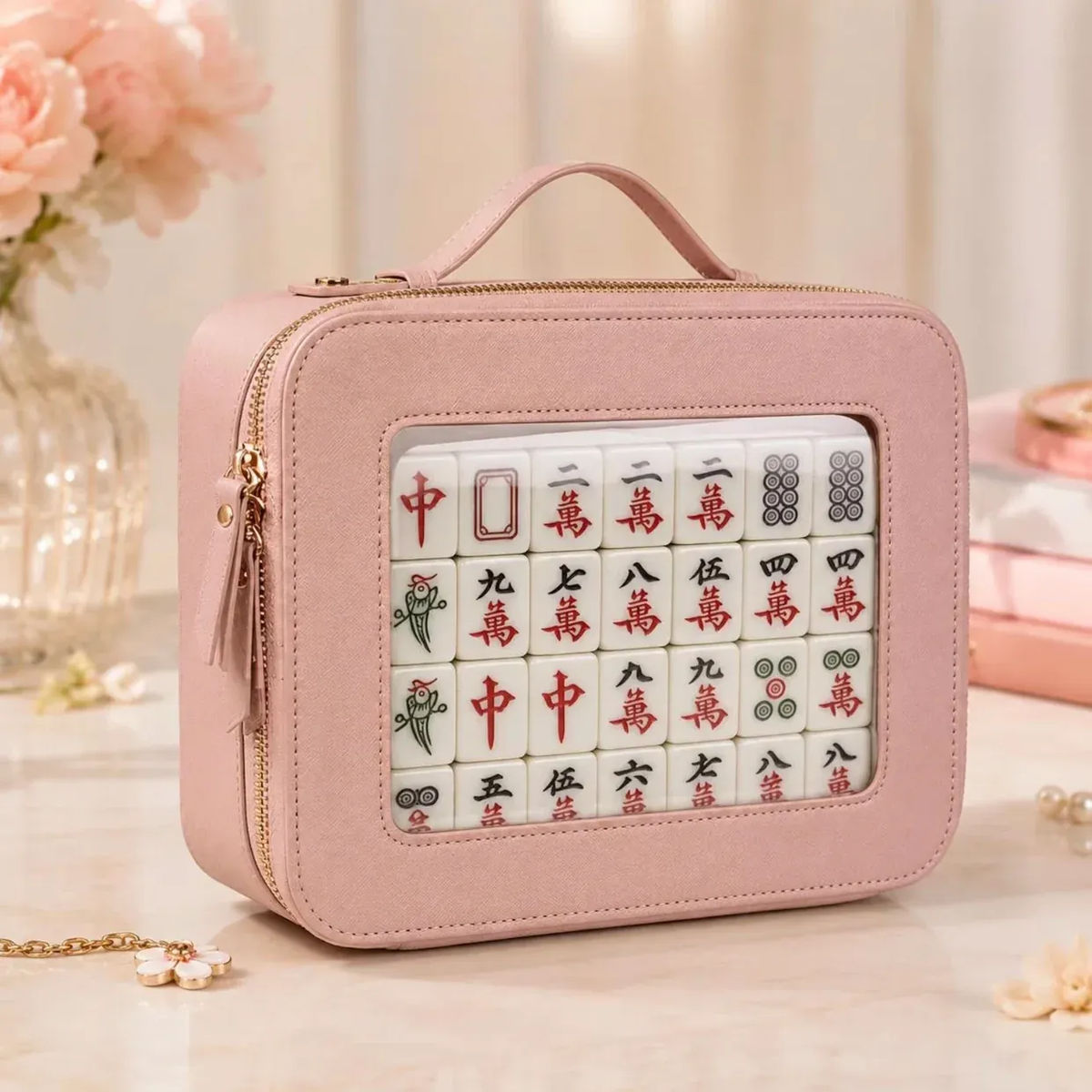
A modern mahjong tote is a protective carryall that holds a full 160-tile acrylic American mahjong set, tiles loose or in racks, plus a mat and dice. Our bags and cases collection offers totes in soft canvas, structured nylon and rigid cases with interior pockets and padding to shield tiles from impact during car trips or plane travel. Sizes typically fit sets ranging 14–16 inches long; check your set's footprint against bag dimensions before ordering. Most modern totes include handles, some add shoulder straps or wheel-ready exteriors for frequent travelers. Prices vary by material and compartment count; see current pricing on product pages. Key decision: do you prioritize lightweight portability (canvas), durability and organization (nylon with dividers), or rigid protection for frequent moves (hard case)? Avoid overstuffed bags—tiles shift inside, straps tear, and zippers jam.
What size tote do you actually need?
American mahjong sets are roughly 14 to 16 inches long and 4 to 6 inches deep when tiles sit in their original configuration or loose in a stack. Your tote must accommodate the set itself plus a mat (usually rolled, adding 2–3 inches to your bundle width), a rack with pushers, and dice. Measure your set before shopping: place it on a flat surface, note length and width, then add 2 inches on all sides for padding and maneuvering room inside the bag. If you travel often or play at multiple venues, a tote with external storage pockets for scorecards, tissues and a rulebook saves frustration. Interior dimensions matter more than external—a bag listed as "fits standard sets" should have at least 17 inches of usable length inside.

Should you choose soft or rigid protection?
Soft totes (canvas or padded nylon) weigh less, fold flat for storage, and cost less than rigid cases; they're ideal if you play at the same venue weekly and pack your car carefully. Rigid cases protect tiles from being crushed if your bag sits under a table or gets squeezed in a car trunk, and they last longer if you fly with your set or transport it frequently on public transit. Our travel bag collection includes both options. Soft bags suit casual home games; rigid cases suit traveling players or those storing sets in shared spaces. A middle ground: nylon totes with thick padding and a hard base panel offer durability without full-case bulk.
🎁 See our most-loved mahjong sets & accessories →
Does your tote need interior dividers or pockets?
Dividers keep tiles, racks, mats and dice separated, preventing scratches and simplifying setup at the table. Pockets hold scorecards, a pen, the current year's National Mah Jongg League card, and dice separately so you don't hunt for them mid-game. If you own multiple sets, a tote without dividers works fine—stack sets carefully and wrap each in a thin cloth. If you own one set and value quick, organized transport, dividers and pockets justify the cost. Some totes include a dedicated mat pocket; others expect you to roll the mat and lay it on top. Check product photos and descriptions carefully: a "compact" tote often sacrifices compartments for size, while a "deluxe" bag has more internal organization but less mobility.

What handle and strap options actually matter?
Handles matter if you carry your tote from car to table weekly. Dual handles (like a gym bag) distribute weight evenly and keep your hands free. A single handle works if you carry short distances. Shoulder straps let you wear the tote hands-free—essential if you also hold snacks, drinks or a purse. Wheeled bases suit airport or heavy travel; most mahjong players don't need them, but they're valuable if you're packing a set for a destination event or cruise. Our best-selling collection includes totes in multiple handle configurations. Test a tote's grip before buying: narrow handles cut into hands on long walks; padded handles reduce fatigue over time.
How do you avoid common tote mistakes?
Mistake: Buying a tote without measuring your set first. Solution: Lay your set in a box or bag at home; measure the footprint and depth; add 3 inches; verify the tote's interior dimensions match or exceed that total.
Mistake: Overstuffing to save money on a second bag. Solution: A crammed tote strains zippers, compresses tiles and risks breakage. Buy a tote sized to your set comfortably, then add a second small pouch for mats if needed.
Mistake: Choosing a tote with zipper corners that catch tile edges. Solution: Look for bags with curved, reinforced zipper paths or magnetic closures. Test zippers before checkout.
Mistake: Ignoring padding thickness. Solution: Press the tote's walls with your fingers; they should compress ½ inch but not bottoming out. Thin-walled bags offer little protection if your bag drops or gets sat on.
Mistake: Assuming all "mahjong bags" fit all sets. Solution: Sets vary by manufacturer and year. A best-selling American set from Mahstead is 160 tiles in acrylic; check if your tote lists "fits 160-tile or standard American sets."
Tote Type | Who It's For | Weight | Best Feature | Trade-off |
Soft canvas with handles | Weekly home-game players | Light | Affordable, folds flat | Less protection, no pockets |
Padded nylon with dividers | Regular players with one set | Medium | Organized compartments | Bulkier for storage |
Nylon with shoulder strap | Players who walk or travel | Medium | Hands-free carry | Strap can slip if overstuffed |
Rigid case with wheels | Frequent travelers, events | Heavy | Maximum protection | Expensive, takes up space at home |
Deluxe with mat pocket | Multi-set owners | Medium-Heavy | Dedicated mat slot | Higher cost, less portable |
What to check before you order
Set size. Measure your set (length × width × depth) or check your set's product listing. Verify the tote interior dimensions are at least 2 inches larger on each side.
Tile count. Our sets are 160 tiles (152 playing tiles plus spares). Confirm your tote lists "fits 160-tile sets" or "fits standard American mahjong."
Handle type & comfort. Single handle, dual handles, or shoulder strap? Padded or bare? Picture yourself carrying your bag to the car and into your venue.
Zipper quality. Look for YKK or equivalent zippers; avoid cheap plastic zippers that jam. Curved zipper paths reduce snagging.
Interior layout. Will you use pockets, dividers, or a open compartment? Be honest about your organization style.
Exterior pockets. If you carry scorecards, pens, or a rulebook, confirm the tote has at least one exterior pocket.
Padding thickness. Check product photos for visible padding depth or read customer photos. Thickness matters more than color.
Return policy. Confirm you can return or exchange if the tote doesn't fit your set—sizes vary by manufacturer and year.
✨ Find your Mahstead set — free US shipping →
We play mahjong every week and know how frustrating it is when your tiles get jostled in transit or your tote fails mid-game. A modern tote isn't just convenience—it's protection for your set and respect for your table. Our travel bag collection pairs well with a quality American mahjong set and a durable mat so you're ready for any game, anywhere.

FAQ
What's the difference between a mahjong tote and a regular luggage bag?
A mahjong tote is sized and padded for a standard 160-tile set (typically 14–16 inches long); luggage is oversized for clothes and documents. Mahjong totes have shallow interiors with compartments for tiles, racks and mats; luggage has deep open space. Choose a tote designed for mahjong to avoid wasted space and tile shifting.
Can I fit two mahjong sets in one tote?
Yes, if the tote's interior is 18+ inches long and well-padded. Stack sets carefully with a thin cloth between them, or buy a larger structured case. Soft totes risk compressing under dual-set weight; rigid cases handle it better.
Do I need a special tote if I own a rigid mahjong case already?
No. A rigid case protects tiles on its own. You'd only need a tote if you want to store or carry the case itself—rare for most players. A soft tote works fine for a smaller set if you buy a second.
What should I pack inside my tote besides the set?
The current year's National Mah Jongg League card, a pen for scoring, dice (if loose), your mat, and rack with pushers. Some players add a small towel or cloth to wipe tiles and a timer. Avoid liquids or food that could spill on tiles.
Can I use a mahjong tote on an airplane?
Yes, as a carry-on or checked bag if it meets airline size limits (typically 22" × 14" × 9" for domestic carry-on). Soft totes usually fit; rigid cases are too large for most carry-ons. Check your airline's policy before booking. A rigid case protects tiles best in checked baggage.
How do I clean a mahjong tote after regular use?
Wipe the exterior and interior with a damp cloth and air-dry. For stains, use mild soap and water; avoid harsh chemicals that fade canvas or nylon. Never machine-wash. Inspect zippers and handles monthly for wear; replace if they loosen or crack.


View More
View More
View More
