
Modern Mahjong Mat: Types, Sizes & How to Choose
Last updated: Nov 23, 2026
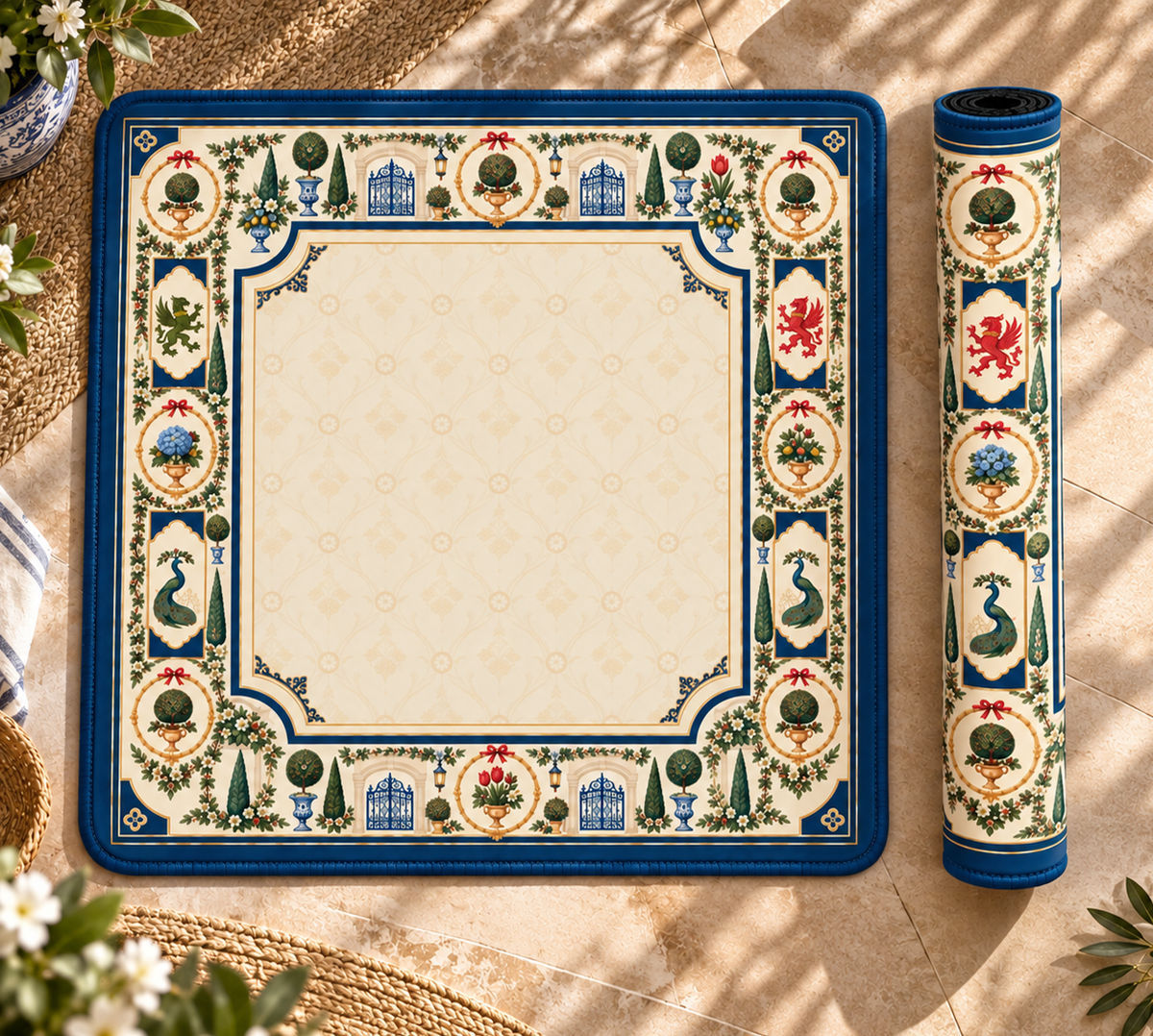
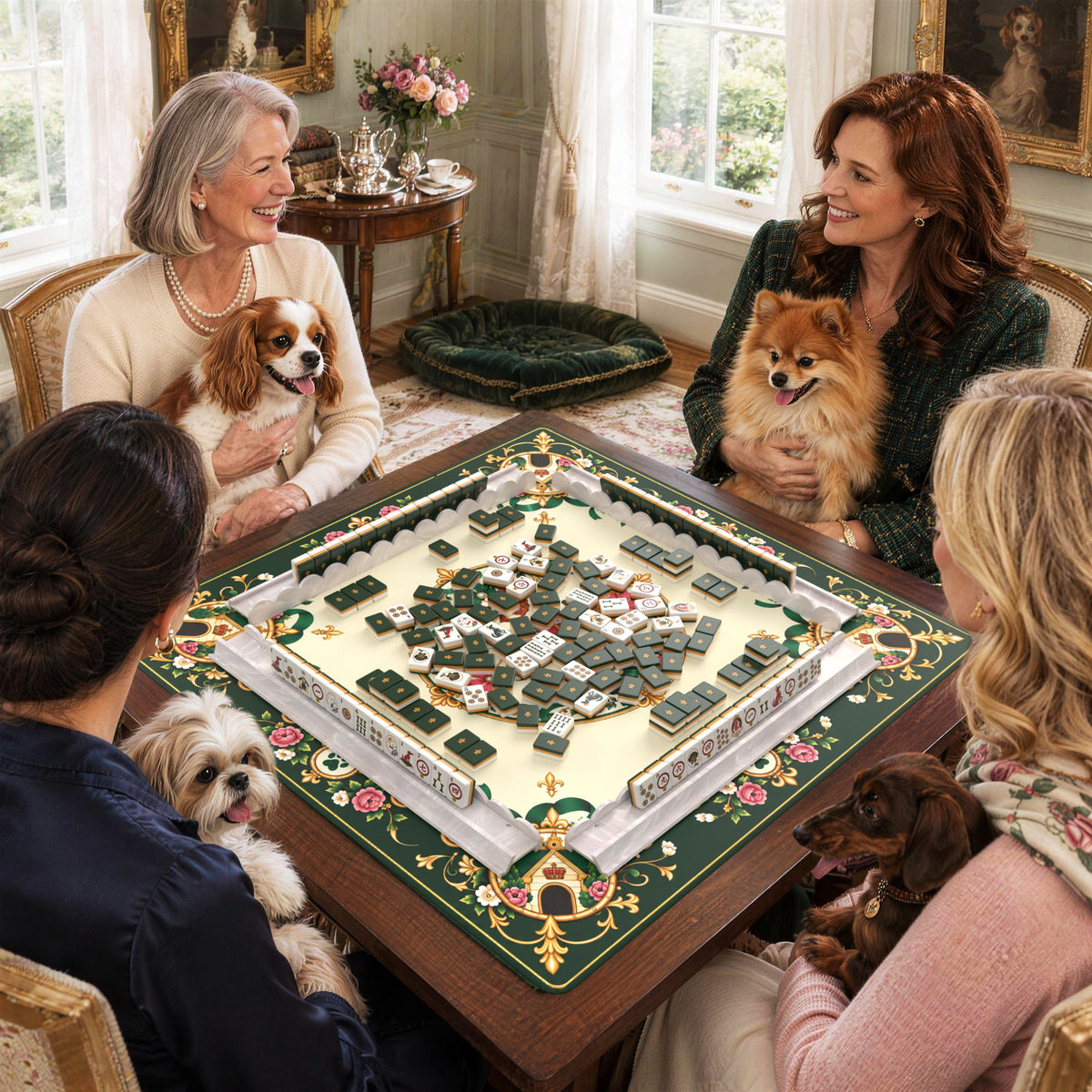
A modern mahjong mat is a flat, cushioned playing surface sized for four players, typically 27"–36" square, that sits atop your table and holds 152 tiles, racks, and the card without slipping. Designs range from minimalist (solid colors, engraved player markers) to full-graphic layouts showing tile positions and scoring zones. Most mats are made from felt-backed neoprene or rubber-backed fabric, reversible, and roll or fold for storage. A mat protects tiles from scratches, muffles clicking, keeps the card visible, and speeds tile organization—we recommend one for every regular host. Mahstead offers mats with custom engravings (player names, game themes) and durable construction built to last through dozens of Charlestons; see current price on the product page. A mat is not essential—many players enjoy tile-on-table games—but serious groups treat it as standard equipment, alongside best-selling mahjong sets.
What size mat do you actually need?
Mat dimensions depend on your table, storage space, and player comfort. A standard four-player mat runs 27"–32" square; larger mats (36"+) suit spacious tables and allow wider tile spreads. Measure your table width and leave 2–3 inches of uncovered border on each side so players can set down drinks and scorecards. If you store the mat rolled in a closet or travel bag, note the rolled length—a 36" mat rolls to roughly 36–40 inches. Smaller tables (36"–40" wide) fit a 27" mat comfortably; larger tables (48"+ wide) benefit from 32"–36". Check your table depth before ordering to ensure the mat doesn't overhang and create a tripping hazard.
Felt-backed or rubber-backed: which surface wins?
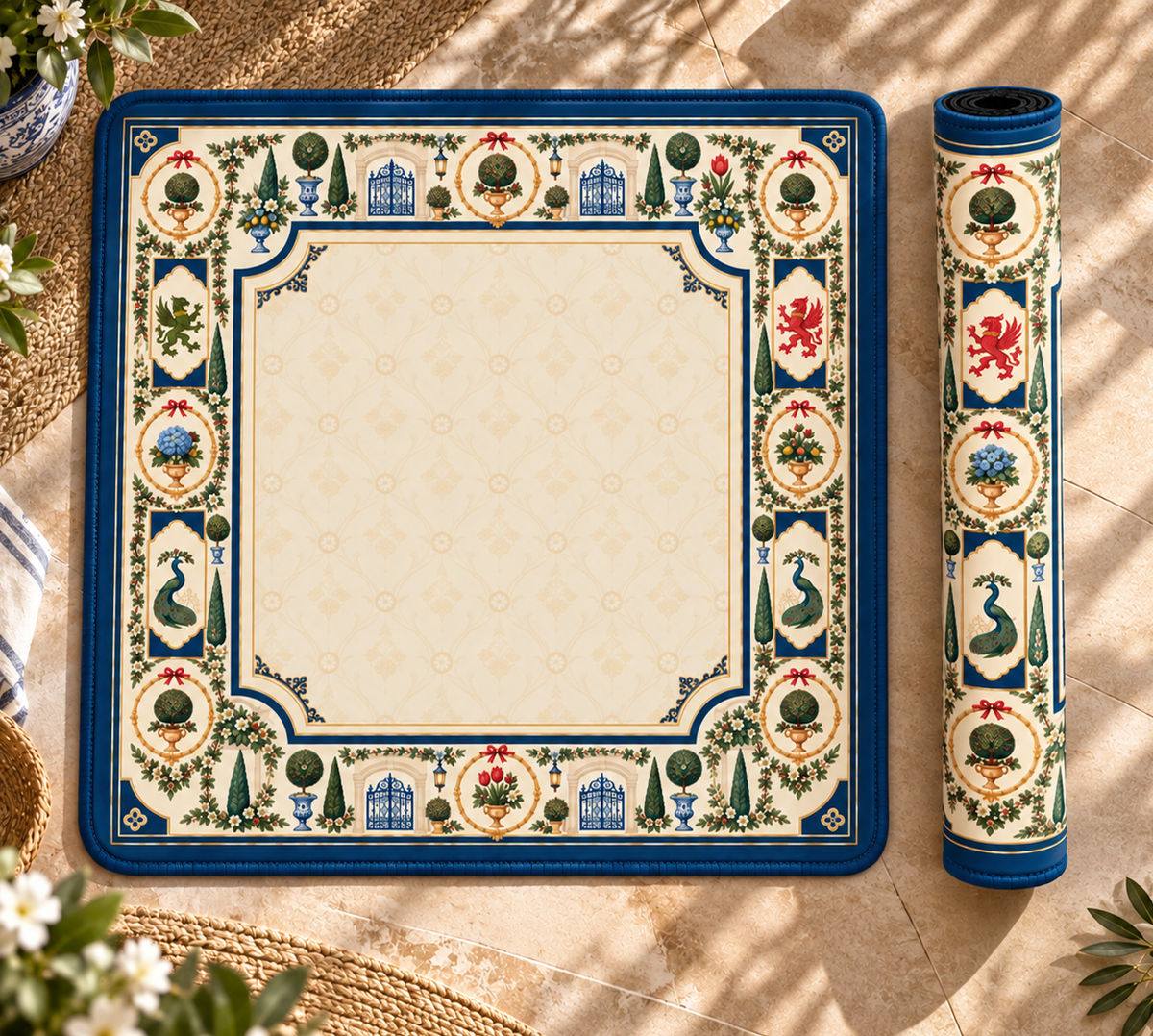
Both materials work well; the choice comes down to tile glide and storage preference. Felt-backed mats (typically neoprene) offer smooth, controlled tile movement—tiles slide easily but don't skate—and are lighter and more packable for travel. Rubber-backed mats provide more grip, keeping tiles stable during shuffles and reducing accidental tile shifts; they're heavier and denser, ideal for permanent setups. Felt is gentler on tile faces during long plays; rubber grips better in humid climates and on slick tables. If you host weekly games and store the mat rolled, felt-backed is easier to manage. If your table surface is slippery or you play in a warm, humid room, rubber backing prevents tiles from drifting during play.
🀄 Shop best-selling mahjong sets →
Engraved player names vs. blank design: when does personalization matter?
Engraved mats add a welcome touch for regular hosts and make a set feel owned, not borrowed. Designs range from player initials (East, South, West, North positions) to full names, game themes, or family crests. Blank mats (solid color, minimalist markers) suit casual groups, guests, and players who rotate hosting duties. If your game has the same four players every week for 5+ years, engraving pays off—the mat becomes a conversation piece and investment. If your group includes guests or rotates players, a blank mat is neutral and flexible. Engraved mats also make excellent gifts for retiring players or milestone celebrations; custom designs transform a utilitarian item into a keepsake. Check Mahstead's engraved American mahjong sets to see how personalization complements a full custom set.
Portable vs. permanent: storage and travel logistics
Portable mats roll or fold tightly into a travel bag (12"–15" diameter rolled, or 1–2 inches thick when folded). Permanent mats may be thicker, heavier, and less packable—ideal if they live on a dedicated game table year-round. If you transport the mat to friends' homes, tournaments, or rotating host locations, prioritize weight and pack-ability; a lightweight mat fits inside a mahjong travel bag alongside your set. If the mat stays on one table, a premium-weight mat with deeper cushioning and non-slip backing offers superior long-term durability. Some players keep two mats: a thin portable one for travel and a thicker one for home play. Measure your bag's interior dimensions and weigh your tiles and racks to ensure the mat fits without overstuffing.
🎁 See our most-loved mahjong sets & accessories →
Comparison: mat types at a glance
Mat Type | Best For | Thickness | Weight | Portability | Durability |
Felt-backed neoprene, 27"–30" | Travel, casual play, small tables | ¼"–⅜" | Light (2–3 lbs) | Excellent (rolls small) | 3–5 years with care |
Rubber-backed, 27"–30" | Stable tile play, humid climates | ⅜"–½" | Medium (3–4 lbs) | Good (rolls standard) | 4–6 years |
Felt-backed neoprene, 32"–36" | Regular home hosts, weekly games | ⅜"–½" | Medium–heavy (4–5 lbs) | Good (larger roll) | 4–6 years |
Rubber-backed, 32"–36" | Premium permanent setups, tournament play | ½"–¾" | Heavy (5–7 lbs) | Fair (bulky rolled) | 5–7 years |
Custom-engraved, any size | Gifts, named player groups, sentimental value | Matches backing | As above | As above | As above + personalization |
What to check before you buy
1. Measure your table. Width and depth (in inches). A mat should not overhang more than 1–2 inches on any side.
2. Note your storage space. Closet shelf, under-bed bin, or travel bag? Confirm the rolled or folded dimensions fit.
3. Confirm tile compatibility. Mahstead's 160-tile sets and most standard American mahjong sets use 152 playing tiles. A mat should comfortably hold 152 tiles spread in four player hands (roughly 38 tiles per player) plus the wall and discard zones.
4. Test the surface texture. If you can see the mat in person, run a tile across it. Tiles should glide smoothly without sticking or skating. In online orders, read user descriptions of tile movement.
5. Check edge binding and seams. Reinforced edges prevent fraying after repeated folding. Seams should be flat and stitched, not glued.
6. Ask about cleaning. Mats accumulate dust and tile chalk. Confirm whether the backing is wipeable (rubber is more forgiving than felt).
7. Verify return or exchange policy. If the mat doesn't fit your table or you dislike the surface feel, confirm the seller allows returns within a reasonable window.
Is a mat worth the investment?
Yes, if you host weekly games or travel with your set. A mat protects tiles, quiets play, and organizes the game space—turning a casual table into a proper game table. For one-off players or borrowers, a mat is optional. For regular hosts, a mat ranks alongside your mahjong set and racks with pushers as essential gear.
✨ Find your Mahstead set — free US shipping →
Getting started: step-by-step mat selection checklist
Measure your table (width and depth in inches).
Decide: portable or permanent? Will the mat travel or stay home?
Choose backing type: Felt for travel and smoothness, rubber for grip and stability.
Pick a size: 27" for small/travel tables, 32" for standard home play, 36" for large tables or luxury setups.
Select a design: Blank or custom-engraved with player names?
Check weight and roll dimensions against your storage or travel bag.
Review edge binding and seam construction for durability.
Confirm cleaning care (wipeable, washable, or dry-only).
Verify the mat fits with your tiles and racks on the table without crowding.
Order and test in your first game; adjust backup storage or portability as needed.
Browse Mahstead's mahjong mats collection to compare styles, materials, and engravings. Pair a mat with a custom-engraved set to complete your game table. Free US shipping on all orders.
FAQ
Can I use a mahjong mat on a glass table?
Yes. Rubber-backed mats grip glass better than felt; test first to ensure tiles don't slip during shuffles. A folded towel under the mat's corners prevents sliding.
How do I clean a mahjong mat?
Wipe with a dry cloth or damp cloth on felt-backed mats; avoid soaking. Rubber-backed mats tolerate gentle washing with mild soap and air dry. Never machine-wash or dry-clean.
What's the difference between a mat and a table cover?
A mat is a playing surface that organizes tiles and protects them; a table cover protects the table itself from spills. Some players use both—the cover under the mat protects the table, the mat protects the tiles.
Do I need a mat if I have a dedicated mahjong table?
No, but many players use one anyway for tile organization, quieter play, and easier cleanup. It's a preference, not a requirement.
Can I fold a mat instead of rolling it?
Yes. Folding creates sharper creases that take longer to relax; rolling avoids permanent creases. Store a rolled mat in a tube or bag to maintain its shape.
Are engraved mats more fragile than blank ones?
No. Engraving (embossed or printed) is surface-level and doesn't affect durability. Engraved mats last as long as blank ones with equal care.
What size mat do four players actually need?
27"–30" for tight tables, 32" for comfortable spread, 36" for roomy setups. Based on a standard tile footprint of roughly 1"–1.5" per tile across a four-player layout.
Can I use a yoga mat or mouse pad instead?
Not recommended. Yoga mats are too thick and soft; mouse pads are too small and slippery. A mahjong mat is engineered for tile weight, glide, and four-player layout.


View More
View More
View More
