
Mahjong Tote for Seniors: Which Bag Fits Your Game
Last updated: Nov 23, 2026
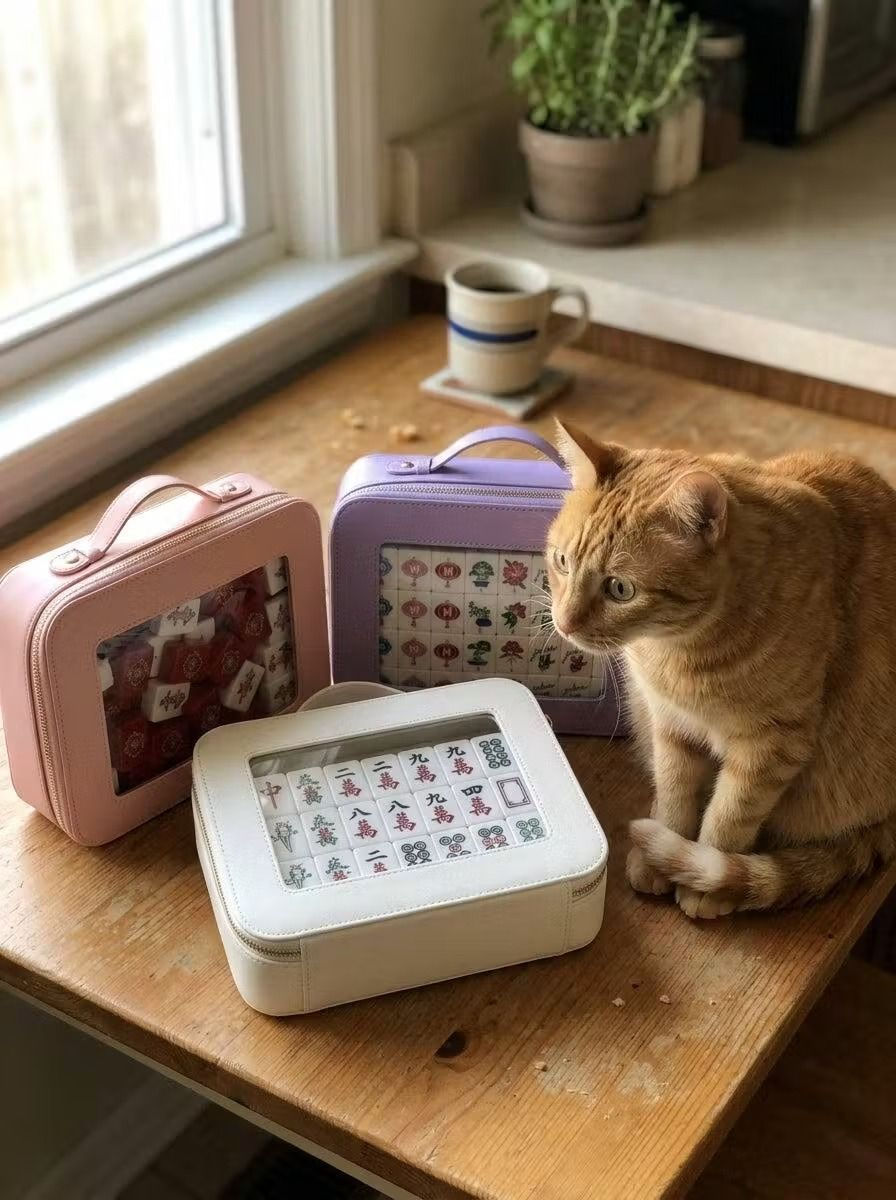
A mahjong tote for seniors is a reinforced carry bag designed to hold a 160-tile set, mats, racks with pushers, and sometimes dice or scoring chips in one trip. Most seniors need a tote with padded handles, a structured base (to prevent tiles from shifting), and enough depth to fit standard mats without folding. Capacity ranges from single-set carriers to multi-compartment designs holding an entire game kit. You can find them in our mahjong bags and cases collection, priced by material and compartments. Key decision: Do you play at one regular venue, or rotate between homes? Single-venue players prefer lightweight totes; multi-location players often choose hard cases with wheels or structured duffels that distribute weight evenly across shoulders and back.
What does a senior-friendly mahjong tote actually hold?
A proper tote fits the standard American 160-tile set, which is about the size of a paperback book when packed in its wooden case or canvas pouch. Most seniors also carry one or two mahjong mats (folded, roughly 20 × 24 inches), a pair of racks with pushers, and occasionally extra jokers or tile markers. A single-compartment tote runs roughly 12 × 15 × 8 inches—enough for one set and a mat rolled together. Multi-compartment designs add pockets for dice, scoring pads, and a damp cloth to clean tiles. Choose depth over width if you must choose: stacked tiles settle, but cramming side-by-side creates pressure on handles.
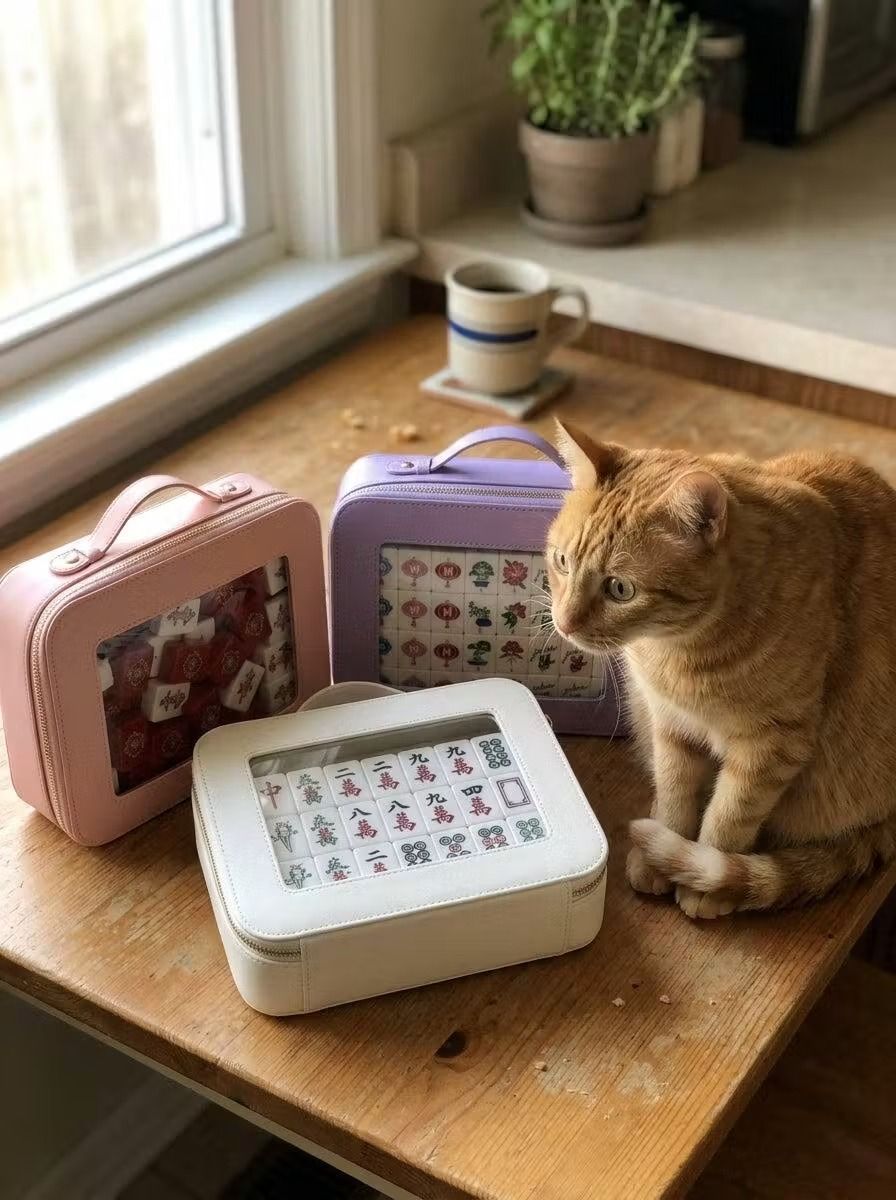
How much weight should you be carrying?
An unadorned 160-tile set weighs about 5–7 pounds. A standard mat adds 2–3 pounds. Two racks with pushers add roughly 1 pound. That means a fully loaded tote should not exceed 12–15 pounds for most senior players. This matters: heavier bags cause shoulder strain during walks from car to game table. Look for totes with padded handles at least 1.5 inches wide—narrow straps cut into skin, especially if you carry the bag one-handed. If your regular route involves stairs or uneven ground, consider a model with a reinforced base and a central grab handle, not just shoulder straps. Test any tote by loading it with books and books and walking 100 steps before you commit.
Padded vs. structured: which protects tiles better?
Padded canvas or synthetic totes rely on soft walls to absorb bumps; they're lightweight but compress under pressure, which can chip tiles in corners. Structured totes (rigid base + partial-height sides) keep tiles upright and prevent stacking from above—ideal if you set the bag down in a car trunk or on a bench. Hard shell cases with dividers offer maximum protection but weigh 3–4 pounds empty and may be overkill for a weekly neighborhood game. A hybrid approach works best for seniors: a canvas or synthetic tote with a reinforced plywood or EVA-foam base, padded top, and inner dividers. This keeps your set safe, stays under 2 pounds when empty, and doesn't feel industrial. Check the travel bag collection for designs that balance these factors—many feature removable dividers so you can scale capacity by trip.
🎁 See our most-loved mahjong sets & accessories →
Single vs. multi-compartment: does organization matter?
Single-compartment totes work fine if you arrive early and set up methodically. Multi-compartment designs (2–4 pockets) save time: keep your mat in one section, tiles + case in another, racks in a third, accessories in a fourth. This prevents fishing for items during setup and keeps damp or dirty items (like a cleaning cloth) away from tiles. For seniors hosting or coordinating games, the extra organization is worth the few ounces of added weight. If you play passively and just bring your tiles, a single roomy compartment simplifies packing and keeps costs lower. Think about your role: host = multi-compartment; regular player = single is enough.
What to check before you order
Before selecting a tote, ask yourself these questions:
How often do you transport your set? Weekly games warrant a durable, well-padded bag; occasional trips allow lighter canvas.
Do you fold or roll your mat? Rolling requires depth; folders need width.
Can you lift and carry 12–15 pounds comfortably? If not, choose a tote with wheels or a duffel that distributes load to your hip belt.
Do you play indoors at one table, or rotate venues? Single venue = simple tote; multi-venue = padded, compartmented design.
Are tiles currently in their original case or loose in a pouch? Cases add bulk; pouches compress—plan accordingly.
Load a candidate tote with your actual set, mat, and racks before checkout if shopping locally. For online orders, check the manufacturer's interior dimensions in inches and weight when empty.

Comparison: tote types for common senior scenarios
Scenario | Bag Type | Why It Works | Best If You… |
Weekly game at one friend's home | Lightweight canvas tote, single compartment | Easy to grab; minimal fuss; seats in car cupholder space | Walk or drive short distances; play casually |
Rotating between two homes | Padded canvas with reinforced base + 2 compartments | Protects during repeated packing; organizes mat separately | Want durability without bulk; host occasionally |
Monthly tournaments or travel games | Structured hybrid tote + removable dividers | Keeps tiles upright; adjusts for extra jokers or scorecards | Attend events; need flexibility for tournament sets |
Senior center or club twice weekly | Duffel with shoulder straps + wheels | Distributes weight; easier on joints; fits under tables | Have arthritis or mobility concerns; value hands-free carry |
🀄 Shop best-selling mahjong sets →
How to pack a tote so nothing shifts
Start with your mat at the bottom, folded lengthwise into thirds (so it's roughly 10 inches wide). Place your tile case or pouch on top, centered. Slide racks + pushers into any side pockets or along the pouch. Tuck a small cloth and dice into corner gaps. If using a multi-compartment tote, keep tiles and mat in separate sections to prevent rubbing. Pack damp items last and keep them on top—don't let cleaning cloths rest against tiles overnight. Close the tote fully and gently shake it once; if you hear shifting or feel movement, loosen items slightly or add a folded towel as a spacer. Seniors often pack the night before a game—doing this gently while sitting down, rather than standing over a counter, saves your back.
Why Mahstead totes matter for your weekly game
Our best-selling mahjong sets collection pairs premium 160-tile sets with sturdy, tested carry options. Because we design sets and bags together, we know exactly how our tiles and mats fit into our totes. Our bags come presized for standard American sets, so you're not guessing interior dimensions or discovering your tiles rattle. We ship free across the US, so you can order a set and tote as a pair without worrying about separate shipping costs eating into your budget. Many seniors order an engraved set with a matching tote—your name or a witty phrase on the tiles, organized and ready in one professional-looking bag. That kind of coordinated setup also makes a wonderful gift for a friend joining your game group.
✨ Find your Mahstead set — free US shipping →
Quick decision framework
Load your current set into a candidate tote (or borrow one identical in size) and carry it for 10 minutes. Pain = wrong choice.
Check interior dimensions in inches; make sure your mat fits unfolded or rolled without jamming corners.
Feel the handle width and padding. Straps under 1.5 inches wide will hurt during regular use.
Test the closure. Zippers should glide smoothly; snaps should click firmly without pinching fabric.
Weigh the empty bag if the seller lists it. Under 2 pounds for a single-compartment, under 3 for multi-compartment, is ideal.
Order with a return window. If it arrives and doesn't fit your setup, you should be able to send it back.

FAQ
Can I use a regular tote bag or purse for my mahjong set?
Regular bags lack padding and support; tiles shift, risking chips or cracks. Mahjong-specific totes have reinforced bases and compartments to keep tiles upright and stable. Try it once with your set, and you'll feel the difference.
What's the difference between a tote and a hard case for mahjong?
Totes are lightweight, flexible, and easier to grip; hard cases protect better and often include wheels, but weigh more and take more storage space. Choose a tote if you carry weekly; choose a case if you attend tournaments or travel by plane.
Do I need a separate bag for my mat, or can it fit in the tote with my tiles?
Both fit in one tote if the tote is deep enough (at least 8 inches). Rolling your mat lengthwise saves space. Keep tiles and mats in separate compartments if possible to prevent friction and dust transfer.
Are padded canvas totes better than synthetic ones for seniors?
Both work equally well if the base is reinforced. Canvas breathes and feels durable; synthetic wipes clean easily. Choose whichever material feels better in your hands—durability depends on construction, not material alone.
What should I look for if I have arthritis or shoulder pain?
Prioritize wide, well-padded handles (1.5+ inches), a lightweight tote (under 2 pounds empty), or a duffel with a hip belt and wheels. Never compromise on handle quality; poor grip design will worsen hand and wrist pain over time.
Can I fit two sets in one tote?
Only if the tote is oversized and has multiple compartments. Standard totes are designed for one 160-tile set plus a mat. Two sets plus two mats typically require a large duffel or two separate bags to avoid overstuffing and handle strain.


View More
View More
View More
