
Mahjong Tile Pouch: Protect & Travel with Your Set
Last updated: Nov 23, 2026
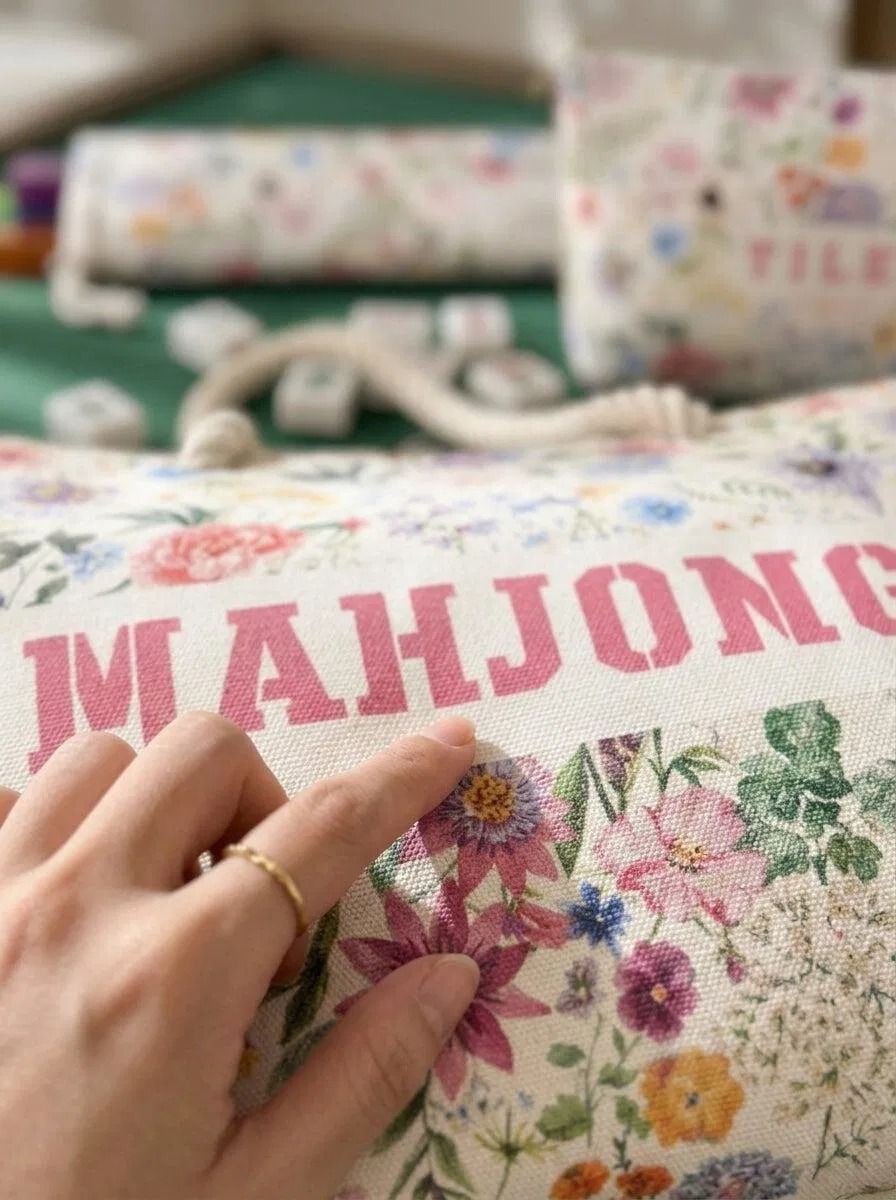
A mahjong tile pouch is a padded or semi-rigid container sized to hold a complete American mahjong set (152 tiles plus jokers and spares). The best pouches have compartments for tiles, dividers to prevent shifting, handles or straps for carrying, and water-resistant fabric to shield against spills. Most fit in a car trunk or closet; many zip or snap closed. Cost basis varies widely depending on material (canvas, nylon, acrylic-lined) and features—see the travel bag collection for current options. What to avoid: pouches without padding will let tiles crack on impact; undersized pouches force tiles to jam and damage edges. A pouch alone doesn't protect your set as well as a hard case, but it's lighter for weekly games and perfect for trips where a full case is overkill. 🎁 See our most-loved mahjong sets & accessories →
What's the difference between a pouch and a case?
A pouch is soft-sided, lightweight, and folds flat when empty—ideal for players who move their set weekly but don't need rigid armor. A case is hard-shelled or heavily padded, takes up fixed space, and costs more, but survives drops and stacks in a closet or garage. If you host home games or transport tiles in a car most weeks, a pouch is your practical choice. If your set travels by plane, stays in a storage closet for months, or you're protecting an heirloom set, invest in a case.

Which pouch size should you choose?
American mahjong sets come in one standard tile count—152 playable tiles plus 8 jokers and spare blanks—so all pouches in the travel bag collection are designed to hold exactly that. Before ordering, verify the pouch interior dimensions against your set's tile trays or loose-tile arrangement. Most Mahstead sets ship flat or in compact trays; measure your stacked tiles in inches (width × depth × height) and compare to the pouch's stated interior space. A pouch that's snug when packed will protect tiles from shifting but make packing tight; one with extra room is easier to close but tiles may rattle. Look for pouches with adjustable or removable dividers so you can tailor compartments to your tile tray layout.
🀄 Shop best-selling mahjong sets →
What material holds up best over time?
Canvas and heavy nylon are the most durable—they resist tears, don't crack in cold, and age well. Acrylic or PVC-lined pouches repel spills (important for coffee or humid game nights) but can stiffen or crack after years of folding. Mesh panels let you see tiles without opening, a nice quality-of-life feature, but mesh alone won't protect against impact. Our best-selling mahjong sets often pair well with canvas or nylon pouches because both can handle the weight of acrylic tiles without stretching. Check the pouch manufacturer's care instructions—some are machine-washable, others need spot-cleaning only. If you play outdoors or near water, prioritize a water-resistant exterior; if you store tiles in a dry closet year-round, material matters less than padding thickness.

Should a pouch have separate compartments for dragons and honors?
Most American mahjong players keep all tiles together because the hand changes every round, and separating honors slows setup. Compartments are helpful only if you're a teacher or run a beginner's clinic where you pre-sort teaching hands. For weekly home games, a single large compartment with a divider to prevent tiles from sliding is cleaner and faster. Some players like a small exterior pocket for the current year's National Mah Jongg League card, dice, or pushers—a thoughtful design feature that saves fumbling. If you also own mahjong racks with pushers or a mat, check whether the pouch can nest inside a larger carry bag; many of our players use a pouch for tiles plus a tote for the full travel kit.
Pouch Type | Best For | Pros | Cons |
Canvas with padding | Weekly home games | Durable, affordable, washable | Heavier, less water-proof |
Nylon with dividers | Regular transport | Lightweight, compact, mold-resistant | May feel less sturdy |
Mesh-panel hybrid | Players who like visibility | Quick tile check, semi-waterproof | Mesh can tear, pricier |
Rigid or semi-rigid | Travel and storage | Maximum protection, stackable | Takes permanent closet space |
What should you check before ordering a pouch?
Tile count match: Confirm the pouch is designed for a full American set (152 tiles + jokers). Pouches meant for travel sets or partial collections are too small.
Interior padding thickness: At least ½ inch of foam or quilting prevents tiles from cracking if the pouch is dropped or bumped in a car.
Handle or strap quality: If you carry it weekly, test weight limits—acrylic tiles are heavier than bamboo. A reinforced handle or over-shoulder strap matters.
Closure durability: Heavy-duty zippers or snap fasteners survive hundreds of open-close cycles; cheaper zippers jam or split after a season.
Dimensions and your tiles: Measure your tile stack or tray, then compare to the pouch's interior height, width, and depth. A mismatch means forced packing or tiles sliding.
Water resistance: If you live in a humid climate or play near kitchen/poolside, pick a pouch with a water-resistant exterior or lining.
Return policy: Many online retailers allow returns within 30 days if the pouch doesn't fit your specific set—check before checkout.
✨ Find your Mahstead set — free US shipping →
Pouches vs. custom-fit alternatives
Some players build custom holders from fabric scraps and foam board—a fun DIY project if you're handy. Others repurpose vintage sewing boxes or mason jars. These work, but they lack water resistance, proper padding, and often take longer to pack than a purpose-built pouch. A well-designed pouch from the travel bag collection saves setup time and protects an investment—whether you've bought an engraved set with custom titles or one of our best-selling standard designs. The pouch is not glamorous, but it's the difference between keeping your tiles mint after five years and watching edges chip after one season.
###

FAQ
Can you fit a mat and racks inside a tile pouch?
No. A tile pouch holds only tiles, jokers, and small items like the card or dice. For a full mahjong kit with mat and racks, use a larger carry tote or wheeled case alongside the tile pouch.
Do I need a pouch if I keep my set at home?
If your set stays in one closet, a pouch is optional—tiles are safe on a shelf. But a pouch keeps dust and pets away, makes retrieval faster, and protects tiles if you ever move or lend the set to a friend.
What's the best way to pack tiles in a pouch?
Stack tiles vertically (numbers facing the same direction) or lay them flat in rows, depending on your pouch's height. Avoid mixing orientations—tiles shift less when aligned. Use dividers or small towels to separate sections if the pouch allows.
Can acrylic tiles go in a plastic-lined pouch?
Yes. Acrylic is inert and won't react to plastics or nylons. Just ensure the lining doesn't retain heat in a hot car, which can warp tiles over time. Store your pouch in shade when not in use.
Are there pouches designed for specific American mahjong set brands?
No—all American sets have the same tile count and similar dimensions. Any pouch labeled for 160-tile American sets will work with any brand, including Mahstead's acrylic sets.
Should the pouch be cleaned or aired out after storage?
Yes. After 3–6 months in a closet, open and air the pouch for a few hours before play—musty fabric can transfer odor to tiles. Wipe the exterior with a dry cloth; if the interior is dusty, vacuum gently or spot-clean with a damp cloth (check manufacturer care instructions first).


View More
View More
View More
