
Mahjong Racks for Beginners: How to Pick Your First Rack
Last updated: Nov 23, 2026
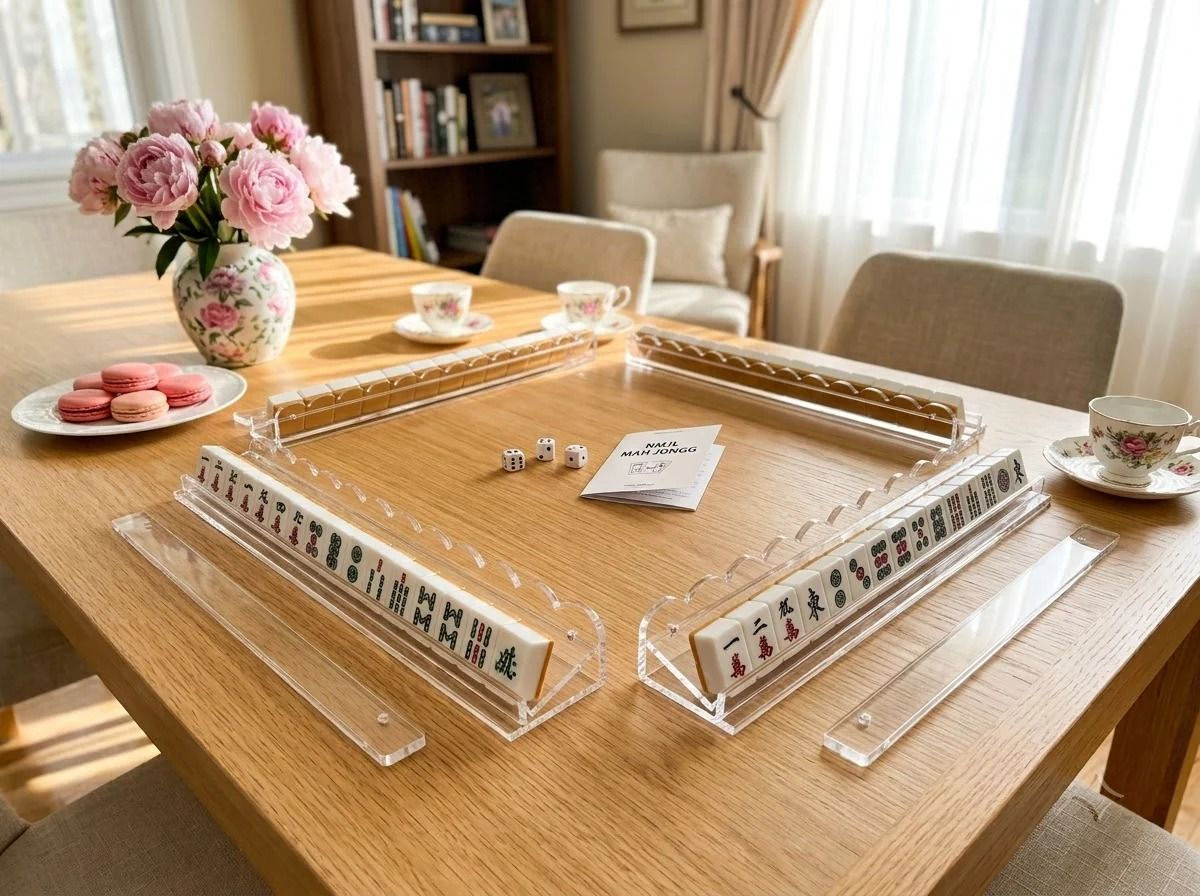
A mahjong rack is a wooden or acrylic stand that holds your 13 tiles upright during play, keeping them hidden from other players and freeing up table space. Racks come in straight designs (simple, compact) or angled styles (easier to read). Most include one or two pushers—small sticks that move tiles forward when you draw or discard. Beginners benefit most from a basic, lightweight rack that's easy to manage; as you play more, you might upgrade to one with comfort features like a tilt angle or reinforced pusher joints. Cost varies widely based on material and craftsmanship. Avoid oversized racks if your table is small, and check that pushers move smoothly before you buy—stiff pushers slow down the game and frustrate both you and your opponents. Mahstead's mahjong racks with pushers come in several styles designed for different hand sizes and play environments, all shipping free across the US.
Why do beginners need a rack at all?
A rack isn't mandatory—you can play with tiles face-down in your hand—but it changes the game. Racks let you see all your tiles without telegraphing your hand to other players, organize by suit and number instantly, and keep the table clean. If you're holding 13 tiles in your palm, you'll exhaust your hand fast and miss counting melds. A rack also means you're not constantly rearranging: you slide the pusher, draw a tile, organize it, and you're ready. Most experienced players use racks every game; beginners often underestimate how much a good rack improves focus and speed.
🀄 Shop best-selling mahjong sets →
What's the difference between straight and angled racks?
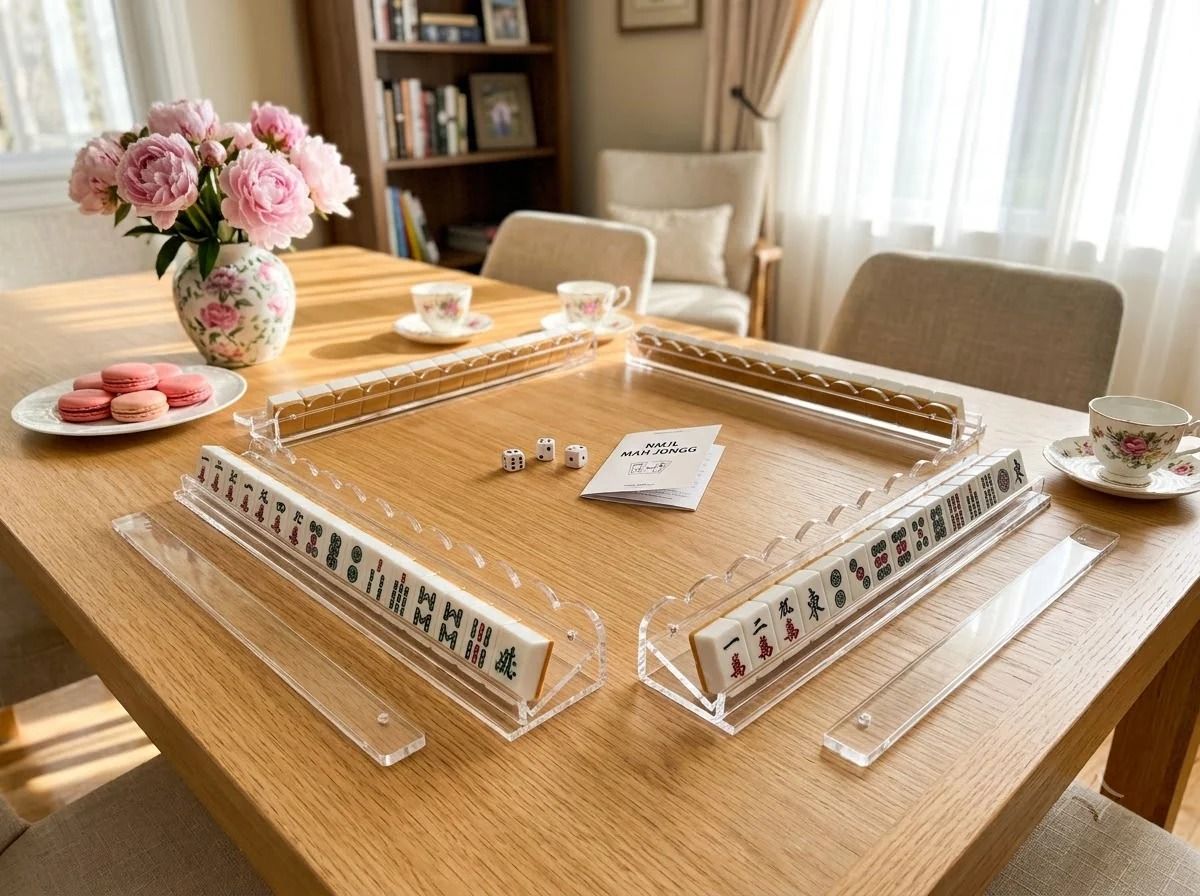
Straight racks sit perpendicular to the edge of the table; the tiles face you directly. They take up less space, suit small tables, and are easier to carry. Angled racks tilt upward (typically 20–45 degrees), bringing your tiles closer to your eye line and reducing neck strain. Many players find angled racks faster because you don't have to lean in to read tiles in the middle or end positions. Straight racks work fine for beginners; angled racks become attractive once you play long sessions or develop hand fatigue. Choose straight if your table is tight; choose angled if comfort and speed matter most to you after your first few months of play.
How do pushers work, and do you really need two?
A pusher is a small stick or rod attached to the rack that moves tiles forward as you draw. You pull the pusher back, draw a tile from the wall, push it forward into your hand, and organize it. Most racks come with one pusher; some have two (one on each side). One pusher is standard and all you need—it speeds up the draw and prevents you from accidentally exposing tiles. A second pusher is a comfort feature: it lets you organize both ends of your hand at once, which helps during fast games. For beginners, one pusher is sufficient; test it in a game first to feel whether smoother movement matters to you. Stiff pushers—those that don't slide freely—are a red flag and will slow your play and annoy others.
Mahstead racks vs. basic alternatives: what should beginners compare?
Feature | Basic Wooden Rack | Acrylic Rack | Oversized/Premium Rack |
Best for | Budget-conscious beginners | Durability + easy cleaning | Frequent players, larger hands |
Weight | Light | Medium | Heavier (steadier) |
Pusher quality | Often variable | Usually smooth | Reinforced hinges, smooth movement |
Table space | Compact | Compact | Larger footprint |
Portability | Easy | Easy | Harder to carry |
Learning curve | Minimal | Minimal | None—just more features |
Beginners often buy the cheapest rack and regret it within a month once pushers bind or the wood warps. Mahstead's best-selling mahjong sets are chosen by players because racks move freely and materials stay stable. Mid-range acrylic racks offer the best balance: they don't crack, pushers slide consistently, and they're easy to wipe clean after snacks or tiles that get sticky. Save premium oversized racks for after your second season, when you know whether you prefer angled or straight, and whether you need extra width.
What size rack should fit your table and hand?
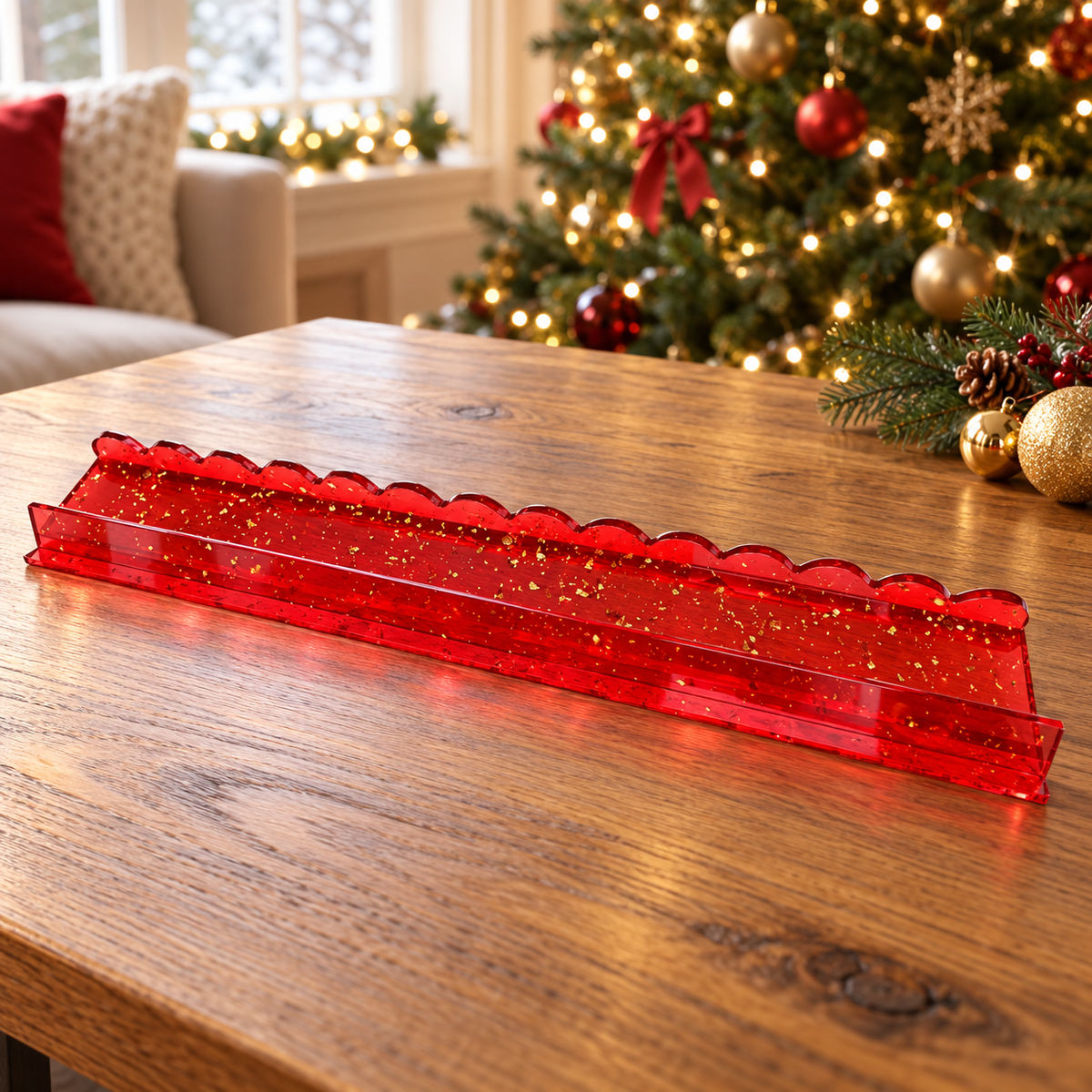
Rack length varies: compact models fit standard 3×3-foot tables, while wider racks (6–8 inches) suit larger tables or players with wider hand spans. Measure your table first. If your four racks (one per player) fit comfortably without overlapping or crowding the center space where tiles get drawn, you're good. Beginners often buy racks that are too wide and then struggle with table real estate. Hand size also matters: if you have small hands, a narrower rack feels less overwhelming and easier to organize quickly. If you have large hands, a wider rack lets you spread tiles without cramping. Mahstead's range includes compact and standard widths; measure your playing space and hand before ordering, and you'll avoid returns or frustration mid-game.
🎁 See our most-loved mahjong sets & accessories →
What should you check before you buy?
Before you order, confirm four things:
Pusher movement: If you can test the rack in person, slide the pusher 10 times. It should glide smoothly without catching or binding. Stiff pushers are the number-one beginner complaint.
Table space: Measure your mahjong table or the surface you'll use. Confirm four racks fit without crowding. If you don't own a table yet, consider a mahjong mat instead—it takes up no extra space and marks positions clearly.
Material durability: Acrylic or quality wood should survive years of weekly play. Cheap plastic or thin veneer often cracks or warps within months. Look at the joints where the pusher connects; reinforced hinges signal durability.
Tile fit: Your rack must hold American mahjong tiles, which are standard 1-inch squares. Some Asian racks or decorative stands use thinner tiles and won't work; verify compatibility with Mahstead or the seller before purchase.
Also decide: do you want one rack, or a set of four? If you're hosting games, buying four matching racks from the mahjong racks collection ensures consistency and eliminates arguments about whose rack is sturdier or taller.
How do you care for your rack to keep it working?
Wooden racks benefit from occasional light oil (food-safe mineral oil) to prevent drying and cracking. Acrylic racks are lower maintenance—wipe them dry after spills and avoid prolonged heat. Check pusher hinges every few months; if they loosen, a small drop of oil or a careful adjustment of the screw keeps them smooth. Never soak racks in water or run them through a dishwasher; water warps wood and loosens acrylic bonds. Store racks in a cool, dry place. After sticky-fingered games, wipe tiles and racks with a soft cloth. Most racks last 5+ years with basic care—and a well-maintained rack holds its resale value if you ever upgrade.
✨ Find your Mahstead set — free US shipping →
Racks as part of your full beginner setup
A rack is one piece of the mahjong puzzle. New players also benefit from a mat to define play space, a current-year National Mah Jongg League card (the official hand reference), and a sturdy mahjong set with 152 tiles and 8 jokers. If you plan to travel to games, consider a padded bag or case that protects your set and racks. Beginners who invest in a complete kit (set, racks, mat, and card) report faster learning and more enjoyment because they spend less time managing equipment and more time learning hands.
FAQ
Can I play mahjong without a rack?
Yes, but it slows you down. You'll hold tiles in your hand face-down, which limits your ability to organize by suit and number, and makes it easier to accidentally expose tiles to other players. Experienced players use racks almost always. Try borrowing one for a game to feel the difference.
How many racks do I need to buy?
If you're hosting a game, buy one set of four matching racks so all players have equal equipment. If you're playing at a friend's house, ask if they provide racks first. For your own collection, at minimum one rack lets you learn and practice; four is standard for a complete home game setup.
What if the pusher on my new rack is stiff?
A stiff pusher often loosens after a few games as materials settle. If it doesn't, add a tiny drop of food-safe mineral oil to the hinge and work it in gently. If it remains stuck, contact the seller—a properly made pusher should slide freely within 24 hours of opening.
Do I need an angled rack as a beginner?
No. Straight racks are fine for learning; most beginners don't notice fatigue in short sessions. Upgrade to angled after 2–3 months of weekly play if your neck bothers you or you want to read tiles faster. Many players stay with straight racks forever.
What's the difference between a mahjong rack and a tile holder?
A rack holds tiles upright and includes a pusher for drawing. A tile holder is a generic stand (sometimes used for cards or game pieces) that may not fit standard mahjong tiles or have a pusher. Always buy a purpose-built mahjong rack to ensure smooth pusher movement and proper tile fit.
Can I use racks from an Asian mahjong set in American mahjong?
Possibly, but Asian mahjong uses smaller tiles (roughly 3/4 inch vs. 1 inch for American). Check tile size first. If they don't fit snugly, tiles will slide or fall, which disrupts play. Mahstead's racks are designed for full-size American tiles.


View More
View More
View More
