
Mahjong Napkins and Plates: Host Like a Pro
Last updated: Nov 23, 2026
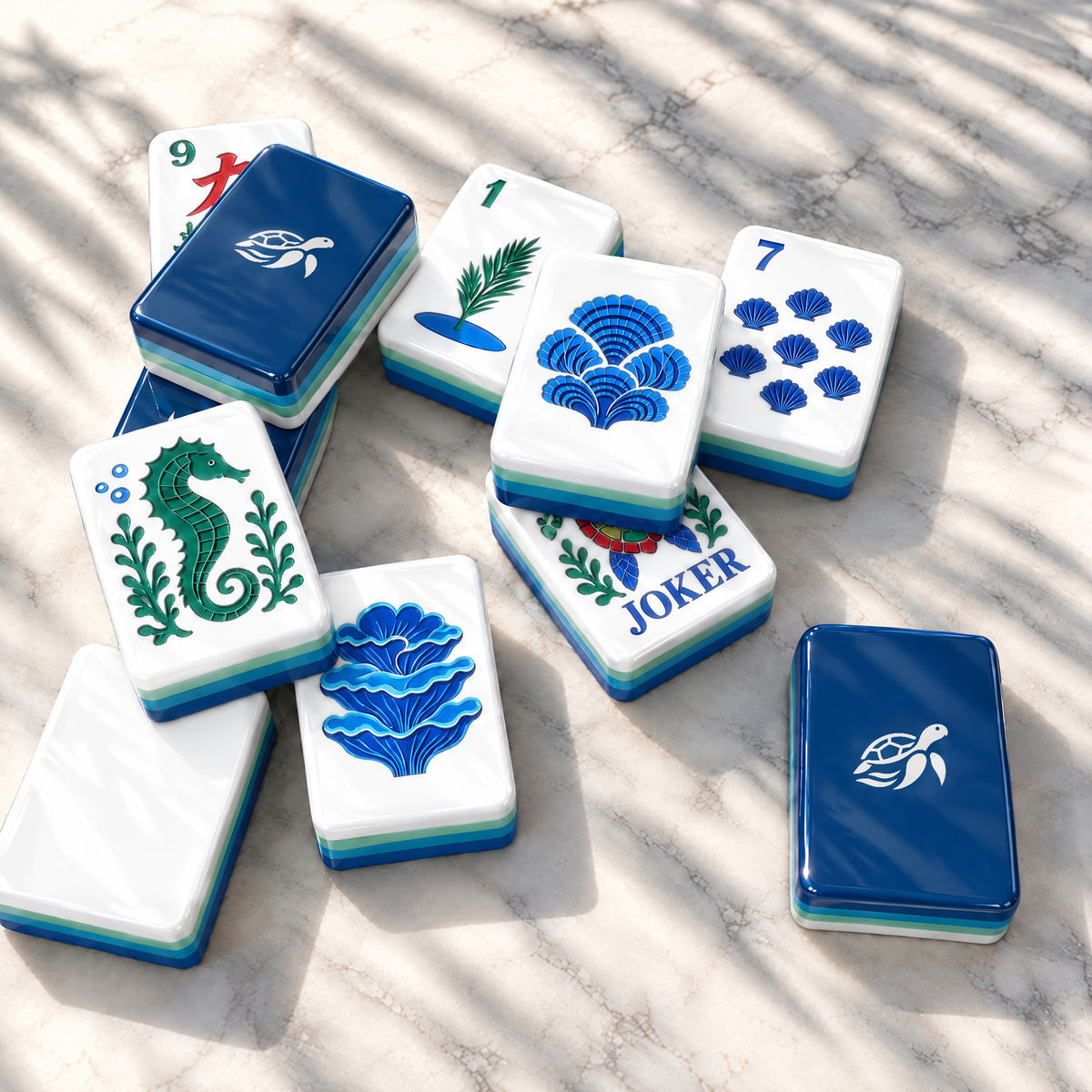
Mahjong napkins and plates are decorative serveware printed with tiles, winds, dragons, or game-themed jokes—designed to turn snack time into table décor that matches your set. You'll find them at specialty retailers, online stores, and party supply shops; sets typically include napkins (cocktail or lunch size), small plates, and sometimes coasters. Most are single-ply or double-ply paper or linen-blend, last one game night, and cost under standard party pricing for 50–100 pieces. The best choices pair with your best-selling mahjong sets in color or theme—solid acrylic sets pair well with minimalist tile graphics, while engraved or novelty sets match bold dragon or wind designs. Avoid generic party plates; buy sets where the tiles or imagery actually represent American mahjong (Bams, Craks, Dots, winds, dragons, flowers) so guests recognize the game you're hosting. 🀄 Shop best-selling mahjong sets →
Why do players buy napkins and plates for mahjong nights?
Mahjong napkins and plates signal that the host takes the game seriously—they're a visual centerpiece and a practical buffer between greasy snacks and your tiles or mat. Many players bring worn sets or mats they've owned for years; themed serveware adds personality and keeps conversation lighter. Napkins with tile prints or witty phrases like "All Chows" or "Quint or Bust" become inside jokes at the table, and small plates let guests munch without touching the playing surface directly. Hosting is easier when everything coordinated: acrylic tiles, felt-backed mat, and matching napkins create a cohesive vibe that new players respect and regulars appreciate.

What design styles work best for American mahjong hosts?
American mahjong napkins and plates come in roughly three styles: tile-heavy (individual Bams, Craks, Dots arranged as a border or corner graphic), wind and dragon (winds in compass layout, Red/Green/White dragons as focal points), and text-based (game terms like "Pung," "Kong," "Meld" or humorous calls like "Shoe!" or "I'm buying!"). Tile-heavy designs match engraved American mahjong sets that already feature large, readable numerals; wind-and-dragon styles suit solid-color sets where the drama lives in the serveware. Text-based plates work for any set and appeal to experienced players who laugh at the inside humor. Pick one dominant style and stick with it—mixing all three reads as cluttered. Match your napkin color to your mat: cream or tan napkins go with green mats, white with gray, jewel tones with burgundy or navy.
Style | Best for | Why it works | Player reaction |
Tile-heavy border | Colorful or engraved sets | Echoes the tiles on the table | "Nice attention to detail" |
Wind compass | Solid acrylic sets | Adds visual structure without competing | "Very on-brand" |
Dragon focal point | Any set | Bold, iconic, impossible to miss | "This is real" |
Witty text | Seasoned players | Breaks tension between hands | Laughter, recognition |
Minimal (single tile or logo) | Elegant hosts | Matches high-end mats and racks | "Classy" |
How many napkins and plates should you buy for a game?
For a four-player game that runs two hours, buy one packet of 50 cocktail napkins (one per hand or meld call, used for blotting fingers or wiping tile edges) and one small-plate set of 20–25 (one per player at the table, replaced if food spills). If you host regularly or have multiple tables, stock two packets of napkins and double the plates. Linen-blend napkins last longer through a night than single-ply; they're worth the slightly higher cost because they don't shred when wet. Buy serveware at least one month before your first hosting date so you have time to swap out or reorder if the art feels off in person. Keep spares in a drawer: players will ask to buy extra sets from you after they see them.

Should serveware match your mahjong set or your hosting style?
The serveware should match your set's color family and visual weight, not your kitchen décor. If your set is a best-selling mahjong set in jewel tones (deep red, teal, or purple), buy napkins and plates in the same hue family, even if your house is all whites and grays. A pale, modern kitchen with bold mahjong napkins actually works because the game is the focus, not the room. Mismatched serveware (say, pastel napkins with a bright engraved set) signals "I grabbed these at the grocery store," which undermines the care you took to own a quality set. Coordination is about respecting the game and the players—they notice. If your set lives in a mahjong bag, buy serveware that echoes the bag's color or the set's dominant tile shade.
What else should you buy to complete a professional-looking game night?
Beyond napkins and plates, a felt-backed mahjong mat and a set of racks with pushers signal that you're a serious host. The mat protects your table and keeps tiles from sliding; pushers let players manage tiles neatly so no one knocks them over. Dice in a small cup, a timer for the Charleston or tile-drawing phases, and a printed card reference (for new players) round out the setup. If you host weekly or monthly, buy two sets of napkins—one in the washer while the other is in use. Store everything in one labeled drawer or bin so setup takes under five minutes. A cohesive setup lifts the entire experience; players return because they feel welcomed and the game runs smoothly.
🎁 See our most-loved mahjong sets & accessories →
What to check before you buy mahjong napkins and plates
Tile accuracy: Verify that Bams show the bird on the 1, Craks show a character or scroll, and Dots show circles. Winds should be labeled N, E, W, S (or compass directions); dragons should show Chinese characters or be labeled Red, Green, White.
Material and weight: Double-ply or linen-blend napkins absorb grease better and won't shred during snacking. Paper plates should be thick enough (≥80 gsm) not to sag under light food.
Color durability: Buy from vendors that print with food-safe inks. Cheap serveware fades quickly or bleeds onto hands if wet—a sign of low-quality printing.
Size match: Cocktail napkins fit a mahjong hand comfortably; luncheon napkins feel oversized. Small plates (≤7") don't clutter the edge of a standard mat.
Quantity consistency: Open the package and count—some vendors short-pack. If you ordered 50 napkins, verify you got 50 before throwing away the box.
Theme cohesion: All graphics should reflect American mahjong (Bams, Craks, Dots, winds, dragons, flowers, jokers). Avoid generic tile clip-art or Hong Kong–style designs unless that's your intentional choice.
✨ Find your Mahstead set — free US shipping →
FAQ
Can I use regular cocktail napkins or do they have to be mahjong-themed?
Regular napkins work functionally, but themed napkins transform a casual game into an event. Players remember the night partly through small touches—the mat, the napkins, the way the tiles sit. Themed serveware tells regulars you care and gives new players a visual anchor for the game. It's the difference between "we played at her house" and "we had the best mahjong night at her house."
What if I can't find napkins with American mahjong tiles?
Look for napkins with dragons, winds (compass), or simple Chinese characters. Avoid Hong Kong or Riichi (Japanese) mahjong imagery if you play American exclusively—the tile sets look different and confuse guests. Custom-printing napkins is an option if you have a regular group and want them exact; ask a local print shop for a quote. Some online retailers also offer small-batch custom orders with a 2–3 week lead time.
Do mahjong napkins stain easily or fade in storage?
Quality napkins printed with food-safe inks resist grease and water staining better than cheap alternatives. Store them flat in a cool, dry drawer away from direct sunlight; they'll last 1–2 years unopened. Once opened, use within a few weeks if you play weekly. Linen-blend napkins are more durable than single-ply paper and hold color better through repeated use.
Should I buy matching plates and napkins or mix designs?
Matching looks intentional and polished; mixing reads as random or secondhand. If you want variety, buy one napkin design and one coordinating plate design in the same color family, rather than three unrelated prints. Players notice and it reflects on your hosting style—coordination signals confidence and care.
Can I reuse or wash mahjong napkins and plates?
Paper napkins are single-use and meant for disposal. If you want reusable options, look for cloth napkins or ceramic/melamine plates with tile or game designs; these can be washed and stored between games. Cloth napkins cost more upfront but save money and waste over a year of hosting. Check the care label before buying.


View More
View More
View More
