
Mahjong Case Reviews: What Matters When You Buy
Last updated: Nov 23, 2026
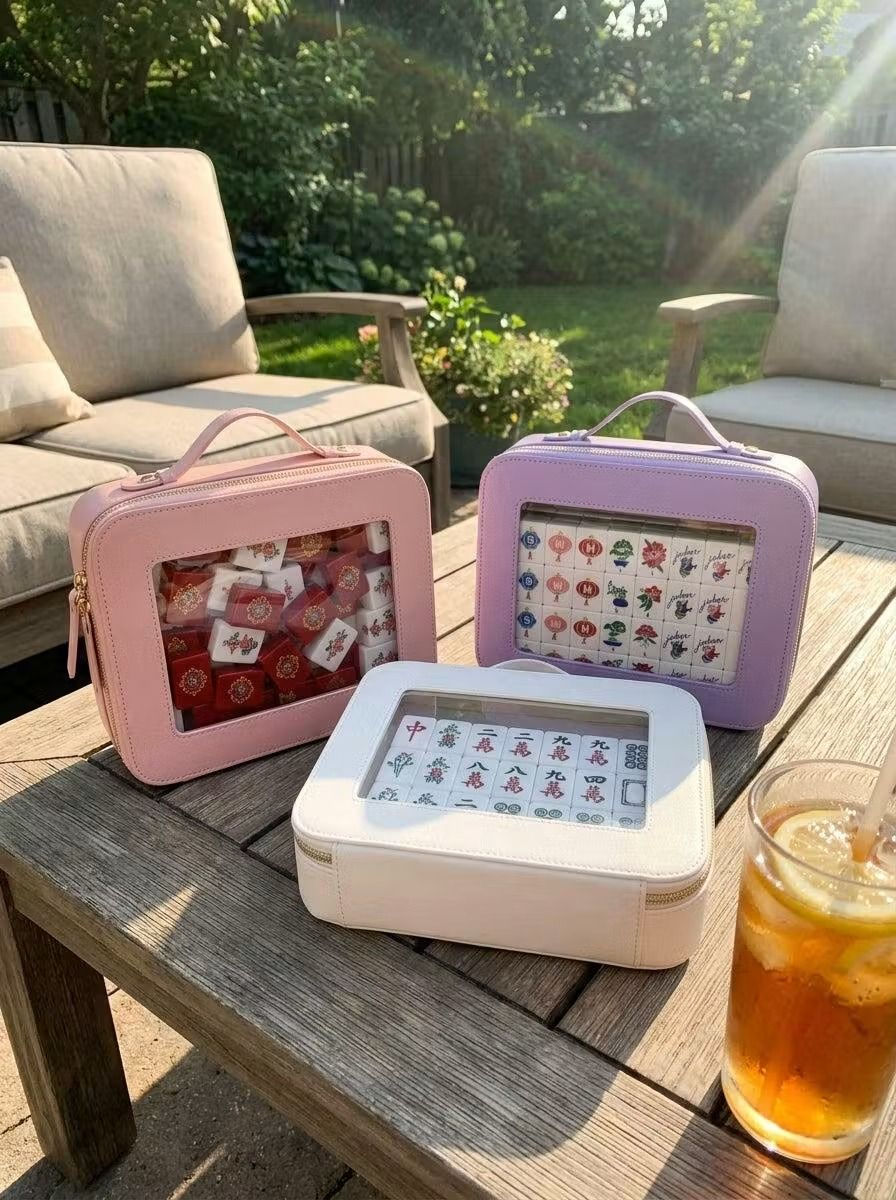
A mahjong case is a padded or hard container built to hold a complete 160-tile American mahjong set, mats, racks, and often a set of dice. Quality cases have internal dividers or foam that keep tiles from shifting, exterior handles for transport, and materials (fabric, acrylic, or hybrid) that resist spills and wear. Most last 5–10 years of weekly play if you pack tiles carefully and avoid overstuffing. Cases range from soft fabric bags with basic padding to structured designs with reinforced corners. Before you order, verify internal dimensions fit your set's box, check whether dividers are removable (useful if you host different set sizes), confirm the case is water-resistant where it matters most (the bottom and seams), and read whether it's designed for lap play or tournament transport. Mahstead offers cases and travel bags in our mahjong bags and cases collection with free US shipping, all tested by players who host weekly games.
How do case dimensions match tile sets?
An American 160-tile set box typically measures 10–11 inches long, 6–7 inches wide, and 4–5 inches tall. Your case's interior must accommodate not just the set box but also a mat (often rolled or folded to 12–16 inches), racks if you store them together, and dice. Measure your set box before comparing cases; cases marketed as "large" are not interchangeable. If your case interior is too snug, tiles shift during transport and wear racks at their grooves. A case with 1–2 inches of spare width is ideal—enough to slide items without force, not so much that tiles tumble. Check whether the case has removable internal shelves or a single flat bottom; removable dividers let you adapt to a smaller set or larger mats.
What materials actually protect tiles best?
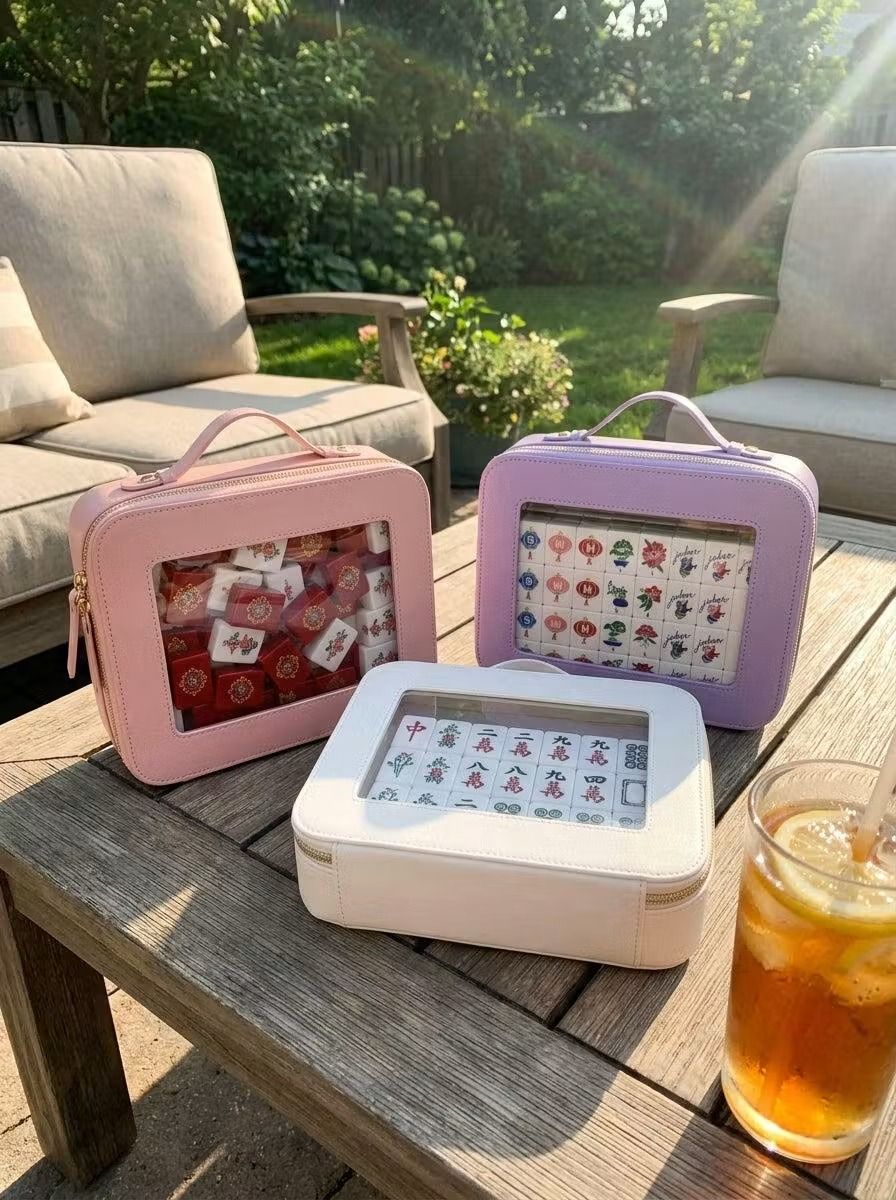
Hard-shell cases (acrylic or rigid polymer) prevent crushing if someone sits on your bag or it gets dropped, but they're heavier and bulkier. Soft-sided padded fabric cases weigh less, fit in a car trunk more easily, and are fine for players who drive to the same weekly venue. Hybrid cases have a rigid base and padded fabric sides—a compromise that protects the bottom where most damage occurs (water, dents) while keeping weight reasonable. Interior lining matters more than exterior material: foam or felt-lined compartments absorb shock and prevent tiles from scratching each other. The bottom seam is the weak point; water leaks there first. Inspect seams on the product page photo—double-stitched seams last longer than single-threaded ones.
Should you buy a case with or without internal dividers?
Dividers help if you own multiple sets or want to organize mats, dice, and racks separately from tiles. Fixed dividers mean you pack the same way every time, reducing setup time at the table. Removable dividers give flexibility: pull them out if you're transporting someone else's set or a mat that doesn't fit the standard layout. Cases without dividers cost less and are lighter but require careful packing—tiles can shift if you brake hard or hit a pothole. If you play at the same venue every week and only move one set, fixed dividers are a luxury. If you travel between multiple game groups or teach beginners (whose sets may differ in size), removable dividers earn their cost.
Case Type | Who It's For | Weight & Portability | Best For |
Soft padded fabric bag | Weekly local players | ~2–3 lbs | Short car rides, familiar venues |
Hybrid (rigid base + padded sides) | Regular hosts who move sets monthly | ~4–5 lbs | Balanced protection and maneuverability |
Hard-shell acrylic | Tournament travelers, multiple venues | ~5–7 lbs | Frequent flights or long-distance play |
Fabric with removable dividers | Multi-set households | ~3–4 lbs | Flexibility and organization |
🎁 See our most-loved mahjong sets & accessories →

What breaks or wears out first?
Zippers fail before the case body if they're cheap metal. Look for heavy-duty zippers (often labelled as reinforced or branded) that won't jam or separate after 50 uses. Handles tear where they're stitched to the case; inspect the anchor points in photos—if stitching looks thin or there's only one row, it won't survive weekly lifting. Corner reinforcements (extra fabric or bumpers glued at edges) prevent splitting when the case gets bumped in a doorway. Water damage starts at seams and spreads inward; a case that sits in a humid garage or near a window can swell or rot felt lining over one season. Store your case in a cool, dry place and air-dry it fully after any spill before closing it. Tiles themselves rarely break unless the case is dropped hard from waist height—they're acrylic, not ceramic. The real wear is the case, not what's inside.
How do you pack a case to avoid damage?
Start by placing the set box or tile bag in the center of the case, not against the edge (where it absorbs impact). Wrap the mat around the outside of the set box or place it on top if there's room; don't cram it into a corner where creases form permanent wrinkles. Mats bend at crease lines repeatedly and tear there; rolled mats are less likely to crease than folded ones. Racks and pushers go in a zippered pouch or cloth bag, then on top of or beside the set box—never loose in the case, where they'll rattle and mark tiles. Place dice last, in a small compartment or pouch so they don't roll into tile edges. Before you close the case, give it a gentle shake; if you hear movement, add a cloth between items or reposition the mat. Check zippers are fully closed before lifting; a half-open zipper can catch fabric or spill tiles as you carry it.
🀄 Shop best-selling mahjong sets →
What to check before you buy
Dimensions. Measure your set box length, width, and height. Compare it to the case's interior dimensions listed on the product page. If the numbers are close (within 0.5 inch), the case is too tight.
Photos of seams. Examine the interior bottom corners and side seams in the product image. Look for double-stitching or reinforcement tape. A single thin line of stitching will separate after 100 trips.
Material description. Confirm whether the bottom is padded foam, felt, or just fabric. Foam absorbs spills better than cloth alone.
Zipper type. If specified, check for "heavy-duty" or "YKK" branding. Cheap zippers jam after 30–50 uses.
Ventilation or moisture control. Some cases list a breathable backing or drainage holes. If you live in a humid climate, this matters. If you live in a dry climate, it's a minor bonus.
Return or exchange policy. Check whether Mahstead accepts returns if a case doesn't fit your set. (Mahstead ships free across the US; verify current policies on the product page.)
Weight. If you carry your case one-handed regularly, prioritize soft bags under 4 lbs. If you set it down at the table and never move it again, weight is irrelevant.
Browse our mahjong bags and cases collection to compare options side by side, or check our best-selling sets and accessories if you're also shopping for a new set to go in one.
✨ Find your Mahstead set — free US shipping →
FAQ
Can I use a hard-sided luggage case instead of a mahjong case?
Luggage cases work for one-way trips but not weekly play. Mahjong cases have interior padding designed for tile protection; luggage doesn't. The interior is also usually too large, letting tiles shift and crack during transport.
How often should I replace a mahjong case?
A well-made case lasts 5–10 years of regular weekly play. Replace it sooner if zippers jam, stitching separates, or water damage appears inside. Inspect the seams annually for wear.
Should I buy a case that fits only my current set or leave room for a larger set later?
Buy for the set you own now. A case that's too large lets tiles shift and racks rattle. If you upgrade sets, a new case costs less than replacing cracked tiles.
What's the difference between a "mahjong case" and a "mahjong travel bag"?
Mahjong cases usually have more structure and internal dividers; travel bags are softer and more flexible. For weekly local play, a bag is fine. For frequent moves or travel, a case holds its shape better.
Can a mahjong case protect tiles from spilling if it tips over in a car?
A zipped case prevents tiles from falling out, but unzipped cases or bags with loose openings will spill. Always confirm zippers are fully closed before lifting and transporting.
Is it worth paying extra for a case with removable dividers?
Only if you own multiple sets or teach. If you host one set every week, fixed dividers are fine and usually cheaper.


View More
View More
View More
