
Mahjong Case for Seniors: How to Choose One That Lasts
Last updated: Nov 23, 2026
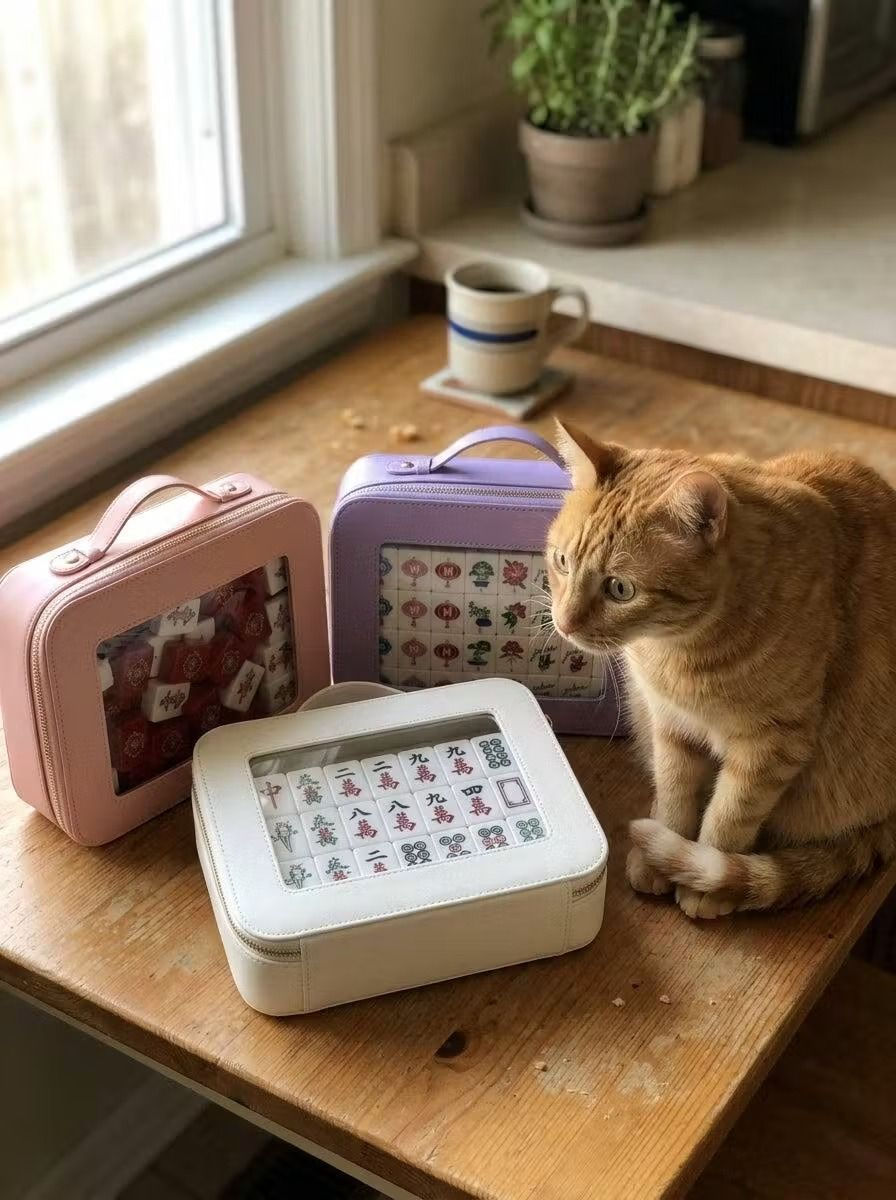
A mahjong case for seniors is a protective carrier designed to hold a full 160-tile American set, mat, racks, and accessories in one organized bag. Most are soft-sided nylon or hard-shell options that weigh between 3–8 pounds when loaded; you'll carry them by handles or over a shoulder. Cases come in two main types: fabric travel bags with interior pockets (easier to pack irregularly shaped items, lighter) and rigid cases with molded compartments (maximum tile protection, steadier carry). A case should fit a standard American mahjong set (152 playing tiles plus spares), a mat rolled or flat, and four racks with pushers. Mahstead's travel bag collection includes designs that organize everything a regular player needs. Price ranges depend on material and size; check the product page for current pricing. Before ordering, measure your mat when rolled and confirm the case interior dimensions match—an inch short and your set won't fit comfortably.
Which Case Style Works Best for Arthritis or Limited Grip Strength?
Soft fabric bags with padded handles or shoulder straps are gentler on hands than hard cases with rigid grips. A wheeled case lets you roll rather than carry, but most mahjong cases don't come with wheels—you'll need a separate cart. Padded handle wraps reduce pressure on palms during a 15-minute walk to a game. Shoulder strap cases distribute weight across your torso, not your wrists. If grip is a concern, avoid cases with thin synthetic handles; look for models with wide, cushioned grips or a cross-body strap. Test the handle before buying by asking the retailer if you can feel samples—your fingers will tell you immediately whether it's comfortable for a full game night out.
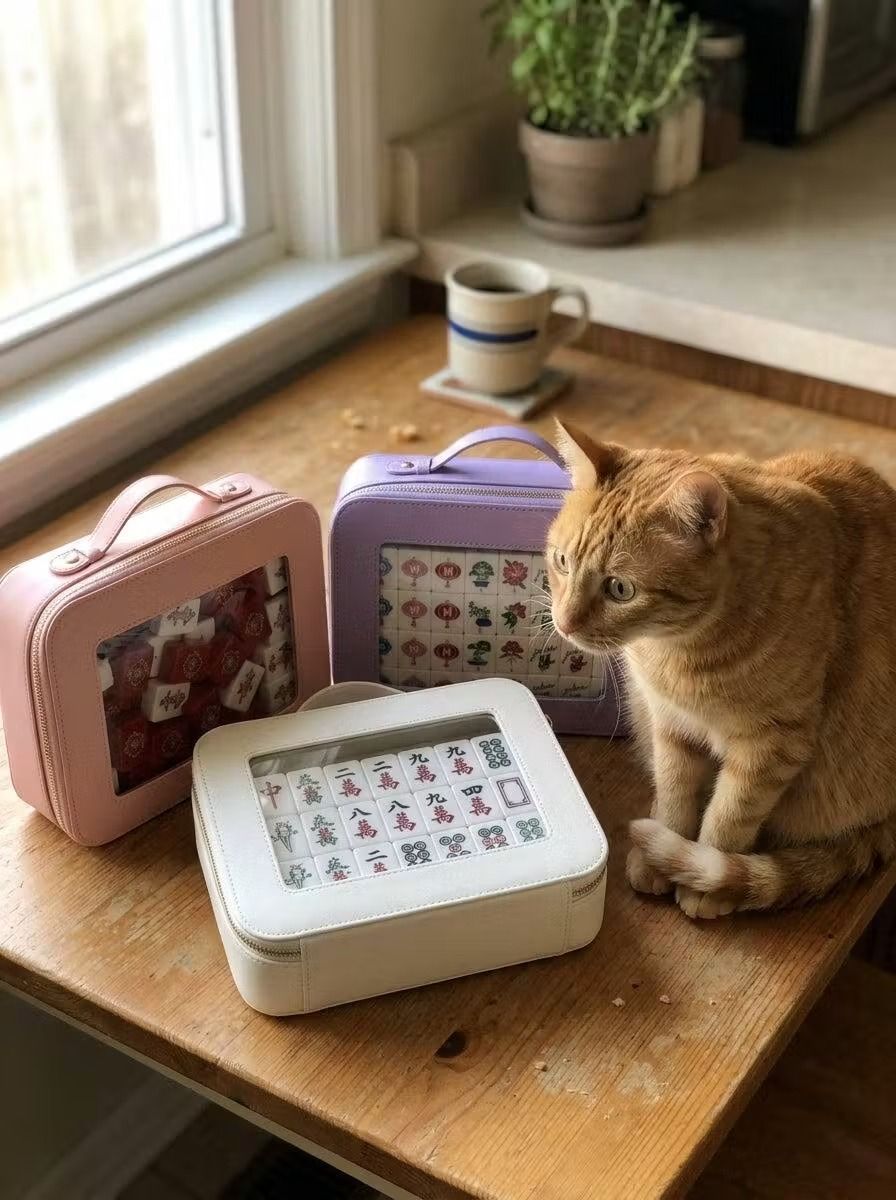
How Much Tile Protection Do You Actually Need?
Hard-shell cases protect tiles from drops and pressure (useful if you travel by car or store cases in a trunk); soft-sided bags are fine if you carry by hand to a regular venue and store at home on a shelf. American mahjong tiles are acrylic, not porcelain, so they're tougher than older sets and survive gentle bumps inside a padded cloth case. Damage usually comes from drops of more than 3 feet or weight stacked on top. If you play locally every week at the same table, a fabric bag is plenty. If you fly with your set or move between houses, a hard case or thick-walled soft bag justifies the extra cost. Most seniors prefer soft cases for comfort and space efficiency—you can squeeze a fabric bag into a car or closet, while rigid cases take up permanent shelf room.
What Should the Interior Layout Actually Include?
Good cases have separate compartments for tiles (two—one per set, or one large divided space), a flat pocket for the mat, slots or elastic loops for racks and pushers, a zippered pouch for dice and scoring chips, and room for a current National Mah Jongg League card. Compartments keep tiles from shifting during transport and make setup at your game faster—no dumping everything on the table. Some cases have removable dividers so you can customize layout as your collection grows. A mat pocket that holds the mat flat (not rolled) prevents creases and mildew. If you own multiple sets, a case that holds two full sets back-to-back is ideal; single-set cases waste carrier space. Before you buy, list what you actually travel with: if you only carry one set and a mat, a compact single-set case saves money; if you host and bring backup racks or dice, a larger case pays for itself in convenience.
🀄 Shop our travel bag collection →

How Do You Know the Case Will Fit Your Tiles and Mat?
Measure your mat when it's rolled to its smallest diameter and length (usually 2–3 inches diameter, 20–24 inches long for a standard mat). Measure a full set's bounding box: American 160-tile sets typically fit in a space roughly 12 × 8 × 4 inches. Compare those numbers to the case interior dimensions listed on the product page—interior space, not exterior. Add 1–2 inches of padding margin so tiles and mat don't rattle. If the product page doesn't show interior dimensions, email the seller or check reviews from other seniors who mention how snugly their sets fit. A case that's too tight causes stress on zippers and handles; one that's too loose lets tiles slide and mats wrinkle. Ask yourself: will I add a second set later, or extra racks? Plan for that now—buying a case twice is more expensive than buying one larger case once.
What Features Matter Most for Regular Game Night Carry?
Handle comfort, weight capacity, and easy setup are the top three. A handle should distribute pressure evenly across your palm and fingers, not dig into one spot. Capacity should exceed your loaded set weight by at least 20 percent (so if your set and mat weigh 5 pounds, pick a case rated for 6.5–7 pounds minimum). Easy setup means you can open the case at the table, pull out components in order, and have everything ready in under two minutes—no searching for dividers or untangling fabric. Cases with a flat-lay design (that open to lay items out like a suitcase) are slower but more organized; envelope or duffel styles are faster but less tidy. For seniors who play twice a week, a case that opens flat saves seconds and frustration at every session—that adds up to genuine relief over a year. Test the zipper length and smoothness; cheap zippers stick and fail after 50 uses.
Case Style | Who It's For | Weight | Best Tile Protection | Carry Ease |
Soft fabric duffel | Weekly local play; good grip strength; prefers light carry | 2–4 lbs | Good (padded interior) | Excellent (shoulder strap option) |
Hard-shell case | Frequent travel; regular transport; less dexterity required | 5–7 lbs | Excellent (rigid walls) | Good (handles) |
Flat-lay soft case | Organization-focused players; multiple sets; home storage priority | 3–5 lbs | Very good (compartments) | Fair (bulk when loaded) |
Wheeled hard case | Mobility concerns; heavier weight tolerance issues | 6–9 lbs | Excellent | Excellent (no carry needed) |
🎁 See our most-loved mahjong sets & accessories →
What Are the Most Common Mistakes Seniors Make When Ordering?
Not measuring the mat. Mats vary in size; a rolling mat with thick foam is bulkier than a thin vinyl one. Confirm interior depth before buying.
Assuming "fits a mahjong set" means a full set. Some cases fit one set only; others fit tile racks separately from tiles. Read the description carefully.
Choosing a case too small to ever upgrade. If you think you'll buy a second set in two years, buy accordingly now.
Ignoring zipper quality. A smooth, heavy-duty zipper lasts 500+ uses; a thin plastic one fails at 40. Feel the sample or read reviews.
Buying hard cases for home-only storage. If you never travel, a soft bag in the closet is cheaper and simpler. Save hard shells for movers or frequent travel.
Forgetting to factor in racks and accessories. A case that barely fits tiles and mat will burst if you try to squeeze in two sets of pushers. Account for what you actually carry every time.
What to Check Before You Buy
Interior dimensions — Does it fit your specific mat (rolled or flat) and two sets side by side, with 1-inch padding margin?
Handle design — Can you hold it comfortably for 15 minutes? Try a sample or read reviews from people your age.
Zipper and stitching — Are seams double-stitched? Does the zipper move smoothly without resistance?
Weight empty — Will a loaded case exceed your safe carrying limit? (Many seniors comfortably carry 5–7 pounds; check your own threshold.)
Compartment count — Do pockets and dividers match your collection and accessories, or will you need to reorganize constantly?
Material durability — Nylon lasts 3–5 years with weekly use; vinyl lasts 2–3. Does the price justify the lifespan you'll get?
We recommend exploring our best-selling sets and checking which cases are packaged with them—many include a coordinated bag that saves research time.
✨ Find your Mahstead set — free US shipping →

FAQ
Can a standard luggage suitcase work instead of a mahjong case?
Yes, if the interior is at least 14 × 10 × 5 inches and you wrap tiles in cloth or soft bags first to prevent shifting. Luggage is heavier, less organized, and overkill for small sets—a dedicated case saves space and time at setup.
How do I know if a case will survive a fall from a table?
Hard-shell cases with corner bumpers protect against drops from 2–3 feet. Soft cases cushion tiles moderately but may not prevent a corner from cracking if dropped hard on tile. Acrylic tiles are forgiving compared to bone; most survive table-height drops unharmed inside any case.
Should I buy a case that holds two full sets or two separate single-set cases?
A two-set case is lighter and more organized if you host or travel with a backup. Two single cases are better if you store sets in different locations or want to gift one case later. Measure your actual need—most seniors play one set per week and need only one case.
What's the difference between a case with wheels and one without?
Wheeled cases eliminate carrying strain but are bulkier, heavier, and take up more storage space. Most mahjong cases don't offer wheels; you'd add a separate folding cart if mobility is a priority. A soft-sided case on a lightweight wheeled luggage cart works well.
Can I wash the interior of a fabric case if it gets dusty?
Yes—remove tiles, vacuum the interior, and wipe with a damp cloth. Air-dry fully (24 hours) before repacking to avoid mildew. Avoid machine washing the whole case; zippers and seams may fail. Spot-clean high-wear areas like handles monthly.
Do cases come with a mat and tiles, or do I buy those separately?
Cases are sold empty or occasionally bundled with a set and mat; check the product description. Mahstead's travel bag collection lists exactly what's included with each option, and we ship sets and cases with free US shipping if you order together.


View More
View More
View More
