
Mahjong Case for a Group: What Protects Your Set Best
Last updated: Nov 23, 2026
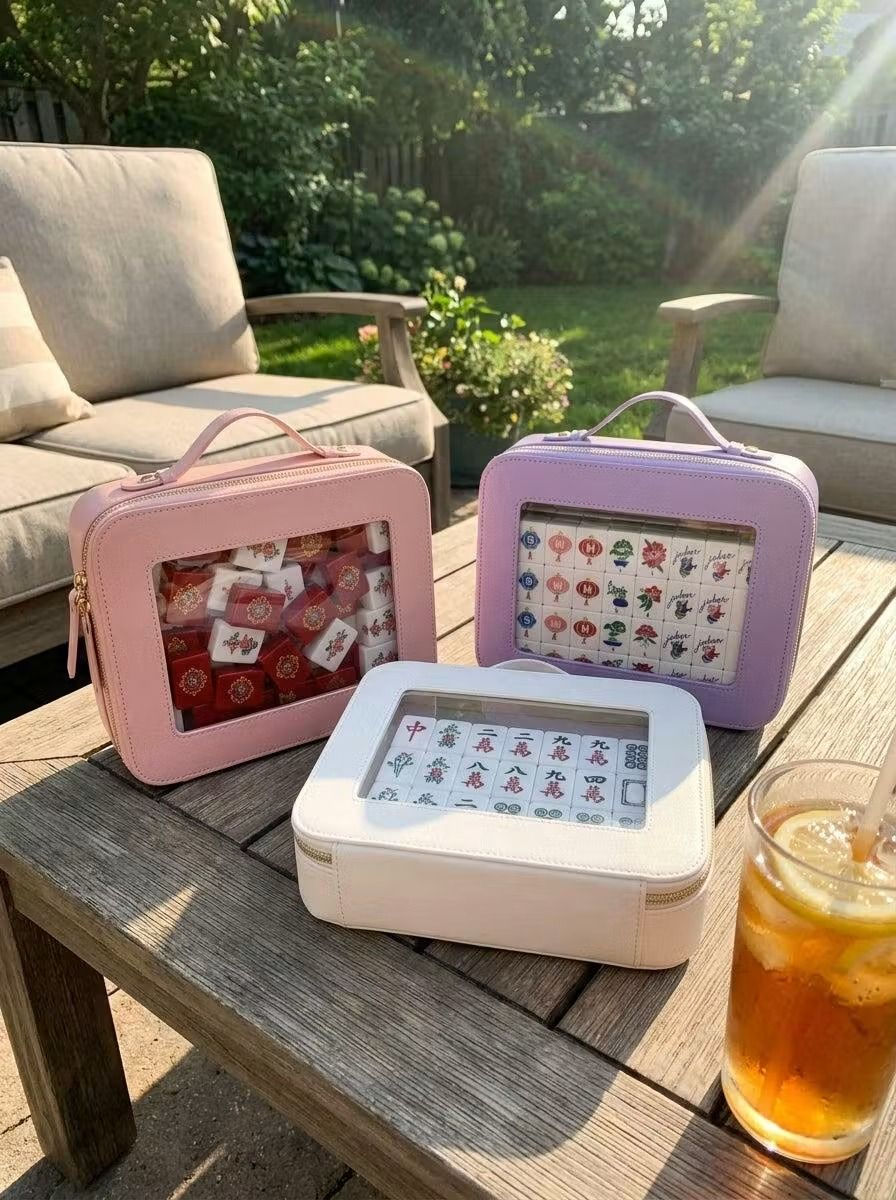
A mahjong case is a bag or hard carrier designed to hold a full 160-tile American mahjong set (tiles, racks, mat, and sometimes dice) without damage. You'll find soft carrying bags with handles or shoulder straps, hard-shell cases for maximum protection, and rolling luggage-style options for frequent travel. Most groups use soft bags for weekly play at a regular table; hard cases are worth it if you're transporting to new venues, storing in a crowded closet, or playing in a humid climate where wood or bamboo tiles can warp. A typical case costs between budget and premium depending on material and padding. Choose based on how often you move your set and whether durability or portability matters more for your game nights. Mahstead offers fitted mahjong bags and cases designed for American sets with padding and secure compartments. 🀄 Shop best-selling mahjong sets →
Which case type works best for weekly game groups?
The right case type depends on how your group plays. If you rotate hosting at members' homes or meet at the same table every week, a soft padded bag with handles is practical: lightweight, easy to store, and affordable. Hard cases protect tiles from crush damage—tiles are acrylic and won't split, but stacking heavy items on top can cause cracks or delamination over years of use. Rolling luggage is overkill for a weekly group unless you travel between cities or attend tournaments. Most of us keep a soft bag in our car or closet and upgrade to hard protection only after years of wear or if the set is a gift we want to preserve.
What should fit inside your group's case?
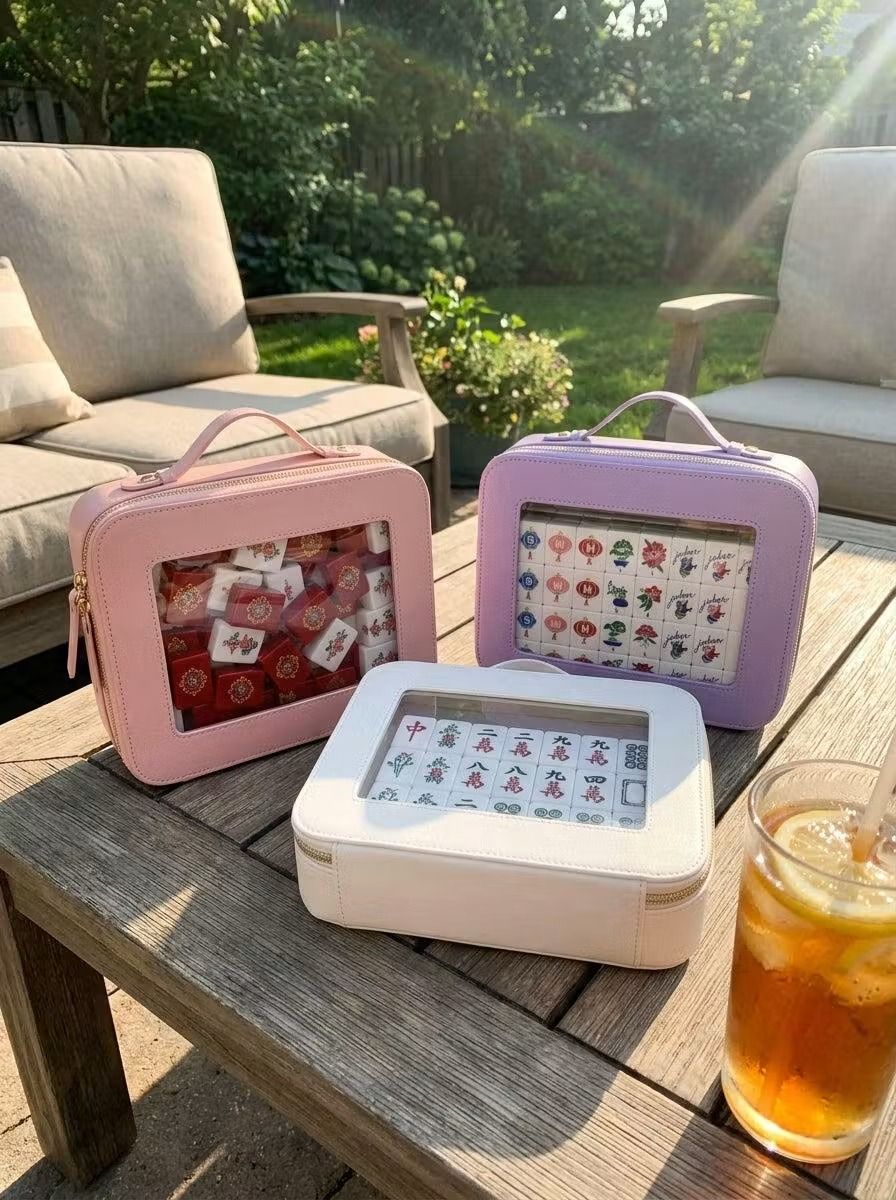
A full American mahjong set includes 160 tiles (152 playing + spares), so your case needs to hold that core load. Add rack sets with pushers, a mat, and dice—all together about the volume of a large shoebox. Check the case dimensions or manufacturer specs against your actual set's volume before ordering; don't assume a "mahjong case" will fit acrylic tiles and a mat together. Many soft bags have a main compartment plus small pockets for dice or card holders. If your group rotates who hosts, the host brings their own case; if one person brings the set to a neutral venue, they may want to pack a shared set plus personal score pads and snacks. Mahstead's travel bag collection includes designs with compartments tested for American set dimensions.
How much protection does a case really offer?
Soft bags with 1–2 inches of padding protect against minor bumps and moisture during a car ride; hard cases shield against dropped corners, pressure from stacking, and accidental spills. For acrylic tiles, the main risk is edge cracks if a bag is thrown or sat on. Wood or bamboo tiles (not common in American mahjong but used in other variants) are vulnerable to humidity without a case; acrylic is more forgiving but still benefits from a closed bag in damp basements or humid garages. If your group plays in the same climate-controlled room every week, protection is secondary; if you transport sets monthly or live in a humid region, a case with sealed or reinforced seams cuts the risk of warp or staining by at least half.
Case Type | Best For | Protection Level | Durability |
Soft padded bag | Weekly local play | Bumps, dust | 3–5 years |
Hard shell case | Tournament travel, storage | Crush, pressure | 7+ years |
Rolling luggage | Multi-city events | All of the above | 7+ years |
Basic drawstring bag | Occasional play, budget | Dust only | 1–2 years |
What do you need to check before ordering a case?
Measure your actual set or another American set to confirm dimensions—most acrylic American sets are 4–5 inches wide × 8–10 inches long × 4–6 inches tall in their original box. Count what you'll carry: just tiles, or tiles + mat + racks? A mat rolled adds 2–3 inches to the length. Check if the case has an internal divider or compartments—loose tiles can shift and rattle, which annoys players but doesn't cause real damage; many groups add a soft cloth or zippered pouch inside to keep tiles still. Read the product page for material (canvas, leather, EVA foam, polycarbonate) and seam type—reinforced stitching lasts longer than glued seams. If the case manufacturer doesn't list dimensions, email support or ask in your local mahjong group whether it fits a standard American set. Don't buy based on photos alone; one case labeled "game set bag" might fit chess pieces instead.
🎁 See our most-loved mahjong sets & accessories →

How do you pack a case so your set stays safe between games?
Place tiles in the storage compartment or a small zippered bag to prevent them from mixing with racks or mat. Lay racks flat or stand them upright if the case has a vertical slot; pushers can slip inside the rack spaces. Roll the mat loosely or fold it into thirds to fit without creasing—a mat crease doesn't affect play but looks shabby after a year. Put heavier items (tiles, racks) at the bottom and lighter ones (dice, score pads) on top. If your case has unused space, add a cloth or bubble wrap to keep contents from shifting during transport; this is especially important if you're driving on rough roads. Never stack anything on top of a closed case while driving—trunk clutter can press down and deform the bag or contents. For groups that play weekly, unpack at home rather than leaving the set in your car overnight; temperature swings and morning condensation can affect wood tiles or rust metal hinges.
✨ Find your Mahstead set — free US shipping →
Are engraved or custom cases worth it for a group?
A group-branded case (engraved with your group name or a mahjong motif) builds identity and makes it easy to spot your set at a venue where multiple players bring their own. Custom engraving is a one-time cost that pays off if the group stays together for 5+ years; if members rotate every 1–2 years, a basic case is smarter. Some groups commission a custom set with personalized tiles and a matching case—this is a significant investment but creates a family heirloom. If your group is serious about mahjong, browse engraved American mahjong sets paired with a sturdy case; the set and case together signal commitment and care. For casual groups, a basic case is enough.
What about transporting multiple sets for a tournament or event?
If your group is hosting a mahjong day or tournament, you might bring 2–3 sets at once. Rolling luggage or a large duffel bag works better than individual cases stacked together. Place each set in its own soft bag first, then nest the bags in the larger case to prevent them from bumping. A hard case large enough for multiple sets is expensive and rarely worth it unless you run mahjong events monthly. Most groups ask each player to bring their own set and case, which distributes the load and ensures everyone plays on a set they trust. If you're the event organizer and want to provide loaner sets, a best-selling collection acrylic American set paired with a durable soft bag is a cost-effective starter option.
What to check before you buy
Set volume: Measure your tiles and racks; don't rely on case photo alone.
Compartments: Verify the case has space for tiles, racks, mat, and small items (dice, scorecards).
Seams and padding: Look for reinforced stitching and at least 1 inch of internal padding.
Ventilation: Soft bags should allow air circulation to prevent moisture buildup; hard cases need drainage holes.
Handles and straps: Check weight capacity and comfort for carrying a full set (typically 5–8 pounds).
Return policy: Confirm you can exchange a case that doesn't fit your set before opening.

FAQ
Can I store a mahjong set in a case long-term without the tiles getting damaged?
Yes. Seal the case and store it in a cool, dry closet away from direct sunlight. Acrylic tiles won't warp, but check the case every 6 months for moisture or odor. If storing for 10+ years, add a silica packet inside to absorb humidity.
Do I need a case if I only play once a month at the same house?
Not essential. A basic drawstring bag protects tiles from dust and minor spills. A case is worth it if you travel to a new venue or store the set in a cluttered closet where items might press on it.
What's the difference between a mahjong case and a generic game bag?
A mahjong case has compartments or padding sized for tiles, racks, and a mat. A generic bag might fit tiles but won't keep pieces organized or protect them evenly. Always confirm dimensions before buying a non-mahjong case.
Should I remove tiles from the case when not playing?
Not required, but it extends the case's life. If tiles stay in the case for months, unpack once a month and air them out to prevent moisture accumulation or mold on canvas interiors.
How much does a good mahjong case typically cost?
Soft bags range from budget to mid-tier based on material and padding; hard cases cost more. Check Mahstead's travel bag collection for current pricing and options tailored to American sets.
Can I fit a mahjong set and a mat in a standard hard-shell suitcase?
Yes, if the suitcase is at least 20 inches long. Lay the mat flat on the bottom and place the set bag on top. Make sure the suitcase lid closes without crushing anything; don't add other items that might shift during travel.


View More
View More
View More
