
Mahjong Bag Under $100: What to Buy & Why
Last updated: Nov 23, 2026
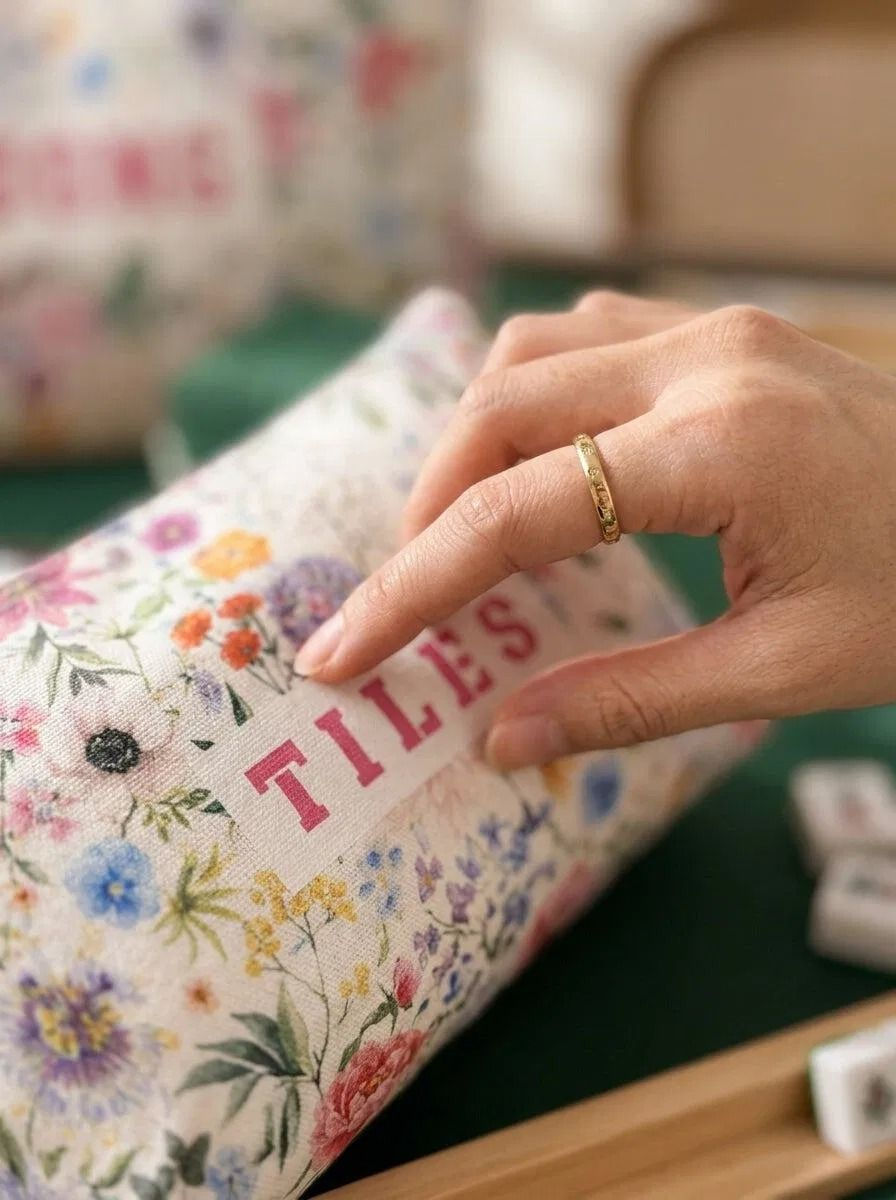
A mahjong bag under budget is a carrier designed to hold a 160-tile acrylic set, mats, racks, and dice in one portable bundle. Most styles fall into soft-sided canvas or vinyl pouches, hard-case rolling options, or compact tote formats. A typical bag fits a standard set (152 playing tiles plus spares), a single mat (usually folded), and basic accessories; capacity tops out around 5–8 liters for soft cases. Pricing varies by material durability and handle type; our best-selling mahjong sets collection pairs well with mid-range bags that balance protection and weight. Before ordering, measure your mat when folded, check the bag's interior depth, and confirm whether you need wheels or just a shoulder strap. We ship free across the US.
We host weekly games and carry our sets and boards in bags we've tested ourselves over hundreds of miles and seasons. If you're shopping for a mahjong bag in this price range, you're looking to protect an investment—your tiles, mats, and accessories—without spending on luxury options. This guide covers the five biggest questions we hear, a comparison table to sort by need, and honest tips to avoid buyer regret.
🀄 Shop best-selling mahjong sets →
What size bag do you actually need?
The answer depends on what you're carrying. If you only need the tiles and dice—say, for a quick game at a friend's house—a small zippered pouch (the size of a large clutch) works fine. If you're transporting a full setup (set, mat, racks, pushers, and score sheet), you need a tote or medium duffel that can hold a folded mat plus a tile case. Most mats fold down to roughly 12" × 18" when creased; confirm your specific mat's folded size before ordering a bag. A bag with an interior depth of 8–10 inches and a width of 14–16 inches accommodates one full-sized folded mat and a 160-tile set's carrying box side by side. If you own two sets or a very thick mat, go one size up. We recommend measuring your items first, then comparing those numbers to the bag's interior dimensions (not exterior, which includes padding).

Soft-sided vs. hard case: which lasts longer?
Soft bags are lighter, cheaper, and take up less closet space. They work well for weekly car rides to friends' homes or local game nights. Canvas or heavy-duty nylon bags breathe better, resist odor, and can last years of casual use; vinyl (PVC or polyester) bags are waterproof, wipe clean in seconds, and are ideal if you're near a lake or travel in humid climates. Hard cases roll on wheels but weigh more and are harder to cram into a car trunk. For most players under budget, a soft-sided bag is the smarter buy. Hard cases shine only if you fly to tournaments or travel over four hours regularly. Check the bag's stitching photos closely: reinforced seams at handles and zippers are what fail first. A bag with bartacks (small stitched reinforcements) at stress points lasts noticeably longer. If the photos show flat, unstitched seams, skip it—the handle will tear in two seasons.
Should your bag have pockets or just one open space?
Pockets are convenient but often reduce total interior volume. Multiple small pockets work well if you own compact dice, score sheets, and a single set's accessories. One large main compartment plus one flat exterior pocket is the sweet spot: you get storage for your mat and set in the roomy center, a smaller spot for your phone or a rule card. Interior zippered pockets don't help much with mahjong gear (tiles are bulky, not small) and can actually shrink usable space. If you're carrying mahjong racks with pushers, an open interior (no cross-dividers) prevents the racks from jamming sideways. Test the layout mentally before you buy: imagine setting down your mat, tile case, and racks in the bag to see if they actually fit. A bag marketed for yoga mats or sports gear often has the right depth and simplicity for mahjong.
What material actually survives weekly trips?
Canvas and heavy-duty nylon hold up well for three to five years of weekly games if machine-washed occasionally. Vinyl bags last slightly longer outdoors but can crack in extreme cold (below 32°F) or stick together in high humidity if stored damp. Polyester blends are the middle road: durable, water-resistant, and machine-washable. Avoid bags with thin, untreated cotton (they stain and tear easily) or solid vinyl that's less than 0.5mm thick (they puncture easily). If you check the product photos, look for double-stitched seams, reinforced grommet holes, and a handle attachment that spans at least 2 inches across the bag's wall (not a tiny single-stitch tab). A bag with a false bottom (a stitched-in panel that lifts out) lets you organize tiles separately from mats and feels more premium—but it reduces flexibility if you occasionally carry different mat sizes. For most budgets, a no-frills, single-pocket canvas or nylon tote beats a multi-pocket vinyl bag because it's easier to clean and simpler to repack.
How do you avoid the most common buying mistakes?
Many players order a bag and find it's just barely too small or has no strap long enough for a shoulder carry. Check: (1) interior dimensions listed in centimeters or inches—compare these to your folded mat, not the bag's name; (2) handle drop (the distance from the top of the handle to the top of the bag opening)—anything under 7 inches won't fit over a shoulder with a coat; (3) whether the bag includes a warranty or return window (some sellers allow returns within 30 days if unused); (4) weight and whether you'll carry it one-handed frequently (anything over 2 pounds empty is heavy when full). The second mistake: buying a bag too big, then overstuffing it until zippers strain and seams tear. A bag at 70% capacity lasts longer than one crammed solid. Third: choosing water resistance over breathability if you live in a humid region—vinyl bags trapped indoors can trap moisture and stain tiles if they're not dried weekly. Our mahjong bags and cases collection shows full dimensions and materials for each style so you can compare before ordering.
🎁 See our most-loved mahjong sets & accessories →
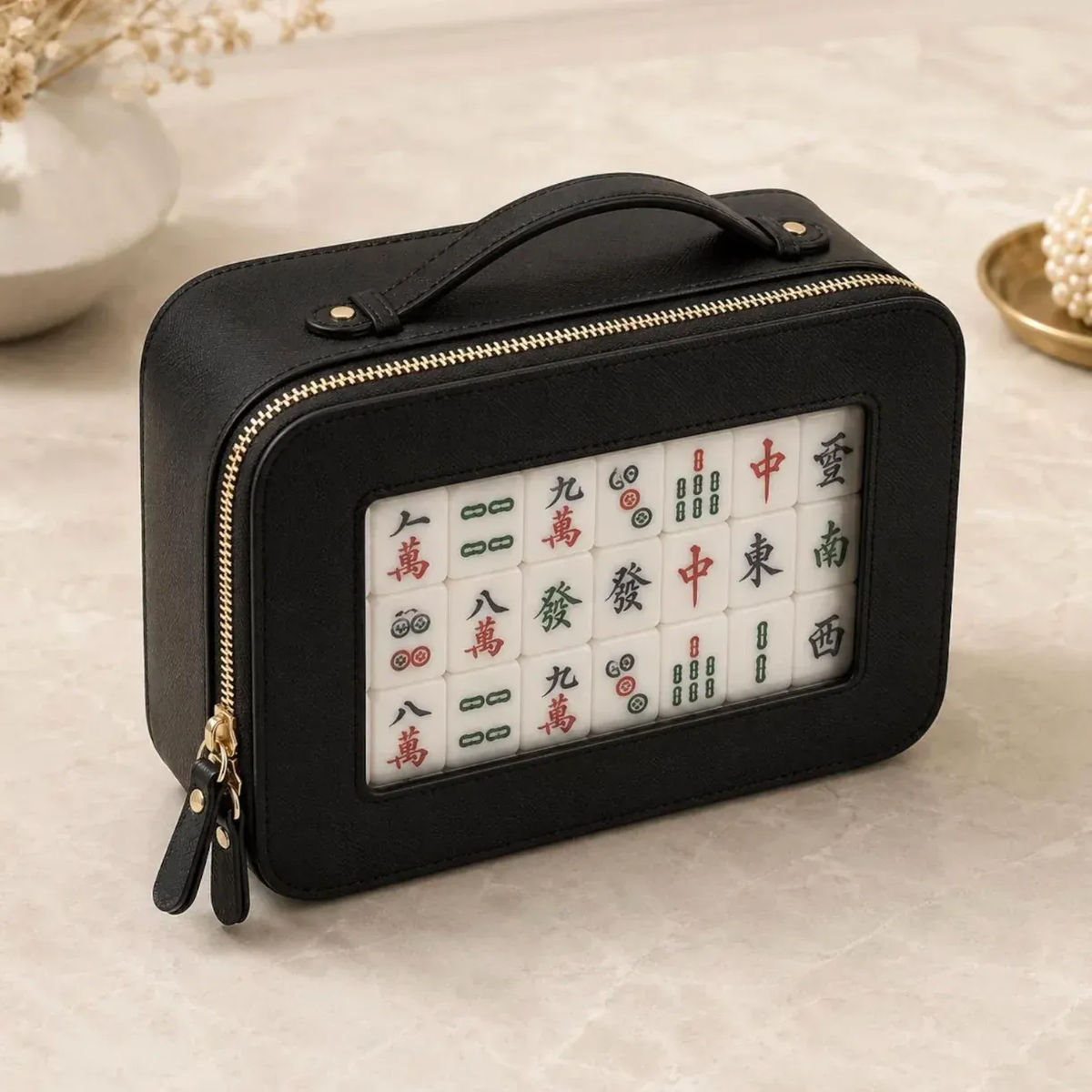
A quick comparison: Four common bag styles
Style | Best For | Capacity | Weight | Durability | Why Pick It |
Canvas Tote (one interior pocket) | Weekly local games, players who walk/bike | 1 set + 1 mat + racks | Light (under 1 lb empty) | 3–5 years casual use | Breathable, easy to wash, minimalist |
Nylon Duffel (shoulder strap + zipper) | Car commutes, players who sit in humid spaces | 1 set + 1–2 mats | Light-medium (1–1.5 lbs) | 4–6 years with care | Waterproof-ish, rolls open fully, organized |
Vinyl Rolling Case (wheels + retractable handle) | Long-distance travel, players with back issues | 2 sets + 2 mats + extras | Heavy (2–3 lbs) | 5–7 years if wheels maintained | Maximum protection, no lifting |
Compact Clutch (zippered pouch, no handle) | Solo tile storage, travel only, gift sets | 1 set (no mat) | Under 0.5 lbs | 2–3 years light use | Cheap, portable, fits in luggage |
Most of us go for the canvas tote or nylon duffel: they're the right size, survive regular washing, and won't embarrass you arriving at a game. A rolling case is worth it only if you attend regional tournaments or have a physical limitation that makes lifting difficult.
✨ Find your Mahstead set — free US shipping →
What to check before you buy
Before clicking "order," do this:
Measure your folded mat (or take a photo of one laid out). Compare length and width to the bag's interior depth and width. Allow 1 inch of slack on each side.
Confirm strap type. If you commute by car, a simple handle works. If you carry it on foot, aim for a handle drop of at least 8–10 inches or a cross-body strap.
Read the weight. Bags under 1 pound stay easy to carry when full; over 2 pounds, and fatigue sets in quickly on long walks.
Look at the zipper teeth. Metal zippers (YKK brand is common) outlast nylon coil zippers by 2–3 years. Check product photos closely.
Ask whether the bag fits your mahjong mats when folded. Not all bags accommodate our thickest mats—some are designed for thin yoga mats instead.
Check return policy. Most online sellers allow returns if the bag is unopened or unused. A few offer exchanges for a different size if you measure wrong.
Interior dimensions are everything. A bag listed as "large" might actually be 10 inches deep (too shallow for most mats when folded), while a "medium" might be 12 inches (perfect). Don't trust the name; trust the measurements.
Recommendations by player profile
The casual weekly player: You need a soft-sided tote with one interior pocket and a comfortable shoulder strap. Canvas or nylon, under 2 pounds empty, and at least 14 inches wide. You'll carry it car-to-table once a week—durability over flash. This is the sweet spot for value: you'll spend less, carry it easily, and it'll last 4–5 years.
The traveling tournament player: Go for a rolling case with a retractable handle and wheels rated for rough sidewalks. Interior depth should be 10 inches or more; confirm the wheel base is wide enough not to tip. You'll spend more, but you'll avoid back strain and protect your sets against airport baggage handlers.
The minimalist: You carry only tiles and dice; you already have a mat at home or borrow one. A compact zippered clutch or small nylon pouch (shoe-bag size) keeps your set dust-free and organized. Ideal if you store tiles in your car between games.
The serious set collector: You own multiple engraved American mahjong sets and want one bag that grows with you. Choose a large duffel or rolling case with 15+ inches of interior width. Confirm it can hold at least two full tile cases side by side, or tall enough to stack them vertically. This is an investment: a good bag here will serve you for 10+ years and pay for itself in convenience.
Why bag quality matters more than you'd think
A cheap bag tears after six months of weekly use, and you're shopping again. A mid-range bag lasts five years and carries the same weight. The difference isn't in features—it's in seam construction, material weight, and zipper quality. When you're spending under your budget, you're at the inflection point where an extra 10–15 dollars buys you a bag that lasts twice as long because the manufacturer upgraded from thin nylon to heavy-duty canvas, or from a plastic zipper to a metal one. We've seen players destroy a cheaply-stitched bag in one season of humid summer travel and swear off bags entirely—unfairly. The problem was the bag, not the concept. A thoughtfully-made bag is invisible: you don't think about it. You just grab your set, go to the game, and unpack. A bad bag makes noise, doesn't close right, and strains your shoulder. Browse our travel-bag collection and pay attention to the stitching in photos, the handle construction, and the zipper details. Those three things predict how long the bag will survive.

FAQ
Can a mahjong bag also fit a laptop or tablet?
Yes, if it's a spacious tote or duffel with at least 12 inches of width and a flat bottom. Lay a thin mat (under 0.5 inches thick) and your tile case side by side, then place a tablet or slim laptop on top. Avoid rolling cases—the interior is usually split into rigid compartments that won't flex for extra items.
What's the difference between a mahjong bag and a regular duffel?
Regular duffels are usually taller and narrower (made for rolled clothes), while mahjong bags are wider and shallower to accommodate a folded mat's rectangular shape. A duffel can work if it's at least 14 inches wide, but a purpose-built mahjong bag saves wasted interior space.
Do hard rolling cases really protect tiles better than soft bags?
Yes. Hard cases have rigid walls that prevent crushing if luggage is stacked on top. However, they're overkill for weekly car commutes to a friend's house. Soft bags with padding (at least 0.25 inches thick) are adequate for local play and cost much less.
Should I buy a bag with a built-in mat or a separate mat and bag?
Separate. Bags with built-in mats are usually too stiff to fold, take up permanent closet space, and are bulkier to transport. A separate bag lets you swap mats (thin for travel, thick for home) and gives you more packing flexibility.
How often should I clean a mahjong bag?
For canvas and nylon, machine-wash once per season if you play weekly, or if the bag visibly collects dust. Vinyl bags just need a wipe-down with a damp cloth every 3–4 months. Never dry-clean a mahjong bag (solvents degrade stitching). Air-dry completely before storing to prevent mold.
Can a mahjong bag fit on an airplane as a carry-on?
Most soft duffels under 22 inches long and 14 inches wide fit standard carry-on limits. Check your airline's exact dimensions; rolling cases often exceed the width limit. Clutches and small totes always fit.
What's the warranty on a mahjong bag?
Warranties vary by seller. Most don't offer warranties (bags are wear items), but many allow returns for manufacturing defects within 30 days. Ask before you buy if durability is your main concern.


View More
View More
View More
