
Mahjong Bag Dimensions: How to Choose the Right Size
Last updated: Nov 23, 2026
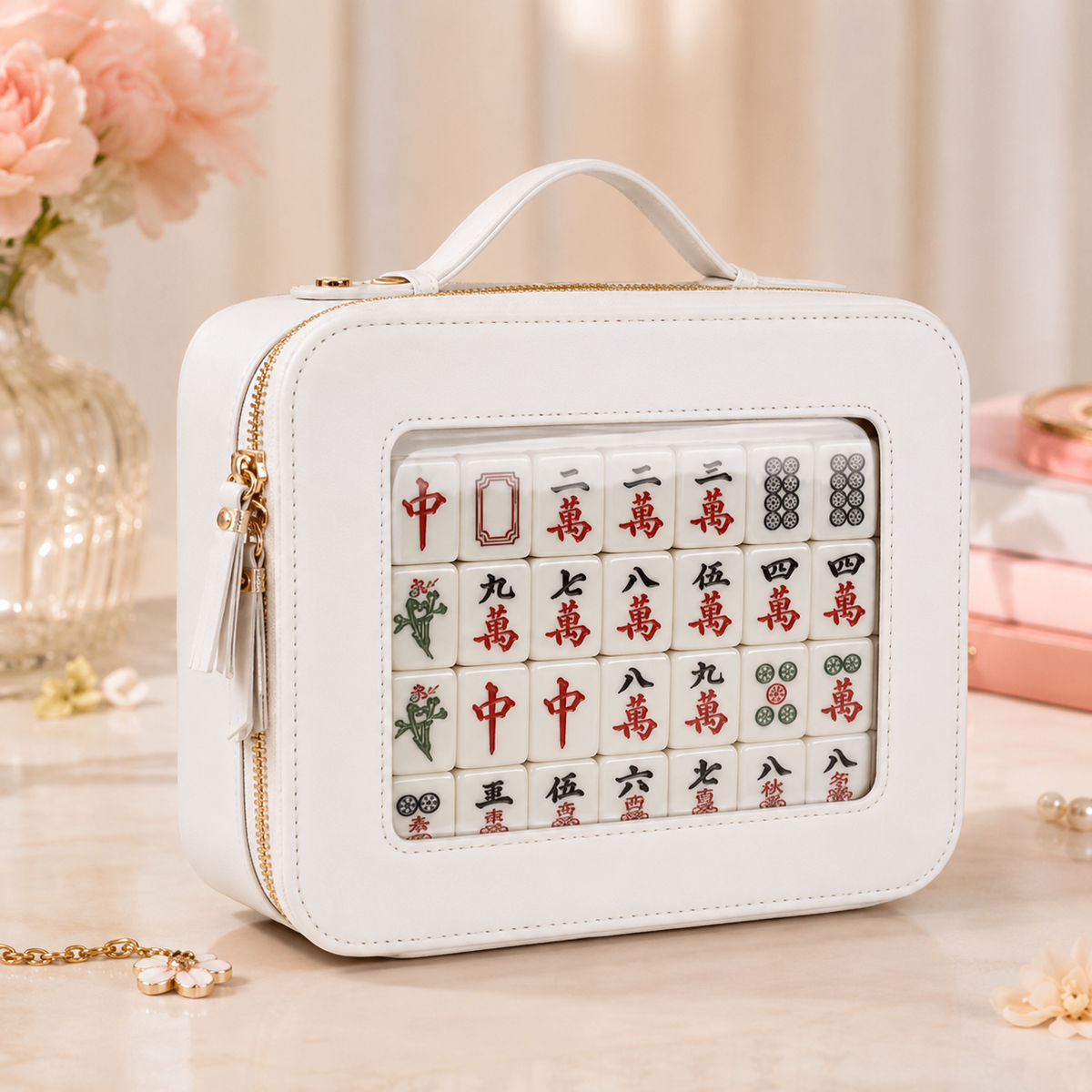
American mahjong bags come in two broad categories: compact carry bags (roughly 12×10×4 inches) for a set alone, and large travel cases (18×14×6 inches or bigger) for a complete setup with mat, racks, and pushers. The standard American set contains 152 playing tiles plus 8 jokers, which takes up minimal space—the real volume comes from your mat (typically 27×27 inches folded, or 36×36 unfolded) and four racks with pushers. Before buying, measure your mat when folded (most compress to 14×14 or 16×16 inches), confirm your rack length (usually 8–10 inches each), and add 2 inches of buffer. A bag labeled for "mahjong" on product pages should clearly state interior dimensions; if it only lists exterior size, subtract roughly 1 inch per dimension. Mahstead's travel bag collection includes options designed for full setups, with padding and compartments that protect your investment during transport.
What actually fits in a standard mahjong bag?
Most bags sold as "mahjong bags" fit one 160-tile set with racks, or one set with a mat. A full game setup—set, mat, four racks with pushers, and dice—requires a larger case or a bag explicitly labeled for the complete package. Interior dimensions are what matter: if a bag lists 15×12×5 inches interior, one standard acrylic set with four racks and pushers will fit snugly, but not a mat. A mat-plus-set combo requires at least 18×16×6 inches interior. Always fold your mat first (most acrylic or neoprene mats fold to a square or rectangle), then measure the folded size, then test-fit your racks alongside it before ordering a bag online. Never assume "mahjong bag" means it holds everything.

How do you measure your mat for packing?
Start with your mat unfolded on a flat surface and note its full dimensions—most American mahjong mats measure 27×27, 28×28, 30×30, or 36×36 inches. Then fold it as you normally would (lengthwise twice, then widthwise, or into quarters), measure the resulting rectangle, and write it down. If your mat is 27×27 unfolded and you fold it twice each direction, it compresses to roughly 14×14 inches. Add your racks (each usually 8–10 inches long and 2–3 inches wide) and a stack of dice, and you're looking at a footprint of about 14×14 with 3–4 inches height. How to choose a mahjong mat covers mat sizes in detail; the thicker the mat (neoprene or premium acrylic), the taller the folded bundle, so budget extra vertical space if you own a luxury mat.
What's the difference between interior and exterior bag dimensions?
Bag manufacturers list two sizes: exterior (the outer measurements of the bag itself) and interior (the usable space inside). The difference is usually 0.5–1.5 inches per dimension, depending on how thick the bag walls and padding are. A bag with 16-inch exterior length might have only 14.5–15 inches of actual packing space. When you shop, prioritize interior dimensions—they're what determine whether your mat and racks actually fit. If a product page shows only exterior dimensions, contact the seller before purchase, or estimate conservatively (subtract 1 inch from each dimension). Reputable bags on product pages always list both; if only one is shown, it's usually a sign the bag may be tighter than advertised.
Bag types and what each one holds
Bag type | Best for | Typical interior size | What fits ---|---|---|--- Compact set bag | Solo player or gifts | 12×10×4 inches | Set + racks only Shopper tote | Casual player | 14×12×5 inches | Set + one rack, no mat Small travel case | Set + mat | 16×14×6 inches | Set + folded mat, tight fit Medium travel case | Full setup | 18×16×7 inches | Set + mat + racks + dice Large hard case | Frequent traveler | 22×18×8 inches | Multiple mats, sets, extras Soft shoulder bag | Lightweight carry | 15×13×5 inches | Set + racks + dice, no mat
Choose based on what you actually transport each week. If you host at home and play with one set, a compact bag works fine. If you travel to tournaments or rotate among friends' houses, invest in a medium case that holds set, mat, and racks together.
🀄 Shop best-selling mahjong sets →

How do you pack a mahjong bag to maximize space and protect tiles?
Fold your mat first and place it flat on the bottom of the bag, smooth side down if it's printed. Set your racks on top of the mat, nestled parallel to each other or in an X pattern (whichever fits your bag footprint). Place the tile set—whether in a wooden caddy, acrylic carrier, or loose tiles in smaller pouches—on top of the racks or in any remaining gap; acrylic tiles are durable and resist scratching, but they can still chip if knocked hard. Dice, pushers, and small items go into side pockets or a zippered pouch so they don't rattle. If your bag has padding, it's already protecting the contents; if it's unpadded, consider adding a thin foam sheet between layers. Always check that racks don't slide around—use the bag's interior straps or secure them with a soft elastic band. Never overstuff or force the zipper shut; if it's tight, you've overpacked.
🎁 See our most-loved mahjong sets & accessories →
What to check before you buy a mahjong bag
Interior dimensions matter more than exterior. If the product page lists only exterior size, estimate conservatively or ask the seller for interior measurements before ordering.
Measure your mat folded, not unfolded. An unfolded 36×36-inch mat folds to roughly 18×18, which still needs space around it for racks and tiles.
Count what you actually carry weekly. Do you pack a mat every time? One set or two? Dice and spare tiles? Buy a bag that fits your typical game, not your maximum possible load.
Check for compartments or straps. Bags with adjustable dividers, zippered pockets, or elastic loops keep your racks and set from shifting during travel.
Test padding thickness. Neoprene or foam padding adds 1–2 inches to exterior dimensions but protects tiles during bumps—worth the trade-off if you travel frequently.
Verify exterior materials. Canvas and nylon resist wear; vinyl lasts years. Hard cases protect against crushing if you store the bag in a car trunk; soft bags are lighter for hand-carry.
Read reviews or product photos if available. Look for real-user photos showing a complete setup packed inside—that's your best proof of fit.
✨ Find your Mahstead set — free US shipping →
Why Mahstead bags pair well with Mahstead sets
When you buy an engraved American mahjong set or best-selling set, you already know the exact tile count (160-tile sets contain 152 playing tiles plus 8 jokers) and acrylic build. Mahstead's travel bags are designed with those dimensions in mind, so the padding and compartments align with acrylic tile stacks and standard-length racks. If you pair a Mahstead set with a Mahstead mat and a Mahstead travel bag, you avoid the guesswork of mixing brands with slightly different footprints. You'll also have consistent quality—the same care that goes into precision-cut tiles and durable acrylic also goes into bag stitching and closure hardware.

FAQ
Can a mahjong bag hold a mat and a set together?
Yes, if the interior is at least 16×14×6 inches. Fold your mat into a square or rectangle first, then measure the result. Smaller mats (27×27 unfolded) fold compact; larger ones (36×36) may need a bigger bag or two separate bags.
What's the best way to protect tiles during transport?
Use a padded bag (neoprene or foam at least 0.25 inches thick), pack the mat flat on the bottom, nest racks on top, and place tiles on the racks or in a secure caddy. Avoid overstuffing or slamming the bag closed.
Why do some bags list only exterior dimensions?
Exterior dimensions are easier to photograph and list; interior dimensions require careful measurement. Always ask a seller for interior size if it's not posted—that's the number that determines whether your set actually fits.
Can I use a regular tote bag instead of a mahjong bag?
You can carry a set in any bag, but mahjong bags include padding, compartments, and straps sized for mats and racks. A regular tote risks tile chips and mat creases over repeated use, especially if you travel weekly.
How much does a good mahjong travel bag weigh?
Soft bags (canvas, nylon) weigh 1–2 pounds empty; hard cases weigh 3–5 pounds. If you hand-carry the bag regularly, soft is more practical; if you store it in a car, hard cases protect better.
What size bag do I need if I host a weekly game at home?
A compact 12×10×4-inch bag for one set and racks is plenty. You won't move it often, so prioritize protection over portability—padded is better than thin.


View More
View More
View More
