
Luxury Mahjong Racks with Pushers: What to Choose
Last updated: Nov 23, 2026

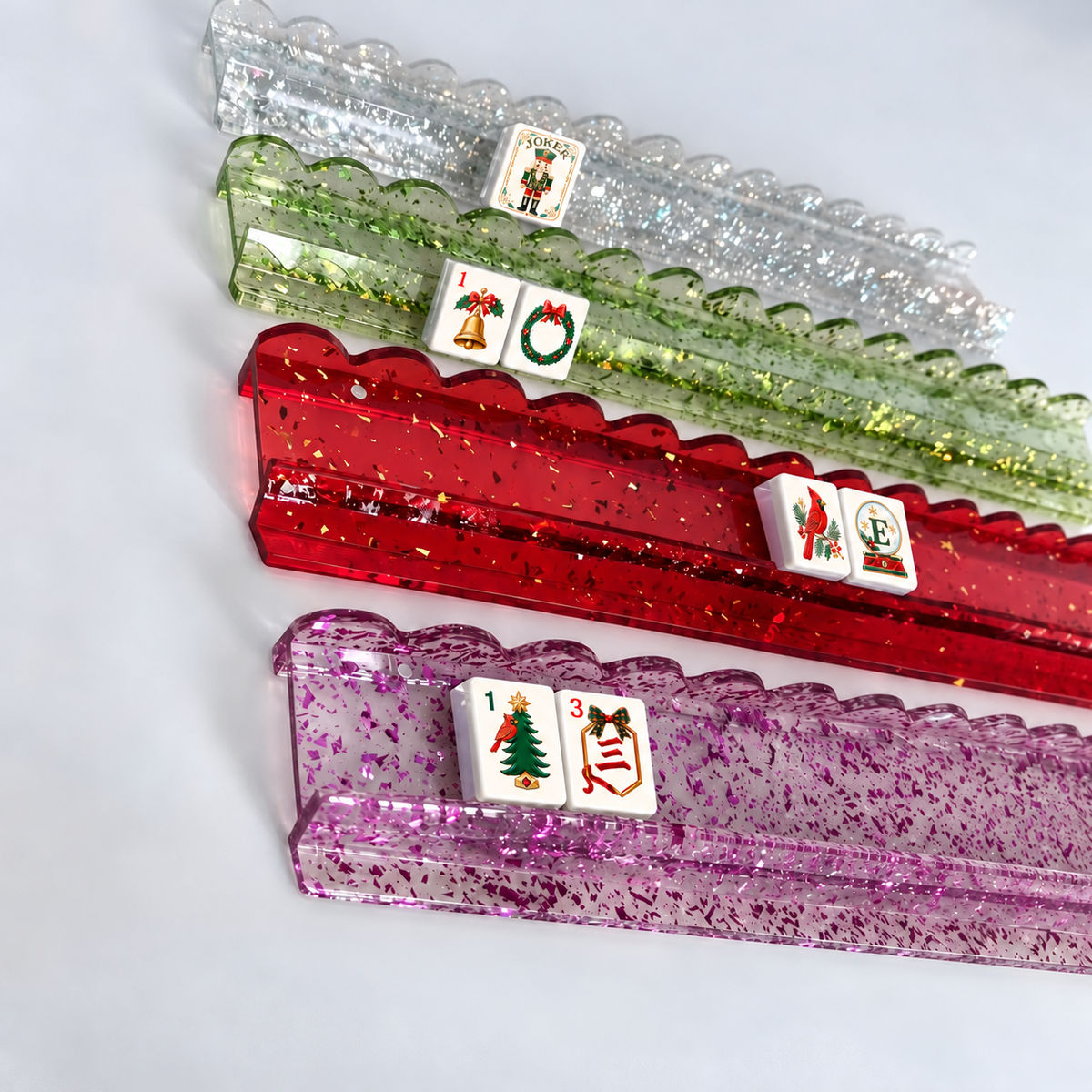
Luxury mahjong racks with pushers are handheld tile organizers—typically bamboo, acrylic, or composite—that hold 13–18 tiles upright and include a pusher stick to nudge tiles into place without dropping them. We use them at every weekly game because they reduce fumbling, keep hands steady for older players, and protect tile edges during play. They're sold individually or bundled with sets; a single rack costs less than most full solutions. Mahstead offers racks designed to match acrylic American mahjong tiles in weight and balance. Before buying, check tile width (some racks fit only standard-thickness tiles) and pusher grip comfort—both affect real-world play.
A quality rack with pushers transforms how you hold and play tiles. We compare design options, durability, and fit to help you choose.
What makes a rack "luxury" rather than budget?
Premium racks use denser materials, precise joinery, and refined pusher mechanisms that won't jam or wear. They feel heavier, slide smoothly over tile edges, and keep their finish after 200+ games. Budget racks often have flimsy pushers or racks that warp when tiles press sideways. Luxury versions prioritize grip comfort—the top edge curves to support your palm for a full four-hour session. The difference shows in the first 20 minutes of play.
🀄 Shop best-selling mahjong sets →

Do I really need a rack if I'm a casual player?
If you play once a month, no. If you play weekly, yes—the reduction in fumbles, tile damage, and hand fatigue pays for itself in game quality. Casual players often discover they've bent or lost joker tiles simply from holding 14 tiles unsupported. A rack also levels the table: every player using one plays at the same confidence level and speed. New players especially benefit; a good rack removes the distraction of "am I dropping a tile?"
What's the difference between acrylic and bamboo racks with pushers?
Rack Type | Material | Weight Feel | Durability | Grip Feel | Best For |
Acrylic luxury | Translucent acrylic | Light, precise | Excellent; won't crack | Cool, smooth | Matching acrylic tile sets |
Bamboo classic | Bamboo with finish | Warm, traditional | Good; can splinter if dry | Warm, natural | Players who love natural materials |
Composite hybrid | Resin + wood blend | Medium | Very good; won't warp | Slightly textured | Players wanting durability + warmth |
Acrylic racks are ideal if you own one of our best-selling mahjong sets with acrylic tiles—they match weight and slide predictably. Bamboo suits players who value tactile tradition; they need occasional oil to prevent drying. Composite racks bridge both worlds: they resist warping (unlike bamboo in dry climates) and cost less than premium acrylic.
How do pushers vary, and why does that matter?
A pusher is a thin stick (often 6–8 inches) used to slide tiles up into the rack without your fingers touching the top edges. Budget pushers are flimsy plastic; premium ones have:
Tapered edges (slide under tiles without catching)
Textured grip (won't slip when hands sweat)
Slight flex (bends slightly rather than breaking)
Sized for standard tile thickness (14–16mm tiles, depending on set)
If a pusher is too thick, it wedges between tiles and bends the rack. If it's too thin, it flexes mid-push and the tile lurches. Test the pusher in your hand before buying; if the grip is slick plastic, you'll lose it by game three. Mahstead racks pair pushers sized for our 160-tile acrylic sets, so they fit standard American tile dimensions.
✨ Find your Mahstead set — free US shipping →

Should I buy a rack as part of a full set or separately?
Full-set bundles (rack + tiles + mat) are cheaper per item but lock you into one color scheme. Buying separately lets you mix—say, acrylic tiles in one color with a natural bamboo rack. If you already own a mahjong set from our collection, a single luxury rack upgrade costs far less than replacing everything. Conversely, if you're starting fresh, a bundle ensures the pusher actually fits your tiles. We recommend bundles for newcomers; experienced players usually upgrade racks independently as preferences evolve.
Comparison: Five Real Scenarios
Scenario 1: Weekly game host (serious) You need 4 racks for guests. Buy them separately in one style so they match visually and everyone has the same playability. Acrylic racks avoid splinter complaints. Expect to invest moderately in quality; durability matters when others touch your equipment.
Scenario 2: Casual 2-player couple One luxury rack each is plenty. Choose whichever material appeals to you both; the difference is aesthetic, not functional at that volume. A bamboo rack with a warm finish fits a living-room vibe.
Scenario 3: New player (beginner) Start with a composite or acrylic rack bundled with a tile set—one decision, one shipment. You'll learn which materials you prefer before investing in multiple racks.
Scenario 4: Collector with multiple sets Buy one luxury rack per set color. You'll rotate them with different engraved mahjong sets, so racks become part of the aesthetic. This is where luxury materials pay off emotionally.
Scenario 5: Tournament player Bring your own rack to ensure consistency. Use acrylic if your home set is acrylic; the feel will be identical. A travel-grade mahjong bag protects the rack in transit.
🎁 See our most-loved mahjong sets & accessories →
What to check before you order
Tile thickness: Measure one of your tiles from edge to edge (14–16mm for standard American sets). Confirm the rack's interior width accommodates that width plus slight room for the pusher.
Pusher grip: Is it textured or smooth? Smooth plastic is slippery; textured material (rubber, ridged plastic) stays in hand.
Material finish: Bamboo racks should feel sealed or oiled, not dry or rough. Acrylic should be smooth without rough edges.
Capacity: Standard racks hold 13–15 tiles; some luxury models hold 18. Know if you prefer a smaller, tighter grip or room to adjust.
Pusher length: Confirm it's proportional to the rack—a 4-inch pusher won't reach the far end of a 7-inch rack.
Bundle fit: If buying as a bundle, the pusher should move freely inside the tile set's box or bag for storage.
Visit the mahjong racks collection to see current options and specifications. Free US shipping applies to all orders.
FAQ
Can I use a budget rack with a luxury tile set?
Yes, but you'll lose the tactile quality. A luxury set in standard acrylic deserves a pusher that moves smoothly—a flimsy budget pusher feels clumsy by comparison.
Do racks ever need maintenance?
Bamboo racks benefit from light oil every 6–12 months if your home is dry. Acrylic and composite racks need only a soft wipe; they don't absorb moisture or wear.
Will a rack fit tiles from any American mahjong set?
Not always. Check tile thickness first—non-standard sets (very thin or very thick) may not fit snugly. Our racks are sized for standard 160-tile acrylic sets.
Can I carry a rack loose in a bag during travel?
Not safely. A mahjong travel case or bag protects the rack and pusher from damage and keeps them with your tiles.
What's the lifespan of a luxury rack?
With weekly play, 3–5 years before visible wear. Pushers wear faster than racks; replacing the pusher alone (if available separately) extends the rack's life.


View More
View More
View More
