
Luxury Mahjong Rack Bag: What to Choose for Travel
Last updated: Nov 23, 2026
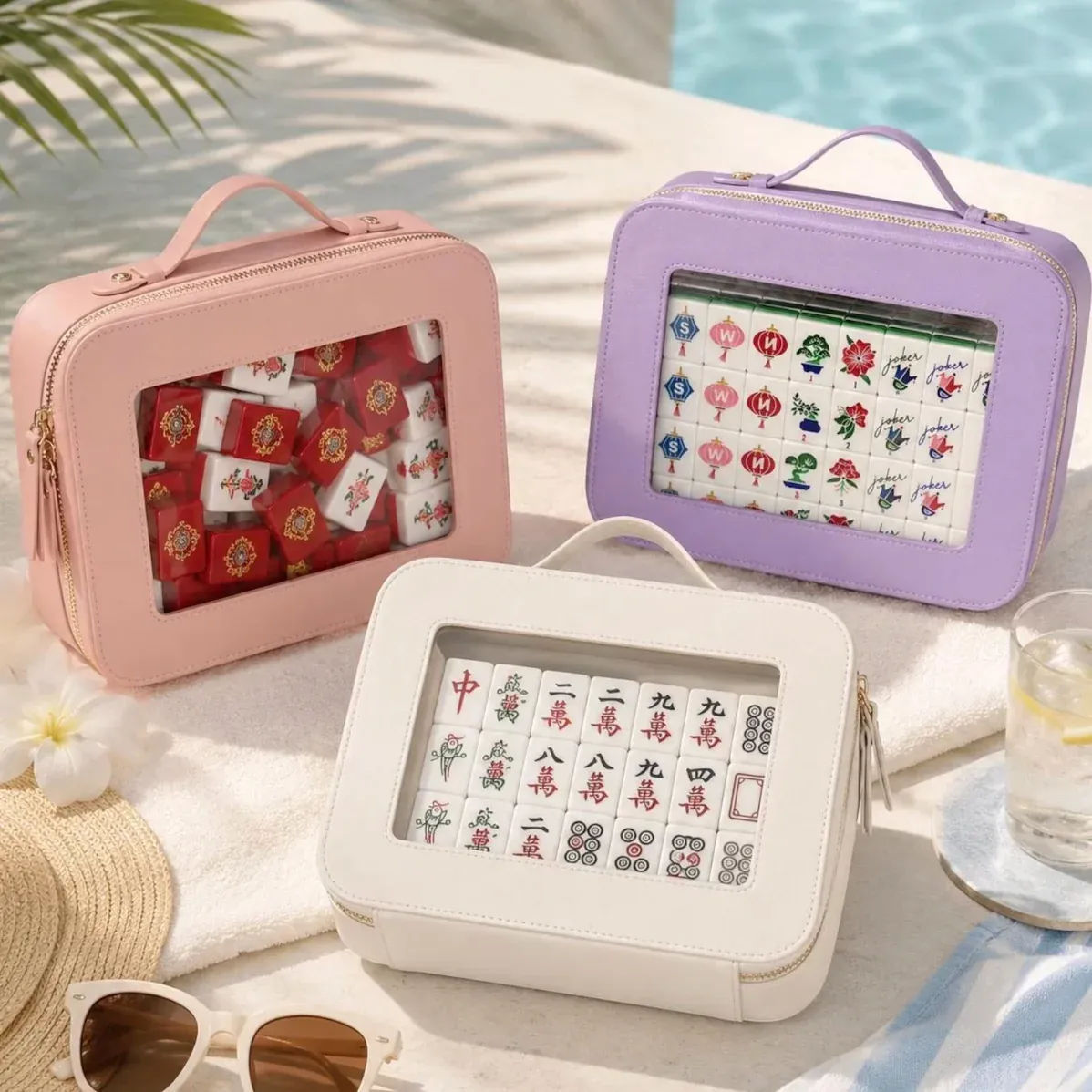
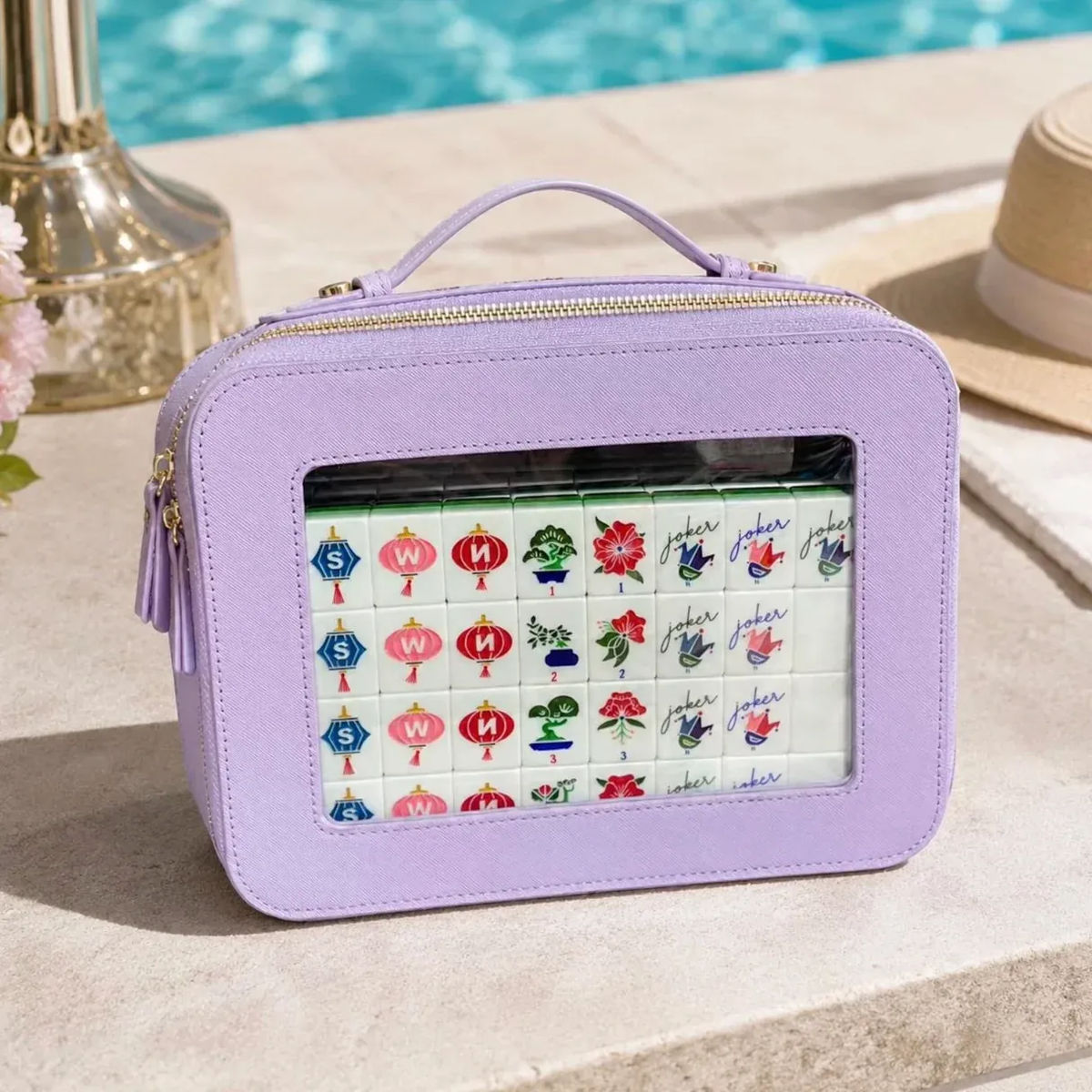
A luxury mahjong rack bag is a padded case designed to hold a full 160-tile American mahjong set, racks with pushers, and dice—often with compartments for tiles, scoring tokens, and cards. These bags range from structured hardcase designs to soft fabric carriers with internal dividers, typically measuring 12–16 inches wide to fit standard acrylic set boxes. Mahstead offers bags in the travel-bag collection with options ranging from everyday canvas to premium padded styles. Cost varies by material and padding thickness; see current price on the product page. Avoid thin plastic-lined bags without foam, which won't protect tiles during bumpy transport, and check that compartments match your set's footprint before ordering. A good luxury bag keeps tiles from shifting, zippers smooth, and straps comfortable for regular travel between weekly games.
Why a dedicated mahjong bag beats a shoebox?
Most of us start throwing our set in a random tote and end up with cracked tiles by season's end. A dedicated bag has internal structure—foam padding, elastic tie-downs, or velvet-lined slots—that prevents tiles from sliding and colliding mid-transport. Hard-sided cases absorb shock; soft padded bags compress into car trunks without taking up closet space when you're not hosting. A shoebox lacks ventilation and stacks poorly with other items; a proper bag has carry handles, shoulder straps, or wheel-ready profiles. The difference shows up after two months of weekly games: tiles stay flush, racks don't bend, and your dice remain in the same pocket every time.
🀄 Shop best-selling mahjong sets →

What size bag do you actually need?
An American mahjong set plays with exactly 152 tiles, plus 8 jokers and spare tiles—all fitting into a standard acrylic tile box roughly 10 × 14 × 4 inches. Your bag must accommodate that box, plus racks with pushers (which add 1–2 inches thickness), dice, and the current year's card. Look for interior dimensions of at least 11 × 15 × 5 inches (depth × width × height) to avoid forcing the tile box or crushing racks. Many luxury bags add a second compartment for scorecards and tokens, so total capacity should feel roomy, not snug. If you host doubles or keep backup sets, measure twice: a cramped bag creates habits of leaving items behind, which ruins a game mid-session. Soft bags compress slightly; rigid cases don't, so plan for the material type when checking dimensions.
Hard case vs. soft-padded bag—which is luxury?
Both can be luxury; the choice depends on how often you move your set. A hard-sided case (rigid shell with foam-lined interior) offers maximum tile protection, resists punctures, and looks polished in a car trunk or as a table centerpiece before play—ideal if you travel by car weekly or fly with your set. A soft-padded bag (thick canvas or faux-leather with quilted lining) weighs less, fits into crowded bags, and rolls up smaller when empty—better if you walk to games, store sets in tight spaces, or host at different homes. Hard cases tend to cost more and take up fixed space; soft bags are often lighter and more flexible. Many of us own both: a hard case for road trips and a soft bag for weekly neighborhood games. Neither is "more luxury" than the other—it's about your actual routine. Check whether the bag includes wheels, whether pockets have zippers (open pockets spill dice), and whether the material resists staining.
🎁 See our most-loved mahjong sets & accessories →
Comparison: Five styles and who they fit
Bag Type | Best For | Key Feature | Check Before Buying |
Rigid hardcase with handle | Weekly car transport, durable protection | Foam-lined, rigid shell, padded dividers | Fits your tile box snugly; check handle comfort |
Soft quilted tote with shoulder strap | Walking to games, flexible storage | Lightweight canvas/faux-leather, compressible | Interior pockets zipped; strap width for comfort |
Roll-on luggage style | Monthly travel, car/train/plane | Wheels, extendable handle, TSA-friendly locks | Wheel durability rated; check tile box clearance |
Vintage-inspired leather case | Collectors, decorative display | Aesthetic appeal, brass hardware, leather exterior | Waterproof lining; weight capacity for full set |
Custom-engraved canvas bag | Gifts, personalized host sets | Name/monogram, durable cotton, premium stitching | Lead time; confirm engraving fits bag size |
Your routine dictates which style pays off: daily players who host rotating venues benefit from soft, packable bags; traveling players or those shipping sets benefit from hard cases with corner protection.

What features separate good from great?
A luxury mahjong bag should have zippered compartments, not open pockets—tiles and dice stay put during bumpy rides. Padding thickness matters: at least ½-inch foam or quilted batting prevents tile cracks if the bag is dropped or sits under luggage. Straps should be reinforced at seams and wide enough not to dig into shoulders when carrying a full set. Interior dividers or custom foam inserts keep the tile box from shifting; elastic or Velcro straps hold racks in place. Look for water-resistant or waterproof lining (crucial if you're caught in rain walking to a game). Corner guards on hard cases prevent dents. A pocket sized for scorecards, a pen holder, or a dedicated dice sleeve is the difference between "functional" and "you thought of everything." Test zippers by hand before ordering; cheap zippers fail within months. Reinforced stitching at stress points (handle attachment, zipper seams) extends the bag's life through hundreds of games.
How to choose between sets: a decision framework
Start by answering three questions in order:
How often do you move your set? If it lives at one table and only travels 2–4 times per year, a soft bag is fine. If it moves weekly or monthly across different homes or cities, invest in a hard case or roll-on bag.
What is your storage space like? Hard cases stack neatly on shelves but take up fixed volume. Soft bags fold flat and squeeze into closets. Choose accordingly.
Do you want integrated organization or flexibility? Luxury rigid cases come with pre-cut foam inserts that lock tiles in place but can't adapt to a new set design if you buy another. Soft bags with velcro pockets adapt to multiple sets and racks.
Once you've answered those, check the mahjong bags and cases guide for deeper technical comparisons and care tips that preserve your investment.
✨ Find your Mahstead set — free US shipping →
What to check before you buy
Measure your tile box and longest rack, then add 1 inch in each dimension to confirm interior fit. Look at product photos from multiple angles and read descriptions for zippered vs. open pockets. Check whether the bag is water-resistant (not just water-resistant fabric, but sealed seams and zipper covers). For soft bags, confirm the shoulder strap is rated for the weight of a full set (roughly 3–5 pounds). For hard cases, verify that corner guards are reinforced plastic, not cheap foam. If you're ordering a custom-engraved bag, confirm the engraving placement fits the space and that lead times don't delay hosting your game. Test the zipper yourself if buying in person; don't rely on photos. Ask whether replacement parts (zippers, straps, padding) are available if the bag sustains damage after a year of use. Free shipping across the US applies to most orders; confirm that the bag ships flat-boxed or compressed, not rolled, to prevent permanent creasing.
FAQ
Can I use a mahjong bag to travel by air with my set?
Yes, if it meets airline carry-on or checked-bag dimensions. Hard cases are more likely to survive baggage handling. Check your airline's size limits (typically 22 × 14 × 9 inches for carry-on) and whether the case is TSA-inspectable. Soft bags compress slightly, making them more flexible for narrow spaces. Never pack your set under luggage without padding; tiles will crack.
What's the difference between a mahjong bag and a regular game organizer?
A mahjong bag is built to protect a full 160-tile set during transport, with tile-box-sized compartments and heavy-duty padding. A regular organizer is lighter, designed for storage at a single location, and often lacks the durability needed for repeated travel. Mahjong bags have straps, wheels, or carry handles; organizers usually don't.
Do I need separate bags for my set and my racks, or one big bag?
One well-sized luxury bag is better. It keeps all game pieces together, prevents lost racks or dice between sessions, and simplifies packing. If you own two sets or regularly switch between two different mahjong racks with pushers, a second small bag for backup pieces makes sense, but one main bag reduces chaos.
How do I prevent tile damage inside a bag during travel?
Keep tiles in their original acrylic box (never loose in the bag), pad the box's corners with foam, and use zippered compartments to prevent tiles from sliding. Never overstuff; air pockets absorb shock. For long car rides, place the bag on a seat, not the floor or trunk, where it absorbs more vibration.
Are there any bag materials I should avoid?
Avoid thin vinyl or unpadded canvas—they don't protect tiles and tear quickly. Skip bags without zipper compartments; tiles and dice spill during travel. Unlined hard cases also cause problems: tiles rattle and get scratched. Always choose padded or foam-lined interiors rated for fragile game pieces.
Can I customize a mahjong bag with my name or game group's logo?
Yes, many luxury bags offer engraving or embroidery. Confirm lead times (typically 1–2 weeks for custom work) before ordering if you need the bag for an upcoming game. Engraved bags make great host gifts or retirement presents for long-time players, especially if paired with a personalized mahjong set.


View More
View More
View More
