
Luxury Automatic Mahjong Table: What to Know Before You Buy
Last updated: Nov 23, 2026
A luxury automatic mahjong table is a motorized furniture piece that shuffles a full 152-tile set, sorts it into stacks, and deals tiles to all four players—eliminating the manual setup that takes 10–15 minutes in a traditional game. These tables typically cost significantly more than standard play surfaces and require electricity, space (4–5 feet on a side), and regular maintenance. They suit serious weekly players in dedicated game rooms or clubs who want speed and repeatability. Most are built overseas and ship as flat-pack or assembled units; assembly time ranges from 30 minutes to several hours depending on the model. For casual home players or those who travel, a quality mahjong mat with hand-shuffled play is faster to set up, store, and carry—and offers the tactile ritual many players value.
An automatic mahjong table mechanically shuffles a full 152-tile set, sorts it into stacks, and deals tiles to all four players—eliminating the manual setup that takes 10–15 minutes in a traditional game. These tables typically cost significantly more than standard play surfaces and require electricity, space (4–5 feet on a side), and regular maintenance. They suit serious weekly players in dedicated game rooms or clubs who want speed and repeatability. Most are built overseas and ship as flat-pack or assembled units; assembly time ranges from 30 minutes to several hours depending on the model. For casual home players or those who travel, a quality mahjong mat with hand-shuffled play is faster to set up, store, and carry—and offers the tactile ritual many players value.
Does an automatic table really save time compared to shuffling by hand?
Yes—but less than you'd expect. Hand shuffling and dealing takes 10–15 minutes; an automatic table does the same work in 3–5 minutes, then requires another 2–3 minutes to inspect tiles for jams, reset the machine, and verify the deal is correct. The real gain is consistency and ease, not pure speed. If you play four games a night, you recover 20–30 minutes total. Serious club players value this; casual home groups often find the ritual of shuffling meditative and don't notice the time loss.
Who should actually buy an automatic table versus a mat?
Automatic table buyers are: dedicated players hosting 2+ games weekly in a fixed room; clubs running tournaments; players with mobility issues who find hand shuffling painful; players who want to eliminate argument about fair shuffling. Mat buyers are: players who host occasionally; anyone traveling or with limited storage; budget-conscious players; those who enjoy the tactile game experience. Consider also that a mat rolls up and stores in a closet; an automatic table stays in place year-round. Our best-selling mahjong sets work equally well on either surface.
🀄 Shop best-selling mahjong sets →
What should you look for in build quality and durability?
Check the motor's wattage (higher = more reliable shuffling), the sturdiness of the dealing arms and tile chutes, and whether the table has a tray for jokers and spare tiles. Look for reinforced joints, metal rather than plastic hinges, and a cover to protect against dust. Read user reports about noise level (some models are very loud) and whether the machine's shuffle pattern truly randomizes or shows bias toward certain stacks. Ask whether replacement parts (a motor, chute, dealing arm) are available and what they cost. A table that needs parts ordered from overseas can mean weeks without play.
What's the real price range, and what comes with it?
Automatic tables range widely based on origin, materials, and features. Entry-level models often cost less than premium furniture but skimp on motor durability and noise isolation. Mid-range tables include better motors, faster cycle times, and more precise dealing. High-end tables feature quieter operation, luxury felt surfaces, and integrated scoring screens. Most arrive as flat-pack and require assembly; some come pre-assembled at higher cost. Almost none include a mahjong set—you must buy tiles separately. Check whether the vendor covers shipping and whether assembly is included or costs extra.
✨ Find your Mahstead set — free US shipping →
How does an automatic table work, and what can go wrong?
The machine tumbles tiles in a internal drum or hopper to shuffle them, then routes them into four stacks via chutes. Dealing arms push stacks toward each player. Common failure points: tiles jam in the chutes (especially if tiles warp or have rough edges); the motor strains under repeated use and burns out; springs or catches wear out after thousands of cycles; the table goes out of level and stacks don't align. Prevention: use only the tiles approved for that machine, inspect before each use for warping, wipe tiles occasionally, and keep the machine on a level surface. Many vendors don't support repairs after the warranty expires—know the terms before buying.
🎁 See our most-loved mahjong sets & accessories →
Automatic table vs. quality mat: a quick comparison
Feature | Automatic Table | Quality Mat |
Setup time | 3–5 min | 2–3 min (shuffling included) |
Cost basis | High (furniture range) | Low to moderate |
Storage | Permanent placement | Rolls and stores |
Portability | Not portable | Highly portable |
Ritual/feel | Fast, mechanical | Hand-shuffled, tactile |
Maintenance | Motor, chutes, springs | Occasional cleaning |
Noise | Audible | Silent |
Who likes it | Club players, frequent hosts | Home players, travelers |
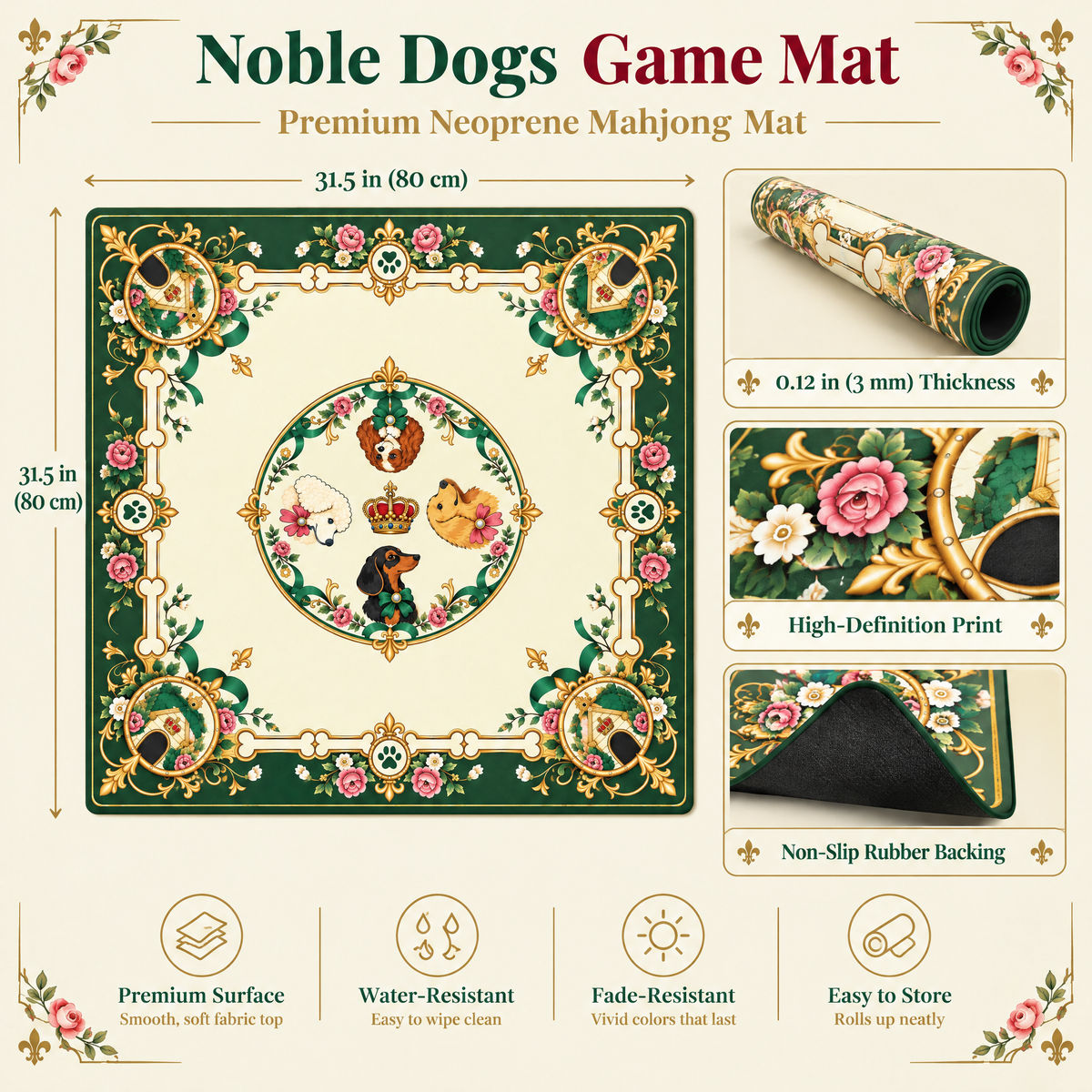
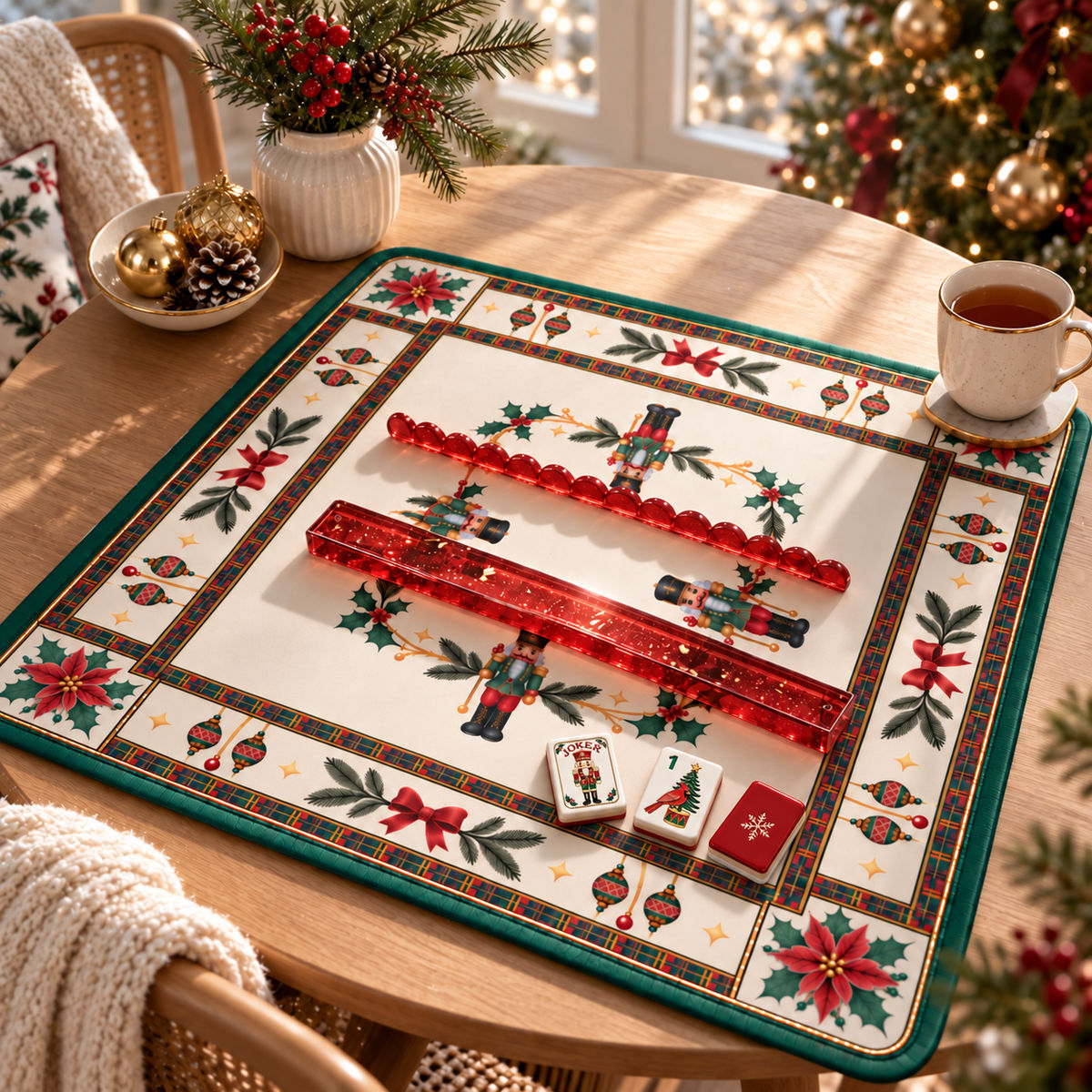
For most home games, a mahjong mat paired with racks and pushers strikes the balance: organized play without the cost and space commitment.
What to check before you order
Measure your space: automatic tables need 4–5 feet on each side, plus room to sit and reach across. Confirm dimensions in the product listing.
Power source: verify you have an outlet nearby and that the voltage matches your region (most ship for 110V US standard, but confirm).
Tile compatibility: ask the vendor which tile sizes and materials the machine accepts. Oversized or extremely thick tiles may jam.
Assembly and support: clarify whether assembly is included, costs extra, or is required. Ask if support is available after delivery.
Warranty and returns: read the fine print. Most have 30–90 day return windows and limited warranties on the motor.
Noise and vibration: if your game room is shared or has neighbors, ask about decibel level and whether the table needs to be bolted down.
Spare parts availability: ask whether the motor, chutes, and springs are stocked locally or must be ordered overseas. Lead times matter.
Automatic tables suit players ready to invest in dedicated, high-frequency play. If you're still building your game or rotate hosts, a quality mat and organized tile storage keeps you flexible and lets the game breathe.
FAQ
Can I use any American mahjong set in an automatic table?
Most machines accept standard 160-tile acrylic sets, but confirm tile thickness and dimensions with the vendor first—oversized or warped tiles jam chutes.
Do automatic tables shuffle fairly, or do they have a bias?
The best ones randomize well, but cheaper models sometimes show slight bias toward certain stacks; read user reviews on shuffle consistency before buying.
What's the noise level like, and can I use it in an apartment?
Most automatic tables produce 70–85 decibels (comparable to a vacuum). If walls are thin, neighbors may notice during play—check the product specs or ask the seller.
How often do automatic tables need maintenance?
Wipe tiles every few months, check chutes for debris, and listen for motor strain. Most need professional service only if parts fail, which can occur after 2–5 years of heavy use.
Is an automatic table worth it for a casual home game?
Probably not—the cost, space, and setup complexity outweigh the time savings for players who host once or twice a month. A mat is faster to deploy and store.
Can I return an automatic table if it doesn't fit my space or I change my mind?
Most vendors offer 30–90 day returns, but shipping costs (and flat-pack reassembly) fall on you. Confirm the policy in writing before ordering.


View More
View More
View More
