
Korean Mahjong Winning Hands: Rules & Hand Types Explained
Last updated: Nov 23, 2026
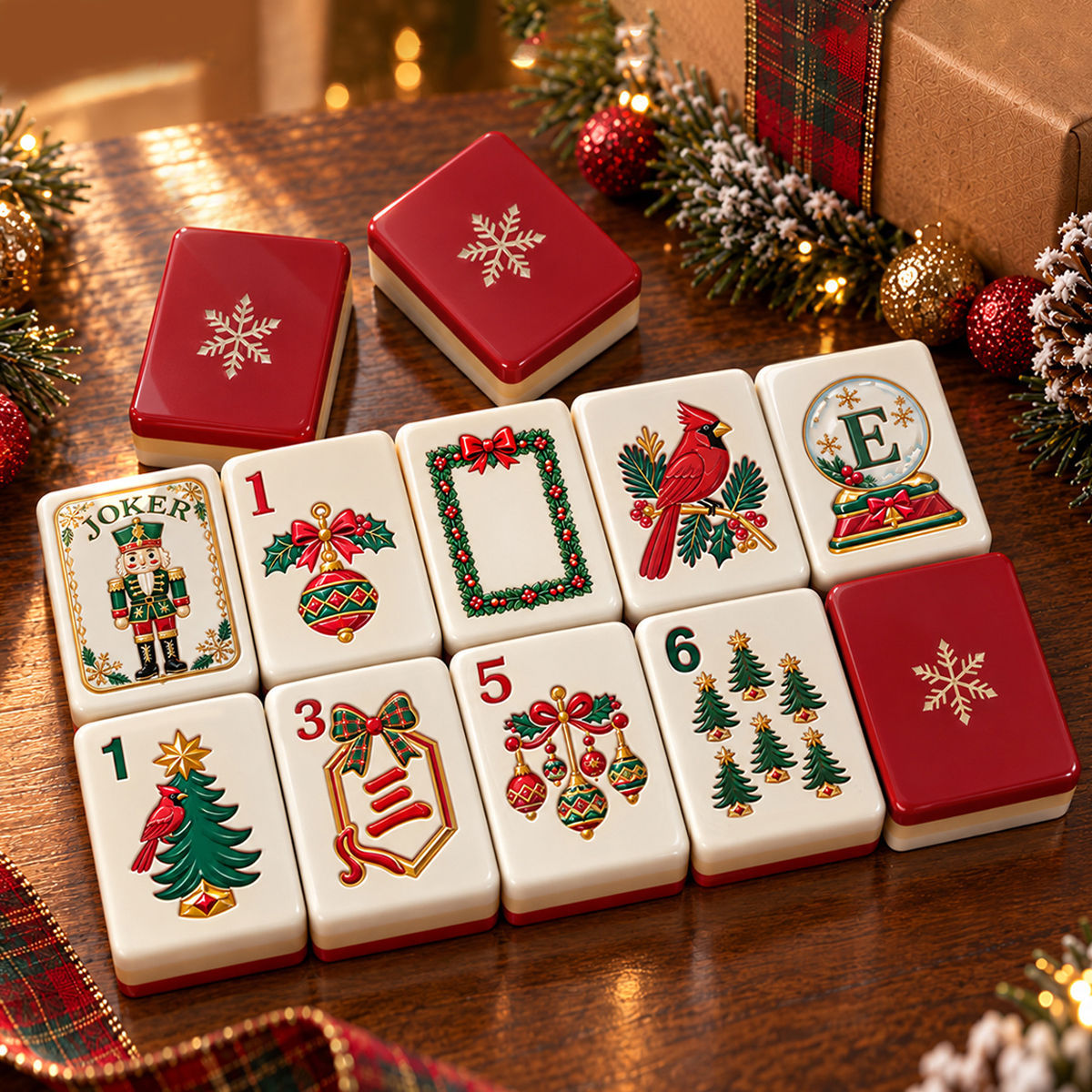
Korean mahjong winning hands require 14 tiles arranged as four melds plus a pair (eye). Unlike American mahjong, Korean play allows chows (three consecutive tiles from one suit) as well as pungs (three identical tiles), and jokers act as wild tiles within melds. A standard win is "tanyao" (all sequences and simples, no honors) or "yakuman" (all honors or all one suit). The 144-tile set contains three suits (1–9 in Bamboo, Character, Dot), four winds, three dragons, and no flowers; play cycles through four rounds with typically eight hands per round. Scoring depends on the hand type and whether you won by draw (tsumo) or claim (ron). Most casual Korean players use simplified scoring; competitive play follows the Riichi standard or house rules agreed beforehand. Mahstead offers best-selling mahjong sets designed for American play, but our mats and racks work equally well if you're learning Korean variants alongside classic American games. 🀄 Shop best-selling mahjong sets →
What's the basic winning structure in Korean mahjong?
A winning hand contains exactly 14 tiles: four melds of three tiles each, plus one pair (called the "eye"). Each meld can be a pung (three identical tiles), a chow (three consecutive tiles of the same suit like 3–4–5 Bamboo), or a kong (four identical tiles, rare in casual play). The pair must be two identical tiles—wind, dragon, or a numbered tile from any suit. You win by either drawing the winning tile yourself (tsumo) or claiming a tile another player discards (ron). The hand must follow one of the recognized patterns—typically patterns with specific suit combinations or honor tiles—defined by your house rules or the scoring system you're using.

How do chows work differently than American mahjong?
In American mahjong, chows (sequences) cannot be called or exposed at all; you may only expose pungs, kongs, and larger groups. Korean mahjong and most Asian variants permit chows as a core meld type. A chow is three consecutive numbered tiles from a single suit—for example, 4–5–6 Dots or 7–8–9 Characters. You can form chows in your hand during play, and once you declare a win, your chows are revealed as proof of your hand. This single rule difference opens vastly more hand possibilities: where an American player might never see certain patterns, a Korean player builds chows constantly. Chows make Korean mahjong faster-paced and more flexible; beginners often find it easier to spot winning combos because sequences feel more intuitive than the strict pung/kong-only constraint of American rules.
What are the main hand types that count as winning?
Korean mahjong recognizes dozens of named hand patterns (yaku), but casual players typically focus on a few core types. Tanyao (all simples and sequences, no honors) is the easiest and most common—imagine a hand of all numbered tiles with at least one chow. Yakuman (limit hands, worth maximum points) includes all honors, all one suit, or all pairs; these are rare but game-changing. Pinfu (no points, basic hand) is a simple sequence-only hand with no bonus tiles. Tsumo (self-draw win) and ron (claim from discard) are not hand types but win modes, and many rulesets award extra points for tsumo. Scoring depends heavily on which yaku you achieved and your house rules—some groups use a simplified point table, others follow competitive Riichi scoring. The National Mah Jongg League card, which governs American mahjong, does not apply to Korean play; Korean players either memorize common patterns or use a reference sheet specific to their variant.
Hand Type | Tile Requirement | Common? | Why It Matters |
Tanyao | All numbered, ≥1 chow, no honors | Very | Easiest win for beginners |
Yakuman | All honors OR all one suit | Rare | Maximum score if achieved |
Pinfu | Sequences only, standard pair | Common | Clean, minimal complexity |
Kokushi | One of each terminal & honor | Rare | Only in some rulesets |
Chinitsu | All one suit + any melds | Moderate | Tight suit control |
How does scoring reflect the hand you won?
Scoring in Korean mahjong varies wildly by region and house rules—there is no single "correct" system like the NMJL card for American play. In Riichi mahjong scoring (used by many Korean clubs), each hand earns points based on its yaku count and whether you won by tsumo or ron; base points multiply by your position (east or south player pays/receives more). Casual players often use simplified scoring: a basic hand might be worth 1,000 points, a tanyao 2,000, a yakuman 8,000 or more. The key difference from American mahjong is that Korean scoring rewards the quality of your win (the yaku), not the tile count. An American player tracking tile count in a hand becomes irrelevant in Korean play; instead, you track which named patterns you've completed. Before you start a game, agree on a scoring method with your table—write it down—because disputes over points arise when house rules weren't explicit upfront.

What's the fastest way to practice recognizing winning hands?
Start by drilling five-hand sequences: grab a 144-tile Korean set or use printable tile PDFs, deal 14 tiles to yourself, and practice spotting whether the hand is "closed" (one tile away from winning) or requires two or more tiles. Work through tanyao hands first—they're the most common and teach you to spot chow patterns quickly. Once you recognize basic sequences, add pungs and mixed melds. Play against a learning partner or join a casual online group where hosts pause hands for discussion; many Korean cultural centers, community colleges, and meetup boards host beginner-friendly sessions in urban areas. The fastest learners spend 15 minutes a day arranging tiles rather than reading; your hands build pattern recognition muscle memory faster than theory. After two weeks of daily practice, you'll begin seeing shapes automatically—the same way experienced American players spot NMJL card patterns without looking them up.
🎁 See our most-loved mahjong sets & accessories →
What to check before you buy a Korean mahjong set
If you're buying a 144-tile Korean mahjong set locally or online, verify the tile count is exactly 144 (not 136 or 152—common confusion with other variants). Check that the suit symbols are clear and the tiles feel balanced in weight; uneven tiles can bias the draw. Buy a set with a bamboo or felt rack if you plan to play regularly—hand management matters more in Korean play than American, since you're constantly rearranging chows and pungs. Ensure the case is durable; Korean sets travel to more casual venues than the formal American game, so packed sets take more wear. If you also play American mahjong at home, consider buying one dedicated set for each variant rather than switching rules—confusion mid-game costs time and trust.
✨ Find your Mahstead set — free US shipping →
How does Korean mahjong compare to other variants you might encounter?
Aspect | Korean (Chukkaram) | American | Chinese (Cantonese) | Riichi (Japanese) |
Tile count | 144 | 152 | 136–144 | 136 |
Chows allowed? | Yes | No | Yes | Yes |
Jokers/wild tiles | Yes (2–4) | 8 (integral) | 1 (optional) | None |
Winning pattern | 4 melds + 1 pair | Specific NMJL card | 4 melds + 1 pair | 4 melds + 1 pair |
Scoring | House rules vary | NMJL card | Points per meld | Yaku-based |
Typical round length | 8–16 hands | 4 rounds × 4 hands | 4 rounds × 4 hands | 4 rounds × 4 hands |
Best for | Casual, flexible | Structured, tournament | Fast-paced social | Competitive leagues |
The biggest surprise for American players switching to Korean: no NMJL card. You're free to win with almost any logical 14-tile arrangement—liberating and chaotic until your table sets house rules.
Where can you learn Korean mahjong in person?
Korean cultural centers, community colleges, and recreation departments often host beginner classes in urban areas with large Korean populations. Search your city's community center website for "mahjong" or "Korean board games"; libraries sometimes maintain bulletin boards with game group contacts. Meetup boards and Facebook groups dedicated to mahjong or Korean culture frequently advertise casual weekly games welcoming learners. When you find a group, ask upfront what scoring system they use and whether they're flexible with new players; the best starter groups pause between hands to explain close calls. Many long-standing American mahjong players also know Korean rules or have friends who do—don't hesitate to ask at your local NMJL club if anyone runs a parallel Korean game night.

FAQ
Can I use an American mahjong set to play Korean mahjong?
No—American sets have 152 tiles, 8 jokers, flowers, and no chow markings, while Korean sets have 144 tiles and typically 2–4 jokers. The tile symbols and counts don't align, and the American NMJL card is irrelevant to Korean play.
Do all Korean mahjong groups use the same scoring?
No. Most casual Korean groups use simplified house scoring (basic hand = 1,000 points, etc.), while competitive clubs follow Riichi mahjong scoring. Always confirm the scoring method before you sit down; it can mean the difference between 2,000 and 16,000 points for the same hand.
What's the easiest winning hand for a beginner to aim for?
Tanyao (all numbered tiles, no honors, at least one sequence). It removes the complexity of honor tiles and teaches you to spot chows first—your foundation for all other hands.
How long does a typical Korean mahjong game take?
A casual game of 8 hands (one round) usually runs 45–90 minutes, depending on hand speed and table talk. Competitive play with strict timing runs faster, often 30–40 minutes per round.
Is there a reference card or app for Korean mahjong hand patterns like the NMJL card?
Many regions have printed hand guides or digital references, but there's no single standard. Ask your local group for their preferred reference; some provide cheat sheets, others expect you to memorize patterns over time.
Can you win Korean mahjong by drawing a tile from the wall (tsumo), and does it score differently?
Yes—tsumo (self-draw) is a valid win mode and typically scores higher than ron (claim from discard) in most rulesets. The exact bonus depends on your house rules, but expect 25–50% more points for tsumo.


View More
View More
View More
