
4 Bam Tile in Chinese Mahjong: What It Means and Why It Matters
Last updated: Nov 23, 2026
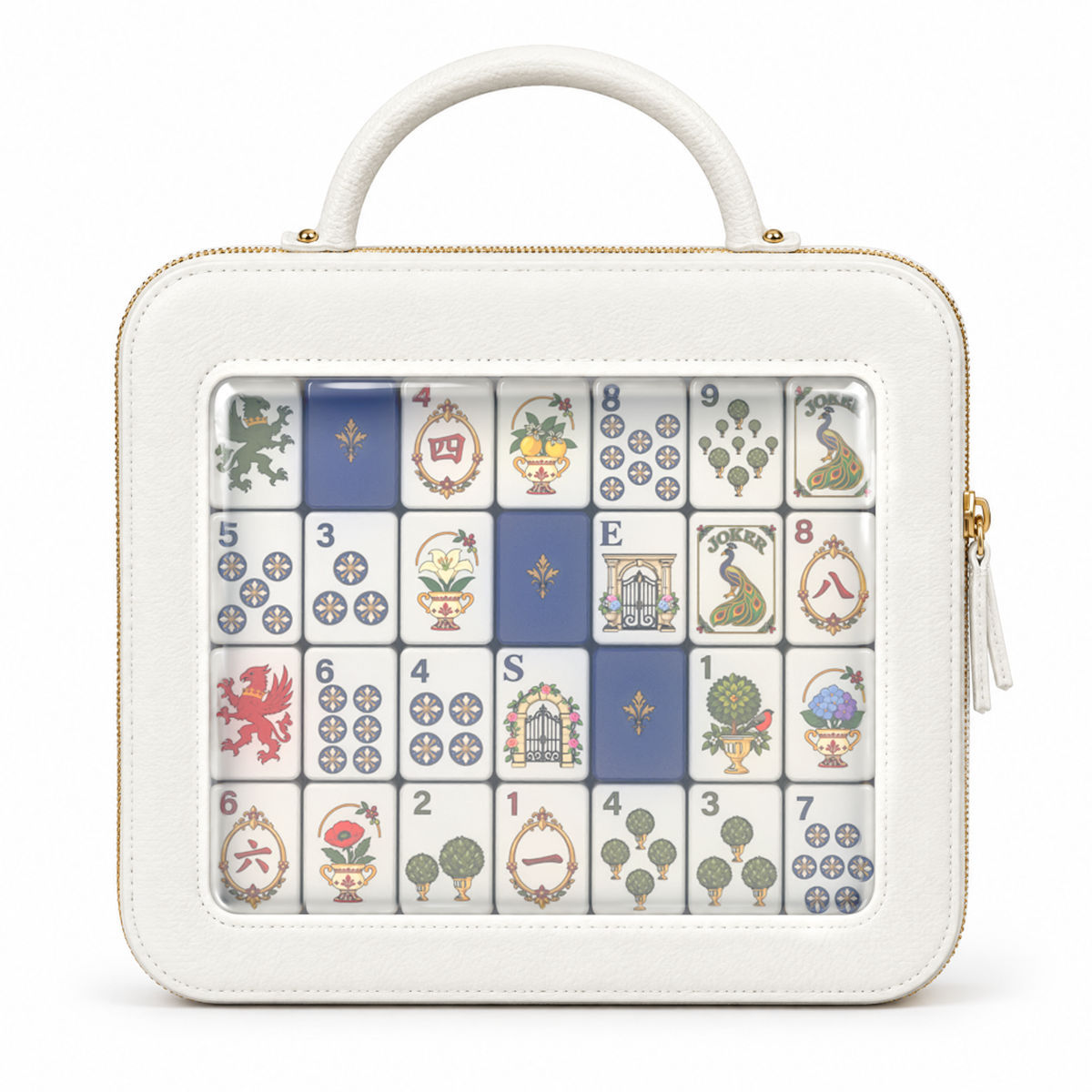
The 4 Bam tile belongs to the Bamboo suit (called "Bams") and displays four bamboo stalks or a stylized bird motif—often the most visually striking numbered tile in the set. In both American and Chinese mahjong, it's a regular rank tile (not a wind, dragon, or flower), and you'll have exactly four identical copies in a standard 152-tile set. The tile is used to form melds—pungs (three identical 4 Bams), kongs (all four), or in Chinese variants, sequences with 2 and 3 or 5 and 6 Bams. American mahjong never allows sequences to be called or exposed; only Chinese, Hong Kong, and Riichi variants use chows. The 4 Bam holds no special scoring bonus in American play, but in Chinese games certain tile combinations (including honor combinations with 4 Bam) can earn extra points. Confusion often arises because American players can only work from the current year's National Mah Jongg League card, which restricts which hands are legal, whereas Chinese players build hands freely from standard combinations. When shopping for a mahjong set, verify the tile design matches the variant you play.
🀄 Shop best-selling mahjong sets →
Why Does the 4 Bam Look Like a Bird?
The 4 Bam traditionally displays a bird because bamboo grows in clusters and the tile design stylizes four stalks as a bird in flight—a visual metaphor rather than literal bamboo. The bird image is so iconic that many players instantly recognize the 4 Bam by shape alone, even from across a table. This design has remained consistent across Chinese, Hong Kong, and American variants for over a century. When you draw or play a 4 Bam, that bird silhouette tells you immediately which suit you're holding and helps speed recognition during fast-paced games.

How Does the 4 Bam Differ Between American and Chinese Mahjong?
In American mahjong, the 4 Bam is a numbered tile used only in hands explicitly listed on the current year's National Mah Jongg League card. You cannot form a chow (sequence) with 2, 3, and 4 Bams—only pungs and kongs are allowed to be exposed or called. In Chinese mahjong, the 4 Bam is a standard rank tile you can combine freely into sequences (chows) like 2–3–4 or 4–5–6, or pungs and kongs. Chinese scoring often rewards certain combinations involving the 4 Bam as a tile of "middle rank." Hong Kong and Riichi variants sit between: they allow sequences but follow stricter hand patterns and scoring rules than mainland Chinese play. The fundamental difference: American mahjong is card-driven (hands come from the League card only), while Chinese mahjong is combination-driven (any legal pattern counts).
What Meld Types Can Include the 4 Bam?
You can form three core meld types with the 4 Bam across all variants:
Pung: three identical 4 Bam tiles (e.g., 🀅 🀅 🀅). This is exposed in American play and all variants.
Kong: all four copies of the 4 Bam (🀅 🀅 🀅 🀅). You draw a replacement tile from the wall or loose tile pile.
Chow (Chinese, Hong Kong, Riichi only): a sequence of three consecutive numbered tiles in one suit, e.g., 2–3–4 Bam, 3–4–5 Bam, or 4–5–6 Bam. American mahjong prohibits chows entirely.
In American play, if the League card for that year includes a hand pattern with a 4 Bam pung or kong, you may expose it and work toward declaring that hand. If the card doesn't list it, that tile combination is illegal for that season. In Chinese and variants, you build any valid combination freely as long as you have the tiles.

When Should You Hold or Discard the 4 Bam?
Strategic play with the 4 Bam depends on your variant and what hands you're chasing:
Scenario | Hold the 4 Bam? | Why |
American: 4 Bam pung on this year's card | Yes, early game | Expose when ready; common pattern |
American: 4 Bam not on this year's card | Discard early | Unplayable; reduces hand options |
Chinese: chasing 2–3–4 Bam chow | Yes | Builds flexible sequence; pairs with many tiles |
Chinese: no Bam suit use in hand | Discard if redundant | Free up hand space; avoid dead melds |
Any variant: opponent likely chasing Bams | Consider discarding | Force opponent to search elsewhere |
The 4 Bam is neither a terminal (1 or 9) nor an honor (wind/dragon), so it occupies a middle-rank position and pairs easily with other numbered tiles. In open play (exposed melds visible), holding a 4 Bam for one more draw costs less risk than holding a rare dragon or wind tile.
🎁 See our most-loved mahjong sets & accessories →
How Do Beginners Mistake the 4 Bam?
New players often confuse the 4 Bam with the 1 Bam—both show birds, but the 1 Bam has one bird and the 4 Bam four. The bird on the 1 Bam typically faces one direction; the 4 Bam shows birds in a flock or cluster. Another common error: mistaking the bird for decoration rather than the tile number itself. Beginners also forget that in American mahjong, even if they draw a 4 Bam early, it's useless unless the League card lists a hand containing it. In Chinese play, novices sometimes forget that a 4 Bam in a chow (2–3–4) must stay in that order and suit—you cannot mix it with 4 Craks or 4 Dots. To avoid these mistakes, lay out all four copies of the 4 Bam on the table during set-up and compare them visually: count the birds, check the suit symbol (bamboo stalk or cluster), and confirm all four are identical before play begins.
What to Check Before You Buy a Mahjong Set
When selecting a new set, ensure the 4 Bam (and all rank tiles 2–9 in each suit) are clearly printed or engraved and easy to read at arm's length across a table:
Tile clarity: Can you spot the bird and suit symbol without squinting? Acrylic sets typically offer crisper imagery than resin or vintage sets.
Set completeness: Does the set include exactly four copies of each numbered tile (36 per suit, 108 total)? Count them before you pay; incomplete sets create play gaps.
Variant match: If you play American mahjong, verify the set tiles align with League card patterns. If you play Chinese, check that sequences are easy to visualize with your set's tile layout.
Durability: Will the 4 Bam bird design fade or chip after dozens of shuffles? Engraved tiles last longer than printed ones.
Browse our best-selling mahjong sets to find options with sharp, durable tile art and full-set tile counts. Each set comes with all 152 playable tiles plus spare jokers, so you start ready to play.
✨ Find your Mahstead set — free US shipping →

FAQ
Is the 4 Bam tile used differently in Japanese Riichi mahjong?
In Riichi, the 4 Bam is a mid-rank numbered tile used in sequences and melds just like Chinese mahjong. Riichi restricts hand types more strictly than Chinese play but treats the 4 Bam the same way as other number tiles. Scoring for specific tile combinations (yaku) may reward certain hands with 4 Bam, but the tile itself has no special power.
Can you use a joker to substitute for the 4 Bam in American mahjong?
Yes, jokers are wild in American mahjong and can substitute for any tile, including the 4 Bam. However, jokers cannot be used in a single tile (pair or single honor) or as a pair; they only work in pungs, kongs, quints, or sextets. If you're short one 4 Bam, a joker can complete a pung or kong.
Why does my 4 Bam tile look different from my friend's set?
Older sets used hand-painted designs, so bird images vary; modern acrylic sets are machine-engraved for consistency. Also, Chinese, Hong Kong, and American sets sometimes use slightly different artistic styles for the bird or bamboo motif. Both are correct—the tile ID (4 Bam) remains the same, only the art differs.
If I'm learning, should I focus on memorizing what the 4 Bam looks like?
Yes, memorizing tile faces by shape and symbol (bird for Bams, circles for Dots, characters for Craks) speeds up play dramatically. The 4 Bam is one of the easiest to spot because of its distinctive bird. Spend 10 minutes at the start of your first game laying out all numbered tiles and learning their faces.
In Chinese mahjong, is a 4 Bam chow (2–3–4) worth more points than a 4 Bam pung?
No inherent bonus for the chow versus pung—scoring depends on your regional rules and hand type. A chow is a sequence; a pung is three identical tiles. Some regional games reward pungs in "honor" melds (dragons, winds) but not numbered suits. Check your local scoring rules or rulebook to see if 4 Bam melds earn bonus points.


View More
View More
View More
