
Japanese Mahjong Scoring: Riichi, Meld Points & Hand Values
Last updated: Nov 23, 2026
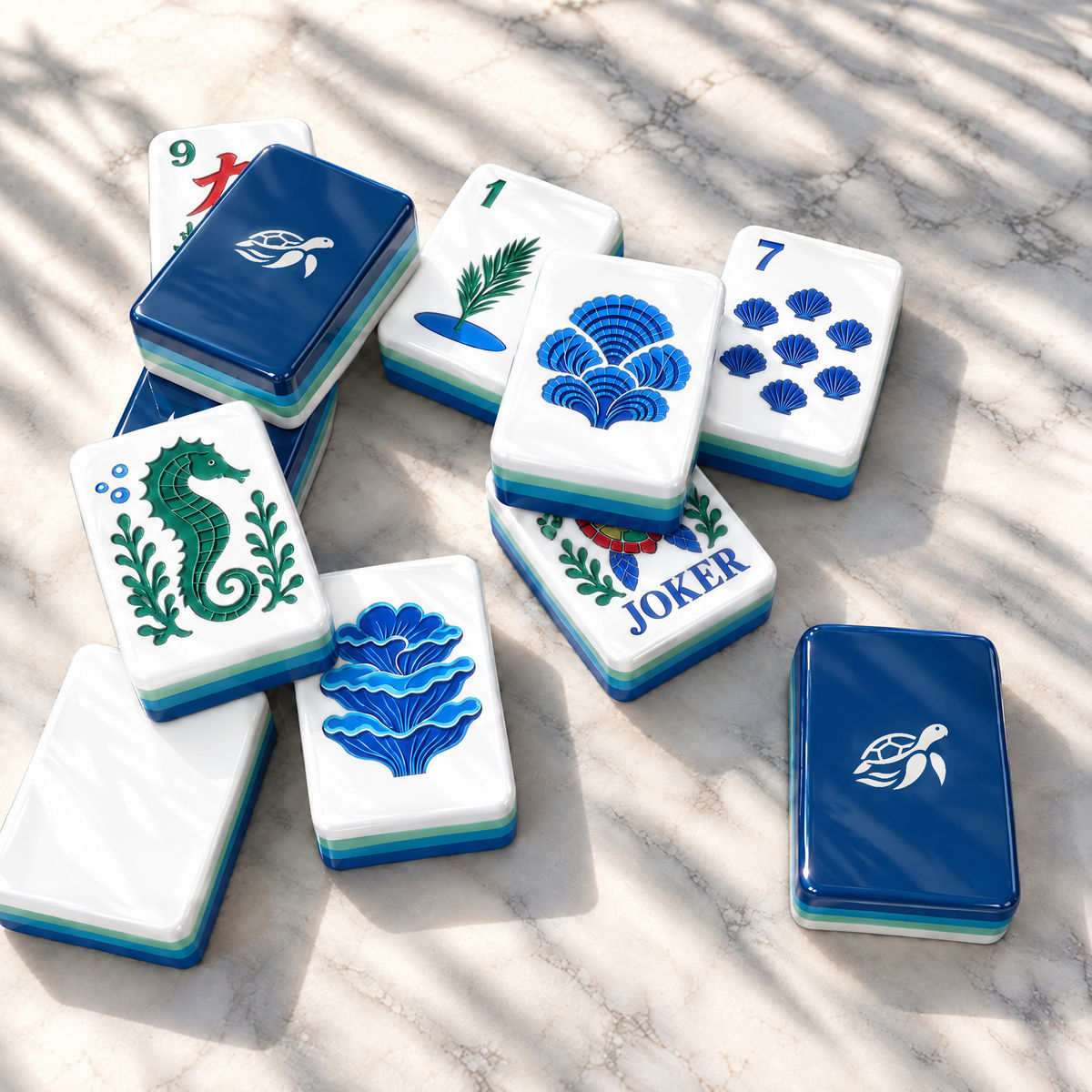
Japanese mahjong scoring awards points based on the base hand value (fu) multiplied by the number of melds or winning conditions (han). A player calculates fu using tile groups, pairs, and winning method (self-drawn or claimed discard), then multiplies by 2 for each han to reach a final point total. Winning hands range from 1-han (fastest wins) to 13+ han (limit hands worth maximum points regardless of fu). Unlike American mahjong, Riichi scoring ignores the year's pattern card—players win whenever their hand meets any standard combination. The dealer earns 50% more points than non-dealers, and all other players pay the winner together (or in Riichi, often just the discarder pays). Scoring tables exist for each fu level and han count, removing guesswork: memorizing them or keeping a reference sheet is standard practice at any serious table. This system rewards aggressive play and punishes incomplete hands far more than American variant rules.
What is fu and why does it matter in Japanese scoring?
Fu (符) is the base point value of your hand before melds are considered. You earn fu by holding specific patterns: a pair of honors or terminal tiles counts as 2 fu; a pung (triplet) of simples counts as 2 fu when concealed or 1 fu when exposed; melds of terminals or honors count double. Winning method adds fu too: self-drawn wins (tsumo) add 2 fu; claimed discard wins (ron) add no bonus but your hand's structure still counts. A hand with no fu bonuses (only chows and a simple pair) is machi (1 fu minimum); a hand with pung of terminals, pair of honors, and self-drawn win might reach 50+ fu. Higher fu means higher payoff when combined with han, so identifying fu correctly before calculating the final score is non-negotiable.

How do han (melds) increase your total points?
Han (翻) means a "double" or scoring element—each meld, honor sequence, or winning condition you complete adds one han. Standard melds include riichi (declaring closed hand, +1 han), tanyao (all simples 2–8, no terminals or honors, +1 han), yakuhai (pung of your wind or the round wind, +1 han), and shōsangen (all three dragon pairs, +2 han). Each additional han multiplies your base fu total by 2, so a 30-fu hand with 1 han is worth 1,000 points, but with 2 han it jumps to 2,000, and with 3 han reaches 4,000. At 5 han, the hand becomes "mangan" (full pay) worth a fixed 2,000 base; at 6–7 han, "haneman" (half-limit); at 8–10 han, "baiman" (limit); and 11+ han "sanbaiman" or "yakuman" (maximum). This scaling means that building multiple meld types is far more valuable than squeezing the last fu from a hand structure alone.
What's the dealer bonus and how does payout work?
In Riichi mahjong, the dealer (East) earns 50% more points per hand. If a non-dealer wins a hand worth 1,000 points, the dealer earns 1,500 for the same hand. When East (dealer) wins, all other three players pay equally into the pot; when a non-dealer wins, the dealer pays a bonus share (often 1.5× the basic amount), and the other non-dealers pay the base. Example: a 2,000-point hand won by South (not dealer) means East pays 1,000, West pays 1,000, North pays 0—South collects 2,000 total. The dealer position rotates around the table each round, so no single player stays advantaged forever. This system creates tension: being dealer is profitable but also makes you the target for opponents chasing big hands. Keeping a running score sheet throughout a session (usually 4 rounds × 4 winds = 16 hands per game) shows who's ahead and helps settle chips or money fairly at the end.
Comparison table: 30-fu hands at different han levels (non-dealer payouts)
Han | Calculation | Non-dealer wins | Dealer wins | Why this matters |
1 | 30 × 2¹ × 100 = 6,000 | 2,000 | 3,000 | Riichi hands start here; low risk, low reward |
2 | 30 × 2² × 100 = 12,000 | 4,000 | 6,000 | Adding a second meld nearly doubles payout |
3 | 30 × 2³ × 100 = 24,000 | 8,000 | 12,000 | Approaching limit; most aggressive wins |
4 | 30 × 2⁴ × 100 = 48,000 | 16,000 | 24,000 | Exceeds mangan; pay table now applies |
5+ | Mangan fixed | 8,000 base | 12,000 base | Limit hand; further melds don't raise payout |
Notice how each han almost doubles the payout until reaching mangan at 5 han: this incentivizes both careful hand building and speed, since a risky early win (1–2 han) often outscores a slow chase for a third meld.
How do limit hands (mangan, haneman, baiman, yakuman) cap your score?
Limit hands replace the fu × han calculation with a fixed maximum payout, simplifying payouts and preventing absurd point totals. Mangan (5 han) pays 8,000 to a non-dealer or 12,000 to the dealer, no matter how high the fu climbs; haneman (6–7 han) doubles that to 12,000 or 18,000; baiman (8–10 han) reaches 16,000 or 24,000; sanbaiman (11–12 han) goes to 24,000 or 36,000; and yakuman (13+ han, or certain one-off hands like "kokushi" or "four winds") is the absolute max, worth 32,000 or 48,000. These ceilings exist to prevent bankrupting a single player on an unlucky discard—you know exactly what you owe the moment you call "ron" on a 5-han hand. Crucially, yakuman hands (like thirteen unique terminal-and-honor pairs, or four concealed pungs plus a pair) don't exist in American mahjong at all; they reward rarer, more strategic play and make Riichi both riskier and more exciting than American scoring's point-per-pattern system.

Common mistakes: fu counting errors and scoring missteps
New Riichi players often miscount fu by forgetting that open melds (exposed pungs) earn half the fu of concealed ones, or by adding fu for chows (sequence melds), which contribute zero fu regardless of concealment. Another trap: believing a hand wins automatically once it matches a meld pattern—Riichi hands must also form a valid winning shape (complete all groups and hold exactly one pair); a hand with four melds and no pair waiting is not a valid tenpai (one-tile-away) hand and will not win if you discard next. Players also occasionally forget the dealer pays or receives bonus: the East always settles ±50% more than non-dealers for identical hands, so miscalculating dealer vs. non-dealer roles mid-round skews final scores. A practical fix: keep a laminated fu/han payout chart at the table, verify the winning hand's structure aloud before paying, and confirm who is dealer before each hand starts. Writing down dealer and han count after every win prevents disputes later.
🀄 Shop best-selling mahjong sets →
What's the real difference from American mahjong scoring?
American mahjong scoring ignores fu and han entirely—instead, you win by matching a single pattern from the year's National Mah Jongg League card, and that pattern alone determines your point value (usually 20, 25, 30, or 40 points depending on complexity). There is no dealer bonus, no limit hands, and no multiplication: each win is worth exactly what the card says. Riichi, by contrast, allows any standard meld combination to win any year, multiply points across multiple rounds, and feature payouts ranging from 1,000 to 48,000 for a single hand. This means Riichi games escalate stakes much faster and reward aggressive, high-han strategies, while American mahjong is more methodical and pattern-focused. If you're hosting both variants at home, learn how American scoring works and post a clear reference sheet for each so players don't accidentally mix the two systems—a common stumbling block in casual groups.
Should you use acrylic tiles or bamboo sets for Japanese play?
Both work fine for Riichi, but acrylic tiles are lighter, shuffle faster, and last longer under heavy play—important if you're scoring dozens of hands in an evening and handling tiles constantly. Bamboo and bone sets feel traditional and sound excellent when tiles click together, but they're heavier, need occasional cleaning, and can crack over time. We see players in competitive Riichi leagues choose acrylic sets from our best-selling collection because they're durable, portable, and won't warp if stored at home for years. If you're playing Riichi just once a week casually, either material suits you; if you're scoring multiple games and want tiles that survive heavy shuffling without chipping, acrylic wins. All modern sets (whether acrylic or bamboo) contain the same 136 tiles needed for Riichi play: four 1–9 in each of three suits, plus 16 winds and 12 dragons—no jokers, no American-style blanks.
What to check before you buy a Riichi mahjong set
Tile count: Riichi uses exactly 136 tiles (no spares or jokers). Confirm the set includes all four copies of each tile before paying.
Suit clarity: Bams, Craks, and Dots must be visually distinct, especially the 5 Crak (marked differently from 5 Bam and 5 Dot). Test in your lighting.
Wind and dragon markings: All four winds and three dragons must be clearly readable; if you play with non-English players, verify kanji or symbol markings are correct.
Dice and racks: Standard Riichi sets include two dice and often four wooden racks. Check racks fit your table width; pushers should slide smoothly without catching.
Carrying case: If you travel for games, confirm the set includes or fits into a sturdy case—Riichi sets are heavy and tiles scatter easily.
Reference card: Some sets include a scoring chart or quick-reference guide; valuable for newcomers but not essential if you keep a chart nearby.
✨ Find your Mahstead set — free US shipping →
Why Riichi scoring feels different: a practical summary
Riichi mahjong scoring is faster to calculate than it appears once you memorize a fu/han table (or keep one printed at the table). The game itself plays quicker because any standard hand wins—not just patterns from a yearly card—so players focus on melds and dealer advantage rather than chasing a single expensive combo. For American players switching to Riichi, expect payouts to swing wilder (some hands triple or quadruple in value with each meld), dealer seats to matter far more (East collects 50% bonus every hand), and strategy to reward both speed and accuracy. Money or chip play feels naturaler in Riichi because scoring is formulaic: you always know exactly what a hand is worth before anyone pays. If your group loves point racing and dynamic dealer rotations, Riichi's system will feel fresh and high-stakes compared to American mahjong's pattern-matching discipline.
🎁 See our most-loved mahjong sets & accessories →

FAQ
Can I win in Riichi mahjong with any hand combination, or only specific patterns?
Any hand with four melds and one pair wins, as long as it's a valid waiting shape (tenpai). You don't need to match a yearly card like in American mahjong. However, certain one-hand yakuman patterns (like all thirteen terminal-and-honor pairs) exist outside the standard rule and are pre-defined as maximum wins.
If the dealer wins, do all players pay the same amount or different amounts?
In most Riichi variants, when the dealer (East) wins, all three other players pay equal shares of the base payout. When a non-dealer wins, East pays a 50% bonus, and the other two non-dealers pay the standard base amount each.
What's the fastest way to learn Riichi scoring without memorizing all the fu/han tables?
Keep a laminated fu/han payout chart or quick-reference card at the table during play. After three or four sessions, patterns (like 30-fu × 2 han = 4,000 points) will stick. Many online apps also calculate points if you input fu and han.
Does Riichi play use the same tiles as American mahjong?
No. Riichi uses exactly 136 tiles (no jokers or blanks), while American mahjong uses 152 tiles plus 8 jokers. Riichi has all four winds and three dragons; American has sixteen winds and twelve dragons with different design conventions.
If someone wins with a yakuman hand, how much does everyone owe them?
A yakuman pays 32,000 points if won by a non-dealer (all three players pay into the pool), or 48,000 points if the dealer wins (all three players pay equally). It's the absolute maximum payout regardless of fu or additional han.
How do I know if I'm in tenpai (one tile away from winning) during Riichi play?
Your hand must have four complete melds (pungs, chows, or kongs) and one open pair or a wait for a pair. If you can win on any single tile drawn or discarded, you're tenpai and can call riichi (declare a closed hand for +1 han and a small stakes deposit).


View More
View More
View More
