
Japanese Mahjong How to Count Points: Riichi Scoring Guide
Last updated: Nov 23, 2026
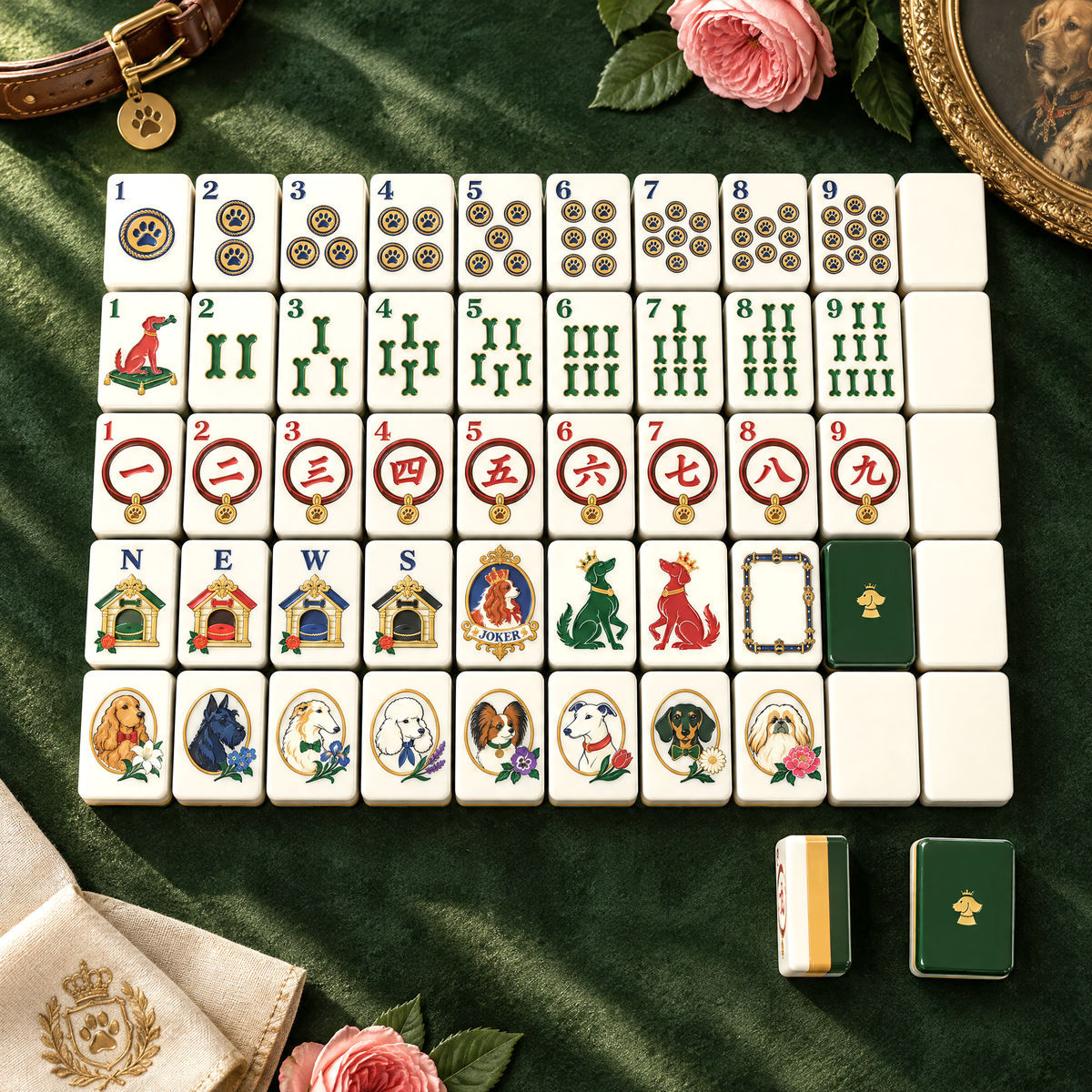
Japanese mahjong scoring differs completely from American mahjong: instead of matching a printed card, you calculate points using han (value multiplier: 1–13 levels) and fu (base points: 20–110 in increments of 10). A winning hand's fu count derives from tile combinations—a closed hand (no exposed melds), your wait type, and bonus tiles (dragons, your own wind). Han come from melds, sequences, and winning conditions like going out on a drawn tile or declaring riichi before your hand is complete. The formula: base fu × points per han = your score. Because scoring escalates sharply at higher han levels, mastering fu calculation and han-generating patterns is essential to play riichi competitively. Unlike American mahjong, riichi allows sequences (chow), mandatory discard calls, and hidden melds—mechanics that demand a different tile strategy and set (check how to read a mahjong card for American rules context).
Japanese mahjong (riichi) scoring uses a two-number system: han (melds, patterns, and winning conditions) and fu (tile groups and wait types). Together they determine the exact points you earn or pay.
What is fu and how do you count it?
Fu (符) is your hand's base point value—the structural score before han multipliers apply. A complete winning hand starts at 30 fu. You add points for specific tile groupings: a pung of honor tiles (dragons, winds) is 4 fu; a pung of numbered tiles is 2 fu. A kong (4 identical tiles) doubles the fu value of a pung. Your wait type—how you stand one tile away from winning—adds 2 fu: if you need exactly one tile to complete two different melds, you score extra fu. Closed hands (where you declare your win on a drawn tile) add 10 fu. Always round to the nearest 10-fu block; 25 fu rounds to 30, 35 fu rounds to 40. Most hands fall between 30 and 110 fu.
🀄 Shop best-selling mahjong sets →

What is han and which patterns generate it?
Han (翻) measures a hand's complexity and rarity—a multiplier applied on top of fu. One han = basic patterns: a closed pung, a sequence (chow), a pung made from the discard. Higher han come from rarer achievements: a hand with no sequences (only pungs and the pair)—called tanyao—is 1 or 2 han depending on context. Going out on your own drawn tile (tsumo) is 1 han. Declaring riichi before completing your hand is 1 han and locks your hand—you cannot change your wait. Honorable hands (only dragons and winds) are worth 3 han. Scoring 3 han or more triggers mangan, a flat point payout that skips the fu calculation entirely. Each additional han above 3 increases mangan value: 5 han is haneman, 8 han is baiman, 11 han is sanbaiman, 13 han is yakuman (the maximum—a named hand pattern so rare it pays a fixed king's ransom). This han-based escalation is what makes riichi strategy revolve around recognizing high-value patterns early.
How do you calculate the actual points owed?
Once you count fu and han, you use a lookup table or formula. The simplest method: multiply your fu × 2^han, then round to 100 points. Example: 30 fu, 2 han = 30 × 4 = 120 points base. Then add: 30 (base) + 120 = 150 points per player. In reality, tables and scoring sheets do this for you—even phone apps calculate it instantly. What matters is understanding why your hand scores what it does: a 40-fu, 2-han hand pays less than a 30-fu, 3-han hand because 3 han triggers mangan. Learn to recognize which patterns activate han (riichi, tanyao, honor-only, sequence-free hands) and you'll internalize scoring without memorizing numbers. Seasoned players glance at a hand and know immediately whether it's worth pursuing or folding.
How does riichi differ from American scoring?
American mahjong uses a flat point system based on a printed card issued yearly—every valid hand worth the same points, and complex hands worth double or triple points. Riichi mahjong is dynamic: your score depends on how your hand is built (fu structure) and which patterns you combine (han multipliers). American hands are exposed and declared before play begins; riichi hands are hidden until you win, so opponents cannot predict your score. American mahjong has no sequences (chows) in your hand—only pungs, kongs, and exposed quints; riichi demands sequences as core mechanics. Scoring is also asymmetrical: in riichi, each player pays a different amount depending on who discarded the winning tile (discarder pays double or triple) versus who drew it (tsumo payouts are split). For American players, riichi feels like learning an entirely new game; the tile mechanics overlap, but the strategy, hand-building, and scoring are independent systems.

What are the most common scoring mistakes beginners make?
Miscounting fu is the top error: players forget to add 2 fu for certain wait types or miscalculate pung values. Memorizing specific han patterns without understanding why they score han leads to confusion when patterns combine—tanyao (no sequences) + riichi (pre-win declaration) stack for 2 han, not 1 + 1 separately. Forgetting that 3 han triggers mangan (a flat payout, skipping fu math entirely) causes players to waste effort calculating points for 3-han hands when the payout is predetermined. Confusing who pays whom: the player who discarded the winning tile pays more than the other two players; if you drew your winning tile (tsumo), all three opponents split the payout. Ignoring riichi lock: once you declare riichi, you cannot change your hand or your winning tile target—if you misjudge your wait, you're stuck. Always verify your wait type (do you win on exactly one tile, or two?) before declaring riichi, because the 2-fu penalty or bonus hinges on it. A best-selling mahjong set designed for Japanese play often includes a small laminated han-fu scoring table card—carry it at first, and you'll stop making these mistakes fast.
Common Scoring Scenario | Fu Count | Han Level | Why It Matters |
Closed pung + pair only | 30 | 1 | Starting score; most basic hand |
Pung of dragons or winds | +4 fu per pung | +1 han if three dragons/winds | Honors boost both fu and han |
Tsumo (own drawn tile) | +10 fu | +1 han | Wait type bonus; auto-adds 10 fu |
Riichi declared before winning | base fu | +1 han | Locks hand; extra multiplier |
No sequences (tanyao) | base fu | +1 or +2 han | Rarer = higher han |
3+ han reached | — | — | Mangan: flat payout, skip fu calc |
What should you check before you buy a riichi set?
If you're new to Japanese mahjong, verify your tiles are marked correctly: riichi tiles use a different suit system (man/pin/sou instead of Bam/Crak/Dot), and numerical markings must be clear under table light. Check whether your set includes a scoring guide or reference card; many entry-level riichi sets omit them. Confirm the tile backs are uniform (no mixed designs that might reveal your hand), and that you have all 136 standard tiles plus bonus/replacement tiles. For weekly games, look for durable plastic or bone tiles and a sturdy carrying case—riichi play is faster and more aggressive than American mahjong, so tiles take more impact. A quality mat with a scoring reference printed on the edge helps beginners; engraved mahjong mats designed for Japanese play often include han-fu tables or hand-type diagrams right on the surface. Test your tiles' weight and balance: heavier tiles (bone composite) feel more premium and are less likely to stick or clump during shuffles.
🎁 See our most-loved mahjong sets & accessories →
Is scoring easier with a scoring sheet or calculator?
Scoring sheets (paper scorecards where you write each player's cumulative points) are standard in tournaments and weekly clubs. They ensure no arithmetic errors and let you track win streaks and payment histories transparently. Calculators (phone apps or handheld devices) are faster for casual play but can create disputes if players disagree on input values—always verify fu and han aloud before tapping calculate. Hybrid approach: call out your han and fu count, cross-check with one other player, then use a sheet or app to compute the payout. Never skip the aloud verification step; it's how the table catches your mistake (or prevents you from misremembering a pattern's han value) before money changes hands. In our weekly games, we use a printed scoring sheet taped to the mat—it's free, foolproof, and no one can argue with pen-and-paper arithmetic. For tournaments or money games, a scoring sheet is non-negotiable; it's also the only way to protest a payout later.
✨ Find your Mahstead set — free US shipping →
How do you practice scoring until it becomes automatic?
Play slowly at first: pause after each hand, count fu aloud with the table, calculate han using a guide, and then compute points. Write down the fu and han for every hand you see—over 20–30 games, patterns emerge and you stop referring to charts. Join a local riichi club or meetup (check community centers, libraries, or Japanese cultural organizations in your area) where experienced players will correct your math and explain patterns in real time. Study one han-pattern per week: focus on tanyao hands for a week, then switch to sequences-with-honor hands, then riichi declaration. Flashcards for high-value patterns (yakuman, sanbaiman, baiman, haneman, mangan) help you recognize them before you finish building the hand—this is what separates beginners from intermediate players. Many riichi resources (forums, YouTube channels, and books) publish 100-hand scoring drills; work through one every other week. The goal is not memorization but pattern recognition—your brain should see a hand shape and immediately sense its han potential.

FAQ
Can I use American mahjong tiles to play riichi?
No. Riichi uses 136 tiles (man/pin/sou suits, 1–9 in each, plus winds and dragons) versus American mahjong's 152 tiles. Suit markings differ fundamentally: riichi tiles show stick bundles, bamboo, and circles; American tiles show Bams (stick), Craks (crack pattern), and Dots. Tile counts and honor compositions also diverge. Use tiles marked for the game you're playing.
What does "mangan" mean and why does it skip fu calculation?
Mangan (満貫) is an automatic flat payout triggered at 3 han or more. Instead of multiplying fu × han, you simply pay a preset mangan rate. This prevents extremely high point calculations and standardizes payouts for complex hands. Higher han levels (5, 8, 11, 13) each have their own fixed rates—haneman, baiman, sanbaiman, yakuman—that dwarf mangan.
How do I know if I have the right wait type for scoring bonus fu?
Your wait type is the set of tiles that would complete your hand to winning. If exactly one number completes two different melds (a "two-way" wait), you score +2 fu. If one tile completes only one meld (a "one-way" wait), no bonus. Analyze your hand by listing every tile that wins: if you see exactly one winning tile, it's one-way; if two different tiles win, it's two-way.
Do sequences (chows) affect fu and han scoring differently than pungs?
Sequences do not add fu themselves—only pungs, kongs, honor tiles, and wait types add fu points. However, sequences unlock certain han patterns: a hand of all pungs and no sequences (tanyao) is worth 1–2 han. Sequences are valued for their role in reaching high-han patterns, not for individual fu contribution. In American mahjong, sequences cannot be exposed at all.
Where can I learn riichi rules and scoring if I only know American mahjong?
Online communities (Reddit's r/Mahjong, Discord riichi servers) and YouTube channels teach riichi basics. Local Japanese cultural clubs often host beginner lessons. Books like "Riichi Book I" provide comprehensive rules. Because American and Japanese mahjong are separate games with different tiles and mechanics, treat riichi as a fresh start rather than a variant—you'll learn faster this way.


View More
View More
View More
