
Is Mahjong Good for Poker Players? A Real Answer
Last updated: Nov 23, 2026
Mahjong is excellent for poker players because both games demand rapid pattern recognition, probability calculation, and decision-making under incomplete information. Unlike poker's continuous betting rounds, American mahjong plays in fixed turns and no-money contexts, so you focus purely on tile logic and hand assembly. The core overlap: reading opponents' discards, remembering what's been played, and calculating odds that a tile exists before you call it. A 160-tile set costs less than a casino session, takes 90 minutes per game, and requires only four players. The main difference is that mahjong has zero bluffing—your hand's legality is transparent once declared. Many poker players find mahjong sharpens their ability to track multiple probabilities simultaneously and build hands strategically rather than reactively, making them more patient and analytical at the poker table.
Mahjong isn't a substitute for poker; it's a complement. We've watched players rotate between the two and noticed they return to poker with sharper focus, less impulsive calling, and better hand selection. Here's what transfers and what doesn't.
How does pattern recognition in mahjong mirror poker?
Both games punish loose thinking and reward pattern spotting. In poker, you track bet sequences, table position, and hole cards. In mahjong, you track which tiles have been discarded, which player needs what suit, and whether a hand is even statistically possible. When you play enough mahjong, your brain starts filing tile sequences automatically—the same way a poker player knows a three-bet from position correlates with a strong range. The mechanism differs, but the underlying skill—holding multiple data points and finding signal in noise—is identical.
🀄 Shop best-selling mahjong sets →

What poker skills don't transfer to mahjong?
Bluffing, aggression, and bet-sizing have no place in American mahjong. You cannot misrepresent your hand, raise the stakes mid-game, or fold to pressure. What you can do is choose when to reveal a pung, when to declare a kong, and when to wait—a form of timing that resembles poker's check-and-call strategy, but without deception. This actually trains a different muscle: restraint. Poker rewards occasional aggression and calculated bluffs. Mahjong rewards disciplined waiting. Many players tell us this balance improves their poker game by reducing tilt and over-aggression.
What probability skills carry directly?
Counting outs. In poker, you estimate how many cards help your hand. In mahjong, you count how many of each tile remain in the wall, factoring in what's been discarded and what opponents have exposed. The math is simpler—you're not comparing pot odds to hand percentages—but the habit is the same. After a month of mahjong, you'll calculate "I need a 7 Crak; three are gone, one is in my hand, so four remain in play" as quickly as you size a bet. This trains the serial, rapid-fire probability instinct that poker rewards.
Is the game theory similar?
Yes and no. Poker rewards exploiting player tendencies and ranges; mahjong rewards reading the board state objectively. In poker, you might call a loose player's raise with marginal cards. In mahjong, you either can draw a tile that completes a legal hand, or you cannot—opinion is irrelevant. However, both games require you to infer opponents' hands from incomplete information. In poker, you use betting patterns. In mahjong, you use discard patterns and exposure. A skilled mahjong player learns to read which suit an opponent is collecting, which wall position they're drawing from, and whether they're chasing a high or low hand. That same inference skill transfers back to poker, making you more sensitive to action tells and table dynamics.
What's the real reason poker players should try mahjong?
Stamina and patience. A poker session can last eight hours, alternating between boredom and adrenaline. A mahjong game lasts 90 minutes per round, with zero downtime—you're always engaged, always calculating. After ten mahjong sessions, players report they can sit through longer poker sessions without fatigue and make fewer rushed decisions in the first two hours. The game also removes money from the equation, which paradoxically sharpens strategic thinking. You're not defending ego or chasing losses; you're solving a puzzle in real time with three other people. That clarity compounds. We've had poker players tell us their A-game returns the night after a mahjong round.
Comparison: Poker Versus Mahjong for Skill Building
Skill | Poker | Mahjong | Winner for Crossover |
Pattern recognition | Very high | Very high | Tie—both essential |
Probability calculation | Complex (odds ratios) | Simple (tile counting) | Mahjong—easier to drill |
Incomplete information | Yes | Yes | Tie |
Bluffing & deception | Core mechanic | Impossible | Poker exclusive |
Reading opponents | Betting behavior | Discard behavior | Mahjong—clearer signal |
Decision speed | Medium | High (turn-based) | Mahjong—sharper reflexes |
Tilt & emotional control | High risk | Low risk | Mahjong—better for training |
Time per session | 4–8+ hours | 90 minutes | Mahjong—better for busy players |
🎁 See our most-loved mahjong sets & accessories →
How to start if you're a poker player coming to mahjong
First, understand that you're learning a new language, not applying poker to a variant game. Read the American mahjong rules as if you've never played a tile game—no shortcuts. The hand reference card is not optional; it changes every spring. Second, join a four-player table with at least one experienced player and commit to three full rounds before deciding whether it fits you. Poker players sometimes underestimate mahjong's learning curve because the turn structure seems simpler than betting rounds, but the hand patterns, joker rules, and tile-counting demands are genuinely complex.
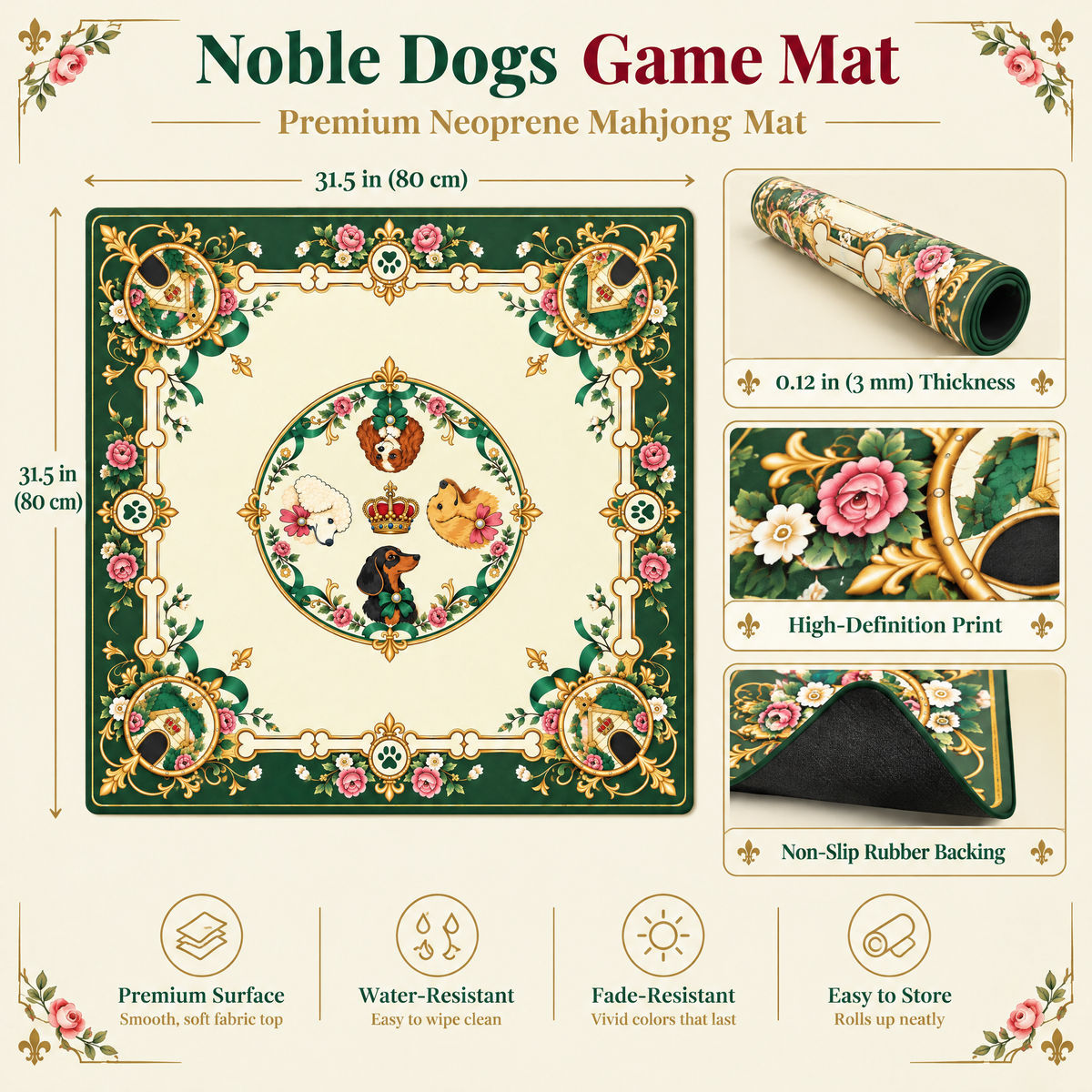
Third, get a set that won't frustrate you. A 160-tile acrylic set from our best-selling collection avoids the brittle bamboo sets that crack after three months of regular play. Include a mahjong mat if you're playing on a bare table—it keeps tiles organized and readable, which reduces mistakes and lets you focus on strategy rather than tile-wrangling. Racks with pushers are not strictly necessary but train better hand-management habits.
What to check before you buy:
Does the set include an up-to-date hand card? (It should; we include the current year's card.)
Are the tiles large enough to read quickly? (Acrylic, engraved tiles are easier on the eyes than bamboo.)
Is the mat vinyl or felt? (Vinyl is more durable for weekly play.)
Do you have a quiet place to play for 90 uninterrupted minutes? (Critical.)
How a poker night could become a mahjong night
Many players we know host mixed game nights: poker early, mahjong after. The energy is different but complementary. Poker's tension subsides into mahjong's flow. Players report feeling more mentally recovered than after a pure poker evening. If you're already hosting, adding a mahjong set costs less than upgrading your poker table. Set it up on a side board, teach the rules during dinner, and give it an honest 90-minute shot. Worst case: you've learned something. Best case: you've found a second strategic game that sharpens the first.
✨ Find your Mahstead set — free US shipping →

FAQ
Can I play mahjong with poker hand rankings or scoring?
No. American mahjong uses a legal hand reference card that changes yearly; hands are fixed patterns, not ranked by strength. The point system is separate from hand selection. Learning the real rules takes one evening; shortcuts will confuse you and the table.
Will mahjong make me a better poker player?
Indirectly. It improves pattern recognition, probability instinct, and patience. It trains restraint in a no-bluff environment, which can reduce over-aggression at the poker table. But mahjong doesn't teach bet-sizing, hand range, or table reads specific to poker.
How long does one mahjong game take?
A full round (four hands, each player as dealer) takes 90 minutes for experienced players, 2–3 hours for beginners. Each individual hand takes 15–20 minutes.
Do I need a special set, or can I use any 152-tile set?
You need a full 160-tile American mahjong set with current-year hand reference card. Bamboo sets deteriorate quickly with regular play; acrylic holds up much better for a weekly game group.
Is mahjong played for money like poker?
In America, most social mahjong games are zero-stakes or play for negligible amounts ($1–2 buy-in, split among winners). Mahjong is legal to play socially without money; poker legality varies by state. Many players prefer mahjong for this reason.


View More
View More
View More
