
Is Cantonese Mahjong Hard to Learn? A Beginner's Guide
Last updated: Nov 23, 2026
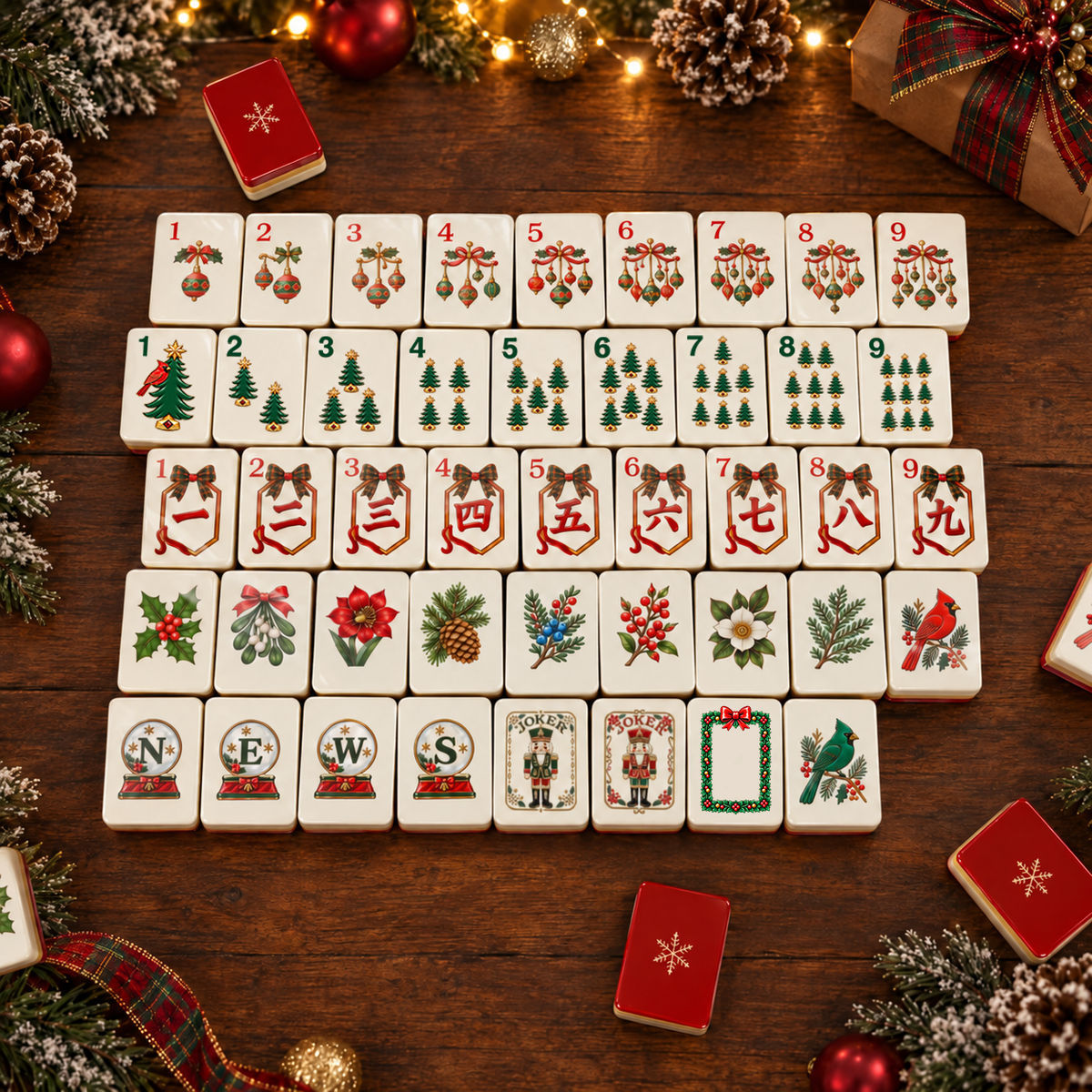
Cantonese mahjong is moderately harder than American mahjong for English-speaking beginners, though not impossible. The game uses 144 tiles (not 152), permits chows (sequences like 1–2–3 Bam), requires quick Cantonese or Mandarin language skills, and moves faster than American play. Winning hands are simpler: any thirteen-tile combination ending in a pair plus four melds (sets of three or four). Learning the tile names, hand types, and meld-calling vocabulary takes most beginners 4–6 weeks of weekly play. Unlike American mahjong, you don't need a fixed card each year—rules stay constant. Start with simplified rule variants, join a learning group, and practice with a standard set; your speed and confidence grow steadily once the tile ranks lock in memory. Many players find the rhythm rewarding once foundation knowledge settles.
Cantonese mahjong sits between American and Chinese play in difficulty—simpler hand logic than American, but faster flow and language demands than casual Western games. We've taught dozens of players to cross over, and the most important predictor of success isn't age or prior mahjong experience; it's willingness to hear names called aloud, write tile names on a reference sheet, and play weekly rather than once a month. Here's what makes Cantonese mahjong a distinct challenge, and how to move past the learning curve.
How does Cantonese mahjong differ from American play?
American mahjong bans chows (sequences) entirely and requires hands to match a published card each season. Cantonese mahjong permits chows, uses a simpler hand structure, and operates under the same rules year-round. You call hands in rapid Cantonese—words like "pung" (three identical tiles), "kong" (four identical), and "chow" (three consecutive, same suit). The faster-paced callouts and the need to parse rapid spoken Cantonese make the game feel busier than American play. Tile ranking and hand values differ too: a simple pair-and-four-melds win beats an elaborate hand every time. If you learned American mahjong first, unlearning the "no chows" rule and the card-dependency takes deliberate practice.

What tiles does a Cantonese set include?
A Cantonese game uses 144 tiles: three suits (Bam, Crak, Dot) numbered 1–9, four copies each (108 total), 16 winds (four each: North, East, West, South), 12 dragons (four Red, four Green, four White), and 8 flowers. Some sets add extra blank or joker tiles for emergencies, but active play uses exactly 144. Sets designed for American play carry 152 tiles; Cantonese sets do not include American-style jokers or the extra tiles. When shopping, confirm the set lists 144 tiles and omits jokers, or pair a best-selling mahjong set with a reference card showing Cantonese hand types.
Can you win with any thirteen-tile combination?
No, but Cantonese hands are far looser than American ones. You win by holding thirteen tiles that form a winning pair (two identical tiles) plus four melds—each meld is either a pung (three identical tiles), a kong (four identical), or a chow (three consecutive tiles of the same suit, like 4–5–6 Dot). Any pung, kong, or chow counts; suit mixing is fine for the overall hand. Your fourteenth tile (the winning tile) completes one of the four melds, triggering the win. This simplicity means games move fast and draws happen often, which beginners find either liberating or chaotic at first.
How long does it realistically take to play competently?
Most players reach playable level—recognizing melds quickly, calling hands without hesitation, and not holding up the game—in 4 to 6 weeks of weekly two-hour sessions. Speed builds on speed. The first week feels like learning a foreign alphabet; by week three, your hands recognize pung patterns without conscious thought. By week six, you're calling tiles as fast as experienced players. Language remains a bottleneck: if you're learning Cantonese at the same time, add 2–4 more weeks. If you play with an English-speaking group that permits translated callouts, the barrier drops. Many beginners plateau briefly around week two (the "hump") when complexity feels overwhelming; stick past that, and breakthroughs follow.

What are the most common beginner mistakes?
Mistake | Why It Happens | Fix |
Forgetting chows are legal | American mahjong muscle memory | Write "chow = sequence OK" on a sticky note by the game mat |
Calling "pung" for a pair | Pair is not a meld; only the four melds + pair win | Refer to meld chart: pair = winning only, not a meld |
Misunderstanding the winning tile | Thinking any fourteen tiles win | Winning tile must complete the fourth meld, not just appear |
Mixing up tile names in Cantonese | Speed of live callouts | Drill tile names offline; record yourself or a video for 10 min daily |
Hesitating on sequences | Unsure which suits permit chows | All three suits permit chows: Bam, Crak, Dot are identical rules |
The biggest trap is assuming American logic applies. Cantonese mahjong rewards flow, not memorization of a card. Pause, reset your mental rules, and trust the weekly repetition.
🀄 Shop best-selling mahjong sets →
What resources help you learn fastest?
Start with a printed hand chart in English and Cantonese (search "mahjong hand types" or ask your group). Join a group with patient teachers who call hands slowly and correct gently—many community centers, libraries, and cultural organizations host beginner Cantonese mahjong circles. YouTube channels by players demonstrating hand types and callouts are free and repeatable. Record video of a full game and watch it once weekly; you'll spot your own patterns. Play the same opponents repeatedly—familiarity with one person's rhythm cuts learning time. Consider pairing your practice set with a mahjong mat to standardize your play surface and reduce hand fumbles; a mat's raised edge and smooth surface keep tiles organized when you're still learning meld spacing.
What to check before you buy
Tile count: Confirm 144 tiles, not 152 or 160. Sets labeled "Cantonese," "Hong Kong," or "Chinese" typically have 144; American sets have 152.
Tile weight and size: Standard is 30 mm × 20 mm face and roughly 8 grams per tile. Heavier tiles feel more stable for learners.
Language on tiles: English numerals (1–9) plus Chinese characters help bilingual learners; characters-only sets move faster for fluent speakers.
Case or bag: A travel bag protects tiles and keeps them organized between sessions, especially if you're moving sets to a group venue.
Seller's return policy: If you've never handled a Cantonese set, confirm you can swap for a different weight or tile size within a reasonable window.
🎁 See our most-loved mahjong sets & accessories →
The honest truth: Cantonese mahjong is not harder than learning, say, chess or bridge—it's just different from American play and hinges on weekly immersion. Your hands will feel clumsy for the first month, your callouts will stammer, and you'll lose every hand. Then, around week four, you'll notice you're not thinking about tile names anymore; you're seeing them. That shift is when it stops being hard and starts being fun.
✨ Find your Mahstead set — free US shipping →

FAQ
Is Cantonese mahjong harder than American mahjong?
Yes, moderately. Cantonese uses sequences (chows), requires fluent callout language, and moves faster. American bans chows and relies on a printed card. A speaker of Cantonese or Mandarin finds Cantonese easier; English speakers find American faster to start but less fun for longtime play.
How many tiles are in a Cantonese mahjong set?
Exactly 144 tiles: three suits (Bam, Crak, Dot) with numbers 1–9, four copies each; 16 winds; 12 dragons; and 8 flowers. American sets have 152 tiles and include jokers. Cantonese sets do not.
Can you use jokers in Cantonese mahjong?
No. Cantonese play uses the 144-tile base only. Jokers are an American invention. Some players keep a blank tile for emergency tile loss, but it is not part of regular play.
How fast do you need to recognize tiles to play?
By week 3–4 of weekly play, most beginners recognize tiles and call melds quickly enough not to slow the game. Speed is less critical than accuracy; a slower but correct call beats a fast mistake.
Do you need to speak Cantonese fluently to play Cantonese mahjong?
No, but it helps. Beginner groups often accept English callouts or a hybrid. Fluency accelerates play enjoyment by year two. Many learners pick up 20–30 key terms quickly; full fluency is not a prerequisite, only willingness to learn aloud.
What's the fastest way to build hand-recognition speed?
Daily offline practice (10–15 minutes drilling tile names) and weekly group play. Combine a printed hand chart, recorded video of real games, and repetition with the same opponents. Muscle memory, not intellect, drives speed.


View More
View More
View More
