
How to Teach Mahjong to Absolute Beginners: A Practical Guide
Last updated: Nov 23, 2026
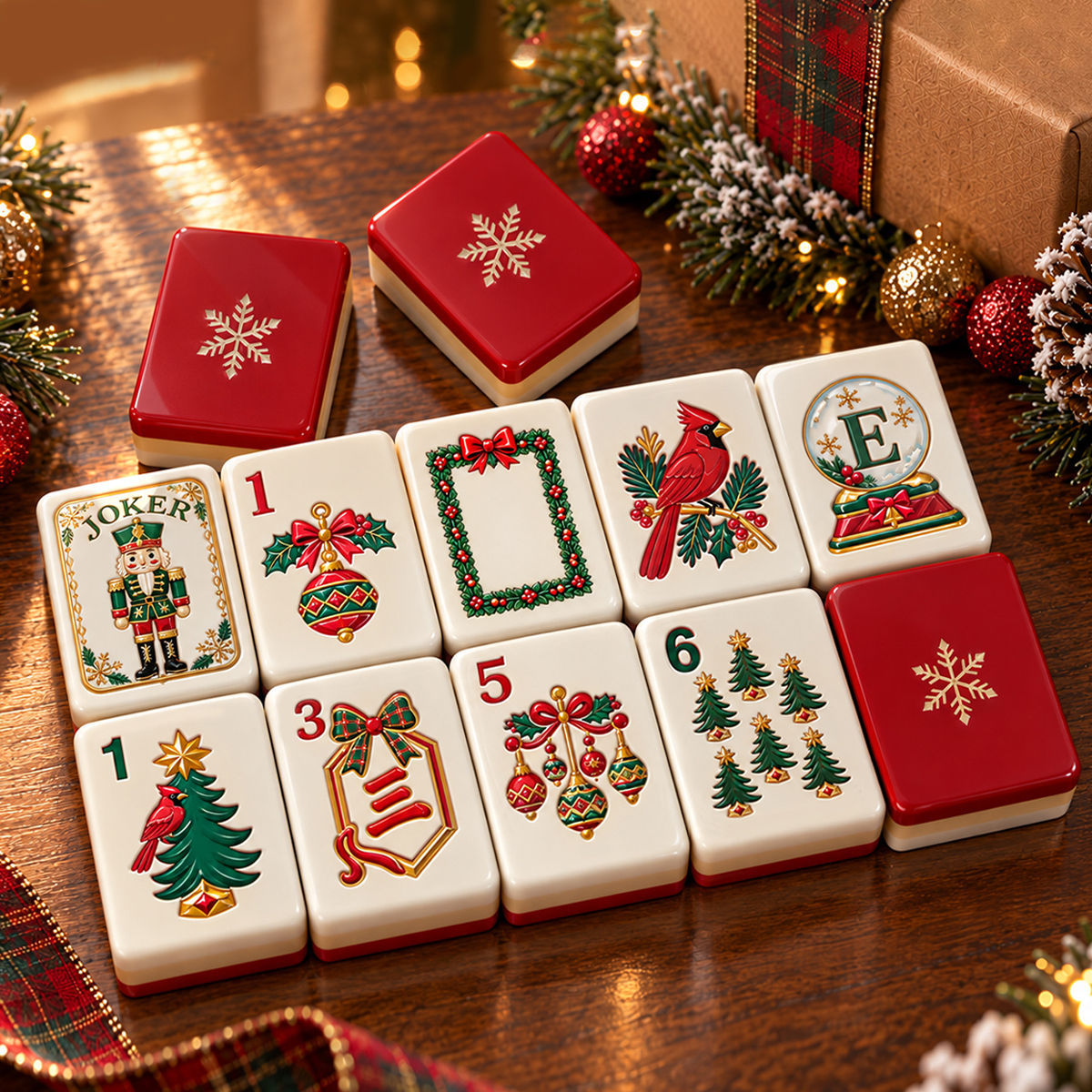
Teaching mahjong to complete beginners works best when you prioritize hand-building over scoring in the first session: show them that all American mahjong hands come from one official card each spring, that a winning hand always contains two identical tiles (the pair) plus four groups of three or four identical tiles (pungs, kongs, or joker-substituted sets), and that jokers cannot sit alone or in pairs. Start with the Charleston, the tile-passing ceremony that feels like a game before the game begins, then deal 13 tiles to each player, call "ready," and draw one tile at a time until someone declares. Walk beginners through reading the card by section—hands are grouped by pair type, then group structure—so they recognize a pattern. Most critical: never introduce joker placement rules, scoring multipliers, or the bonus points system until they've completed three hands; these layers overwhelm new players and slow learning. A full beginner session with four players takes 45 minutes to 90 minutes once everyone understands the basic hand shape. Mahstead's best-selling mahjong sets include the tiles, card, and rack in one package, which removes setup friction for new groups.
Why Does It Matter to Start with Hand-Building, Not Scoring?
Scoring feels abstract to someone who's never seen a mahjong tile move. When beginners focus first on "I need to find four groups and a pair," they're solving a concrete puzzle—they can look at their rack, spot patterns, and chase a goal. Once they complete a hand and win, they feel the reward, and suddenly the scoring system makes sense because it explains why that hand was better than the one they almost built. We've hosted dozens of new-player games, and groups that spend ten minutes on scoring before dealing never finish a full hand; groups that start with the hand shape and ask "what's this worth?" after someone wins stay focused for four consecutive rounds.
Explain it this way: "You win by building this shape: two matching tiles plus four groups of three or four identical tiles each. Those groups can be three in a row? No—never. Always three or four of the same tile. Here's your card; find a hand and read it section by section. If your tiles match what's printed, you call 'mahjong.'" That's the entire introduction. Leave scoring cards, bonus hands, and concealed kongs for session two.

What's the Correct Order for a Beginner Game Setup?
Setup order matters because it teaches the rhythm without forcing players to memorize a rulebook. Follow this checklist in sequence:
Give each player a rack. Show them how tiles fit upright in the grooves so they can see their hand without exposing it to others. A mahjong rack with pushers holds 13 tiles and keeps them from sliding during the Charleston; beginners typically drop tiles without a rack, which kills momentum.
Explain the Charleston. Say: "We're about to pass tiles clockwise three times. Each pass, you choose three tiles from your hand you don't want and place them face-down in front of you. Pass right. Count to five. Pick them up. Now pass left. Now pass across. This is how we randomize our starting hands without reshuffling." Don't call it a "ritual"—call it the warm-up. It feels less formal and lets players relax before the game starts.
Deal two full rounds from the wall. (Everyone gets 8 tiles first, then 5 more, for 13 total.) Beginners understand a 13-tile hand. A 14-tile "live hand" where dealer draws extra is confusing on turn one.
Call "ready." Explain that now each player, in turn (starting east, moving clockwise), draws one tile from the wall and discards one into the center. No choices yet—just draw, show the group, discard. This teaches the mechanic so beginners see it work before they make decisions.
Sit for three complete rounds (nine turns per player) before anyone plays their first card strategically. Let them watch discards accumulate, recognize their first matching tile, and ask, "Wait, can I use that one?" That moment is when the game clicks.
How Do You Teach the Charleston Without Overwhelming Them?
Most new players don't understand the why of the Charleston—they just follow the motions and feel lost. Frame it as a three-step ritual that levels the playing field:
"When we shuffle a deck of cards, one person does it. Everyone else watches and hopes they got a good hand. Mahjong is fair because everyone reshuffles. You choose three tiles you don't want, pass them, pick up three from the person to your left, pass again, pick up three from the person across from you, and pass one more time. You just spent 45 seconds actively controlling what hand you get. Now everyone's hand is random and equal."
Demonstrate with six tiles in your hand. Place three down, move them clockwise, pick up the player's three, place them in your hand, and keep going. Say the direction aloud—right, left, across—so the second and third passes don't create confusion. Have the group do it once at half-speed without tiles, just pointing and counting, so they nail the direction before they handle the pieces.
The biggest mistake: letting beginners watch the Charleston instead of doing it. If one person shuffles and three people wait, those three disengage. Everyone passes, every time.
🀄 Shop best-selling mahjong sets →
What's the One Rule Everyone Gets Wrong?
The pung rule. Absolute beginners always think a pung is any three different tiles. You'll hear, "I have 1 Dot, 2 Dot, and 3 Dot—that's a run, right?" No. A pung is three identical tiles: 1 Dot, 1 Dot, 1 Dot. American mahjong has no runs or sequences. Every group is always three or four of the exact same tile, or three or four of a mixed set (like Red Dragon, Green Dragon, White Dragon, or different suits if the card allows it—but that's session two).
Beginners confuse this because card games and dominoes have sequences. Mahjong doesn't. Say it early and repeat: "Every group is four of a kind, three of a kind, or three different tiles if your card says so. Never different numbers of the same suit. Never. That's the biggest rule."
When someone tries to lay a 1-2-3 sequence, smile and say, "That's a run in poker. Here, we need three of the same tile or three tiles that match your card's pattern. Let's look at your card together—what can you actually make?" Turning the teaching moment into a card-reading lesson kills two birds: they remember the rule and start learning the card.
How Do You Keep a Beginner Engaged During Slow Turns?
Beginner games move slowly because players spend 90 seconds deciding which tile to discard. Use the wait time to teach, not to fill silence. While a player thinks, narrate what's happening at the table for everyone else:
"Sarah's looking for a pair of Craks. She has one 3 Crak. Everyone, look at your hand—if you have a 3 Crak, mentally note it, because when Sarah discards it might show up in the middle soon." This teaches discards-matter, which is the second layer of strategy, and it keeps the other three players actively watching.
Call attention to completed groups as they hit the table: "Tom laid three 5 Bams—that's called a pung. Now he needs one more group to fill his hand. Everyone else, avoid throwing Bams for a moment." This narrative helps players see the table as a shared puzzle, not four isolated hands.
When someone picks up a discard, praise it aloud: "Emily threw a 7 Dot. Marcus immediately picked it for his hand—smart, because he was only one group short." This reinforces the idea that discards are hints, and watching them teaches the game.
Never let a beginner sit in silence. Narrate, ask questions, and explain what others just did. Boredom kills return rates faster than losing.

What Equipment Makes Teaching Easier?
You'll want a mat that opens up the table so all four players can see the wall clearly, a full set with clear tile faces (not tiny or faded numbers), racks that hold 13 tiles upright without falling, and one physical card at the table. Here's what actually works:
Need | Why It Matters | Our Pick |
Four racks with pushers | Beginners drop tiles; racks keep hands stable and private | Mahstead racks hold 13 tiles with pushers to move groups aside as they build |
Mat with clear wall area | Beginners lose track of which pile is the "wall"; a mat marks it visibly | Mahstead mats have printed wall lines and dealer positions |
Large, numbered tiles | Tiny numbers cause hesitation and misreads; beginners second-guess themselves | Best-selling acrylic sets have crisp, large indices that read from across a table |
One printed card per game | Beginners squinting at a phone image lose focus; a card on the table is the reference | Included with every set; keep one flat under a table edge, in view but out of play |
Dice for wind assignment | Beginners forget who's east; rolling dice makes it fair and memorable | Most sets include dice; Mahstead sets have them |
The fastest way to train a table: four best-selling sets, one mat, and a group that meets weekly for six weeks. After six games, they read the card, understand the Charleston, know the hand shapes, and are ready to learn scoring and special hands.
🎁 See our most-loved mahjong sets & accessories →
What Mistakes Do Beginners Make, and How Do You Correct Them?
Mistake 1: Using jokers in a pair or alone. Beginner says, "I have two red jokers—that's my pair!" Jokers can only substitute for missing tiles in groups (a pung or kong). Never in pairs, never alone. Correct gently: "Jokers are wildcards. They fill empty spots in groups of three or four, but the pair—the two matching tiles—must always be real, no jokers." Keep a joker off the table until this rule lands.
Mistake 2: Throwing an honor tile (wind or dragon) on the first turn. New players don't know which tiles are honors, so they throw randomly. One player throws a wind; another immediately declares it and doesn't explain why it was valuable. Beginners feel ambushed. Teach proactively: "Honors—winds and dragons—are rare. When one hits the discard pile, it's often grabbed fast. Never throw one until you've discarded two or three regular tiles." This sounds like strategy, but it's really teaching tile value.
Mistake 3: Forgetting the direction of the Charleston. On the second or third pass, someone passes left instead of right. Stop gently: "We're on pass two—left this time. Count to five, then pick up." No drama. They'll remember next game.
Mistake 4: Trying to make a hand that's not on the card. Someone sees four 3 Dots and a pair of White Dragons in their rack and lays them down, then realizes they're not on the card. Prevent this by asking, before they lay: "Find that on your card—point to it." Let them search. If they can't find it within ten seconds, it's not valid. If they find it, celebrate. This turns the card-read into the gate-keeper and builds their trust in the reference.
Mistake 5: Not calling "ready." A beginner draws a tile on the second round after the Charleston and immediately starts playing strategy instead of learning the mechanic. Enforce ready: "Until everyone calls ready, we're still learning the rhythm. Once all four ready, then we play."
How Should You Introduce the Card on Session One?
The card is overwhelming if you explain the whole thing. Introduce it by section:
Show the pair section first. Say, "The top rows show every legal pair. Two Green Dragons. Two 1 Bams. Two White Dragons. Your hand always has exactly one pair—and it must match one of these rows." Point to three examples. Don't explain why certain tiles pair together; just show the visual pattern.
Show a group section next. Say, "Below the pairs, you see groups. Most groups are four of a kind or three of a kind. Some are mixed—like Red Dragon, Green Dragon, White Dragon. These are called 'dragons' or 'honors.' If you have three of these, you can lay them." Point to one mixed-group line. Don't overwhelm with options.
Connect it together. Ask a beginner, "If you pick this pair and these four groups from the card, can you show them to me on your rack?" They'll search their tiles, feel proud when they find a match, and begin reading the card naturally.
Don't explain bonus hands, concealed kongs, or quints (five-tile groups) on day one. Those are layers two and three.
What to Check Before You Buy a Set
Tile size and readability. Beginners squint at tiny numbers. Hold the set in hand—can you read a 2 Crak from three feet away without glasses? If no, it's too small. Acrylic tiles with printed indices (not stamped) stay readable after 100 games.
Rack quality. Do the tiles stand upright without leaning? Do they stay in place when the rack is moved? Cheap racks tip or let tiles slide, which frustrates beginners immediately. A quality rack costs a few dollars more and pays for itself in the first session.
Mat dimensions. A mat should be at least 24 inches wide so all four players can see the wall area clearly. Cramped mats force beginners to reach across others, which breaks focus.
Card lamination or clarity. If the card is flimsy, it'll get coffee spilled on it, pages will bend, and beginners lose the reference. A laminated card or card protector is worth the cost.
Jokers and spare tiles. A 160-tile set includes the standard 152 playing tiles plus spares (extra jokers and blanks for future replacement). Beginners never need to know about spares; just confirm the set is complete before the first game.
✨ Find your Mahstead set — free US shipping →
How Many Sessions Until They're Ready to Play Real Games?
Based on our experience hosting weekly games, most absolute beginners need five to six sessions (one per week, two hours each) to play independently:
Session 1: Hand-building, Charleston, basic turn structure. They complete one full hand and feel the win.
Session 2: Card reading, pair identification, which tiles to hold. They complete three hands; they stop guessing and start planning.
Session 3: Discarding strategy, reading the table, recognizing what others need. They claim a discard intentionally instead of by accident.
Session 4: Scoring, bonus points, and why one hand beats another. They understand why they won or lost.
Sessions 5–6: Playing with minimal coaching. They hold their own, lose without frustration, and ask questions about edge cases (concealed kongs, quints) on their own.
After six sessions, they're ready to join a regular group or play casually with friends without you at the table.

FAQ
Should I teach all four players at once, or one-on-one first?
Teach all four at once around a table. Mahjong is a four-player game; it makes no sense in isolation. One-on-one teaching creates confusion because the rhythm (draw, discard, passes, wall refill) only lands when all four players move through it together. Start with four absolute beginners at the same time—they learn faster because they're in the same boat, and no one feels behind.
What if someone doesn't have a mahjong set yet?
A best-selling Mahstead set includes everything four beginners need: 160 tiles (152 in play), a card, two dice, four racks, and jokers. Free US shipping means it arrives ready to unbox and play. No hidden pieces needed. If you're hosting weekly, order one set per table of four.
Can you teach mahjong over Zoom or video?
Not well. Teaching mahjong requires showing tile reads, Charleston passes, and discard timing in real-time. A video call adds lag and makes it hard for beginners to ask "why" mid-turn. If distance is an issue, record a 15-minute video of a full hand played at normal speed (not explained)—let beginners watch it twice, then meet in person for the first live game. Online play is for players who already know the rules.
How do I handle someone who keeps forgetting the hand shapes?
They're not forgetting—they're not internalizing because they're watching instead of doing. Hand them the card and say, "Pick any line. Now find those tiles in your hand and lay them on your rack (not on the table)." They search, they fail, they flip the card and search again, they succeed. Repetition through doing locks in the pattern. Two sessions of active searching and they'll recognize common shapes instantly.
Should beginners play for money or stakes?
No. Beginners learning a new game are anxious about making mistakes; adding financial pressure multiplies the stress and kills learning. Play for fun or tokens (bragging rights) the first four sessions. Once they're comfortable with the mechanics and scoring, adding stakes becomes optional—but never mandatory. Some groups never play for money; others do. Let the group decide after they've mastered the basics.
What if a beginner wins on their first hand?
Celebrate it. They might have lucked into a simple hand on the card, but the win is real. Beginner wins are often hands that hit fast because they're common patterns. Say, "You built that hand cleanly. Here's what it scored. See? Your pair of Craks, four Bams, four Dots, and four Dragons—that's a worth hand." Don't diminish it as luck. Next session, they'll recognize the pattern again because they won with it once.


View More
View More
View More
