
How to Store Mahjong Dice: Smart Solutions for Your Set
Last updated: Nov 23, 2026

Store your mahjong dice in a cool, dry place away from direct sunlight and moisture—ideally in a small fabric pouch, cloth box, or dedicated compartment inside your mahjong bag or case. Most players keep dice with their complete set since a standard American mahjong set includes two dice used to determine the starting hand each round. Store them separately from your tiles to avoid mixed storage and to make pre-game setup faster. A zippered drawstring pouch works well for casual players; serious weekly hosts often use a dedicated travel bag or case that keeps dice, tiles, and racks together. Keep dice away from humidity, extreme heat, and strong direct light, which can warp or fade acrylic over time. Check monthly for dust accumulation and wipe gently with a soft, dry cloth before each game.
Most of us grab our mahjong set from the same spot every week and don't think twice about where the dice live. But if you're hosting regularly or traveling with your set, proper dice storage saves you from lost pieces, warped edges, and the awkward moment when you can't find both dice five minutes before game time.
Why does dice storage matter for your game?
Mahjong dice sit in a cloth pouch or rolled across your mat dozens of times per game season. Unlike tiles, which stack and nest safely in a box, dice roll, get tossed, and are handled frequently—so they're more exposed to dust, moisture, and accidental damage. Store them carelessly and you'll face faded surfaces, cracked corners from being crushed under a closed set, or a die that's gone missing entirely. Proper storage keeps both dice clean, recognizable, and ready to shuffle every time you open your set.

Where should you actually keep your mahjong dice?
In your home, store dice in a cool corner away from windowsills, radiators, and humid areas like kitchens or bathrooms. A bedroom closet or game-room cabinet works perfectly. If you're packing your set for travel or transport to another player's house, store dice inside a small zippered pouch, a dedicated compartment of your mahjong bag, or nestled in the padding of a hard case. Never toss them loose in a box with tiles—they'll roll under furniture, accumulate dust, or get damaged by pressure. Many weekly players use a padded travel bag or case that keeps dice, racks, and the full set organized in one place, which eliminates the "where did I put the dice?" scramble.
What container is best for dice storage?
Container Type | Best For | Why It Works |
Cloth pouch (included with many sets) | At-home weekly games | Breathable, compact, keeps dust off; store on shelf |
Zippered small box | Frequent travelers | Protects from rolling; fits in a bag pocket easily |
Dedicated bag/case compartment | Rotating hosts | All game gear in one spot; minimizes loss and setup time |
Hard acrylic case with padding | Long-term storage + travel | Maximum protection; prevents warping and crushing |
If your set came with a cloth pouch—most do—use it. If you're buying dice separately or upgrading storage, look for a small zippered fabric pouch or a complete mahjong case or bag with a dedicated pocket. Avoid rigid plastic boxes that trap moisture; avoid open shelves where dust settles constantly.
How do you prevent dice from fading or warping?
Heat and UV light are the enemies of acrylic dice. Store them away from direct sunlight, heat lamps, and radiators. If you keep your set in a hot garage or car for even a few hours, the dice can warp slightly and become unbalanced—or worse, the colored surface can fade so you can't read the pips clearly. Keep them in the same stable environment as your tiles: a cool interior space. If you live in a very humid climate, add a small silica gel packet (the kind that comes in electronics boxes) to your storage pouch or case to absorb excess moisture—this is especially important if you're storing your set for months between seasons or in a basement.
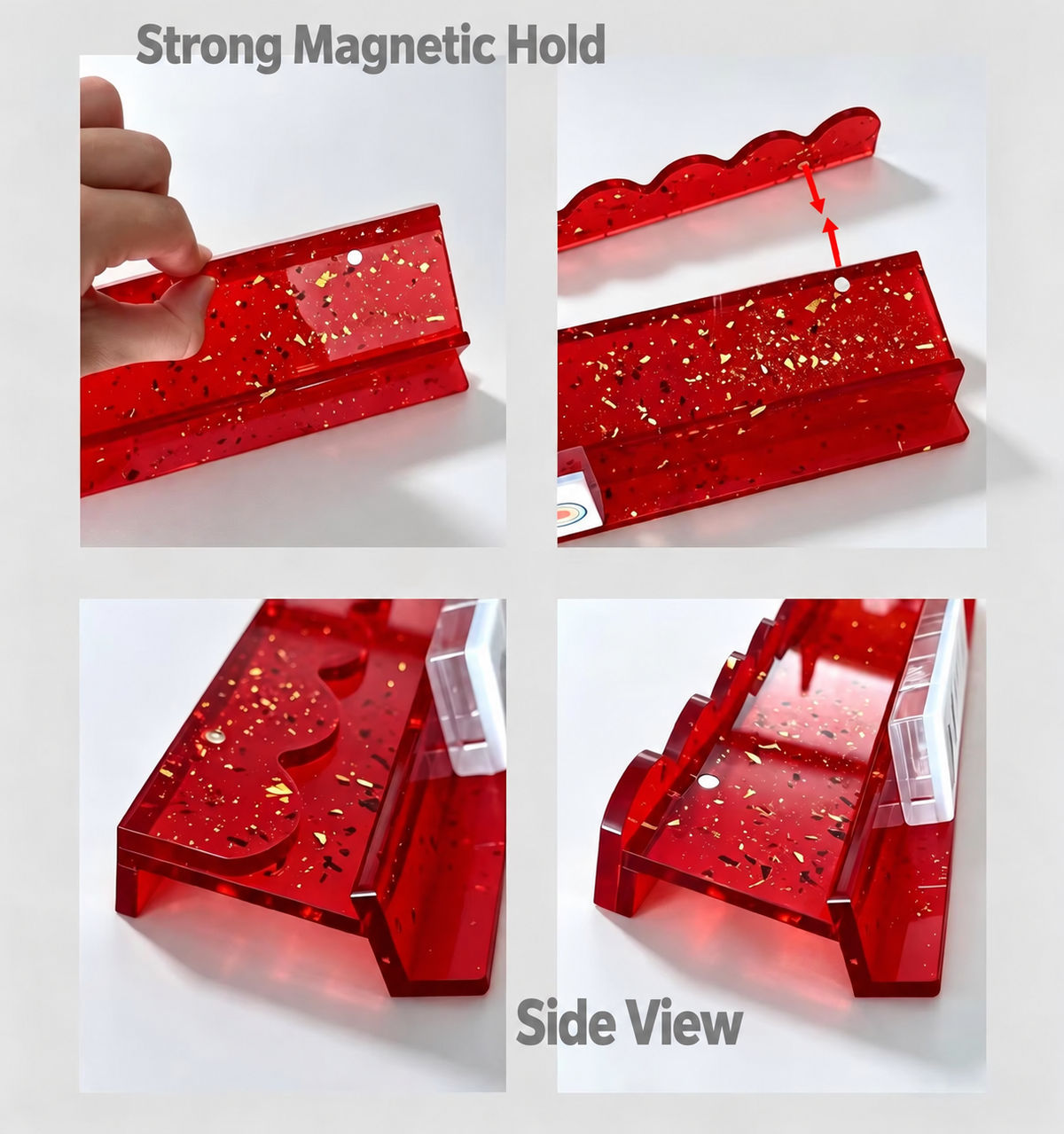
What's the fastest dice-storage setup for busy hosts?
If you host weekly games, store your dice and racks together in a single padded mahjong bag or carrying case alongside your tiles. This one-grab approach means you're not hunting for pieces in multiple drawers five minutes before your first game. Keep that bag in the same closet or cabinet every week so muscle memory takes over. Some hosts store a backup pair of dice in the same bag—useful if one die rolls under furniture during a tense round. Label your bag clearly (or use an engraved set for extra flair) so you grab the right game kit even if you own multiple sets.
What should you check before you store your dice away?
Before putting dice into storage, clean them gently with a soft, dry, lint-free cloth—never use water or cleaners, which can damage the surface or seep into cracks. Look for small cracks, chipped corners, or discoloration. If a die is visibly damaged, set it aside and replace it rather than storing a faulty piece that will throw off your shuffles. Make sure both dice roll evenly across a flat surface; if one sticks or rolls off-angle, the balance is off and it should be retired. Count to verify you have both dice before you close your storage container—most American sets include exactly two standard six-sided dice, and it's easy to lose one in a hasty pack-up after a long game night. Store the lid or closure device right next to the pouch so you always have it when you're ready to play.
🀄 Shop best-selling mahjong sets →
Common storage mistakes to avoid
Storing dice loose in a tile box. They roll everywhere, get crushed, or disappear under the stack of tiles. Use a separate pouch.
Leaving dice in a hot car. Even for an hour on a warm day, acrylic warps. Transport them inside the climate-controlled cabin.
Mixing old and new dice in the same container. If you've replaced one die, label the old one clearly and store it separately so you don't accidentally use mismatched dice at game time.
Forgetting a backup pair. If you host regularly, keep a second set of dice in your bag—one die rolls under furniture sometimes, and having a backup saves you from canceling game night.
Storing dice near strong perfumes, cleaners, or smoke. These can discolor or degrade the acrylic surface over time.
The easiest habit: treat your dice storage the same way you treat your mat and racks. If you own a quality mahjong bag or case, everything lives there. If you're a casual player with a set that stays at home, a small cloth pouch in a cool closet costs almost nothing and keeps your dice ready for the next hand.
🎁 See our most-loved mahjong sets & accessories →
Most of us never think about dice storage until one goes missing or we notice it's warped. A few minutes spent setting up a dedicated system now—whether that's a pouch, a small box, or a complete travel bag with compartments—will save you headaches every week for years. Clean them, store them dry and cool, keep them with your set, and check them before each game. That's the full recipe.
✨ Find your Mahstead set — free US shipping →

FAQ
Can you store mahjong dice in the same container as tiles?
You can, but it's not ideal. Dice roll around and can get lost under tiles or crushed by the weight of the set. Most players keep them in a separate small pouch or zippered compartment so they're easy to locate at game time.
Do acrylic dice need special humidity control?
Not special, but moisture is the enemy. Store dice in a dry room away from bathrooms and kitchens. If you live in a very humid climate or store your set long-term, a silica gel packet in the pouch helps prevent warping or discoloration.
How often should you replace your mahjong dice?
If they're unwarped, uncracked, and roll evenly, they can last for years. Replace them if one is visibly damaged, rolls unevenly, or is lost. Most players retire a die when it shows obvious wear or discoloration.
Can you store dice in a plastic bag or plastic box?
Plastic bags trap moisture and can degrade acrylic; rigid plastic boxes do the same. Use breathable fabric (a cloth pouch) or a hard case with ventilation, and avoid prolonged plastic contact.
What's the best place to store a mahjong set if you only play occasionally?
A cool, dry closet or cabinet inside your home. Keep the dice in a small pouch inside a larger travel bag or case alongside your tiles and racks so everything is together and protected when you need it.
Should you store dice separately from racks and mats?
It depends on your setup. If you have a complete mahjong bag or case with compartments, store everything together for convenience. If you store items in different locations, keep dice in one small dedicated pouch so they don't scatter or get lost.


View More
View More
View More
