
How to Store Mahjong Accessories: A Player's Guide
Last updated: Nov 23, 2026
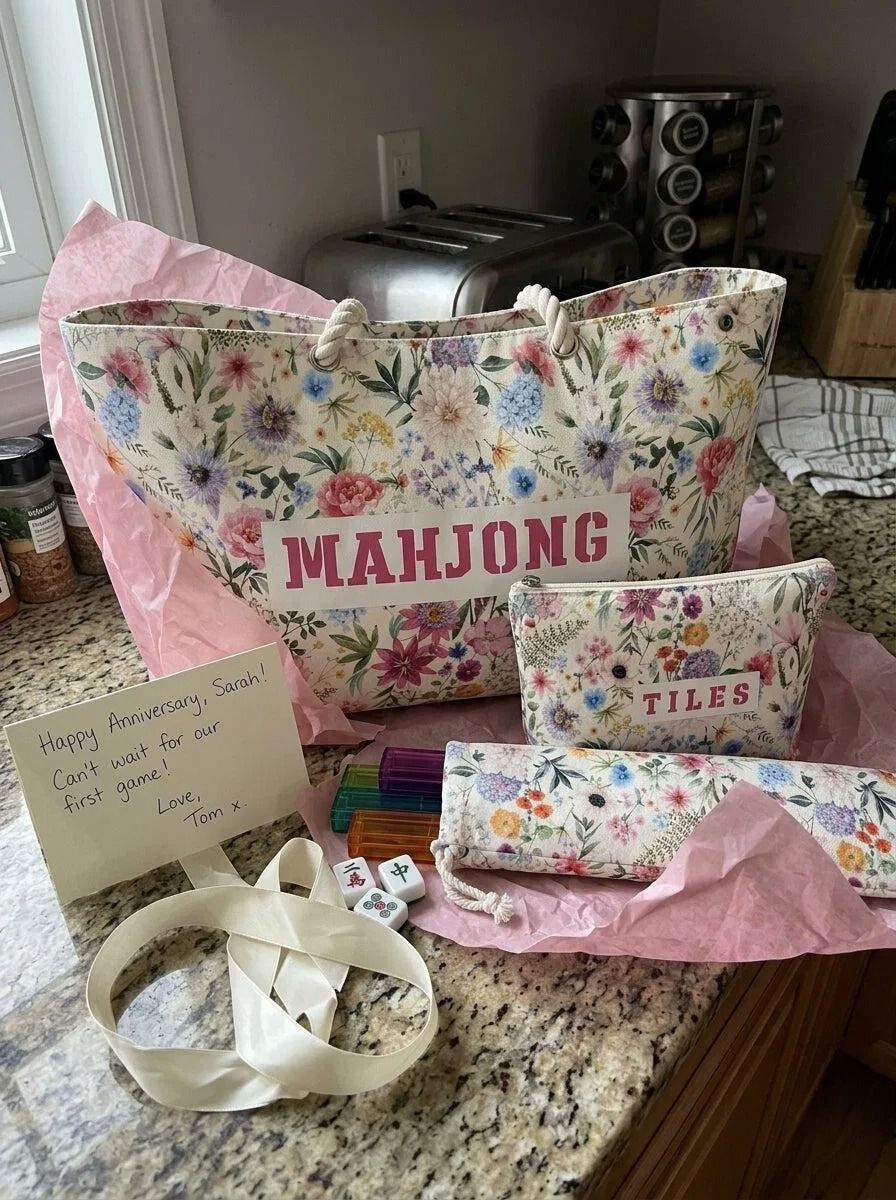
Store American mahjong tiles in a cool, dry place (50–55% humidity) away from direct sunlight and heat sources. Keep your 160-tile set in its original rigid case or a dedicated mahjong bag and case designed to protect acrylic from scratches and warping. Never stack heavy items on top of the set or leave it in a car, attic, or basement where temperature swings cause acrylic to expand and contract. Mats should be rolled (not folded) and stored flat in a cool closet; racks and pushers fit inside a drawer or small container. Check tiles quarterly for dust and wipe acrylic gently with a microfiber cloth—no water or alcohol unless you're cleaning visible residue. Jokers and spare tiles stay in the case's compartment. Players who follow these steps report tiles and racks remaining perfect after 10+ years; neglect storage and you'll see cracking, fading, and joystick looseness within 2–3 seasons.
Why does temperature and humidity wreck acrylic tiles?
Acrylic tiles expand when warm and contract when cold. Humidity causes acrylic to swell slightly, and dry air shrinks it. Repeated cycles warp the tiles so they no longer stack flat or fit smoothly in racks. Tiles stored in attics (summer heat 120°F+) or basements (winter cold + damp) fail fastest. A climate-controlled closet, bedroom shelf, or hallway cabinet stays stable year-round. If your home runs 68–72°F with steady humidity, that's ideal. Extreme swings—garage, unheated porch, sun-facing window—are your tiles' worst enemy.

Where should you keep your set between games?
Your best-selling mahjong sets come in protective cases or can be upgraded to a dedicated travel bag. For at-home storage between weekly games, leave the set in its case and place it on a shelf away from windows, radiators, and AC vents. A bedroom closet, linen closet, or cabinet in a game room works well. Avoid:
Garages (temperature swings, dust, rodents)
Basements (moisture, mold risk)
Attics (summer heat damages acrylic permanently)
Car trunks (extreme heat in summer, freeze-thaw in winter)
Direct sunlight (fades tile colors over years)
If you host weekly games at home, a designated shelf or side table in your game room keeps the set visible and ready. Store it low enough that pets or children can't knock it down.
🀄 Shop best-selling mahjong sets →
How do you store mats so they stay flat and don't crack?
Mats are heavy fabric and rubber or acrylic backing. Never fold them; creases can crack the backing or develop permanent wrinkles. Instead, roll your mahjong mat tightly around a cardboard tube (like a paper towel roll) or store it flat under a bed or in a closet on a low shelf. If you must keep it upright, lean it against a wall in a cool room—not near heat or moisture. Mats should lie completely flat for at least 24 hours before your next game so the fabric relaxes and sits evenly on the table. Store the mat in its original bag if you have one; the bag protects it from dust and pets. Once a year, wipe the mat's surface with a damp (not wet) microfiber cloth and let it air-dry completely before rolling it up again.
What's the right way to store racks, pushers, and small accessories?
Mahjong racks with pushers are wood or acrylic with moving joints. Store them upright or flat in a drawer—never stacked under weight, which can crack joints or bend pushers. Keep them in a cool, dry place; moisture loosens wood and causes acrylic to warp. Pushers can be removed and stored separately in a small bag or pouch if space is tight. Check that no pushers are stuck in the "open" position when you put the racks away; closed position keeps them from catching dust or breaking. If your racks live in a humid climate, wipe them with a dry cloth monthly. Dice, score sticks, and other small items stay in a labeled zippered pouch inside your main case or bag. This prevents loss and keeps everything together for transport.

Should you clean tiles before storing them?
Yes, but gently. Before putting your set away for the off-season or even between games, use a soft, dry microfiber cloth to wipe each rack of tiles—swipe once in one direction, don't rub back and forth. This removes dust and fingerprints without introducing moisture. If tiles are visibly soiled (coffee spill, food residue), dampen the cloth slightly with distilled water, wipe the affected tiles once, and dry immediately with a separate dry cloth. Never use rubbing alcohol, vinegar, or soap; these can dull the acrylic gloss or damage any engraved text. Store the cloth in a drawer near your set so it's always handy. Do not clean tiles while they are in the racks; remove them first, clean the rack, then put tiles back. A quarterly wipe-down keeps your best-selling mahjong sets looking brand-new.
🎁 See our most-loved mahjong sets & accessories →
What does a proper storage setup checklist look like?
Use this checklist before storing your set for a season or after each game night:
Tiles & Set
[ ] Remove dust with microfiber cloth
[ ] All 160 tiles present (check spare jokers are accounted for)
[ ] Place set in rigid case or dedicated bag
[ ] Store on shelf away from direct sun, heat, moisture
Mats
[ ] Wipe surface if needed; air-dry completely
[ ] Roll (never fold) around cardboard tube or store flat
[ ] Lay flat 24 hours before next use
Racks & Pushers
[ ] Check all joints are intact, pushers move smoothly
[ ] Store upright or flat—never under weight
[ ] Wipe with dry cloth to remove dust
Accessories
[ ] Dice, score sticks, tiles in labeled pouch
[ ] Jokers and spare tiles in case compartment
Storage Environment
[ ] Room temperature 68–72°F, humidity 50–55%
[ ] No direct sunlight, AC vents, or heat sources
[ ] Away from pets, children, moisture, pests
Storage Condition Comparison
Environment | Risk Level | What Happens | How to Fix |
Climate-controlled closet | ✓ Safe | Nothing—tiles stay perfect | None needed |
Bedroom shelf (away from window) | ✓ Safe | Minor dust; wipe quarterly | Dry cloth |
Basement | ✗ High risk | Warping, mold, joystick damage | Move to closet |
Garage | ✗ High risk | Heat damage, humidity swings, pests | Move to closet |
Attic | ✗ Very high risk | Permanent warping, color fading | Unplayable within 1–2 years |
Car trunk | ✗ Very high risk | Extreme heat, freeze-thaw cracking | Tiles split |
What to check before you buy storage containers
If you're buying extra mahjong bags and cases or storage organizers:
Rigid base: Soft pouches don't protect tiles from crushing if stacked.
Compartments: Separate pockets for tiles, mats, racks, dice prevent scratching.
Material: Nylon or canvas exterior; padded interior for acrylic.
Size: Confirm it fits your 160-tile set plus mat and racks (or tiles and racks only if mat stays rolled elsewhere).
Airflow: Avoid airtight seals, which trap moisture. A breathable bag is better.
Handles: If you move your set often, padded handles reduce hand fatigue.
Waterproof lining: Optional but smart if you travel to humid climates or store near a bathroom.
We've seen players use decorated, engraved sets as semi-permanent display pieces; if that's your plan, keep the set in its case on a high shelf away from sunlight to preserve the colors and engraving for decades.
✨ Find your Mahstead set — free US shipping →
FAQ
Can you store mahjong tiles in a plastic bin in the garage?
No. Garages have extreme temperature swings (50–120°F) and humidity fluctuations that warp acrylic tiles within 1–2 seasons. Use a climate-controlled closet or bedroom shelf instead. A garage is the fastest way to ruin a set.
How often should you wipe down tiles and racks?
Wipe tiles with a dry microfiber cloth before storing them after each game night, and do a deep quarterly check for dust or residue. Racks should be wiped monthly if stored in a humid room. This keeps everything clean and lets you spot early damage.
Does sunlight fade mahjong tile colors?
Yes. Direct sunlight (especially UV rays through south or west-facing windows) fades acrylic colors over months to years. Store your set on a north-facing shelf or in a closed cabinet away from windows to preserve the vibrant colors and any engraving.
Can you store a mat folded if you don't have much space?
Not long-term. Folded mats develop permanent creases in the fabric and can crack the acrylic backing. If space is tight, roll the mat instead. If you must fold it temporarily, unfold and lay it flat for 24 hours before your next game to let the fabric relax.
What humidity level is safe for mahjong tiles?
50–55% humidity is ideal. Below 40% causes acrylic to shrink and crack; above 70% encourages warping and mold. Most climate-controlled homes stay in this range. If you live in a very humid climate, store your set in a room with a small dehumidifier or air conditioning.


View More
View More
View More
