
How to Read Mahjong Craks: Tiles, Symbols & Quick ID
Last updated: Nov 23, 2026
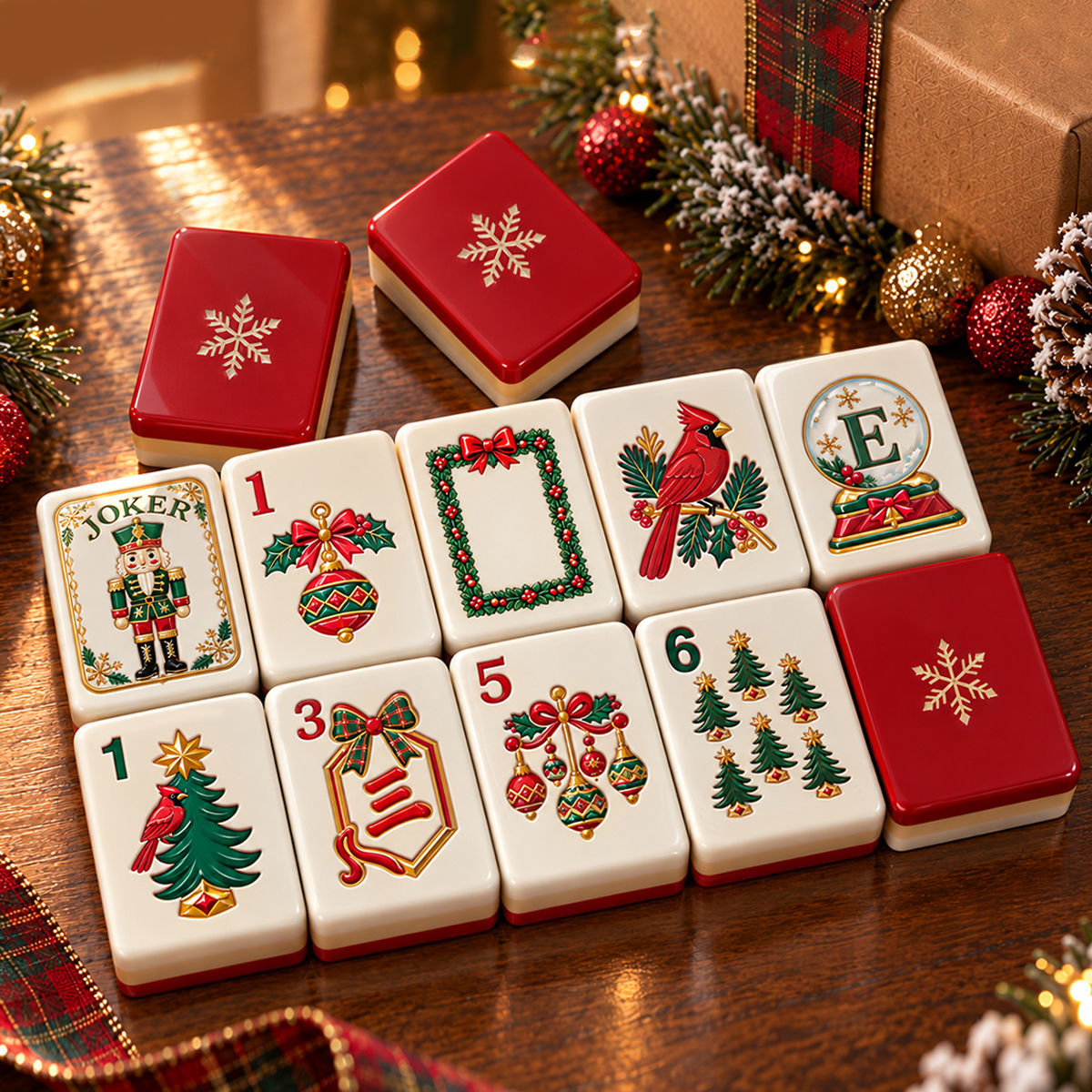
Craks are the second of three numbered suits in American mahjong (alongside Bams and Dots), numbered 1–9 with four copies of each in a standard 152-tile set. Each Crak tile displays its number plus a symbol—traditionally a Chinese character or stylized currency mark representing coins or a bamboo grove, depending on the tile set design. You'll recognize them by their visual pattern in the upper left and lower right corners, matching the number shown. When reading the National Mah Jongg League card, Craks appear abbreviated as "C" (e.g., "1C" = one Crak). Unlike suit combinations that require sequences (Bams 1-2-3), American mahjong uses Craks only in pungs (three identical tiles), kongs (four), or mixed sets. The symbol itself is standard across most tile sets sold today, though engraved or themed designs vary in artistic style.
Craks are one of three number suits in American mahjong, marked by a distinctive bamboo or currency symbol. Once you know what to look for, reading them becomes automatic.
What does the Crak symbol actually represent?
The Crak symbol has its roots in Chinese mahjong tradition, where it originally depicted coins stacked and strung together (a bundle of currency). Modern tile sets render this as a stylized badge, circle, or bamboo design—the exact artistic rendering depends on the manufacturer. What matters: every tile of the same Crak number looks identical, so the symbol is consistent across all your sets. Look at your 1 Crak: it should have the same coin/bamboo mark as your 5 Crak or 9 Crak, only the number changes.

How do I spot a Crak tile versus a Bam or Dot?
Craks always display their symbol as a discrete badge or emblem, distinct from the Bam's bird motif (usually shown on the 1 Bam) and the Dot's simple circle or pip pattern. Bams show a pictorial bird or bamboo design; Dots appear as small filled circles or dots arranged in patterns. On best-selling mahjong sets, symbols are printed clearly on both the face and reverse of each tile, so orientation doesn't matter. Hold a Crak, Bam, and Dot side by side: the three symbols are instantly visually distinct. The suit letter—C, B, or D—is printed on the tile itself in American sets, making identification foolproof once you've seen a few rounds.
🀄 Shop best-selling mahjong sets →
Why do Crak symbols look different between sets?
Artistic variation is intentional—different manufacturers and designers interpret the traditional Chinese coin or bamboo mark in their own style. Some engraved American mahjong sets feature minimalist line drawings; others use bolder or more ornate renderings. A few modern sets use thematic symbols instead (animals, stars, or personalized engravings for gifts). The key rule: within your own set, all Craks of the same number are identical, and all three suits (Bam, Crak, Dot) remain visually distinct. If you play in tournaments or with the National Mah Jongg League card, the symbol variation doesn't affect hand recognition—you read by number and suit letter, not the artistic style.
What does "2C" or "5C" mean on the mahjong card?
On the League card, "C" stands for Crak, and the number is the tile's number (1–9). So "2C" = two Crak, "5C" = five Crak. When you see a line on the card reading "2C 3C 4C," you're looking for one each of those three tiles to form a pung (three identical tiles) or part of a larger set. The card never shows sequences (runs) involving number suits in American mahjong—you cannot call or expose 1-2-3 or any run of Craks, Bams, or Dots. Craks appear in pairs, pungs, kongs, quints, and sextets only. Learning to spot "C" instantly on the card speeds up your game dramatically.

How do I practice reading Craks under pressure?
Start by laying out a complete Crak suit (1–9, four copies each = 36 tiles) and sort them by number without looking at the card. Then pick a tile from the pile and call it aloud—"7 Crak"—before checking. Do this for 2–3 minutes each session. Next, mix Craks with Bams and Dots (keeping numbers separate) and repeat. Play slow practice rounds with friends where you pause after each draw and say the tile name aloud. Most players nail this skill within 3–4 weeks of casual practice. Keep a mahjong mat with clear tile areas (hand, melds, discard) so you're practicing in a game-like setup. Speed comes naturally after 20–30 games.
Suit | Symbol | Abbreviation | Quick ID tip |
Bam | Bird or bamboo plant | B | Most ornate or pictorial |
Crak | Coin/currency badge | C | Central circular or coin-like mark |
Dot | Simple pip or dot circle | D | Minimalist, repeated dots only |
🎁 See our most-loved mahjong sets & accessories →
What common mistakes should I avoid when reading Craks?
Confusing Crak with Dot: If tiles are worn or lighting is poor, a faded Crak symbol can look like a plain dot. Solution: always check the suit letter printed on the tile (C, D, or B), not just the symbol. Misreading the number: The Chinese numeral or Arabic number on the tile is your truth—double-check it if you hesitate. Assuming symbol style = different set: Artistic variation is normal; don't assume a fancier-looking Crak means it's a different suit. Playing without the card nearby: New players often try to memorize hands instead of referencing the current year's League card; always keep it visible. Ignoring joker substitutions: When a Crak appears in a pung or kong with a joker in place of one tile, you still read it as a Crak set—the joker just fills the missing tile.
What to check before you buy a mahjong set
Before ordering, confirm that the tile symbol is clearly printed on both sides (face and back). Ask whether the suit letter (C, B, D) is engraved or printed—both work, but printed text fades with time. Verify the set is 160 tiles (152 playing tiles plus spares) so you have replacements if a tile chips. Check that Craks are visually distinct from Dots and Bams in the product photos—if all three suits blur together, the manufacturer's design is unclear. For travel or gifted sets, a mahjong bag or case with organized compartments makes sorting and protecting tiles much easier during play.
✨ Find your Mahstead set — free US shipping →

FAQ
Can I use Craks in a sequence like "1C 2C 3C" in American mahjong?
No. American mahjong does not allow number-suit sequences (chows). Craks, Bams, and Dots form only pungs (3), kongs (4), quints (5), or sextets (6)—all identical tiles. Sequences are not playable or exposable.
What's the difference between a 1 Crak and a 1 Bam if I can't see the symbol clearly?
Check the suit letter printed on the tile (C or B). The symbol should also differ—Craks show a coin/badge; Bams show a bird or bamboo plant. Under good light, the two are unmistakable.
If a Crak tile looks worn, how do I know it's still playable?
As long as the number and suit letter remain readable, it's legal. If the symbol is completely worn away but the C letter and number are clear, read it by those marks. Most worn tiles are still identifiable.
Do I need to memorize what each Crak number looks like?
No, but you'll memorize it naturally after 10–15 games. Start by always checking the printed number; speed comes from repetition, not effort.
Why do some Crak tiles have a different artistic style in my set?
Manufacturer choice or theme—engraved sets sometimes use personalized or thematic designs. Within your set, all Craks remain identical and visually distinct from Bams and Dots, so gameplay is unaffected.


View More
View More
View More
