
How to Play Western Classical Mahjong: Rules & Setup
Last updated: Nov 23, 2026
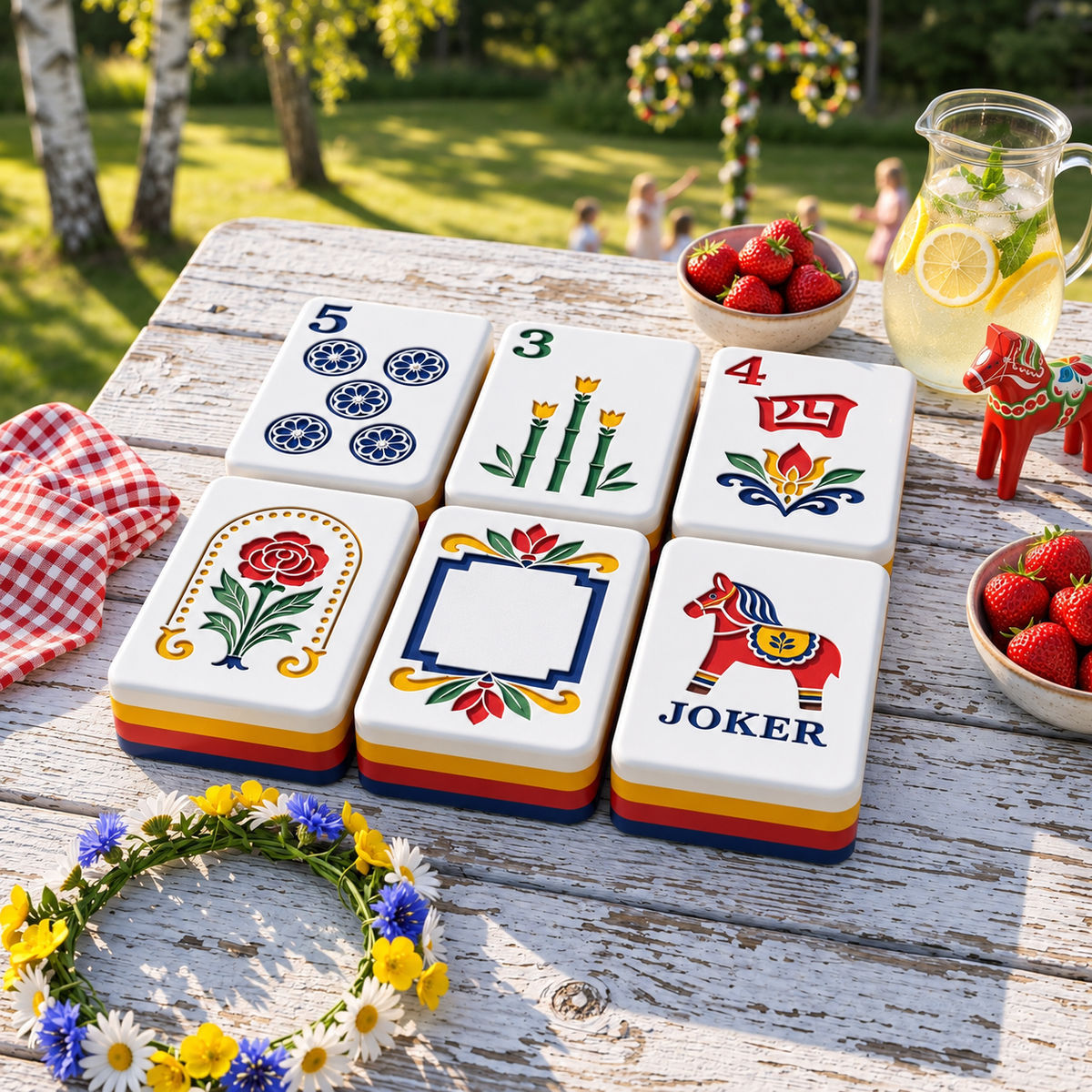
Western classical mahjong is played with 152 tiles (108 suited tiles in three suits—Bams, Craks, Dots—numbers 1–9 in each; 16 winds; 12 dragons; 8 flowers; and 8 jokers). Four players sit around a table, each drawing and discarding tiles in turn. The goal is to form a "winning hand"—typically 14 tiles arranged into four melds plus a pair, though classical patterns vary. A hand lasts roughly 15–20 minutes. Unlike American mahjong (which requires matching hands from an annual card), classical mahjong uses fixed traditional patterns: pungs (three identical tiles), kongs (four), and sequences. Setup involves a tile wall, Charleston-style passes, and live dealing from the wall.
What makes Western classical mahjong different from American mahjong?
American mahjong uses a laminated reference card (updated yearly by the National Mah Jongg League) that defines every legal hand. Classical mahjong has no card—instead, players learn a fixed set of traditional winning patterns. American mahjong forbids sequences (called "chows") entirely; classical play permits them freely. American sets include no sequences visible in play; classical play exposes them. American jokers cannot substitute for a pair; classical jokers can fill almost any tile role. American mahjong pungs and kongs must be identical tiles exposed on the table; classical mahjong allows concealed melds. In short: American mahjong is standardized annually by a League card; classical mahjong is timeless and pattern-based.

How do you set up and start a classical mahjong hand?
Before tiles are drawn, the four players pass tiles to one another in a ritual called the Charleston. Each player passes three tiles right, then three left, then three across. A fourth optional pass allows returning three tiles right. After the Charleston, the player designated as "East Wind" (often rotating each hand) arranges 152 tiles face-down in a long wall around the table. The wall is 38 tiles long and two tiles high on each side. East draws first: taking two tiles from the top-right of their wall section, revealing one tile face-up as the "Kong" tile (which ends play). Each remaining player draws two tiles. East then draws one more, making 14 tiles; the other three players have 13. Play begins with East discarding one tile face-up into the center.
🀄 Shop best-selling mahjong sets →
What are the core winning patterns in classical mahjong?
The most common winning hand is "14 tiles: four melds plus a pair." A meld is either a pung (three identical tiles), a kong (four identical tiles), or a sequence (three consecutive suited tiles: 1–2–3 Bams, or 5–6–7 Dots, for example). A pair is two identical tiles. So a winning hand might be: three 2 Dots + three 5 Bams + three 1 Craks + 2–3–4 Dots (a sequence) + two White dragons. That totals 14 tiles, four melds, and a pair—a win. "Special hands" exist in classical play: a hand of all pungs and kongs (no sequences), a hand of all terminals and honors (1, 9, winds, dragons), or a hand of one suit only. Each variant carries different point values, creating deeper strategy.
Pattern Type | Tiles in Hand | Melds Required | Example | Point Multiplier |
Standard (one suit + honors) | 14 | 4 + pair | Three 3 Bams, three 2 Craks, three E winds, 5–6–7 Dots, pair of Reds | 1× |
All Pungs/Kongs | 14 | 4 + pair (no sequences) | Three 4 Bams, three 7 Dots, three W winds, four 1 Craks, pair White | 2× |
All Terminals & Honors | 14 | 4 + pair (1s, 9s, winds, dragons only) | Three 1 Bams, three 9 Craks, three N winds, three Red dragons, pair White | 3× |
Dragon Hand | 14 | Includes one dragon triplet | Three 2 Dots, three Red dragons, three 4 Bams, 1–2–3 Craks, pair Green | 1× |
Clean Hand (one suit) | 14 | 4 + pair (same suit + honors) | All tiles from Bams, with wind triplet | 2× |
How do players call, draw, and claim melds during play?
On your turn, you either draw from the wall or receive a discard. After drawing 14 tiles, you discard one face-up. If another player needs that tile to complete a pung, kong, or winning hand, they call "Pung," "Kong," or "Win" and stop the game. A pung claim exposes three matching tiles; a kong exposes four. Both are placed openly. A winning call ends the hand immediately; the winner scores based on their pattern and any bonuses (called "chow hands," "flower bonuses," or "drawn wins"). If no one calls the discarded tile, play passes to the next player, who draws from the wall. This cycle repeats until someone wins or the wall is exhausted (a "wall game," which is a draw).

What scoring system do classical players use?
Classical mahjong scoring varies by regional ruleset, but most Western groups use a "point total" system. A basic win is worth a fixed amount—often one point or one unit (could be one dollar, one chip, or one point). Bonus multipliers apply: a hand of all pungs (no sequences) might be worth 2 points; a hand of one suit only, 2 points; a hand using all four dragons, 3 points. Drawing a winning tile from the wall (rather than calling a discard) adds a bonus. Winning on your first turn after drawing tiles is a bigger bonus. Each player who does not win pays the winner their share of the hand's total points. A player who discarded the winning tile may pay extra. Scores accumulate across multiple hands; the player with the highest total after 16 hands (four rounds of four hands each) wins the session.
🎁 See our most-loved mahjong sets & accessories →
What tiles should a beginner watch out for?
New players often confuse tiles that look similar: the 1 Bam (which displays a bird, not a traditional "1" symbol), the White dragon (also called "Soap"—a blank tile that serves as zero and pairs well with Dots), and flower tiles (which do not count toward hand combinations; they are bonuses only). The four seasons and four flowers are bonus tiles: drawing one lets you reveal it, set it aside, and draw an extra tile from the dead end of the wall immediately. Never lose track of how many tiles of each rank are still in the wall; if three 5 Craks have been discarded, only one remains. Watch for kongs: if a player reveals four identical tiles, the wall shrinks, and the hand ends sooner. Jokers are valuable but limited—there are eight total. Use them wisely; don't waste them on a low-scoring hand. A sound strategy is to keep flexibility early, aim for patterns worth bonus points, and discard "dangerous" tiles—those no one else is likely to need.
What you'll need to learn classical mahjong
A full best-selling set includes all 152 tiles, 8 jokers, and spare tiles. Pair it with a mahjong mat for a smooth, organized play surface and racks with pushers to sort and hold your hand without fumbling tiles. If you host regularly, a travel bag or case keeps everything protected and portable. Engraved sets from our mahjong titles collection make hosting feel special and help players remember whose set it is.
Before you buy: what to check
Ensure your set includes all 152 tiles in clear view (count them or verify the packaging states 160-tile set, which includes spares). Check that tiles are acrylic or bone/bamboo—they slide and stack predictably on a mat. Verify the mat is large enough for all four players to reach comfortably; standard mats are 30–36 inches on a side. Confirm racks have pushers; pushers let players move tiles without lifting them, reducing fumbles and keeping the hand hidden. If you play weekly, invest in a padded bag; tiles are durable but unpadded storage can crack corners over years. Read the ruleset your group uses (Western classical rules vary by region); print or bookmark a reference card so new players have a resource.
✨ Find your Mahstead set — free US shipping →

FAQ
Can I play classical mahjong with an American mahjong set?
Yes, in principle—both use 152 tiles and the same basic suits. However, American sets often omit clear sequence symbols on the tiles, making it harder to read hands visually. You'll also need a printed reference for classical patterns, whereas an American player uses the annual League card. Start with a set intended for classical play to avoid confusion.
How long does a single hand of classical mahjong take?
A typical hand takes 15–20 minutes if all players are familiar with the rules. A full session (16 hands, roughly four rounds) takes 4–5 hours with breaks. Faster players may finish in 3 hours; slower groups or newcomers often take 6 hours.
What is the difference between a Kong and a Pung in classical mahjong?
A pung is three identical tiles; a kong is four identical tiles. Both are melds that can be exposed when another player discards a tile you need. A kong is worth more points because it uses more tiles from the limited pool, making it rarer and more valuable in scoring.
Do I have to pass tiles in the Charleston at the start of every hand?
Yes. The Charleston happens before every hand. Each of four players passes three tiles right, three left, three across, and (optionally) three right again. This shuffle ensures tiles are distributed randomly and no player begins with an obvious advantage.
Can jokers be used as any tile, or are there restrictions?
In classical mahjong, jokers are wild and can substitute for almost any tile—suited tiles, winds, or dragons. However, many regional rulesets forbid using a joker as a pair. Some restrict jokers in winning hands or penalize hands with many jokers. Check your group's ruleset; if unclear, assume jokers can fill any tile except a pair.
How do I know if my hand is a winner?
You have 14 tiles arranged into four melds (pung, kong, or sequence) plus a pair. Verify each meld is legal: three or four identical tiles, or three consecutive suited tiles (e.g., 2–3–4 Bams). The pair must be two identical tiles. If all four melds are valid and the pair is complete, you have a win. If uncertain, other players can verify your hand before you collect your points.


View More
View More
View More
