
How to Play Hong Kong Mahjong: Rules & Game Setup
Last updated: Nov 23, 2026
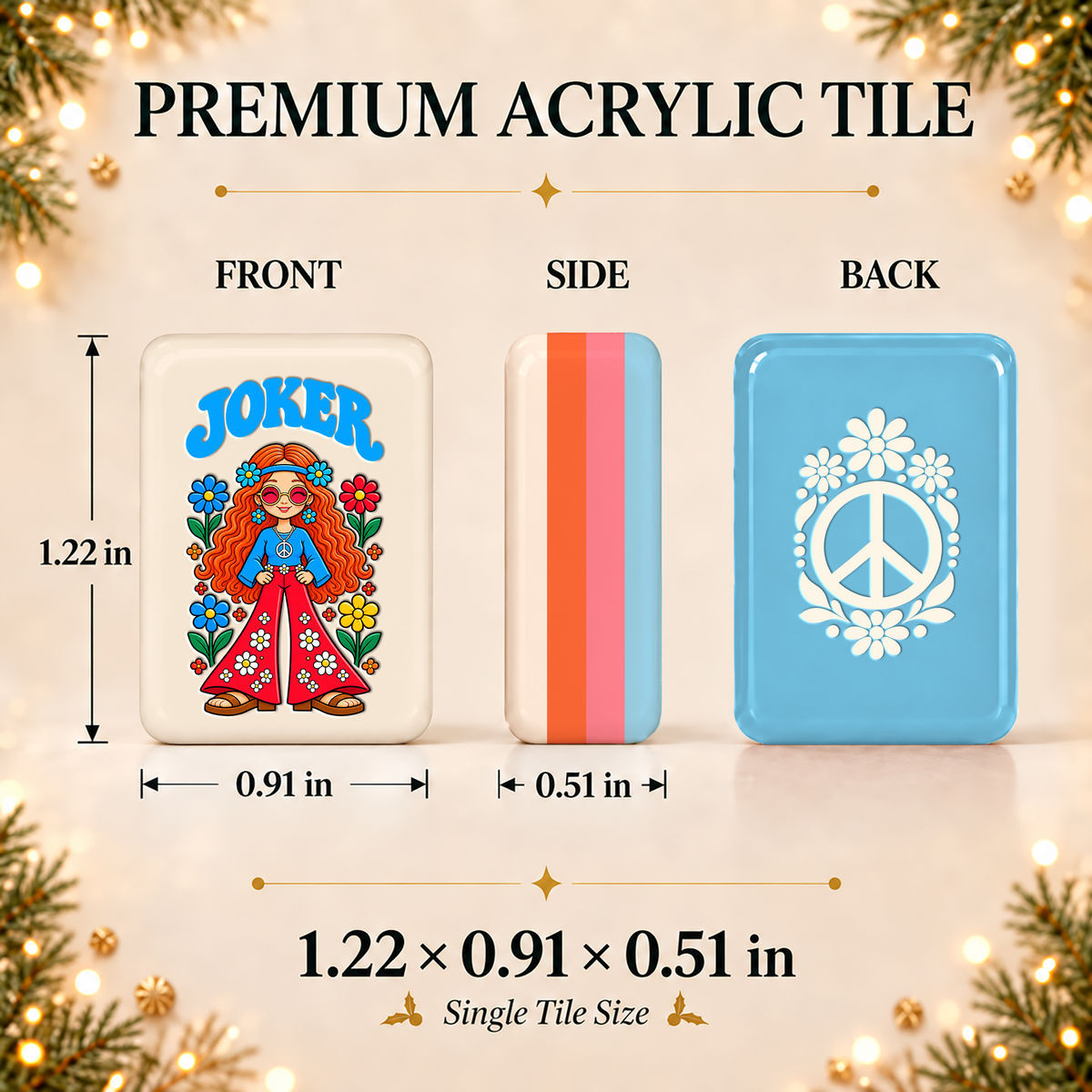
Hong Kong mahjong uses 136 tiles—three suits (Bamboo, Character, Dot) numbered 1–9 in four copies each, plus 16 winds and 12 dragons—no flowers or jokers. Four players each draw 13 tiles; East deals and draws first, making 14. Winning hand is 14 tiles: four melds (chows, pungs, kongs) and one pair. A chow is three consecutive numbers in one suit (like 2–3–4 Bamboo); a pung is three identical tiles; a kong is four identical. Unlike American mahjong, chows can be called from other players' discards, and the hand card changes nightly. A round lasts until East loses; players rotate. Hong Kong games favor speed and tactical discard reading over rigidity. Many players use a compact set like our best-selling acrylic collections when learning multiple variants.
Hong Kong mahjong is a faster, looser variant where sequences (chows) and single pairs count, jokers don't exist, and winning hands are simpler. We walk you through the core rules, setup, and how it differs from American play.
What tiles come in a Hong Kong set?
A Hong Kong set contains 136 playable tiles: one suit of Bamboo (1–9, four of each), one of Character (1–9, four of each), one of Dot (1–9, four of each)—that's 108 tiles. Plus 16 winds (North, East, South, West, four of each) and 12 dragons (Red, Green, White, four of each). Total: no flowers, no jokers, no blanks. The setup is identical regardless of which language or region marks the tiles.

How do you set up and deal in Hong Kong mahjong?
Four players sit around a table. Decide East (dealer) by casting dice or drawing tiles. East faces south; the other players are South (facing north), West (facing east), and North (facing west). Each player builds a wall of 34 tiles in two rows facing inward, then pushes tiles together so the wall is 34 wide and two high. East rolls two dice, counts counterclockwise around the table, and breaks the wall at that point. East draws 14 tiles from the wall in sets of four (drawing from right to left along the wall), then each other player draws four tiles twice, then one tile each—so East has 14, others have 13. All tiles are kept hidden on a personal rack. Discard order is East → South → West → North → East.
What counts as a winning hand?
A winner holds 14 tiles forming four melds and one pair. Each meld is either:
Pung: three identical tiles (e.g., 3 Dot, 3 Dot, 3 Dot)
Kong: four identical tiles (e.g., North, North, North, North)
Chow: three consecutive numbers in the same suit (e.g., 2 Bamboo, 3 Bamboo, 4 Bamboo)
The pair is always two identical tiles (e.g., 5 Character, 5 Character). A valid winning hand might be: pung of 7 Dots, chow of 1–2–3 Bamboo, kong of East winds, chow of 8–9 Character and 1 Character (called a "wrap"), and a pair of White dragons. No jokers substitute for missing tiles—the hand must be concrete. East wins on a draw from the wall (called "self-drawn win" or tsumo); any player can win on another's discard (called ron). When someone discards a tile, any player can claim it to complete a pung, kong, or chow—this is called "calling." The game ends the moment someone declares a win.
🀄 Shop best-selling mahjong sets →
How does play flow turn by turn?
East draws one tile from the wall, then discards one tile face-up into the center. South looks at the discard: if it completes a pung, kong, or chow they're building, they call it aloud and expose those tiles (removing one tile if a chow to maintain 13 hidden tiles before winning). If no one calls, South draws one tile and discards one. This repeats until East loses (someone else wins). At that point, East passes East status to the next player, usually South, and tiles are shuffled and reset. Many groups play multiple rounds (rounds are often called "winds") so each player gets turns as East. After four rounds (one at each wind), the game ends and scores are tallied.

How is Hong Kong mahjong different from American?
Aspect | Hong Kong | American |
Tiles | 136 total; no jokers, flowers, or blanks | 152 tiles + 8 jokers (160 set); 8 flowers, 12 dragons, no blanks in play |
Chows (sequences) | Allowed, can be called and exposed | NOT allowed—no sequences exist |
Pair in hand | Any two identical tiles | Two identical tiles, but jokers cannot form a pair |
Melds | Pungs, kongs, chows, one pair per hand | Pungs, kongs, quints (5), sextets (6), one pair; jokers only in melds |
Hand card | Changes nightly; local or published variant | Fixed National Mah Jongg League card (issued every spring) |
Calling | Can call any player's discard to complete melds | Can only expose sets; no calling from discards |
Joker use | None | 8 jokers in play; can substitute for any tile in a meld but not in a pair or single |
Winning | Self-drawn (from wall) or off another's discard | Only off current discard; must match a printed hand from the League card |
Speed | Faster; fewer tiles, looser rules | More rigid; strategic card reading |
Hong Kong is looser and faster because chows are simple (three in a row) and calling from others' discards lets players interrupt and block. American mahjong is more cerebral—players memorize the yearly hand card and plan around joker placement.
What common mistakes should beginners avoid?
Forgetting chows are legal. New players from American backgrounds often discard as if no sequences exist, then miss calling opportunities. Every discard can feed a chow, so watch what others are collecting.
Holding the wall incorrectly. If the wall isn't compact or tiles aren't drawn in the right order, the game unravels. Before dealing, confirm all players have a neat wall 34 tiles wide and two tiles high.
Calling too slowly. When someone discards, you have seconds to decide. Hesitation can mean forfeiting the tile. If you want it, speak up immediately.
Breaking the wall wrong. East must roll two dice, count around the table counterclockwise (not clockwise), and break the wall at that position. Miscounting changes the entire deal.
Mixing in American rules. If half your table plays American and half Hong Kong, chaos erupts. Agree on the variant before shuffling tiles.
What to check before you buy a Hong Kong mahjong set:
Confirm it contains 136 tiles (Bamboo, Character, Dot, winds, dragons—no jokers or flowers).
Check that tiles are large enough to read quickly in dim light (acrylic tiles are durable and easy to clean).
Verify the set ships with a cloth bag for portability; many groups rotate hosting duties.
If you play both American and Hong Kong, a best-selling mixed-variant set lets you swap tile counts, though American sets have jokers Hong Kong ignores.
🎁 See our most-loved mahjong sets & accessories →
When should you use a mat and rack for Hong Kong play?
A mat protects the table and organizes the wall. For Hong Kong, a mat that's at least 35 inches square gives each player room for a 34-tile wall plus personal tiles. Many players use mahjong racks with pushers to hold and organize their 13 or 14 tiles neatly; pushers slide tiles into place and speed up play when hands change rapidly. A rack isn't mandatory for Hong Kong—tiles in hand are fine—but it cuts down confusion and speeds turns. Racks are especially helpful when younger or newer players join: everyone sees the same tile layout and can call faster.
✨ Find your Mahstead set — free US shipping →

FAQ
Do I need jokers to play Hong Kong mahjong?
No. Hong Kong uses 136 tiles only—no jokers, no flowers. Jokers are specific to American mahjong. If your set has jokers, simply set them aside.
Can I win on my own draw or only off another player's discard?
Both. You can win by drawing a tile from the wall (self-drawn win) or by calling a tile someone else discarded. Calling instantly ends the round.
How many rounds does a typical Hong Kong game last?
Most groups play four rounds (one at each wind position: East, South, West, North), so each player is dealer once. One round can last 20–45 minutes depending on pace and luck. Total game: 2–3 hours.
What happens if no one wins before all tiles run out?
It's a draw. Shuffle tiles, reset, and start a new hand. The same East usually remains dealer for the next hand unless the group has a house rule.
Is Hong Kong mahjong harder than American mahjong?
Different, not harder. Hong Kong is faster and looser because chows and calling are simpler. American is more rigid—you must match a printed card and jokers substitute for tiles. Hong Kong rewards quick reading and memory; American rewards strategy and patience.


View More
View More
View More
