
Mahjong Racks for Travel: What to Choose & Why
Last updated: Nov 23, 2026
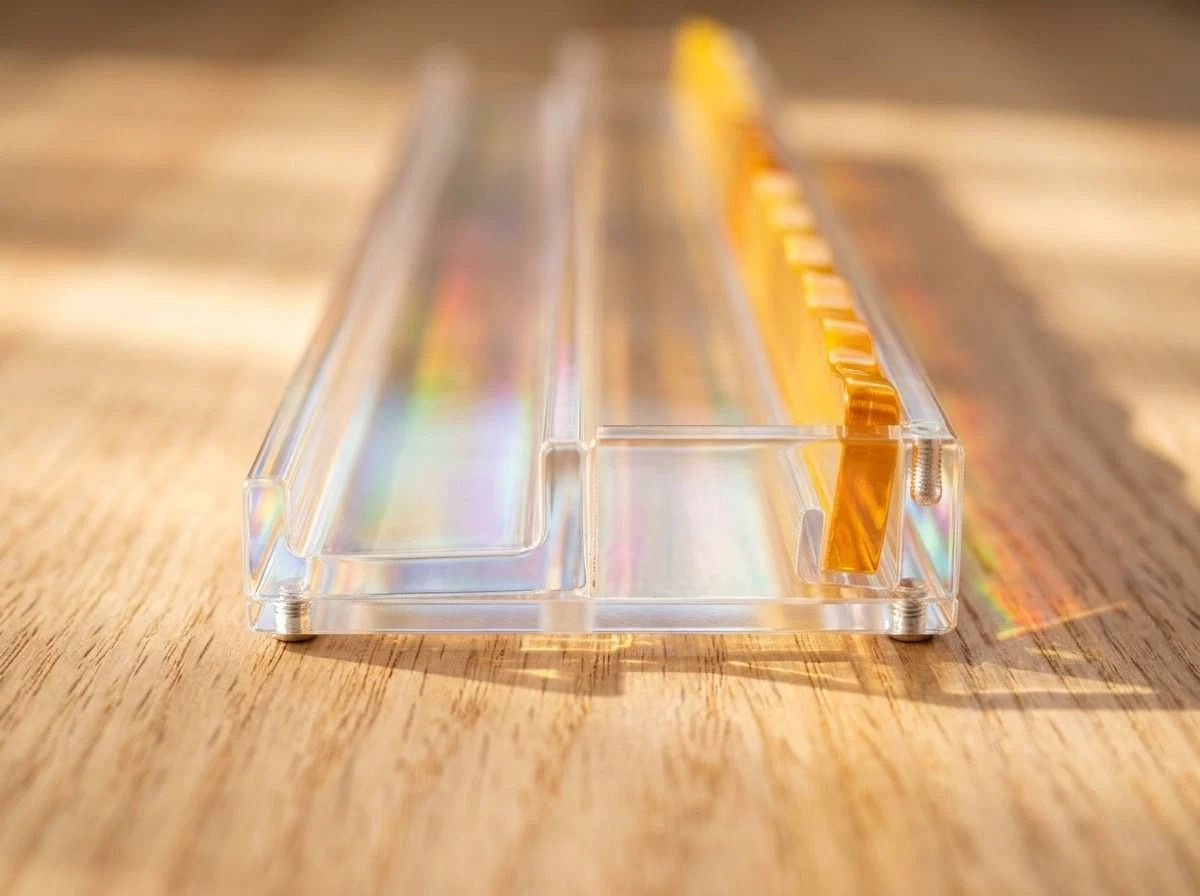
Travel racks solve two problems: they organize your tiles and free up table space. Unlike tall standing racks for home play, travel-focused designs fold flat, compress into bags, or sit low enough to fit in a suitcase beside your best-selling mahjong sets. Most accommodate a standard 152-tile set plus jokers; the best include pushers (the small wedges that help you draw tiles cleanly). Look for bamboo or acrylic construction—both pack well—and confirm the width matches your tile size before ordering. A solid travel rack typically costs less than a full replacement set and lasts through years of weekly games on the road.
What makes a rack truly portable for mahjong travel?
A travel rack must fit three criteria: lightweight under 2 pounds, collapsible or under 2 inches thick when packed, and sized to hold one player's tiles without tipping. Bamboo racks with pushers fold into thirds or quarters; some acrylic designs nest inside each other like cake pans. The pusher—a thin wedge that slides up behind your tiles to advance them toward you—adds maybe an ounce but saves your hands from repetitive strain during long games. We've packed racks in car trunks, duffel bags, and even carry-on luggage; the flat ones survive better than L-shaped stadium racks. Check the product page for stated dimensions when closed; if it doesn't say, assume it won't fit in a standard weekender bag.
🀄 Shop best-selling mahjong sets →

Should your travel rack include a pusher?
Yes, if you play American mahjong regularly. A pusher lets you draw a tile one-handed, keeping the rest of your wall intact; without one, you risk shifting your whole rack or exposing tiles early. For casual travel games where you're just keeping tiles organized (not playing by strict league rules), a basic rack works fine. But if you're bringing your set to weekly league games or competitive tournaments, a mahjong rack with pusher is worth the modest extra cost. The pusher also makes shuffling cleaner—you line up all four players' racks in a neat row, and tiles sit flush against the pusher so nothing slides mid-game. We've seen racks without pushers cause disputes over whether a tile was drawn fairly; a pusher eliminates that argument.
How do bamboo and acrylic travel racks compare?
Feature | Bamboo | Acrylic |
Weight | Lighter (1–1.5 lb) | Slightly heavier (1.5–2 lb) |
Packability | Folds or rolls | Nests or folds flat |
Durability | Resists dents; can splinter if dropped | Scratch-resistant; brittle if cracked |
Aesthetics | Warm, natural look | Modern, clear or colored |
Tile grip | Slightly textured | Smooth; tiles slide easily |
Cost basis | Mid-range | Mid-range to premium |
Best for | Hand-feel enthusiasts, cabin trips | Frequent flyers, damp climates |
Bamboo racks have been the standard for decades because they're lightweight and grip acrylic tiles without slipping. Acrylic racks became popular because they're dishwasher-safe and survive humid beach houses better than wood. Neither is objectively "better"—it's whether you value a natural feel or modern durability. We take bamboo to mountain cabins and acrylic to humid coastal games; both survive the trip intact. Ask yourself: will your rack sit in a humid garage or a dry closet between trips? If the former, acrylic wins. If you love the tactile warmth of bamboo and your storage is climate-controlled, go bamboo.
🎁 See our most-loved mahjong sets & accessories →
What's the difference between a personal travel rack and a set's built-in racks?
Many engraved American mahjong sets include light wooden racks meant for home use—they're taller, less portable, and sometimes flimsy in transit. A dedicated travel rack from Mahstead's collection is engineered for packing: reinforced hinges, angled bases to prevent tipping in a bag, and pushers that stay attached (not lost). The included racks are fine if you never move your game, but they're bulky and can break if compressed under other luggage. We recommend buying a separate travel rack if you transport your set more than once a month. The investment pays for itself in peace of mind—you won't arrive at game night with a cracked tile stand.

What gear completes a portable mahjong travel setup?
A complete travel setup pairs your rack with a carrying bag or case, a mat (if the venue doesn't provide one), and dice. A soft bag holds your set, racks for all four players, and dice in separate compartments; a hard case is overkill for travel unless you fly frequently. If you're traveling to someone else's home, ask if they have a mat; if not, a portable fabric mat rolls up smaller than a yoga mat and lays flat on any table. Dice are tiny and easy to lose—bring a backup pair. We've shown up to vacation games with all the tiles and no racks, then borrowed from the host; it's awkward. Pack your racks, and you'll never improvise again.
How do you pack a travel rack so it survives the car or plane?
Wrap each rack in bubble wrap or a towel to prevent scratches and dings during transit. Acrylic racks benefit most from padding—a sharp knock can crack them. Store the pusher in a separate slot or pocket of your bag so it doesn't break off. If you're flying, place racks in the center of your luggage, surrounded by soft items like clothes or a rolled mat—never at the edge where baggage handlers can crush them. For car trips, secure the bag so it doesn't slide under the brake pedal or get sat on. We've transported racks hundreds of times by car without damage; the key is treating them like they're fragile (even though bamboo is quite tough). Acrylic deserves extra care—a small crack spreads fast if you drop it again later.
✨ Find your Mahstead set — free US shipping →
What should you check before you buy a travel rack?
Before ordering, verify three things: tile size (standard American mahjong tiles are about 1 inch square), rack capacity (152 tiles plus jokers), and whether pushers are included or sold separately. Measure your home racks or look at your set's packaging for tile dimensions. Check that the closed/folded dimensions fit your intended storage—if you're packing it in a carryon, measure your bag's interior. Read the product page for what comes in the box: some racks include pushers for all four players; others sell pushers as add-ons. If the description doesn't specify, message Mahstead's support before ordering—it takes one email to confirm, and you'll receive your exact setup without guessing. We've had players arrive with racks sized for oversized export tiles or racks too narrow for standard American sets; asking in advance prevents that frustration.
Recommendation: Start with one travel rack
If you're the person who hosts or organizes travel games, buy a complete mahjong rack with pusher. If other players usually bring their own racks and you just want backup, a simple folding design without pushers saves weight and cost. Either way, pair it with a carrying bag or case that fits your rack plus a set of tiles—it's the single best investment after your best-selling mahjong sets themselves.
FAQ
Can I use my home racks for travel, or do I need to buy separate ones?
Home racks are often too tall or bulky. Travel racks fold, compress, or nest flat—they're engineered for suitcases and car trunks. If your home racks fit your luggage and you don't mind the weight, they work fine; otherwise, a dedicated travel rack is worth the modest investment.
Do travel racks come with pushers?
Most quality travel racks include at least one pusher; some include four (one per player). Check the product page; if it's unclear, confirm before ordering. Pushers prevent tile spillage and keep the game fair, so we recommend racks that include them.
How many racks should I bring if I'm hosting a travel game?
Bring four—one per player. Some players may bring their own, but it's safer to assume you need all four. If space is tight, confirm in advance that other players will bring racks, or buy a set that nests or folds to save space.
What's the difference between a travel rack and a mahjong mat?
A rack holds one player's tiles vertically; a mat is the playing surface where all four players lay tiles face-down to draw and win. You need both for a complete portable setup, unless the venue provides a mat.
Can acrylic travel racks go in the dishwasher?
Yes, most acrylic racks are dishwasher-safe on a gentle cycle. Bamboo racks should be hand-washed and air-dried to prevent warping. Always remove tiles before washing, and check the product page for specific care instructions.
If I buy a 160-tile set, will a standard travel rack hold all the tiles?
Yes. A 160-tile set contains 152 playing tiles plus spare jokers and blanks; travel racks are sized for the 152 tiles in play. The spares usually stay in the box or a small pouch, so they don't take up rack space.
Are travel racks suitable for beginners, or should I wait until I'm more experienced?
Travel racks are for anyone who moves their game. Beginners benefit from racks just as much as experienced players—a good rack keeps tiles organized and the game flowing smoothly, which helps newer players learn faster.


View More
View More
View More
