
How to Deal in Taiwanese Mahjong: Rules & Setup
Last updated: Nov 23, 2026
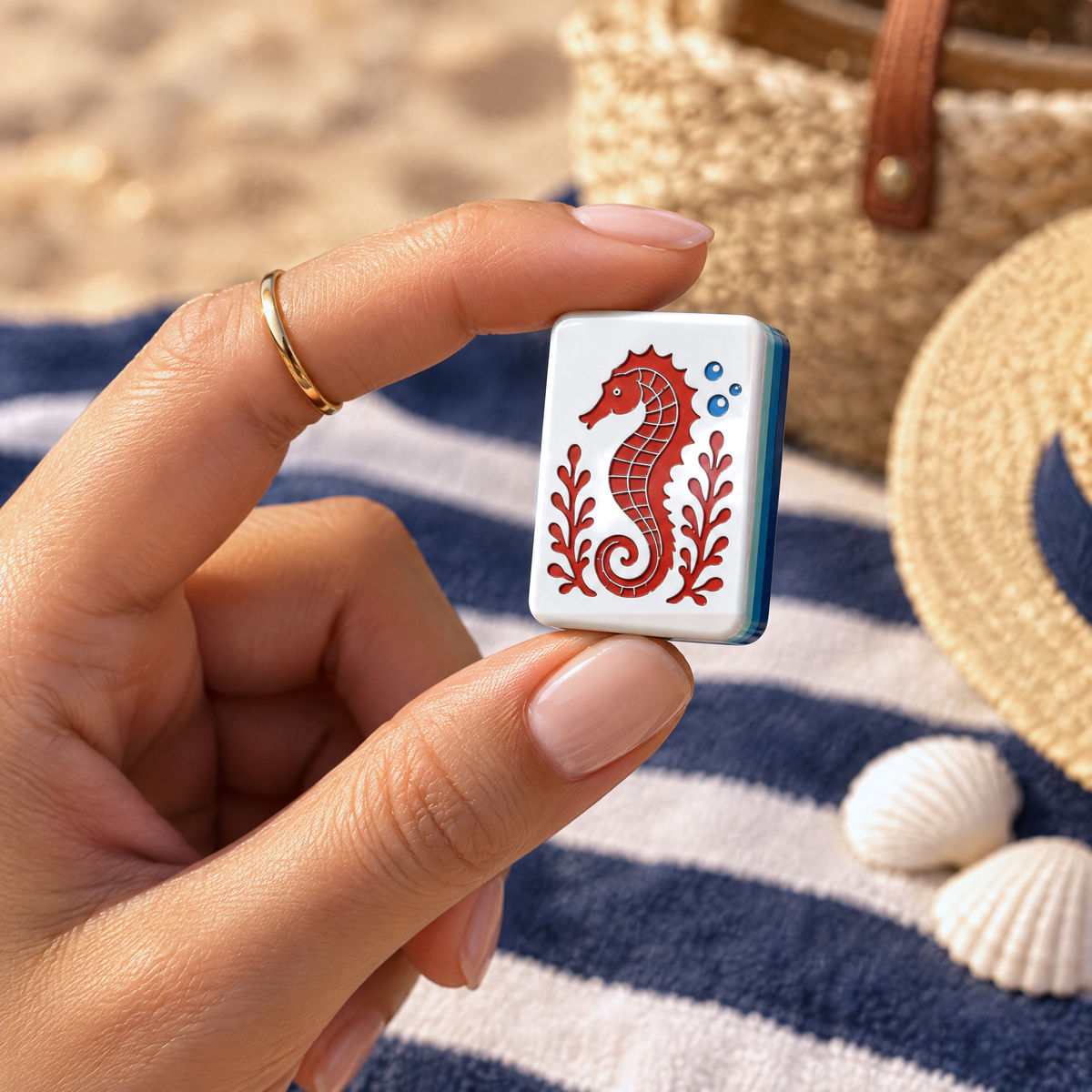
In Taiwanese mahjong, dealing differs fundamentally from American play: the dealer draws 14 tiles and each other player draws 13, totaling 52 tiles in hand before play begins—no Charleston, no annual card required. Tiles are shuffled and stacked into a wall; the dealer breaks it at a position determined by dice roll, then draws tiles in a specific sequence (dealer takes 2, then 1 each player draws 2, cycle repeats) until all players hold their opening hand. Unlike American mahjong's rigid hand patterns from the National Mah Jongg League card, Taiwanese hands are fluid: players form winning combinations (pairs, pungs, kongs, and chows—sequences of three consecutive numbers) dynamically during play. A hand wins when all 14 tiles form valid melds plus a pair, and players discard openly to a central discard pile after each draw. Jokers vary by regional rules; some sets include none. Play is faster, more tactical, and suits players who prefer improvisation over pattern-matching.
🀄 Shop best-selling mahjong sets →
Why does Taiwanese dealing use a different sequence than American?
American mahjong requires the Charleston—a ritual three-pass tile exchange—and enforces a rigid 14-tile hand from an annual pattern card. Taiwanese dealing skips the Charleston entirely and distributes tiles directly: dealer gets 14, others get 13, drawn from a broken wall in a fixed rotation. This speeds play by 5–10 minutes and removes the constraint of matching pre-printed patterns, letting players adapt their hand to tiles as they arrive. The method traces to classical Chinese and Hong Kong mahjong traditions, where the wall break by dice roll is standard. No pattern card means no need to wait for spring's National Mah Jongg League release; Taiwanese players can begin anytime with any tiles, making it ideal for casual groups or frequent players.

How do you set up the wall and choose the break point?
Players shuffle all tiles face-down, then stack them into a wall roughly 18 tiles long and 2 tiles high (dimensions vary by set size; 152-tile American sets work, though Taiwanese sets typically contain 144 tiles). The dealer rolls two dice; the sum determines the break point by counting positions around the wall from right to left or by house rule. Once agreed, the dealer draws from that position, taking the top two tiles, then passing play left. The next player draws two tiles from the wall's next position, and so on, each player drawing two tiles per cycle until all four hold 13–14 tiles. The wall must be kept hidden and intact; only the top face of tiles is visible as they're drawn. This method is the foundation of all subsequent play and prevents tile peeking or advantage-seeking. Get it right at the start and the hand flows smoothly.
What are the valid winning combinations in Taiwanese mahjong?
Taiwanese winning hands require exactly 14 tiles: one pair (2 identical tiles) plus four melds of three or four tiles each. A meld can be a pung (three identical tiles), a kong (four identical tiles), or a chow (three consecutive numbers in the same suit—for example, 4 Bam, 5 Bam, 6 Bam). The critical difference from American play is that chows are allowed and actively used; American mahjong forbids sequences. A player can win by drawing the 14th tile themselves (a "self-draw" win, higher-scoring in many variants) or by taking a tile discarded by another player to complete the hand. Some regional rules allow only the pung as a valid final meld; others permit chows. Verify house rules before the first hand to avoid confusion and disputes.
🎁 See our most-loved mahjong sets & accessories →
How do players call and expose melds during play?
In Taiwanese mahjong, calling a meld is immediate and vocal: as soon as you can form a pung, kong, or chow using your hand and another player's discard, you announce it ("pung," "kong," or "chow") and expose the three or four tiles face-up on the table. The meld then remains visible for the rest of the hand. Kongs drawn from your own hand (a "concealed kong") are typically face-down or flagged specially to score higher. After calling and exposing a meld, you continue drawing and discarding in turn order. If a discard can satisfy multiple players' calls, house rules determine priority—often the player closest to the discarder in turn order. Jokers, if allowed by regional rules, can substitute for any tile in an exposed meld but not in a hidden pair or a concealed kong. The flow is more fluid than American play, where only specific, pre-announced patterns can be exposed.
What are the key scoring differences and hand-end rules?
Taiwanese scoring systems vary widely by region, but most assign base points per hand type and multiply by the number of "doubles" (winning conditions met). A self-draw win is typically worth more than a win from a discard. All-pungs hands, all-chows hands, or hands using only one suit score more. Concealed kongs and winning with the last tile from the wall ("a win on the final tile") add doubles. At hand-end, the winner collects from all other players or from the discarder alone, depending on rules. Scores accumulate over the session or "round" (typically four hands, one per wind position). Unlike American mahjong's fixed point structure per pattern, Taiwanese scoring is contextual and negotiable before play. Clarify the house scoring table before sitting down to avoid settlement disputes. Many casual groups simplify to flat payouts (e.g., loser pays winner equal amounts) rather than complex multiplication.
Aspect | American Mahjong | Taiwanese Mahjong | Key Difference |
Deal sequence | No deal; Charleston pass | Dealer 14, others 13 from wall | Taiwanese skips pattern-prep phase |
Wall setup | Not used; all tiles start in hand | Built and broken by dice | Taiwanese uses classical wall method |
Valid melds | Pungs, kongs, quints, sextets only | Pungs, kongs, chows | Taiwanese allows sequences |
Pattern source | Annual National Mah Jongg League card | Player-driven, no card needed | American rigid; Taiwanese adaptive |
Winning hand size | 14 tiles (varies by pattern) | Always 14: pair + four melds | Taiwanese more predictable |
Joker use | Allowed in all melds; never in pair | Regional variation; sometimes none | American enforces joker inclusion |
Play speed | ~30–40 min per hand | ~15–25 min per hand | Taiwanese faster due to no Charleston |
Scoring | Fixed per pattern card | Context-based, region-dependent | American objective; Taiwanese negotiable |
✨ Find your Mahstead set — free US shipping →

Can you use an American mahjong set to play Taiwanese mahjong?
Yes—American 160-tile sets contain 152 playable tiles (the standard American set), and Taiwanese play uses only tiles from that core set (Bams, Craks, Dots, winds, dragons, flowers). You'll have spare tiles left over, but those remain unused during the hand and don't interfere. The tile symbols, sizes, and suits are identical. However, two practical gaps matter: American sets are optimized for the annual card's hand patterns and may include jokers in quantities tied to American rules (jokers can't appear in a pair or single tile). Taiwanese regional rules sometimes forbid jokers entirely or allow them differently. Also, American sets come with a mat designed for American deal and discard positions; Taiwanese play uses a simpler central pile. If you're a committed Taiwanese player, consider sets designed for Asian play or verify that your American set's joker count and tile symbols match your region's expectations. For casual experimentation, an American set works fine; for regular weekly play, a region-specific set prevents confusion.
What common mistakes should new Taiwanese players avoid?
Breaking the wall incorrectly. The dealer must roll dice precisely and count to the agreed position before drawing. Miscounting creates unfair tile distributions. Use the dice every deal and recount aloud so all players confirm.
Calling a meld too late. In Taiwanese play, a meld call is binding once announced. If you call a pung or chow and expose the tiles, you cannot retract it. If another player's discard satisfies your hand, declare it immediately—hesitation forfeits the call.
Confusing chow order. A chow must use three consecutive numbers in the same suit (4, 5, 6 Bam is valid; 4 Bam, 5 Crak, 6 Dot is not). Mixing suits or non-consecutive numbers voids the meld.
Misjudging joker substitution. If jokers are allowed in your region, they substitute only in exposed melds, never in the hidden pair or a concealed kong. Some variants allow jokers nowhere; clarify before play.
Discarding too slowly. Taiwanese play rewards speed. Hesitation signals strength and gives others information. Decide and discard within 10 seconds to keep the game brisk.
Failing to agree on scoring beforehand. Taiwanese scoring varies wildly. Settle the point structure, self-draw vs. discard payoffs, and round format before the first hand.
What you'll need
If you're transitioning from American mahjong or hosting a first Taiwanese game, our best-selling collection includes quality sets with clear tile markings and durable composition—essential when play moves at Taiwanese pace. A durable mahjong mat with a central discard zone simplifies tracking plays and keeps tiles organized. For Taiwanese regular play, racks are optional (many players hold tiles in hand), but racks with pushers help newer players manage exposure and avoid accidental reveals. If you're hosting rotating games, a travel bag or case protects your set between sessions—Taiwanese tile wear is real when play frequency is high.
What to check before you buy
Tile clarity. Taiwanese play is fast; tiles must be instantly readable. Avoid sets with faint markings or unclear suit symbols. American sets from our best-selling collection meet this standard.
Suit symbols. Confirm that Bams, Craks, and Dots are printed consistently. Chinese character variants exist; choose one and stick with it to avoid mid-game confusion.
Joker count and rules alignment. If your region forbids jokers, verify that your set's joker quantity doesn't complicate play. Some casual groups simply remove them; others include them at full value. Decide as a group.
Size and weight. Taiwanese players move tiles quickly; lighter sets (acrylic or resin) are easier to stack, break, and shuffle. Ceramic sets slow the tempo slightly but feel more premium.
Spare tiles. American 160-tile sets include spares (jokers and blanks beyond the 152 playable tiles). Those spares stay in the box during play; never add them to the wall or to hands.

FAQ
Is there a fixed Taiwanese mahjong rulebook like the American National Mah Jongg League card?
No. Taiwanese mahjong has no single authoritative rulebook; rules and scoring vary by region, family, and play group. Before each session, players agree on hand-winning conditions, meld validity, joker use, and point structure. This flexibility is both a strength (infinite local variants) and a friction point (confusion if rules aren't pre-agreed). Always clarify before the first hand.
Can a player win on the 14th tile drawn from the wall, or only on a discard?
Yes—Taiwanese mahjong allows self-draw wins (drawing your own 14th tile from the wall). In fact, many variants score self-draw wins higher than discard wins, encouraging aggressive draws. A discard win occurs when you declare a meld using another player's discarded tile to complete your 14 tiles. Both are valid endings; rules determine relative point values.
What happens if a player discards a tile that multiple other players could use for a meld or win?
Most house rules assign the meld or win to the player closest to the discarder in turn order (typically the player immediately after the discarder). If all players want the same discard, a precedence rule prevents simultaneous claims. Verify this with your group before play; disputes arise here frequently in mixed groups.
Are flowers and seasons used in Taiwanese mahjong the way they are in American?
Flowers and seasons vary by region. Some Taiwanese groups include them as bonus tiles (draw an extra tile or score a double if you hold a flower at hand-end); others exclude them entirely. Chinese and Hong Kong variants use them more consistently. Confirm with your players; if unsure, play without them for the first hand.
How long does a typical Taiwanese mahjong hand take compared to an American hand?
A Taiwanese hand typically runs 15–25 minutes; an American hand, 30–40 minutes, largely because American play includes the Charleston setup and pattern-card consultation. Taiwanese speed comes from direct dealing, immediate meld exposure, and simpler pre-hand negotiation. Experienced groups play even faster.
Can you use a dealer button to track the wind position across hands, as in American mahjong?
Some Taiwanese groups rotate the dealer position (East, South, West, North) across hands, marking the shift with a button or marker. Others play dealer-take-all or use a fixed dealer for the entire round. Wind position affects scoring in some variants. This is another house-rule decision; agree on the rotation scheme before starting.


View More
View More
View More
