
How to Deal in Siamese Mahjong: Rules & Steps
Last updated: Nov 23, 2026
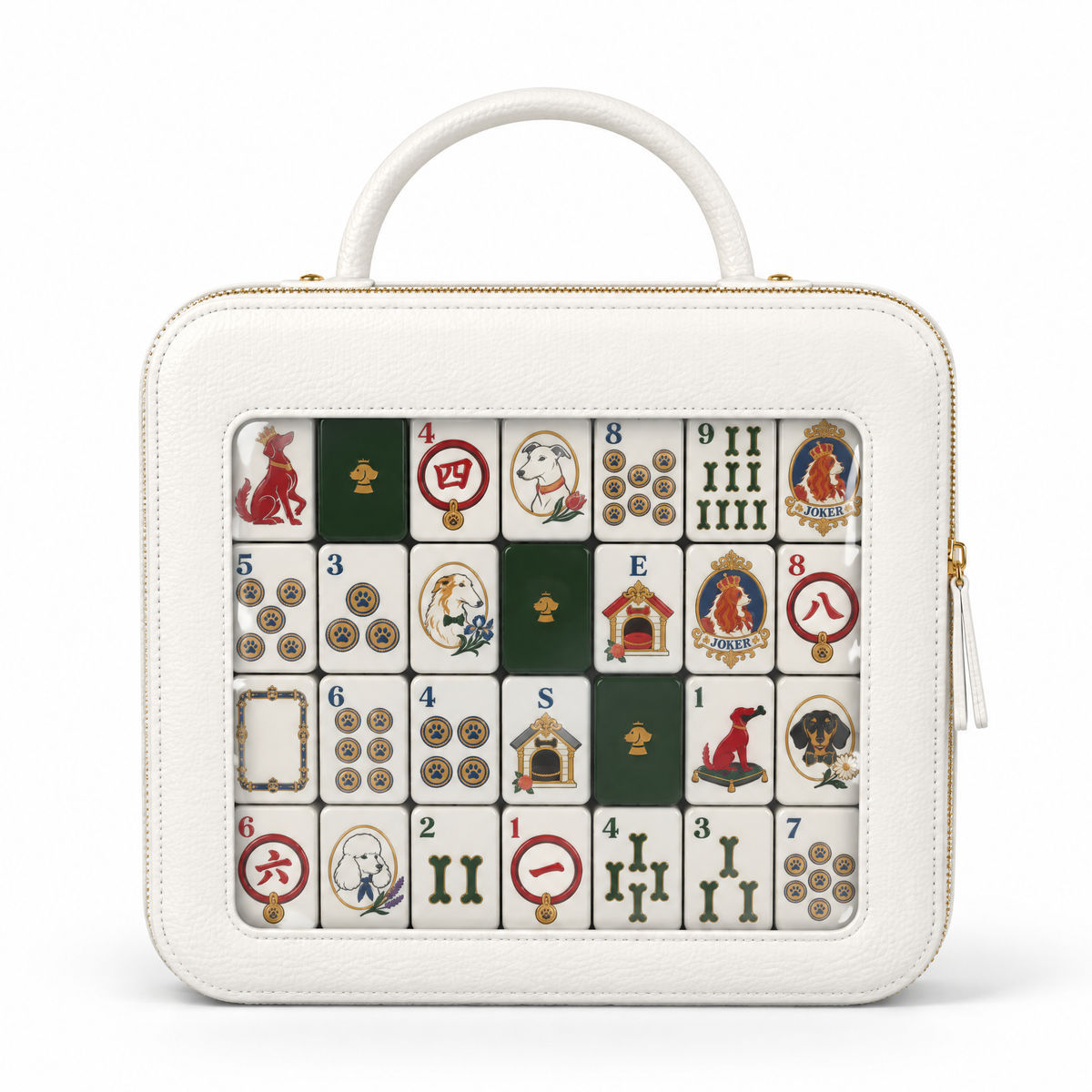
Siamese mahjong (also called Thai mahjong) deals from a live wall rather than a shuffled pool, with the dealer distributing 16 tiles per player in a strict counter-clockwise pattern. Unlike American mahjong's fixed 152-tile format, Siamese uses 136 tiles: one suit (Bamboo) in numbers 1–9 × four copies (36 tiles), Winds, Dragons, and Flowers—no Dots or Craks. The dealing sequence begins after discarding flowers and kongs; each player receives four tiles at a time from the left end of the wall until all hold 13, then the dealer draws one more (14 total). Play proceeds with players drawing from the wall and discarding, building melds (pungs, kongs, chows—sequences are allowed and exposed). The game ends when someone completes a legal winning hand. Setup takes 5–10 minutes; a hand lasts 15–30 minutes depending on skill. Unlike American play, Siamese has no jokers, no Charleston, and melds are built live at the table.
In our weekly games, we've hosted players transitioning from American mahjong to Siamese, and the learning curve is real—but manageable. The core difference lies in how the wall is built and how tiles are dealt. Let's break down the mechanics so you can host your first Siamese game with confidence.
What is the live wall and why does it matter?
The live wall is a single-layer line of tiles arranged face-down in front of each player. In Siamese mahjong, you never shuffle all 136 tiles into a pool; instead, each player builds a wall of 34 tiles (17 pairs), arranged in order. This wall is the source of all draws during play—when you need a tile, you draw from your own wall at a fixed point. The position of the draw point (east or north, depending on house rules) determines whether players draw from left or right. The live wall eliminates the luck of random shuffling and creates a strategic rhythm: experienced players track wall depletion and adjust discards accordingly.

How do you build and arrange the four walls?
All four players shuffle their 34 tiles face-down on the table, then arrange them into a line of 17 pairs, stacked two tiles high and two deep (forming a brick pattern). The dealer sits east; north, west, and south follow counter-clockwise. Walls are positioned on the table's edge in front of each player, creating a square. One of the dealer's pairs is designated as the start of the draw sequence—often the southernmost pair, depending on house convention. A small marker (sometimes a die roll) sets the opening draw position. This setup is visual and tactile; groups we host often use a mahjong mat to anchor the walls and keep the floor clear.
What is the exact dealing sequence for Siamese?
The dealer (east player) begins by drawing the first tile from their own wall's starting pair, drawing the top tile from the left pair in their wall. Moving counter-clockwise, the dealer then pulls a top tile for north, then west, then south. Then a second round: dealer draws two tiles (leaving one pair in the wall), then north draws two, west draws two, south draws two. A third round repeats: dealer two, north two, west two, south two. A fourth round: dealer two, north two, west two, south two. After this, the dealer draws one final single tile, giving the dealer 14 tiles total. North, west, and south now hold 13 each. Before the first draw, players discard any flowers and kongs they hold to the center of the table; these are replaced with draws from the remaining wall. The entire dealing process takes 3–5 minutes and must follow this order exactly—mistakes here create imbalances that ruin the game.
How does dealing differ between Siamese, American, and Chinese variants?
Aspect | Siamese | American | Chinese (Standard) |
Total tiles | 136 (Bamboo suit only) | 152 (three suits + honors) | 136–144 (regional) |
Wall structure | Live wall (each player builds one) | Shuffled pool (one communal draw) | Live wall (drawn sequentially) |
Dealing method | Four tiles/player per round, four rounds + dealer draws 1 extra | Drawn singly from pool until 13 each | Two or four tiles/player per round |
Draw source | Player's own wall | Communal pool + discard pile | Communal wall + discard pile |
Flowers/bonus tiles | Discarded before dealing; replaced from remaining wall | Hand completed per League card rules; replaced from pool | Discarded; replaced from wall or dead end |
Sequences (chows) | Allowed and exposed during play | Not allowed—pungs/kongs only | Allowed and exposed |
Jokers | None | 8 jokers; critical to play | None (or limited house jokers) |
Setup time | 5–10 minutes | 3–5 minutes (pre-shuffled often) | 5–10 minutes |
American play is faster because shuffling is done once; Siamese requires wall-building by each player, which takes longer but reduces luck. Chinese mahjong falls between, using a live wall but drawn communally. For players used to American's fixed tile counts and joker substitutions, Siamese feels more rigid—but many experienced players prefer it precisely because skill and memory, not joker placement, determine outcomes.

What are the most common mistakes when dealing Siamese, and how do you prevent them?
Mistake 1: Wrong tile count per round. Dealers sometimes give three tiles or five instead of four per player per round. Prevention: Count aloud as you deal—"One for north, one for west, one for south, one for me; two for north..." A second player can watch the dealer. Mistake 2: Drawing from the wrong wall. New players draw from a neighbor's wall instead of their own. Prevention: Keep walls visually distinct; use a mat with clear quadrants so each wall stays in its space. Mistake 3: Forgetting to replace flowers before dealing. Flowers and kongs are removed and replaced before the main dealing rounds; if you skip this, your wall has fewer tiles. Prevention: Before you shuffle your wall, confirm: no flowers, no incomplete kongs in hand. Mistake 4: Incorrect starting position. Players disagree on which pair is the "start" of the draw. Prevention: Establish house rules before the game: "East's southernmost pair is draw point one" or "a die roll determines the house position." Write it down. Mistake 5: Uneven stacking. Walls that are not stacked uniformly (two high, two deep) lead to tiles tipping or jostling during play. Prevention: Stack each pair identically—press gently and check alignment. A mat with racks can steady tiles and pushers if needed.
🀄 Shop best-selling mahjong sets →
How do you handle flowers, kongs, and replacements in Siamese?
After walls are built but before dealing begins, each player reveals flowers (if their tiles include them) and any concealed kongs. These are placed in the center face-up. For each flower or kong, that player draws a replacement tile from the remaining portion of the communal "dead end" wall—tiles not yet used in any player's wall. Once all replacements are drawn and held, dealing of the main hand begins. If a player draws a flower or kong during play (after the initial deal), they expose it, lay it face-up in front of them, and draw a replacement from the dead end. This differs from American mahjong, where jokers and blanks never enter play and flowers are handled per the current League card rules. In Siamese, replacements are always available until the wall runs low; once the dead end is depleted, no more replacements are drawn, and play continues with the hand as-is. This rule keeps the game flowing and prevents disputes over "running out" of replacement tiles.
What equipment helps you master Siamese dealing?
For Siamese-specific play, we recommend a high-quality mahjong mat with quadrants or guidelines—it keeps the four walls organized and prevents the chaos of tiles sliding or mixing. A set of mahjong racks with pushers steadies each player's hand during dealing and play, reducing dropped tiles and fumbles. Many Siamese players prefer acrylic tile sets because they stack evenly and don't warp—crucial for wall stability. Unlike American play, you don't need jokers or a Charleston ritual, so a standard Siamese set (136 tiles, no blanks or bonus jokers) is sufficient. If you're traveling to teach Siamese rules, a compact set with a padded travel bag fits easily in a car or suitcase.
🎁 See our most-loved mahjong sets & accessories →
What to check before you buy or teach Siamese mahjong
Tile count: Confirm your set has exactly 136 tiles (Bamboo 1–9 × 4, Winds, Dragons, Flowers). No Dots, no Craks, no jokers or blanks.
Tile stackability: Acrylic tiles stack and build walls better than wood; test by building one wall before buying.
Player agreement on house rules: Before the first game, write down: which wall position starts the draw, how a tie (if applicable) is resolved, and whether kongs drawn during play award replacement tiles immediately or after the current player's turn ends.
Mat fit: A mat with a quadrant or wall-size guide speeds setup. Measure your table; most standard mats fit 48–52 inches.
Practice deal: Run through the dealing sequence once with no tiles, calling out counts. Muscle memory reduces errors.
✨ Find your Mahstead set — free US shipping →

FAQ
Can I use an American mahjong set (with Dots and Craks) to play Siamese?
No. American sets have 152 tiles across three Bamboo/Crak/Dot suits; Siamese uses 136 tiles and only the Bamboo suit. Using an American set will create tile imbalances and confusion. Buy or borrow a Siamese-specific set.
What happens if the dead end runs out of replacement tiles during play?
Once no replacement tiles remain, players continue play without drawing replacements. If a flower or kong is drawn, it is exposed but no tile replaces it—the player simply holds one fewer tile until the hand ends.
How long does a typical Siamese game last?
A single hand takes 15–30 minutes depending on player skill and wall length. A full session of 4–6 hands lasts 90 minutes to 2 hours, similar to American mahjong.
Is the dealer's 14-tile advantage a scoring advantage too?
In most Siamese house rules, the dealer draws first and therefore has a strategic advantage (more control over discards and wall flow), but the scoring weight depends on house rules. Some tables reward dealer wins at higher rates; others do not. Agree on scoring before play begins.
Can chows (sequences like 1-2-3 Bamboo) be concealed in Siamese, or must they always be exposed?
In standard Siamese, chows can be part of a concealed winning hand, but once a chow is exposed during play (by calling it from another player's discard), it stays exposed on the table. Concealed melds remain face-down in hand until the winning declaration.
How do I transition players from American mahjong to Siamese without frustration?
Start by explaining the three biggest differences: no jokers, sequences are legal, and walls are built individually rather than shuffled communally. Run a practice deal (no tiles drawn) so everyone learns the count order. Then play one "practice hand" where players ask questions freely before attempting a real game.


View More
View More
View More
