
How to Complete a Vintage Mahjong Set with Missing Tiles
Last updated: Nov 23, 2026
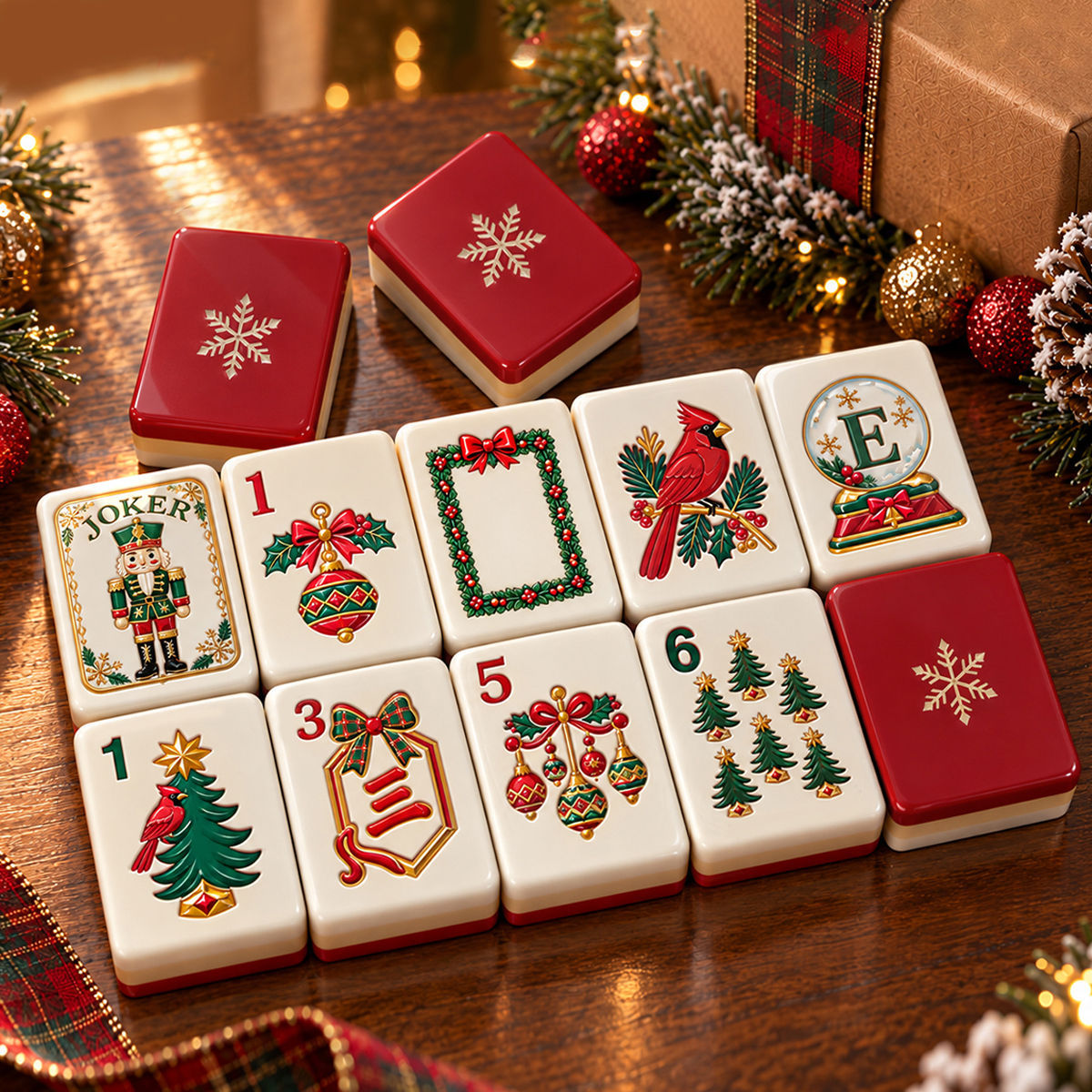
An American mahjong set requires exactly 152 tiles plus 8 jokers to play; if you're missing any of these, your set is incomplete. For vintage sets, you have three paths: find matching loose tiles from the same era and maker (often the hardest route), buy a modern replacement set and swap tiles carefully to match your vintage set's style, or accept a mixed vintage-and-modern aesthetic by adding high-quality replacements. The National Mah Jongg League rulebook doesn't forbid mixed sets, so casual players often replace missing tiles with contrasting acrylic or bone pieces. Before spending time hunting, photograph your tiles' size, color, material (bamboo veneer, bone, plastic, acrylic), and any maker's marks—this narrows your search. Mahstead and similar retailers sell complete modern sets; you can cannibalize one to fill gaps in your vintage collection if the tile dimensions and weight match closely enough.
What tiles are in a complete American mahjong set?
A complete American set contains three suits (Bams, Craks, Dots) numbered 1–9 with four copies each; 16 winds (four each of North, East, West, South); 12 dragons (four Red, four Green, four White); 8 flowers; and 8 jokers. That's 152 playing tiles plus 8 jokers—160 total. Most vintage sets follow this standard, though pre-1950 sets sometimes omit flowers or have variant designs. Check the set against the National Mah Jongg League tile inventory: if you can identify what's missing, you'll know exactly what to hunt for or replace.

Where do you source matching vintage tiles?
Sourcing exact matches for vintage tiles is detective work. Auction sites, local antique dealers, estate sales, and online vintage game boards often have loose tiles or incomplete sets you can mine for replacements. Document your set's material, color, and any embossed details (gilt, carved motifs, maker initials). Join online vintage mahjong collector groups on social media—experienced players often recognize tile styles and can point you toward specific makers. If your set is bone with green inlay, for example, "Bakelite black with gilt flowers," or "celluloid with hand-painted characters," those details dramatically narrow your search. Some dealers keep "tile lots" of mixed vintage pieces; a few tiles from the same era cost less than a whole set. Estate liquidators in major cities sometimes sell mahjong tiles by the dozen.
Should you mix vintage tiles with modern replacements?
Yes—many home players do, and the rulebook allows it. A mixed set works fine for casual games; the only downside is visual cohesion and resale value. If you're completing a set you plan to play with weekly, mixing is practical: add modern acrylic replacements to fill gaps, and your game plays flawlessly. If you're preserving an heirloom or collectible, mixing may lower its value unless documented clearly. Before you mix, ask yourself: Am I playing this set or displaying it? Playing sets tolerate mismatches; collectible sets should stay as original as possible. One winning strategy is to replace ALL lost tiles from a single modern manufacturer, keeping the vintage tiles intact and grouping the replacements visually (store them in a separate pouch, for example). That way, the set's integrity remains clear to future owners.
Scenario | Best approach | Why it works | Trade-off |
Casual weekly game, missing 3–4 tiles | Add modern acrylic replacements from one set | Plays perfectly; consistent quality | Visual mix, lower collectible value |
Family heirloom, missing 1–2 tiles | Hunt for exact vintage matches | Preserves originality and future value | Time-intensive; matches may be costly or unavailable |
Inherited set, unsure of value or use | Mix strategically; document each replacement | Playable now, authentic identity preserved for later | Requires careful record-keeping |
Display or collectible set | Keep original tiles only; leave empty until matches found | Respects the maker and era; no compromises | Set remains incomplete; cannot play |
How do you match tile dimensions and weight?
Vintage tiles vary wildly in size and heft. Pre-1940 bone or bamboo tiles are often thicker and heavier (roughly 24–28mm wide, 12–15mm thick) than 1970s–1980s plastic sets (22–24mm wide, 8–12mm thick). Modern acrylic tiles from quality makers tend toward the 24mm–25mm range and weigh more than thin plastic, matching older sets better. Before buying replacements, measure three tiles from your set (width, thickness, weight in grams if you have a scale) and compare them to the product dimensions listed by the seller. Tiles that are visibly different in size will feel uneven when stacked or drawn from a rack, and mismatched weight throws off the shuffle. If you're buying a complete modern set to cannibalize, request dimensions first. Mahstead's best-selling acrylic mahjong sets are engineered for balanced weight and consistent sizing, making them reliable sources for replacements.

What's the best way to avoid future tile loss?
Prevention beats replacement every time. Use a sturdy mahjong bag or case when transporting your set—loose tiles tumble out of fabric bags or cardboard boxes. Store your set in its original container if possible, or upgrade to a dedicated acrylic organizer with partitioned slots for each tile type. Handle tiles over a cushioned mat or towel during play to catch breakage and prevent tiles from scattering across the floor. Teach your players to set tiles firmly but gently—slamming tiles into racks cracks edges, especially on vintage bone or bamboo. Keep a spare joker or two on hand; jokers wear faster than numbered tiles because they're drawn from the wall more often. If a tile cracks during play, retire it immediately and slot in a replacement before the next game. Many home groups keep a small "repair kit" of extra jokers and a few high-quality blanks in a matchbox, ready for emergencies.
🀄 Shop best-selling mahjong sets →
How do you identify and replace specific missing tiles?
Start by laying out your set in the standard inventory: three rows of suits (Bams, Craks, Dots), one row of winds, one row of dragons, one row of flowers, one row of jokers. Any empty slot tells you what you need. Document each missing tile's name and suit—for example, "missing one White dragon" or "two Red Bam jokers." Cross-reference the National Mah Jongg League tile list (available free online) to ensure you're naming tiles correctly. Once you know what's missing, photograph it alongside a known tile for scale and color reference. Post that photo on vintage collector forums or send it to antique dealers. When you find a candidate tile, compare it side-by-side: does the material match (bamboo veneer, bone, acrylic)? Is the design consistent (hand-painted, printed, engraved)? Are the dimensions within 1–2mm? If the candidate tile passes these checks, buy it confidently. For multiple missing tiles, this process scales—hunt for three or four at once rather than one at a time, since shipping individual loose tiles is expensive.
Should you restore or replace a damaged vintage set?
Restoration (cleaning, resealing, minor repairs) differs from replacement (swapping out broken tiles). Restoration is worthwhile if your set has sentimental value or you're a collector; replacement is faster for casual players. Cracked or chipped tiles on valuable vintage sets should not be glued or filled—that destroys collectible value. Instead, source replacements from the same maker and era, or accept the damage as part of the set's history. If half your tiles are cracked, replacement may be the only practical path forward. Before you decide, research your set's maker, age, and market value. Check online auction records or reach out to a mahjong historian in your area. If your set is pre-1960 bone with hand-painted detail, each tile has real value; if it's a 1980s plastic set, replacement tiles cost a fraction of what you'd spend hunting for originals. For most vintage sets, a middle-ground approach works best: keep original tiles intact, use high-quality modern replacements for damage, and document the hybrid nature of the set.
🎁 See our most-loved mahjong sets & accessories →
What to check before you buy replacement tiles
Checklist item | Why it matters | Red flag |
Material match (bone, plastic, acrylic, bamboo) | Tiles handle and wear consistently | Replacement is a different material entirely |
Size (width, thickness in mm) | Tiles stack evenly in racks and shuffle smoothly | More than 2mm difference in width or thickness |
Weight (in grams) | Balanced draw from the wall; no floating or sinking | Replacement tile is noticeably lighter or heavier |
Color and finish (matte, glossy, gilt) | Aesthetic cohesion; matches lighting of original set | Shiny replacement next to matte originals looks wrong |
Maker's mark or era indicator | Confirms you're buying from the same family of sets | No mark or a different maker's imprint |
Tile count clarity | You know exactly what you're buying—8 jokers, 152 base | Seller cannot confirm tile count or composition |
When you're ready to buy replacements, explore Mahstead's engraved American mahjong sets and compare their dimensions and materials to your vintage set. Modern sets are engineered for durability and consistent sizing, so they're excellent sources for replacement tiles if your measurements align. If you need a complete backup set for play while you hunt for vintage matches, a contemporary acrylic set keeps your games going without worry.
✨ Find your Mahstead set — free US shipping →

FAQ
Can I use tiles from a different country's mahjong set (Chinese, Hong Kong, Riichi) to replace American tiles?
No—Chinese mahjong uses different tile symbols and counts (no flowers, different dragons and winds), and Riichi tiles are layered with different markers. Stick to American mahjong tiles only; swapping system will confuse players and violate league play rules.
How much does it cost to replace a single missing tile?
Loose vintage tiles range widely based on rarity and material; modern replacement tiles cost less than sourcing an entire vintage set. For pricing, compare options on product pages of retailers or auction sites, but expect replacement to be practical only if you're missing a few tiles, not half the set.
What if my vintage set has tiles I can't identify—how do I know what's missing?
Photograph all tiles and compare them to the National Mah Jongg League tile inventory (published free online each spring). Sort tiles by suit and number; gaps will be obvious. If a tile is unfamiliar, post the photo online to collector groups—experienced players recognize rare or regional variants.
Is it okay to mix jokers from different materials (one acrylic, one bone) in the same set?
Functionally, yes—the game plays fine. Aesthetically, no—mismatched jokers look obviously wrong. If you must mix materials, try to group them visually or keep them separate during storage so the set's original character is clear.
Where can I find a mahjong collector or historian to authenticate my vintage set?
Search online forums, social media groups dedicated to vintage games, local antique clubs, and university game studies programs. Email photos to dealers who specialize in vintage Asian games. Many enthusiasts volunteer advice for free if you share detailed photos and history.
Should I get the set professionally appraised before replacing tiles?
Only if you believe it's valuable (pre-1950, bone or bamboo, maker's mark, rare design). Appraisers who specialize in vintage Asian games can be found through antique associations. For everyday sets, the cost of appraisal exceeds the set's value; hunt for matches first if you want to preserve it.


View More
View More
View More
