
How to Choose a Mahjong Case: A Buyer's Guide
Last updated: Nov 23, 2026
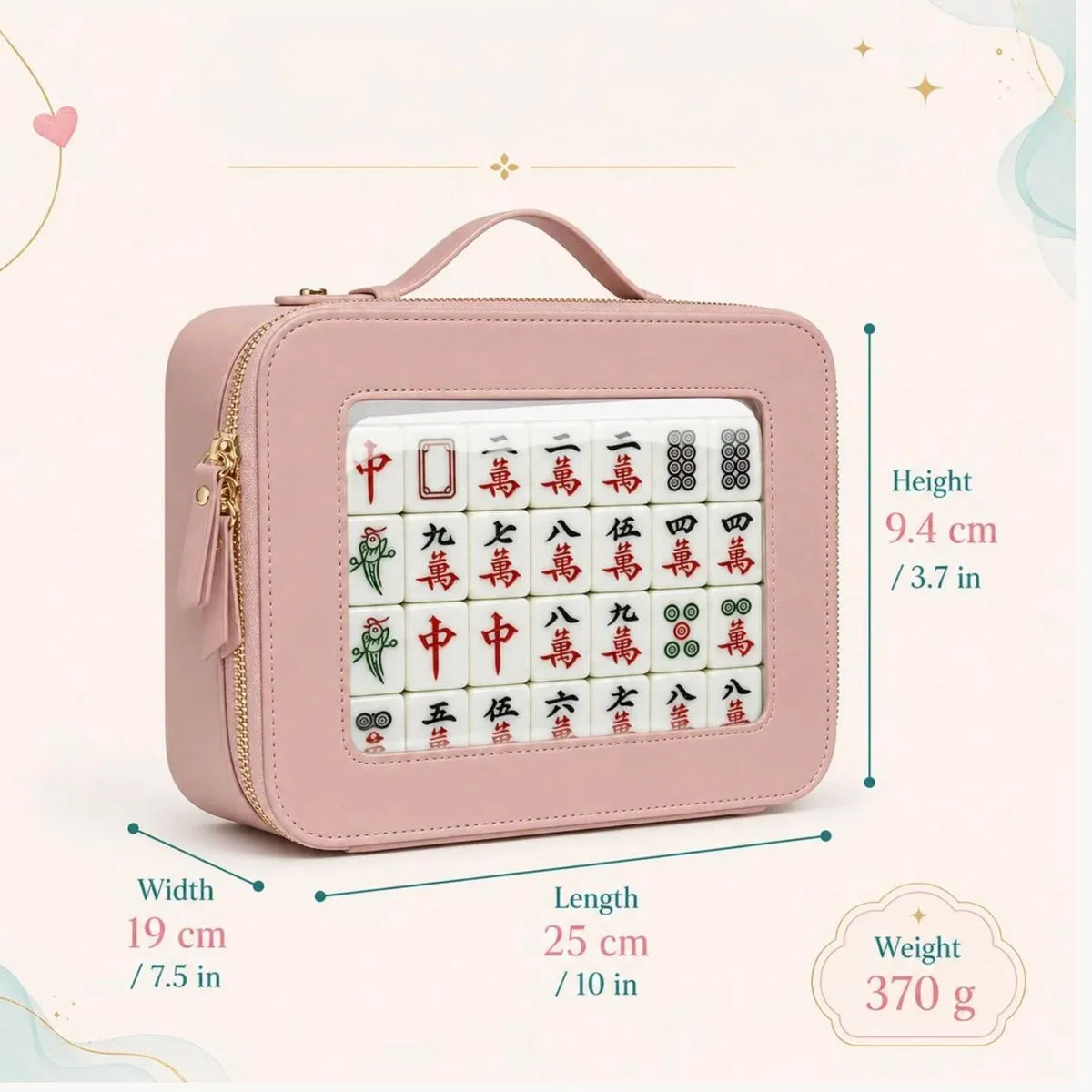
A mahjong case is a protective container for your tiles, racks, mats, and accessories. Cases range from soft zippered bags to rigid hard shells with foam interiors. Hard cases offer maximum protection for frequent travelers and tournament players; soft bags are lighter and cheaper for casual home players who rarely move their sets. Most cases hold a full American mahjong set (160 tiles), dice, racks, and sometimes a mat rolled separately. Mahstead offers both hard-shell and soft-bag options in the travel bag collection. Your choice hinges on three factors: transport frequency, set value (especially if engraved), and whether you'll store it between games or move it weekly.
What size case do you actually need?
Standard American mahjong sets contain 160 tiles—152 playing tiles plus 8 spare jokers. A case should fit those tiles plus two to four racks (each roughly 30 inches when unfolded), dice, the card, and ideally a mat rolled in a separate sleeve. Most soft cases measure 18–20 inches long, 10–12 inches wide, and 4–6 inches deep—roomy enough for a complete set with a wrapped mat. Hard cases typically run 20–24 inches long with similar width and greater depth (6–8 inches), offering dedicated compartments for tiles, racks, and a mat pocket. If you're carrying only tiles and racks, a compact soft bag (16 × 9 × 4 inches) works. If you want the mat inside, choose a case at least 20 × 12 × 6 inches. Measure your set's footprint (tiles in their tray or stack) before ordering.
🀄 Shop best-selling mahjong sets →

Hard shell vs. soft bag: which protects better?
A hard-shell case is molded plastic, aluminum, or composite with a foam-lined interior; it shields tiles from crushes, drops, and water splash. A soft bag (canvas, nylon, or polyester) zips closed but offers limited crush resistance. Hard cases win for tournament travel, frequent airplane trips, and expensive engraved sets. Soft bags suit weekly home games, car transport, and players on a tighter budget. Hard cases weigh 2–4 pounds empty; soft bags weigh 1–2 pounds. If your set is a gift or irreplaceable (custom engraved with player names or artwork), hard protection justifies the cost difference. If you carry your set once a month to a friend's house, a soft bag is practical and sufficient. Most spills and damage happen during bag-to-table transfer, not transport—a soft case prevents dust accumulation, which is the real risk for home players.
Case Type | Best For | Protection Level | Weight | Storage |
Hard shell | Tournaments, air travel, valuable sets | Crush & water resistant | 2–4 lbs | Stable, compact |
Soft bag | Weekly home games, car trips | Dust & minor bumps | 1–2 lbs | Folds flat |
Hybrid (semi-rigid) | Casual plus occasional travel | Moderate crush, water-resistant zippers | 1.5–3 lbs | Good compromise |
How should tiles and racks fit inside?
Tile trays (the plastic holders that come with a set) stack or nest within the case's base compartment. Racks should lie flat or stand upright in a dedicated slot. If your case has removable dividers, arrange tiles by suit and dragons separately—this prevents jumbling during travel and makes setup faster at your next game. Jokers should stay in their own small pocket or box. Dice go in the front zippered pocket. The mat can roll tightly and sit in a side sleeve or separate fabric pocket to avoid creasing. Leave a half-inch of clearance around the tile stack to avoid forcing the lid. Overstuffed cases warp zippers and crack tile edges. When you unpack, tiles should be in the same order as you packed them—no shifting means no broken acrylic edges.
✨ Find your Mahstead set — free US shipping →
What makes a case travel-ready vs. storage-only?
A travel case has reinforced zippers (metal sliders, not plastic), padded handles, and water-resistant fabric or sealed seams. A storage case (often softer, lighter, or cheaper) is fine for closet use but zippers fail under repeated opening after a year of weekly games. Travel cases have corner guards and bumpers to absorb impact. Storage cases are bare. If you move your set more than twice a month, invest in a travel case. If you pull it out seasonally, a basic storage bag works. Look for YKK or similarly rated zippers (mentioned in product descriptions). Check reviews or photos for visible seams—sealed stitching resists water and wear. A reinforced handle (double-stitched, wide fabric) supports a full set's weight (4–6 pounds) without tearing. Soft cases with plastic feet on the base prevent zippers from catching the floor when you set it down.
What to check before you buy?
Before ordering, verify three things:
Interior dimensions vs. your set's footprint. Measure your tiles in their tray, your four racks laid flat, and your mat rolled (usually 36 × 24 inches). Add 1–2 inches for padding. Most product pages list interior dimensions; cross-check yours.
Zipper and carry-handle reviews. Read or watch photos of the case open and loaded. Do zippers glide smoothly or snag fabric? Can the handle hold weight without deforming?
Material durability for your climate. Canvas and nylon last longer in humid homes; plastic-lined cases resist moisture but can feel sticky. Acrylic mahjong tiles (standard in American sets) are durable but can scratch—soft interiors protect them better than bare plastic.
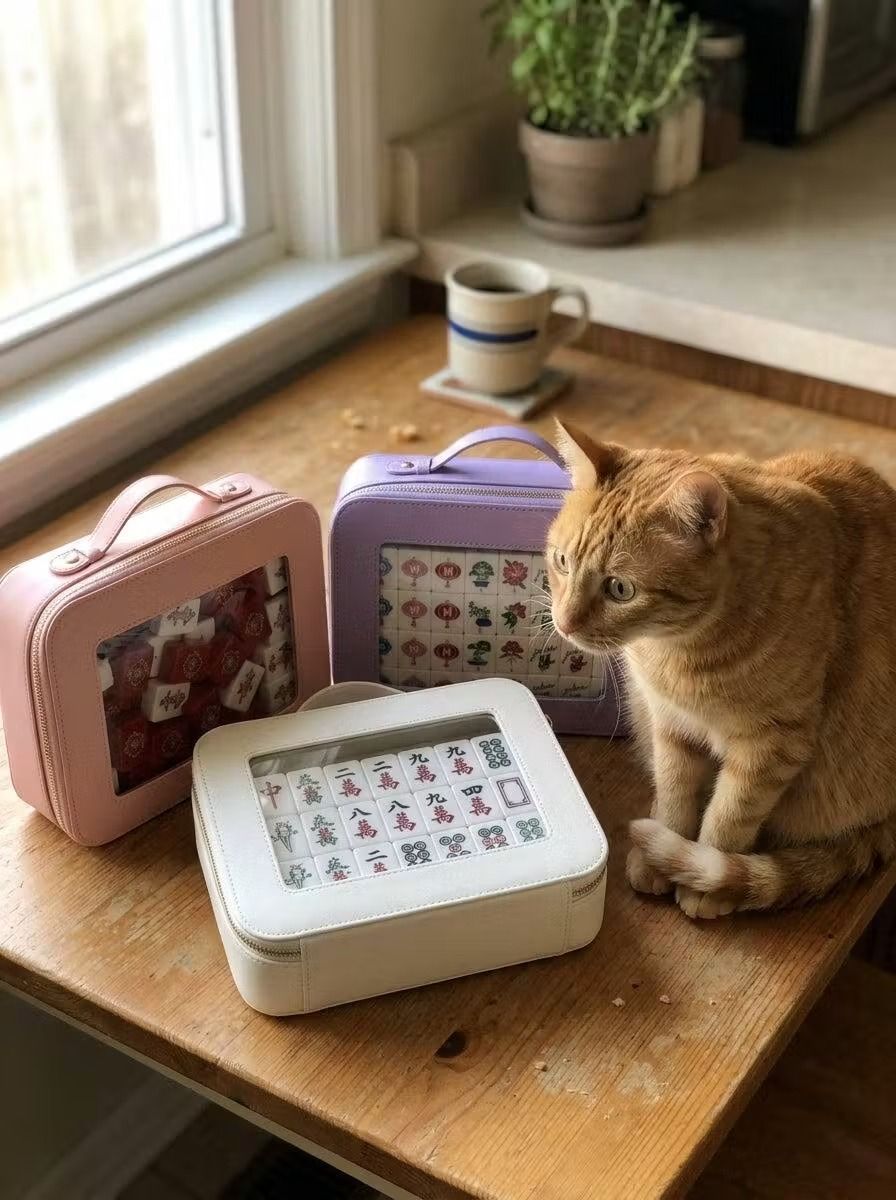
Also check: Does the case come with padding or compartments, or do you supply your own cloth dividers? Mahstead's cases ship with protective foam or dedicated tile pockets. Are pockets labelled or generic? Does it have a mesh window to see contents without opening? These features add convenience but aren't essential—a simple padded case works fine if you're organized.
🎁 See our most-loved mahjong sets & accessories →
Why invest in a case if you only play at home?
Even home-only players benefit from a case. Mahjong sets sit on tables between rounds, exposed to dust, pet hair, and spills. A closed case keeps tiles clean and fresh between weekly games. Acrylic tiles (used in American mahjong) are porous and absorb dust—a case eliminates daily wiping. If your set is engraved (especially with player names or gift designs), a case protects the artwork from fading and scratching. A case also signals respect for the game when guests arrive—a set stored in its proper case feels professional and cared-for, versus tiles loose in a shoebox. If you entertain and move your set from closet to table weekly, a soft bag costs less than replacing scratched or dulled tiles in a year. Many of us store our sets in cases between seasons or retirement from active play, and a proper case prevents warping and discoloration in closets.
Should you customize or monogram your case?
Yes, if the set inside is custom. Many Mahstead cases ship plain (solid colors, neutral designs), and engraved sets deserve matching protection. A custom or monogrammed case prevents mix-ups if multiple players travel together and makes the whole package a standout gift. Plain cases are cheaper and versatile—you can swap sets or pass the case to a new player. Custom cases (engraved with initials, player names, or a clan name) are keepsakes and cost more but reflect the personality of a valued set. If you're buying a case to go with a beautiful custom mahjong set, align the designs—metallic accents on the set might pair with a case that has similar hardware. Mahstead can advise on compatible aesthetics; plain cases let the tiles shine.
What to check before you buy
Before ordering a case:
Measure your set and racks. Tiles + trays + four racks stacked = your minimum interior depth. Add 2 inches for padding.
Confirm zipper type. Metal sliders (YKK brand or equivalent) last longer than plastic. Check product photos.
Verify handle attachment. Double-stitched, wide straps won't tear under a 6-pound set's weight.
Read for water resistance. Sealed seams or waxed fabric resist humidity and accidental spills.
Check if padding is included. Some cases ship with foam; others require you to add cloth dividers or bubble wrap.
Review interior layout. Dedicated tile pocket, rack slots, and a mat sleeve are conveniences, not must-haves, but they reduce setup time.
Most Mahstead cases include internal padding and are designed to fit a standard American mahjong set plus racks and mat. Soft bags start lighter and cheaper; hard cases justify the cost if you travel monthly or own a high-value set.

FAQ
Can I fit a 160-tile set, four racks, and a mat in one case?
Yes, if the case interior is at least 20 × 12 × 6 inches. Roll the mat tightly and place it in a side sleeve or vertical pocket. Stack tile trays and lay racks flat. Most travel cases accommodate this; compact soft bags may require rolling the mat externally.
Do I need a hard case for weekly car trips?
No. A soft bag with reinforced zippers suffices for car transport. Hard cases shine for air travel, tournament play, or rough handling. If your set is valuable or engraved, a hard case's crush protection justifies the cost.
What's the difference between a mahjong case and a generic carrying case?
Mahjong cases have interior partitions or pockets sized for tile trays, racks, and dice. Generic cases are bare and require you to wrap items in cloth. Mahjong-specific cases save setup time and organize better, but a generic hard case with foam dividers works if you're handy with packing.
Will a soft bag protect my engraved tiles?
A soft bag prevents dust and minor bumps but doesn't shield tiles from crushing force. If your set is engraved with artwork or player names, a hard case or hybrid semi-rigid case offers better protection for an heirloom-quality set.
How do I know what size case to buy if I'm a beginner?
Buy a standard case (18–22 inches long) that fits a complete 160-tile set plus racks. You'll grow into it. Mahstead's travel bag collection lists dimensions for each option; measure your set's footprint against the interior specs.
Can I use the same case for different mahjong sets?
Yes, if the sets are similar size (160 tiles each). American mahjong sets are standardized. If you own sets from different countries or tile styles, check dimensions before sharing a case—some Asian sets are slightly smaller or larger.
What's the best case for storing a set I don't play often?
A breathable soft bag in a cool, dry closet prevents warping and dust. Avoid sealed hard cases in humid basements—they trap moisture. If you store seasonally, a soft case with a lid and gentle padding is ideal and takes less closet space.


View More
View More
View More
