
Chinese Mahjong vs Singapore Mahjong: Key Rules & Differences
Last updated: Nov 23, 2026
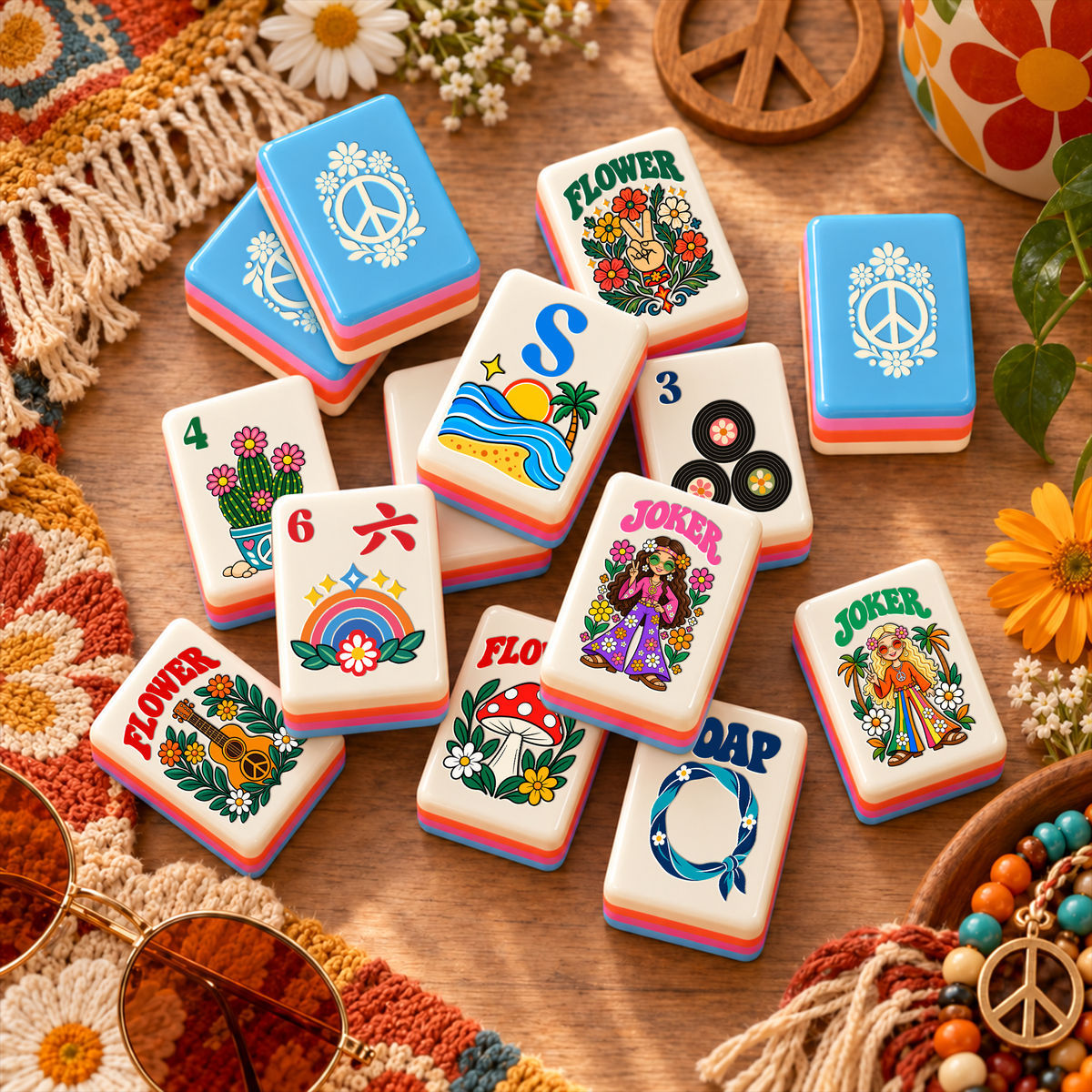
Chinese mahjong uses 144 tiles (numbers 1–9 in three suits, winds, dragons, flowers, seasons) and winning hands are built from melds visible to all players; sequences (chows) are allowed and crucial. Singapore mahjong is a regional variant of Chinese mahjong, using the same 144-tile structure but with house rules that vary by club and region—most commonly adding scoring multipliers and stricter calling protocols. American mahjong, by contrast, uses 152 tiles plus 8 jokers, disallows sequences entirely (only pungs, kongs, quints, and sextets), draws hands from the National Mah Jongg League's yearly card, and is played with mandatory tile-passing (the Charleston). If you play American mahjong regularly, our best-selling mahjong sets are built exactly to US tournament standards; if you're exploring Chinese variants, confirm your local group's specific house rules before buying a set.
Chinese mahjong, Singapore mahjong, and American mahjong are distinct games with different tile sets, hand patterns, and scoring systems. Understanding these differences helps you choose the right variant and equipment for your table.
What tiles are in a Chinese mahjong set?
Chinese mahjong uses 144 tiles total: four copies each of numbers 1–9 in three suits (Bams, Craks, Dots = 108 tiles), plus four winds (N, E, W, S = 16 tiles), three dragons (Red, Green, White = 12 tiles), plus four flowers and four seasons (8 tiles). No jokers exist in traditional Chinese mahjong; all winning hands must use only the base 144 tiles. The game centers on building melds from your hand that match patterns on no written card—instead, players memorize or know hand rankings by house tradition.

How does Singapore mahjong differ from Chinese mahjong?
Singapore mahjong uses the same 144-tile base as Chinese mahjong but applies regional scoring multipliers and house rules unique to Singapore clubs and tournaments. Common Singapore variants include bonus points for "all pungs," "all terminals," "big two dragons," and "big three dragons," along with stricter rules about when you can call a tile or win. Rules vary significantly by club—some allow the 1 Bam as a bird tile with no special value, others treat it as a wild or bonus. Before joining a Singapore mahjong group, ask the host for a written rule sheet covering their specific scoring system and calling protocols.
Feature | Chinese Mahjong | Singapore Mahjong | American Mahjong |
Tile count | 144 (no jokers) | 144 (no jokers) | 152 + 8 jokers |
Sequences (chows) | Yes, required | Yes, required | No, not allowed |
Tiles passed before play | None | None | Yes (Charleston) |
Winning patterns | Memorized or house rules | House rules + multipliers | National Mah Jongg League card |
Melds visible to all | Yes | Yes | Only certain melds |
Jokers in play | None | None | 8 in rotation |
Hand reference | Player memory | Player memory | Annual printed card |
Can American players use a Chinese mahjong set for Singapore rules?
No. Chinese and Singapore sets lack the 8 jokers that American players use; they also omit the 152-tile count American mahjong requires. More importantly, American mahjong strictly forbids sequences (chows)—the core of Chinese and Singapore winning hands. If you play only American mahjong, buying a Chinese set will confuse your table because tile counts and allowable melds don't match. If you want to explore both games, you'll need separate sets. Our best-selling mahjong sets come as 160-tile sets built for American play; they include the full American tile count plus spares.
✨ Find your Mahstead set — free US shipping →
How do sequences (chows) work in Chinese and Singapore mahjong?
A sequence (chow) is three consecutive numbered tiles in the same suit—for example, 4 Bam, 5 Bam, 6 Bam. In Chinese and Singapore mahjong, at least one sequence is required in nearly every winning hand; many hands are built entirely from sequences and pungs (three identical tiles). Sequences must be called or exposed when you win, and other players see them laid face-up. American mahjong disallows sequences entirely; only pungs (3 identical), kongs (4 identical), quints (5 identical), and sextets (6 identical) are playable. This fundamental difference is why an American set with jokers cannot be used for Chinese or Singapore games—the hand patterns are incompatible.

What scoring system does Singapore mahjong use?
Singapore mahjong scoring is based on a point multiplier system tied to specific hand patterns. A "base hand" might be worth 2 points, but if it includes "all pungs" (no sequences), it's multiplied by 2. Additional multipliers apply for "big two dragons," "big three dragons," "mixed one suit," or "all one suit." The exact multipliers and qualifying patterns differ by club; some groups use a 4× or 8× multiplier for rare hands, while others cap multipliers at 2×. Scores are usually settled in cash or chips after each hand. Before playing Singapore mahjong, always request the host's official multiplier list—playing without it leads to disputes and slowed games.
🀄 Shop best-selling mahjong sets →
Why do Chinese, Singapore, and American mahjong feel so different?
Chinese and Singapore mahjong emphasize creativity—players build hands from any combination of sequences and pungs, drawing strategy from reading opponents and calculating probability. American mahjong is pattern-matching: you have a printed card, you search for today's allowed hands, and you call tiles to fill them. Chinese and Singapore games have no annual card change; winning patterns are fixed or house-defined. American mahjong's National Mah Jongg League card changes every spring, so hands valid one year may not exist the next. Jokers in American mahjong act as wildcards for any tile in a pung, kong, or longer meld—they dramatically speed up hand completion. Chinese and Singapore mahjong rely entirely on tile luck and no jokers, making discards far more consequential.
What should you check before buying a set for your variant?
Confirm your group's exact variant — "Chinese mahjong" and "Singapore mahjong" may vary by club; ask for rule specifics in writing.
Verify tile count — Chinese and Singapore sets are 144 tiles (no jokers). American is 152 tiles + 8 jokers.
Check if sequences are allowed — If yes, you need a set with 1–9 in each suit. American sets work for American rules only.
Ask about tile markings — Some groups prefer traditional characters on dragons; others use colors or symbols. Confirm before ordering.
Test the set at a practice session — Borrow or visit a friend's game first; sets feel different (tile weight, size, noise), and some tables have strong material preferences.
🎁 See our most-loved mahjong sets & accessories →
If you play American mahjong exclusively, we carry engraved American mahjong sets designed for tournament standards and mahjong mats that protect play and speed hand-building. For multi-game tables or hosting, a durable mat and quality racks with pushers make transitions smooth.
What to check before you buy
Your group's specific rules — house rules vary even within Singapore mahjong clubs; one text message to your host saves a wrong purchase.
Tile material and feel — plastic tiles click loudly; acrylic and resin tiles are quieter; test at a game first if possible.
Set storage — Chinese 144-tile sets fit different bags than American 160-tile sets; check dimensions against your travel bag or case.
Annual updates — If you play American mahjong, you'll need the new National Mah Jongg League card each spring (available from the League or printed locally).

FAQ
Can I play American mahjong with a Chinese mahjong set?
No. Chinese sets lack jokers and use 144 tiles; American mahjong requires 152 tiles plus 8 jokers. Sequences are illegal in American play, so the tile mix is wrong. You need a proper American set to play American mahjong rules.
What is "all pungs" in Singapore mahjong scoring?
All pungs is a hand composed entirely of three-tile identical sets (pungs) and a pair; no sequences. It multiplies your base hand score by 2 or more, depending on your club's rules. Always confirm the multiplier with your host before playing.
Do Chinese and Singapore mahjong players use a card like American mahjong?
No. Chinese and Singapore players memorize hand patterns or follow house rules passed down by club tradition. No printed yearly card exists. American mahjong uniquely requires the National Mah Jongg League card, which changes every spring.
Why can't I use jokers in Chinese or Singapore mahjong?
Traditional Chinese and Singapore mahjong have no joker tiles; the 144-tile set is closed. Jokers are a feature of American mahjong, added to speed play and increase hand variety. Chinese and Singapore rely on pure tile luck and discard strategy.
How do I find a Chinese or Singapore mahjong group to join?
Check community centers, libraries, and cultural organizations in your area; many host weekly or monthly sessions. Online forums and social media groups for your region often post game schedules. Always ask for house rules in writing before your first session.


View More
View More
View More
