
How Many Tiles in Vietnamese Mahjong?
Last updated: Nov 23, 2026
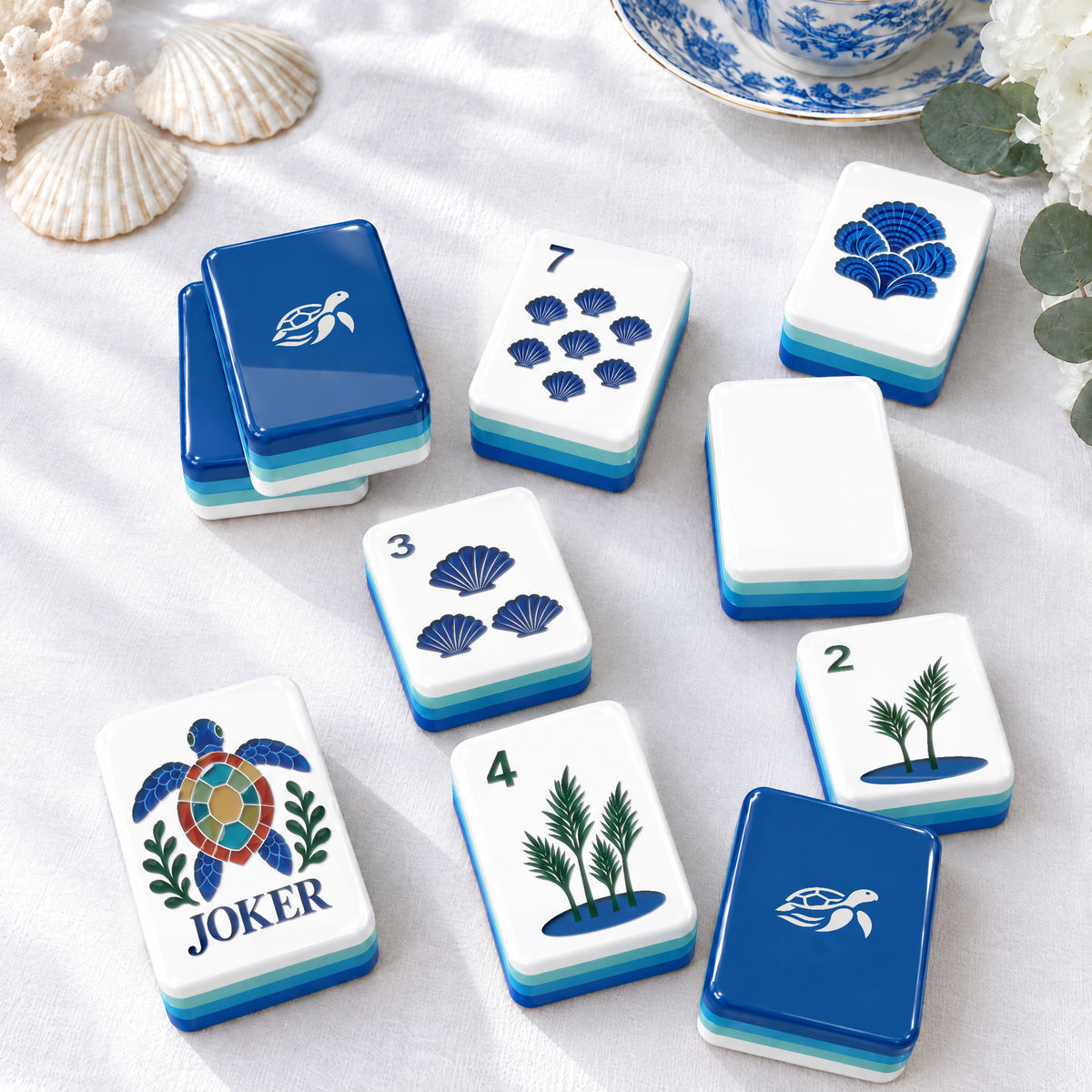
Vietnamese mahjong uses exactly 144 tiles split into four suits: Bamboo (Bam), Coins (Crak), Characters (Dot), and Honors. Each numeric suit (Bam, Crak, Dot) runs 1–9, with four copies of each number = 36 tiles per suit (108 total). The Honors suit contains 28 tiles: four Winds (North, East, South, West = 16 tiles) and four Dragons (Red, Green, White, 4 blanks = 12 tiles). No jokers are used in standard Vietnamese play—all 144 tiles are in active play. This differs sharply from American mahjong, which adds jokers and flowers to reach 152 tiles plus 8 jokers. Vietnamese rules also permit melds (called "faan") in sequences (1-2-3, etc.), a major departure from American-only pungs and kongs. If you're learning Vietnamese mahjong, confirm your set contains all four suits at 1–9 and all four Honor types before you buy; American sets will not substitute directly.
🀄 Shop best-selling mahjong sets →
Why does Vietnamese mahjong have fewer tiles than American?
Vietnamese and Chinese mahjong descended from the same root game and kept the original 144-tile standard. American mahjong, formalized in the 1920s–1930s, added 8 flowers, 8 jokers, and extra tiles to increase hand complexity and house-rule variety. Vietnamese players stuck with the classical format: simpler inventory, faster tile recognition, identical rule sets across regions. The 144-tile count is enforced because the game's scoring and draw mechanics depend on it; adding jokers or blanks breaks wall-draw timing and hand probability. If you've played American mahjong with 160 tiles, switching to Vietnamese requires mental reset: no wild cards, no bonus flowers, pure tile-matching only.

What are the four suits and how many of each?
The four Vietnamese mahjong suits are Bamboo (Bam, shown as 1–9 sticks), Coins (Crak, 1–9 circular designs), Characters (Dot, 1–9 Chinese numerals), and Honors (no numbers—Wind symbols and Dragon glyphs).
Suit | Tiles per suit | Copies | Total |
Bamboo (Bam) | 1–9 | ×4 each | 36 |
Coins (Crak) | 1–9 | ×4 each | 36 |
Characters (Dot) | 1–9 | ×4 each | 36 |
Honors (Winds) | N, E, S, W | ×4 each | 16 |
Honors (Dragons) | Red, Green, White, Blank | ×4 each | 12 |
TOTAL | — | — | 144 |
Each Bamboo 1 traditionally shows a bird; Coins often feature decorative wheels; Character tiles display Chinese numerals; Winds show their direction names (Bac, Dong, Nam, Tay in Vietnamese); Dragons are color-coded or symbol-marked. All four copies are identical, making it easy to spot a complete set at a glance. Vietnamese sets are compact: no flowers, no seasons, no jokers to inventory.
How does the 144-tile count affect gameplay?
The 144-tile wall divides evenly: 13 tiles are dealt to each of the four players at game start. The remaining 108 tiles form the live draw wall (27 tiles per player wall-side). Drawing and discarding run in a fixed order; after 13 rounds, 52 tiles have entered play, leaving 92 in the wall. This rhythm is baked into Vietnamese hand calculations and waiting-hand probability—adding or removing tiles breaks the math entirely. Jokers, for example, would let players "switch" a tile mid-hand, destroying the strategic tension of the discard pile. The 144-tile format also means a round ends in fewer turns; games typically complete in 30–45 minutes rather than 60–90 with American rules, making Vietnamese mahjong ideal for quick-play sessions or casual weekly groups.
What makes Vietnamese tile sets different from American or Chinese sets?
Vietnamese mahjong sets use the same tile rank order (suits 1–9, four Winds, three Dragons) as classical Chinese play—but they stop there. American sets include flowers (Spring, Summer, Autumn, Winter), bonus point tiles, and 8 jokers, pushing the count to 160 tiles. Chinese sets vary by region: Hong Kong play uses 144 tiles but adds joker equivalents called "blanks," and Taiwanese or Riichi variants add their own card mechanisms. Vietnamese tile imagery follows traditional Chinese iconography: bird on the Bamboo 1, calligraphic numbers on Character tiles, and symbolic Wind and Dragon marks on Honors. Modern Vietnamese sets are often plastic (easier to handle, quieter, cheaper to ship) or bamboo-and-bone (traditional, heavier, prized for their click-sound and heft). If you're ordering online, check the product photo for the Honors tiles—valid Vietnamese sets show all four Wind symbols and the three colored Dragons plus a blank or "Soap" tile (often white or blank-faced).

How do I choose the right Vietnamese mahjong set?
Before you buy, verify three things: (1) Tile count is 144, not 152 or 166. American and some mass-market sets pad the count with flowers or extra jokers; Vietnamese play requires the classical 144 only. (2) Check that all four Suits are present and marked clearly. Look at product photos for the Bamboo 1 bird, Coin wheel, Character numerals, and four Wind symbols. (3) Confirm Honors tiles include Red, Green, and White Dragons plus a blank (or "Soap") tile. If the listing doesn't show Honors or shows "jokers" instead, it's an American set and won't serve Vietnamese play. Our best-selling mahjong sets collection includes 160-tile acrylic designs ideal for American mahjong, but if you're specifically seeking 144-tile Vietnamese sets, prioritize sellers who stock classical formats and read the tile breakdown carefully. Many online retailers mix formats—a 144-tile Vietnamese set is less common in the US than 152- or 160-tile American sets, so confirm before checkout.
🎁 See our most-loved mahjong sets & accessories →
What tiles do Vietnamese players most often draw by mistake?
New players often confuse the Bamboo 1 (bird symbol, not dots) with the Coin 1 (circular coins, not a bird), especially in poorly printed sets. The White Dragon tile—often blank or marked with a barely visible glyph—gets misread as a blank draw tile and is discarded early, breaking a hand. Wind tiles without clear labeling (especially East and South, which are similar in some fonts) lead to misdiscards. Avoid sets with thin plastic tiles or blurry printing; after 2–3 games of heavy shuffling, worn tile faces cause hesitation and error. Buy sets with raised or embossed numerals and suit symbols; clear printing on every tile saves arguments and keeps the game flowing.
What to check before you buy a Vietnamese mahjong set
Tile count: Confirm 144 tiles, not 152/160/166.
Suit clarity: Bird on Bamboo 1; coins, numerals, and Wind marks all visible in the product photo.
Honors completeness: Red, Green, White Dragons and four Winds (N, E, S, W).
Material: Acrylic for durability and easy cleaning; bamboo-bone for traditional feel and sound.
Bag/case: Vietnamese sets are compact; a drawstring bag suffices unless you travel often.
Jokers: Should be zero; if the listing mentions jokers, it's an American format.
Shipping: Confirm free US shipping; acrylic tiles ship safely in padded boxes.
✨ Find your Mahstead set — free US shipping →
Why learn Vietnamese mahjong if American exists?
Vietnamese mahjong is faster, teaches pure tile logic without jokers, and connects you to a global player base in Vietnam, Cambodia, and diaspora communities. Many players rotate between American and Vietnamese rules to sharpen different skills: American teaches hand-reading under pressure (watching for exposed melds and joker swaps), while Vietnamese trains memory and disccard prediction. The 144-tile format is also the international standard used in Chinese, Hong Kong, Taiwanese, and Riichi variants—learning it opens doors to travel-game compatibility. If you're serious about mahjong, knowing both strengthens your overall play.

FAQ
Can I use an American mahjong set to play Vietnamese?
No. American sets have 152 or 160 tiles including jokers and flowers; Vietnamese play requires exactly 144 classical tiles. Using an American set forces you to remove jokers and flowers, disrupting draw math and confusing new players. Order a proper 144-tile Vietnamese set.
Are Vietnamese and Chinese mahjong tiles identical?
Almost. Both use 144 tiles, the same four suits, and Winds/Dragons. However, some Chinese regional variants (Hong Kong, Taiwanese) add bonus tiles or rule modifications that Vietnamese play does not. Check which variant your group plays before buying.
What's the White Dragon tile used for in Vietnamese mahjong?
The White Dragon (often blank-faced or marked with a barely visible glyph) is a third Dragon honor, worth points like the Red and Green Dragons. It is not a wild card or joker—it is a fixed, non-interchangeable tile.
Do Vietnamese mahjong tiles cost less than American sets?
Not necessarily. Price depends on material (plastic vs. bamboo-bone), craftsmanship, and brand, not tile count. A high-quality 144-tile Vietnamese bamboo set may cost as much as a 160-tile acrylic American set; budget for both similarly.
How do I teach Vietnamese mahjong to American mahjong players?
Start by explaining no jokers exist, so no "wild card" substitutions. Emphasize that sequences (1-2-3) are allowed and scored—a core difference from American rules. Use a printed reference card with Vietnamese hand patterns so players memorize the shift.
Will Mahstead ever stock 144-tile Vietnamese sets?
Mahstead specializes in 160-tile acrylic American mahjong sets with free US shipping. For Vietnamese 144-tile sets, seek regional vendors or specialist international retailers who focus on classical formats. Always confirm the tile count and Honors composition before purchase.


View More
View More
View More
