
How Long Does a Game of Siamese Mahjong Take?
Last updated: Nov 23, 2026
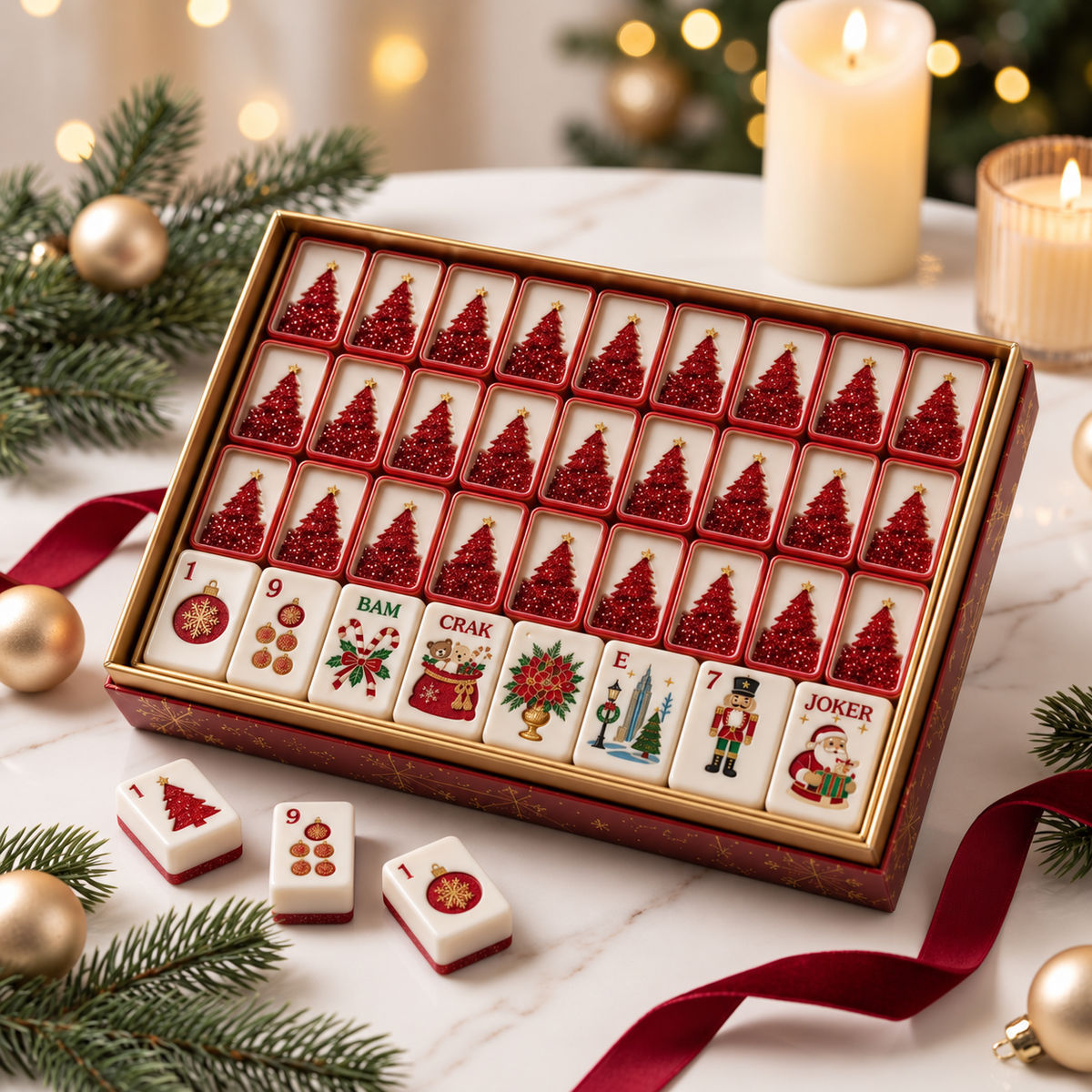
Siamese mahjong typically takes 20–40 minutes per game, depending on player skill and table speed. The variant uses a smaller tile set (108 tiles instead of American mahjong's 152), no jokers, and hand patterns that resolve faster because fewer tile combinations are valid. Setup (shuffling, drawing initial hands) adds 3–5 minutes. A full session of three rounds plays in roughly 90 minutes. Beginners may stretch a single game to 50 minutes while learning; experienced players often finish in 15–20. Siamese mahjong rewards quick decision-making, so aggressive play speeds the game—waiting for perfect hands slows it. We find that hosting a Siamese session works well as a warm-up before American mahjong or as a standalone faster-paced evening when time is tight.
Siamese mahjong is a Southeast Asian variant played on a smaller tile set (108 tiles instead of American mahjong's 152), no jokers, and hand patterns that resolve faster because fewer tile combinations are valid. A typical game runs 20–40 minutes, depending on player skill and table speed.
What makes Siamese mahjong faster than American mahjong?
Siamese mahjong moves faster because the tile set is smaller (108 tiles vs. 152), hand combinations are simpler, and there's no Charleston passing phase. American mahjong requires players to consult the current year's National Mah Jongg League card to verify legal hands—a lookup step that pauses the game. Siamese uses a fixed set of hand patterns learned by heart or printed on a small reference sheet, so play flows without stopping to check a thick card. No jokers also means fewer wild-card decisions; each tile has one role only. The result is continuous play with fewer decision bottlenecks.

How much time does setup add to a Siamese game?
Setup for Siamese mahjong takes 3–5 minutes: shuffling all 108 tiles face-down, building the wall, breaking it, and drawing initial hands. There's no Charleston (the American ritual of passing tiles before play), so you skip that 2–3 minute exchange entirely. If you're hosting a session, lay out your mat and tile racks before players arrive to trim another 2 minutes. A small engraved set with clear suit markings helps beginners scan tiles faster during wall-building, keeping momentum.
Does player skill really change game length that much?
Yes—dramatically. Beginners may take 50–60 minutes per game because they hesitate during discard decisions, miscalculate melds, or misread tile sequences. Intermediate players typically finish in 30–40 minutes. Experienced players who recognize hand patterns instantly and commit to discard strategy quickly can finish in 15–20 minutes, especially if play is competitive and aggressive. Waiting for a perfect hand (a "dead man's hand" mentality) stretches any game; players who go for wins earlier keep sessions moving. A mixed-skill table averages 35 minutes per game.
How many games fit into a typical weekly session?
A typical 2–3 hour Siamese mahjong session fits 3–5 complete games, depending on skill mix and breaks. If you're hosting friends new to the variant, plan for 2–3 games plus 15 minutes of rule review at the start. A group of regulars can play 4–5 games in the same window because play is decisive and setup is quick. We find that announcing "best of three games" before starting helps everyone prepare mentally and keeps the pace steady. For a social gathering where mahjong is one of several activities, one or two games (60–90 minutes total) works well.

What's the difference between Siamese and Hong Kong mahjong timing?
Siamese mahjong is generally 5–10 minutes faster per game than Hong Kong mahjong. Hong Kong uses 144 tiles (more than Siamese's 108) and allows sequences (chows) as exposed melds, which increases hand complexity and decision time. Siamese restricts exposed melds to pungs (three matching) and kongs (four matching), similar to American mahjong's no-chow rule, so hand patterns are simpler and play is leaner. Hong Kong also includes a scoring phase after each win; Siamese often uses a simpler point settlement, reducing overhead. If you've played both, you'll notice Siamese feels more like speed chess than Hong Kong's deliberate puzzle-solving.
Variant | Tile Count | Setup Time | Avg. Game | Exposed Melds | Jokers? |
Siamese | 108 | 3–5 min | 20–40 min | Pungs/kongs only | No |
Hong Kong | 144 | 3–5 min | 30–50 min | Pungs, kongs, chows | Yes (sometimes) |
American | 152 | 5–8 min* | 60–90 min | Pungs, kongs, quints, sextets | Yes (8 required) |
American setup includes the Charleston tile-passing ritual.
🀄 Shop best-selling mahjong sets →
How to speed up or slow down a Siamese session
To speed up: Agree on a 30-second discard timer before play starts; skip elaborate scoring discussions between rounds; keep hands moving hand-to-hand without pause. Experienced players can announce melds confidently without hesitation.
To slow down: Allow longer deliberation time (2 minutes per decision); play with a printed hand reference sheet so players double-check patterns; chat between rounds; introduce house rules like penalties for quick discards that create winning tiles.
We recommend hosting with mahjong racks with pushers if you're mixing skill levels—pushers let beginners organize and count tiles faster, reducing decision paralysis. A durable mat with clear zones also keeps play organized and prevents fumbling during wall-building.
What to check before you buy a set for Siamese mahjong
Tile count: Confirm 108 tiles (not 144 or 152).
Suit clarity: Ensure Bams, Craks, and Dots are visually distinct; Siamese play relies on quick tile recognition.
Weight and feel: Lighter tiles speed sorting; heavier tiles (resin or bone-and-bamboo) slow deliberation slightly.
Included racks: Small racks help beginners—helpful for faster table flow.
Storage: If you host weekly, a padded travel bag protects tiles and cuts setup time across sessions.
🎁 See our most-loved mahjong sets & accessories →
Real-world session timing example
Your group of four friends meets Friday nights for two hours. You allocate 15 minutes for rules recap and setup on the first visit. Game 1 runs 35 minutes (mixed skills). Quick dinner break: 10 minutes. Game 2 runs 28 minutes (players are warmer). Game 3 runs 22 minutes (confidence is up). Total: 110 minutes—three complete games, one unfinished round. On subsequent weeks, you skip the recap and fit four games comfortably.
If the same group played American mahjong (with the Charleston and card consultation), the same two-hour window would allow 1.5–2 games. Siamese's speed makes it ideal for casual weeknight gatherings or as a training format for newer players before they tackle American variants.
We host Siamese sessions when time is limited or when we want to play multiple games in one evening. The faster pace keeps energy high and lets everyone stay sharp through several rounds—perfect for a standing weekly group.
✨ Find your Mahstead set — free US shipping →

FAQ
Can you play Siamese mahjong online?
Yes, but app availability varies by region. Online play eliminates shuffling and wall-building, so digital games run 10–15 minutes—faster than in-person play. The trade-off is no tile feel or social atmosphere.
Is Siamese mahjong easier for beginners than American mahjong?
Yes. Fewer tiles (108 vs. 152), no Charleston, no league card to consult, and simpler hand patterns make Siamese more approachable. Beginners grasp the basics in one session; American mahjong typically takes 2–3 weeks of practice.
What happens if someone goes out on the wrong tile in Siamese?
The win is invalid; play continues. Unlike some variants that penalize missed wins heavily, Siamese typically just restarts the hand. Rules vary by house, so clarify before you start.
How does scoring speed affect overall game length?
Simple point settlement (e.g., winner takes 1 unit from each player) adds 1–2 minutes per game. Complex scoring with bonuses or multipliers adds 3–5 minutes. Agree on your scoring method before play to avoid disputes.
Can I use an American mahjong set to play Siamese?
No. American sets have 152 tiles, jokers, and specialized tiles (flowers, winds, dragons) that don't fit Siamese hand patterns. You need a true 108-tile Siamese or classical Chinese set to play by authentic rules.
How does game length change in a 3-player Siamese game?
Three-player Siamese mahjong runs slightly faster—roughly 15–30 minutes per game—because fewer players mean fewer decision points per round. Setup time increases slightly (handling fewer initial tile draws), but overall sessions are comparable in pace to four-player games.


View More
View More
View More
