
Hong Kong Mahjong Setup: Rules, Tiles & How It Differs
Last updated: Nov 23, 2026
Hong Kong mahjong is played with 136 tiles total: three numbered suits (1–9) × four copies each, plus winds and dragons in smaller quantities than American sets, and no flowers or jokers. Players sit in compass positions (East, South, West, North) and pass tiles in a simpler opening ritual than the American Charleston. The core difference: Hong Kong allows chows (sequences like 3–4–5 of one suit), which American mahjong forbids entirely. A player wins by forming a hand of four melds (pung, kong, or chow) plus a pair, all from a live draw or discard—there is no annual hand card that dictates winning combinations. Games typically take 30–45 minutes per round. The tile set has no spare jokers or blanks. If you own an American set and want to learn Hong Kong rules, you'll need to adapt because tile counts and hand-building logic are fundamentally different.
What are the exact tile counts in a Hong Kong set?
A Hong Kong mahjong set contains 136 tiles: Bams, Craks, and Dots numbered 1–9, with four copies of each (108 tiles), plus 16 winds (4 East, 4 South, 4 West, 4 North), and 12 dragons (4 Red, 4 Green, 4 White). There are no flowers, jokers, or blanks—only these 136 tiles in play. Compare this to American mahjong, which uses 152 tiles and includes flowers and jokers; the Hong Kong variant focuses on pure hand-building without wild cards. If you've played American games, expect to learn a tighter, more strategic tile economy.

How does the opening ritual differ from American mahjong?
Hong Kong uses a simplified wall-building and tile draw instead of the formal four-tile Charleston that American players know. Each player builds a wall of tiles face-down in their space, then draws tiles in a fixed order (often starting with the East player and moving counter-clockwise). The dealer (East) begins with 14 tiles; other players hold 13. No formal pass-and-exchange happens; the game moves directly to discarding and calling. This streamlined opening saves 5–10 minutes per game and eliminates the possibility of charitable or tactical passing.
Which melds win in Hong Kong and how do they combine?
Hong Kong players can form three types of melds: pungs (three identical tiles, like three 5 Dots), kongs (four identical tiles), and chows (sequences like 4–5–6 Bams). A winning hand requires exactly four melds plus one pair; all combinations are valid. A player may win by drawing a tile from the wall (a "self-draw" win, valued higher) or taking an opponent's discard (a "discard win"). American mahjong forbids chows entirely and requires hands to match patterns on the annual card; Hong Kong removes this constraint, making every hand a live puzzle instead of a pre-defined match. Once you see how sequences unlock new combos, the strategic depth becomes clear.
What happens when a tile is discarded—can anyone claim it?
When a player discards, the three opponents in turn order have the right to claim it, but priority is strict: a player claiming a tile to complete a pung or kong (for winning) beats anyone claiming it for a chow (sequence). If no one claims the tile, play passes to the next player, who draws from the wall. In American mahjong, only certain exposed melds are legal; in Hong Kong, any valid meld (pung, kong, or chow) can be claimed and exposed on the table. This open-play style makes discard strategy crucial—you must remember what others might be building.
How is winning scored and when does a round end?
In Hong Kong, a player wins by completing a hand of four melds plus a pair using their 14th tile (drawn or claimed from a discard). Self-draw wins score higher than discard wins. Scoring systems vary by region and house rules—some use a point-per-meld system, others use multipliers based on tile rarity or hand type. A round ends when one player wins or when the wall is exhausted; if no one wins, it's a draw and East remains dealer. Compare this to American mahjong, where rounds are scored from a shared card and points depend on exact hand patterns and payout tables. Hong Kong is simpler to track but requires mental arithmetic at the table.
Setup Comparison: Hong Kong vs. American Mahjong
Aspect | Hong Kong | American |
Total tiles | 136 | 152 |
Flowers | None | 8 (4 pairs) |
Jokers | None | 8 |
Chows allowed | Yes (3-4-5 sequences) | No—forbidden |
Hand card | None; all hands valid | Yes; annual NMJL card required |
Opening ritual | Simple wall + draw | Formal Charleston (pass 3 times) |
Melds that can be called | Pung, kong, chow | Pung, kong, quint, sextet only |
Winning formula | 4 melds + 1 pair | Pattern from card + any final tile |
Game length per round | 30–45 minutes | 20–40 minutes |
Wild-card jokers | No | Yes; 8 in play, never in pair or single |

How do you actually set up your first Hong Kong game?
Step 1: Arrange seating. Seat four players at a square table facing compass directions: East (dealer), South, West, North. Decide who deals by drawing high tile; that player is East.
Step 2: Build the wall. Each player stacks their 34 tiles face-down in a 17-tile-long, 2-tile-high wall in their space. The walls form a square in the center of the table.
Step 3: Open the wall. The dealer (East) rolls two dice to determine where to break the wall. Count off that many tile stacks clockwise from the right end of the dealer's wall. Break there.
Step 4: Deal tiles. East takes 2 stacks (4 tiles), then passes clockwise: South takes 2 stacks, West takes 2 stacks, North takes 2 stacks. Repeat until East has 14 tiles and the others hold 13.
Step 5: Start play. East discards one tile face-up in the center. South looks first to claim it or passes. Play moves counter-clockwise around the table.
This setup takes 3–5 minutes. No shuffling of a hand card is needed—just one discard pile, one active hand per player, and the live wall.
What mistakes do new players make and how to avoid them?
Mistake 1: Treating it like American mahjong. You cannot look up valid hands on a card because none exists. Learn the four-meld-plus-pair rule instead. Spend one evening with a rules guide and one practice round before playing for points.
Mistake 2: Claiming tiles out of turn. In Hong Kong, if you claim a discard out of order, you disrupt the priority system and create unfair advantage. Keep your eyes on who discarded and wait your turn—typically counter-clockwise.
Mistake 3: Exposing melds too early. Showing your work (pungs, kongs, chows) on the table telegraphs your strategy. Skilled opponents will avoid giving you winning tiles. Hide melds as long as you can; claim early only when you're close to winning.
Mistake 4: Miscounting the wall. If you lose track of how many tiles remain, you may misjudge the end-game timing. A dedicated scorekeeper or a silent tile counter helps. Many players use a small marker or counter to track wall depth.
Mistake 5: Playing with inconsistent house rules. Before play, agree on scoring, whether kongs trigger new draws, and whether a discard win pays less than a self-draw. Write them down if playing for the first time with a new group.
🀄 Shop best-selling mahjong sets → (https://mahstead.com/en-us/collection/best-selling)
What to check before you buy a Hong Kong set
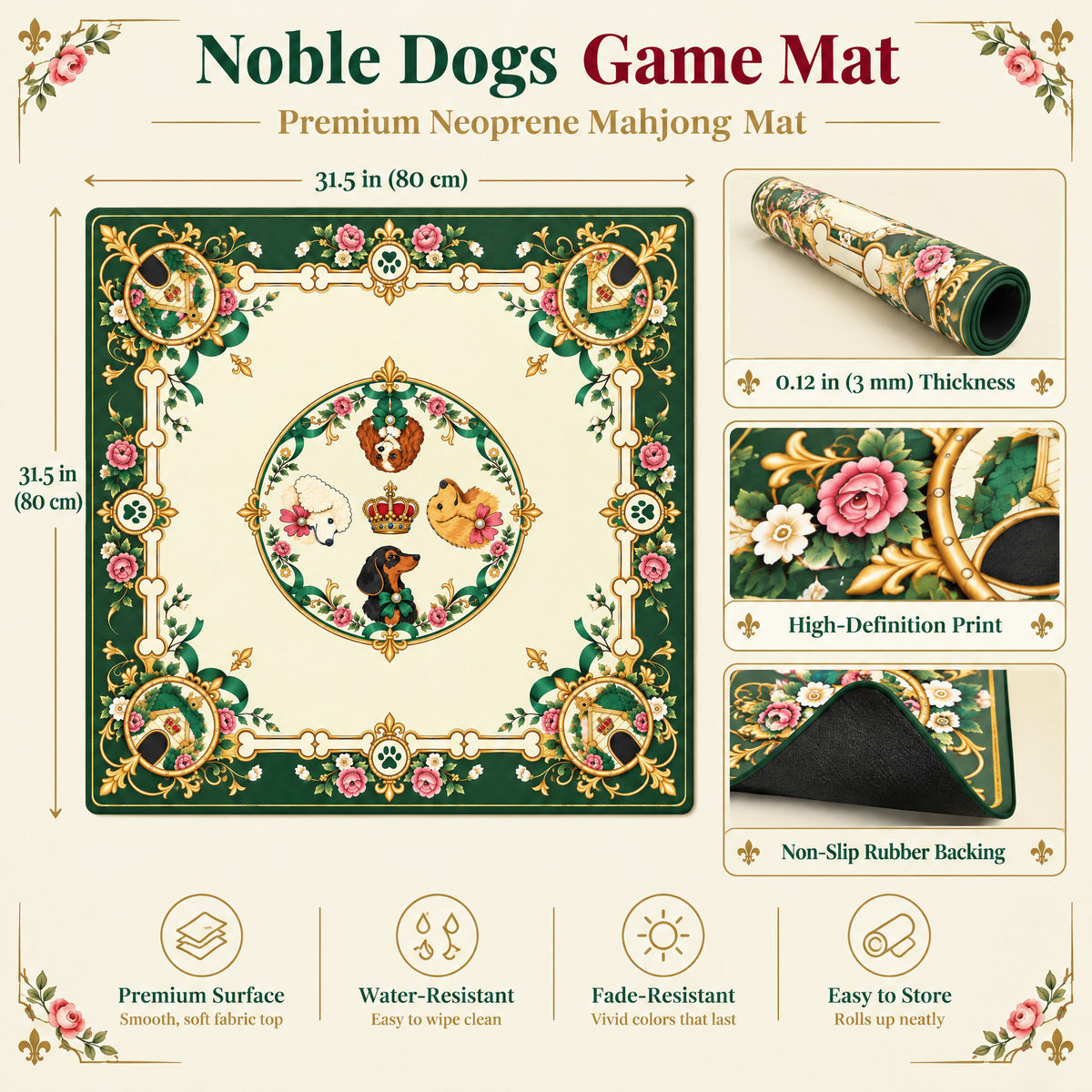
If you're buying a set specifically for Hong Kong play, confirm the tile count is 136 before checkout—not 144, 152, or 160. Some retailers bundle American or multi-variant sets that don't split evenly into Hong Kong's 136-tile economy. Check for durability: acrylic or bone tiles withstand years of shuffling and discards; lightweight plastic may crack after one season. Verify the tile face is printed legibly (not faint) so you can read suits from across the table in normal light. If you travel or host weekly games at different venues, choose a set with a protective travel bag or case so tiles don't scatter or scratch. A mahjong mat is optional for Hong Kong (the discard pile and melds sit loose on the table), but many players prefer one for organization and noise reduction during fast play.
Do I need special equipment to play Hong Kong mahjong at home?
You need a set of 136 tiles, a flat table (36 × 36 inches minimum), and seating for four. A dedicated mat is helpful but not essential—many players organize tiles loose on a tablecloth. A rack or pusher system is less common in Hong Kong play than in American games because players typically hold and read tiles in hand rather than displaying them in a row on a rack. Two dice (to determine the break in the wall) are standard; most sets include them. If you host regular games, add a mahjong mat to protect your table surface and define the playing area, especially if you rotate hosting duties across apartments or houses. A notebook for scoring is useful unless your group uses a dedicated app.
🎁 See our most-loved mahjong sets & accessories → (https://mahstead.com/en-us/collection/best-selling)
Can I convert an American set to Hong Kong rules?
Technically, yes—American sets contain 152 tiles, and Hong Kong uses 136, so you would remove 16 tiles (the flowers and jokers) and play with what remains. However, this creates a size and balance problem: your American tiles may have a different weight, feel, or art style from a true Hong Kong set, and you lose the flowers and jokers that opponents might not recognize as absent. More importantly, American tile counts and suit distributions are designed for American hands, not Hong Kong's four-meld-plus-pair system. If you have a best-selling American set at home, play American—don't retrofit. If you're serious about Hong Kong mahjong, invest in a dedicated 136-tile set. The rules are different enough that using the wrong equipment undermines learning and enjoyment.
✨ Find your Mahstead set — free US shipping → (https://mahstead.com/en-us/collection/best-selling)

FAQ
Do I need to pass tiles in a Charleston before a Hong Kong game?
No. Hong Kong omits the formal Charleston. Each player builds a wall, the dealer breaks it with a dice roll, and tiles are dealt in order—no passing ritual. The game starts immediately after the dealing phase.
Can I win Hong Kong mahjong with a hand I invent, or must I match a pattern book?
You can win any hand that follows the four-meld-plus-pair rule. There is no pattern book or annual card. This makes Hong Kong more open-ended than American mahjong, where every hand must match a published card.
What's the difference between a self-draw win and a discard win in Hong Kong?
A self-draw win happens when you draw your winning tile from the wall; it typically scores higher. A discard win occurs when you claim an opponent's discarded tile to complete your hand; it scores lower. Both are legal endings.
How many tiles should a Hong Kong set include—136 or 144?
The standard is 136 tiles for play. Some sets sold as "Hong Kong" bundles include 144 or more, but those extra tiles are usually for different regional variants or backups; only 136 are used per game.
Can chows wrap around (like King, Ace, 2) in Hong Kong mahjong?
No. Sequences must flow in order within the numbered ranks 1–9. A chow cannot wrap from 9 back to 1. The highest sequence is 7–8–9; the lowest is 1–2–3.
How do I know if my Hong Kong set is fair or if some tiles are marked?
Inspect all tiles under strong light before the first game. Tiles should be uniform in size, weight, and surface finish. If one tile feels heavier or has a different shine, isolate it and check it against others of the same rank. Buy from a reputable seller if fairness is a concern.


View More
View More
View More
