
Hong Kong Mahjong Flower Strategy: Hand-Building & Play
Last updated: Nov 23, 2026
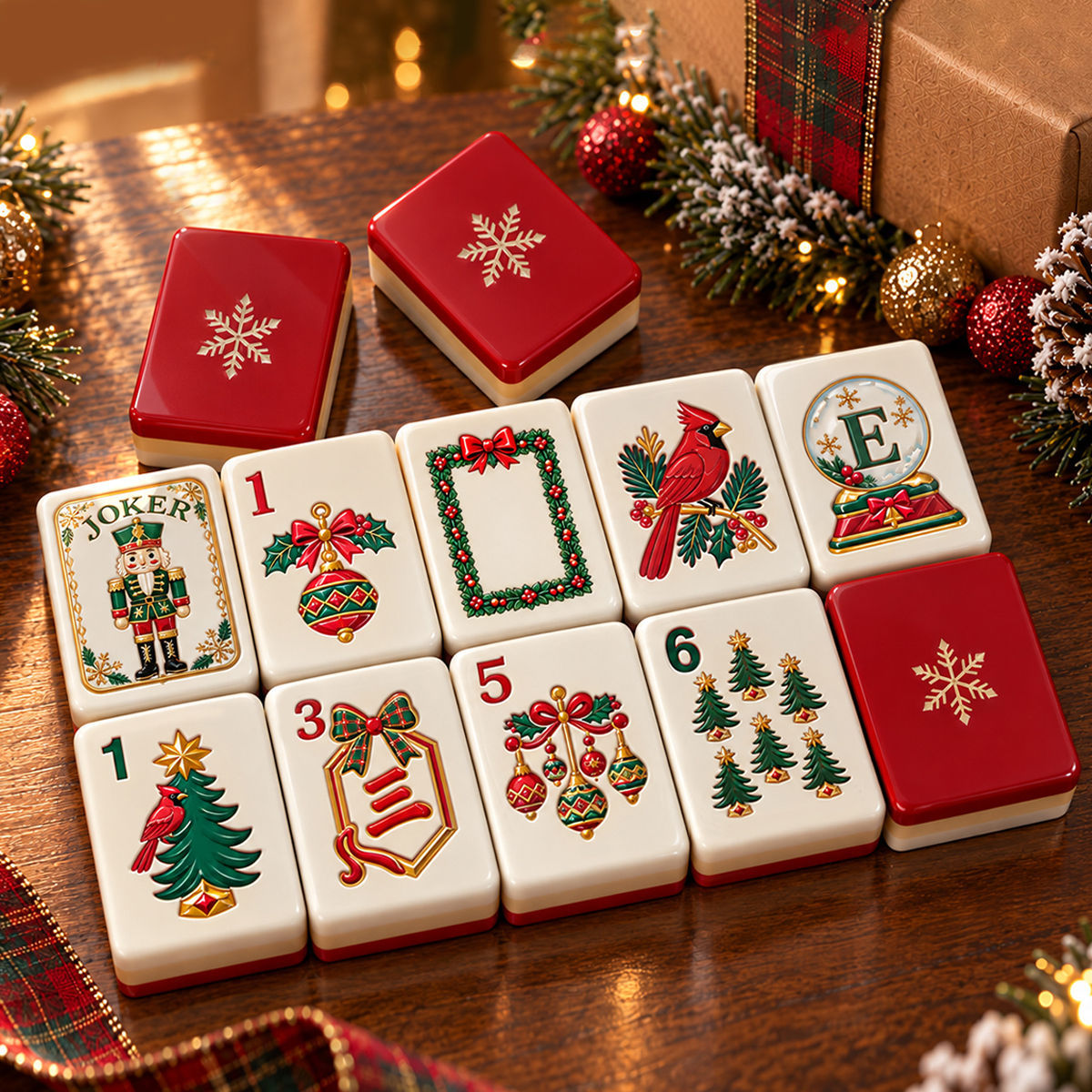
In Hong Kong mahjong, the eight flower tiles (春 Summer 夏 Autumn 秋 Winter 冬, plus Plum 梅 Orchid 蘭 Chrysanthemum 菊 Bamboo 竹) are drawn immediately and replaced from the dead wall; they generate immediate points (usually 1 point per flower) and count toward hand completion only in specific limit hands. Unlike American mahjong—which has no flowers—Hong Kong flowers reward you for drawing them and strategically serve as bonus multipliers. Beginners often hoard flowers hoping to build all eight; experienced players know certain flowers unlock high-scoring combinations (like all Plums, or flowers paired with specific suit patterns). The core strategy is: draw a flower, score it, replace it, then read your new tile. Most games award 1 point per flower immediately, plus bonus points if your final hand contains a set of matching flowers or all flowers. Flower strategy turns random luck into tactical pressure—you must decide how to build around flowers you didn't choose, or pivot your whole hand when a valuable flower arrives.
In Hong Kong mahjong, flowers are not cosmetic; they're the difference between a simple hand and a premium one. We've hosted weekly Hong Kong games for years, and we've watched beginners ignore flowers entirely—then suddenly realize their East player just scored 4 extra points before even going out. Flowers require a different mindset from American mahjong players switching to Hong Kong rules. Let's break down the strategy that will turn flower draws from frustration into advantage.
How do flower tiles work in Hong Kong mahjong?
In Hong Kong mahjong, when you draw a flower tile during play—whether on your opening draw or as part of your draw after your turn—you immediately score points (typically 1 point per flower), set it aside in front of you, and draw a replacement tile from the dead wall (the same wall you drew from during the opening deal). This happens mid-turn, before you decide whether to pung, kong, chow, or discard. You keep drawing replacement tiles until you draw a non-flower. The eight flowers (Spring, Summer, Autumn, Winter, Plum, Orchid, Chrysanthemum, Bamboo) are fixed; you cannot manipulate which flower you get. Scoring ends once you complete a hand that declares, at which point all your flowers count toward the final score. This rule is fundamentally different from American mahjong, where flowers do not exist; in American play, your only bonus mechanism is jokers and the score card pattern.

What's the difference between season flowers and plant flowers?
Hong Kong recognizes two flower families: the four seasons (Spring, Summer, Autumn, Winter, usually numbered 1–4 in some sets) and the four plants (Plum, Orchid, Chrysanthemum, Bamboo, often numbered 5–8). Some regional variants score them identically (1 point each); others award bonus points for completing a full set of seasons or a full set of plants—for example, 2 points for all four seasons, 2 for all four plants, totaling 4 bonus points on top of the 8 base points from eight flowers. The distinction matters because certain high-scoring limit hands explicitly require "all seasons" or "all plants," making your strategy pivot dramatically mid-game. If you draw Plum early and spot that the winning hand requires all four plants, you now prioritize staying alive long enough to draw Orchid, Chrysanthemum, and Bamboo—a rare tactical luxury.
🀄 Shop best-selling mahjong sets →
Should you build toward holding all eight flowers, or play them as they come?
Holding all eight flowers sounds tempting—and it wins you a high-scoring bonus—but it's a trap for intermediate players. The hand that contains all eight flowers must also be a valid winning hand (a complete pung/kong/chow structure plus a pair), and you have limited seats and tile slots. Most experienced players treat flowers as a random gift: score them, keep them, and ensure your core hand (the 13 tiles you're actually forming into a winning pattern) stays playable. The strategy is defensive: flowers should never force you to sacrifice a strong pung or discard a critical suit tile just to make room. Instead, play your base hand first, let flowers happen in the background, and if all eight arrive before you declare, you've earned a massive bonus. If you draw only three flowers by the time you go out, you've still scored 3 points and won the hand. The players we know who win consistently treat flowers as "nice-to-have upside," not "essential to chase."
How do flowers affect your discard sequence and dead wall strategy?
When you draw a flower, you don't discard—you replace it from the dead wall and continue your turn. This creates a subtle advantage: you see extra tiles. If you draw two flowers in a single turn, you've effectively looked at two replacement tiles before committing to a discard, giving you more information than opponents who draw non-flowers. Experienced players weaponize this by tracking how many flowers are in play and how many remain in the dead wall. If three flowers have been revealed and you're East (drawing first), you know the dead wall distribution has shifted, and tile availability for other players changes. The dead wall holds 14 tiles in Hong Kong (compared to American mahjong's wall composition); flowers consume dead wall draws faster, so hands end sooner. If you're holding a half-formed hand and flowers are flying early, declare fast—the wall will empty before you expect it.
What's the scoring math for flowers in a winning hand?
Most Hong Kong rules award 1 point per flower immediately upon draw, then add bonuses in the final hand. A typical scoring breakdown:
Each flower drawn: 1 point (paid when you draw it)
All four seasons in final hand: 2 bonus points
All four plants in final hand: 2 bonus points
All eight flowers in final hand: 4 bonus points (instead of the season/plant bonuses)
If you declare a hand with three Plums (Plum, Orchid, Chrysanthemum) and two Seasons (Spring, Summer), you earned 5 points when you drew them, plus 0 bonuses at the end (since you didn't complete either full set). Your final hand score depends on the winning pattern and who paid (self-draw vs. discard pay-out), then those flower bonuses stack on top. A player new to Hong Kong often undercalculates because they forget to add flowers to the hand-value bonus. If the base hand is worth 2 points (a simple pung win) and you hold six flowers (6 base points), your total is 8—but if two of those flowers are Seasons and two are Plants, you now have 10 (plus any self-draw multiplier). Tracking flowers as you play, not at settlement, prevents arguments and keeps the game moving.
Scenario | Flowers drawn | Seasons complete | Plants complete | All 8 flowers | Total points (drawing + bonus) |
Heavy flower luck | 8 | Yes (4) | Yes (4) | Yes | 8 + 4 = 12 |
Mixed draw | 5 | No (2) | Yes (4) | No | 5 + 2 = 7 |
Light draw | 2 | No (1) | No (1) | No | 2 + 0 = 2 |
Strategic draw | 6 | Yes (4) | No (2) | No | 6 + 2 = 8 |
🎁 See our most-loved mahjong sets & accessories →

What mistakes do American mahjong players make when switching to Hong Kong flowers?
The biggest mistake: treating flowers like American jokers. In American mahjong, jokers are wildcards that can substitute for any tile in a pung or kong; flowers don't work that way in Hong Kong. You cannot use a flower to complete a pung of Bamboos—the flower stays face-up as a bonus, not a replacement tile. Second mistake: forgetting to draw a replacement. New players draw a flower, score it, then immediately discard as if they'd drawn a regular tile, leaving themselves one tile short. The turn isn't complete until you've drawn a replacement from the dead wall and updated your hand to 14 tiles again. Third mistake: misunderstanding dead wall position. In American mahjong, there's no "dead wall"; in Hong Kong, the 14-tile dead wall is sacrosanct and supplies all flower replacements. If you accidentally draw from the main wall instead of the dead wall after a flower, the hand is fouled. Fourth mistake: forgetting that flowers don't delay play. If you draw multiple flowers in sequence, your turn can last several seconds as you process replacements—but other players' turns still move at normal pace. Holding up the table with indecision isn't strategy; it's bad etiquette. Make your flower-draw decision and discard within seconds.
When should you switch to playing a different suit because of flowers?
Flowers shouldn't dictate your hand structure, but they can influence your pivot. If you've opened with intentions to build Dots and Craks (in Hong Kong terminology: Circles and Characters), but you've drawn five flowers and no high-value Honour tiles (Winds, Dragons), you're already earning 5 points just from flowers alone. At that moment, holding a weak Dot and Crak hand isn't worth the risk; you might discard your lowest prospects and play a defensive game, chasing a simple pung or Honour-heavy hand that's less likely to lose big. Conversely, if flowers have been rare and you see three gone before your second turn, you're unlikely to draw more; don't hoard hand space hoping for an eighth flower—build the hand you have. The decision framework: Count flowers in play, not just your hand. Count what you need to complete a limit hand (if pursuing one). Count discards to see which players are fishing (drawing) vs. settled (discarding safely). If you're ahead on flowers and behind on tile certainty, lock in defense. If you're behind on flowers but ahead on tile certainty (a clear pung forming), press offense.
How do you read flowers on the best-selling mahjong sets?
Quality Hong Kong sets clearly mark all eight flowers with traditional or romanized labels—Spring/梅, Summer/蘭, Autumn/菊, Winter/竹, Plum, Orchid, Chrysanthemum, Bamboo. Our engraved sets at Mahstead use crisp tile faces and numbering (1–4 seasons, 5–8 plants) so you identify flowers instantly mid-turn, avoiding costly misreads. Some older or budget sets blur or omit flower labels, forcing you to memorize tile art instead of reading text—a handicap in fast play. When you're hosting a weekly Hong Kong game, buy a set where flowers are immediately legible; nothing kills the flow of a game like a player asking, "Wait, is this Orchid or Chrysanthemum?" every three turns. Check the tile thickness and sizing: flowers are the same physical size as number and Honour tiles (in legitimate sets), so they stack and shuffle identically. If your set's flower tiles are noticeably thinner or smaller, they'll jam your racks or get lost in the shuffle.
✨ Find your Mahstead set — free US shipping →
What to check before you buy a Hong Kong mahjong set
Flower clarity: All eight flowers labeled in English or Chinese (or both). Test under your home lighting.
Tile uniformity: Flowers match the weight, thickness, and size of other tiles—no flimsy or oversized flowers.
Dead wall marking: If the set includes a rack or wall divider, confirm the dead wall section is marked or easy to isolate (14 tiles).
Set completeness: Confirm the set includes all eight flowers (some budget sets drop flowers entirely). Count before leaving or opening.
Regional variant clarity: If the set manual or packaging specifies which Hong Kong ruleset it supports (Cantonese, Fujian, etc.), cross-check your house rules—scoring and flower bonuses vary slightly by region.

FAQ
Do flowers count toward the 14-tile hand limit in Hong Kong mahjong?
Yes. Your hand is always 14 tiles: 13 in play, 1 discard. Flowers live in front of you as scoring bonuses, not part of the 14, but they block play flow when you're replacing them from the dead wall. Once you declare a winning hand, flowers are counted as part of the final score.
What happens if all eight flowers are drawn before the hand ends?
The hand continues with normal tiles. There are no more flowers to draw. You've earned 8 points already (at draw-time) plus any seasonal/plant bonuses. If all eight flowers sit in front of you when you declare, you earn additional multiplier points (typically 4 bonus points) on top of your base win.
Can I refuse to score a flower when I draw it?
No. Flowers are mandatory—you must draw them, score them immediately, and replace them. This is non-negotiable under standard Hong Kong rules. If a house rule permits optional flowers, it's a non-standard variant; confirm with your group before playing.
How do flowers work if I'm self-drawing a winning hand?
Flowers are scored when you draw them, regardless of when you declare. You don't "cash in" flowers at the end; you cash them in as you draw them. When you declare (self-draw or discard), flowers are already scored and added to your hand value.
If I draw a flower during another player's turn, do I score it immediately?
You never draw during another player's turn in Hong Kong mahjong. You only draw on your own turn (after discarding) or when the hand opens (the initial draw for East and South, etc.). Flowers belong to the player who draws them; if East draws two flowers on the first turn, only East scores them.
How do flowers affect the length of a Hong Kong game compared to American mahjong?
Flowers slightly shorten games because each flower drawn consumes a dead wall tile, depleting the wall faster. A typical Hong Kong hand lasts 10–14 draws; American mahjong typically lasts 12–16 draws. Flowers also add scoring granularity, so players sometimes declare faster to lock in their flower points before the wall empties.


View More
View More
View More
