
Competition vs. Siamese Mahjong: Rules & Play Differences
Last updated: Nov 23, 2026
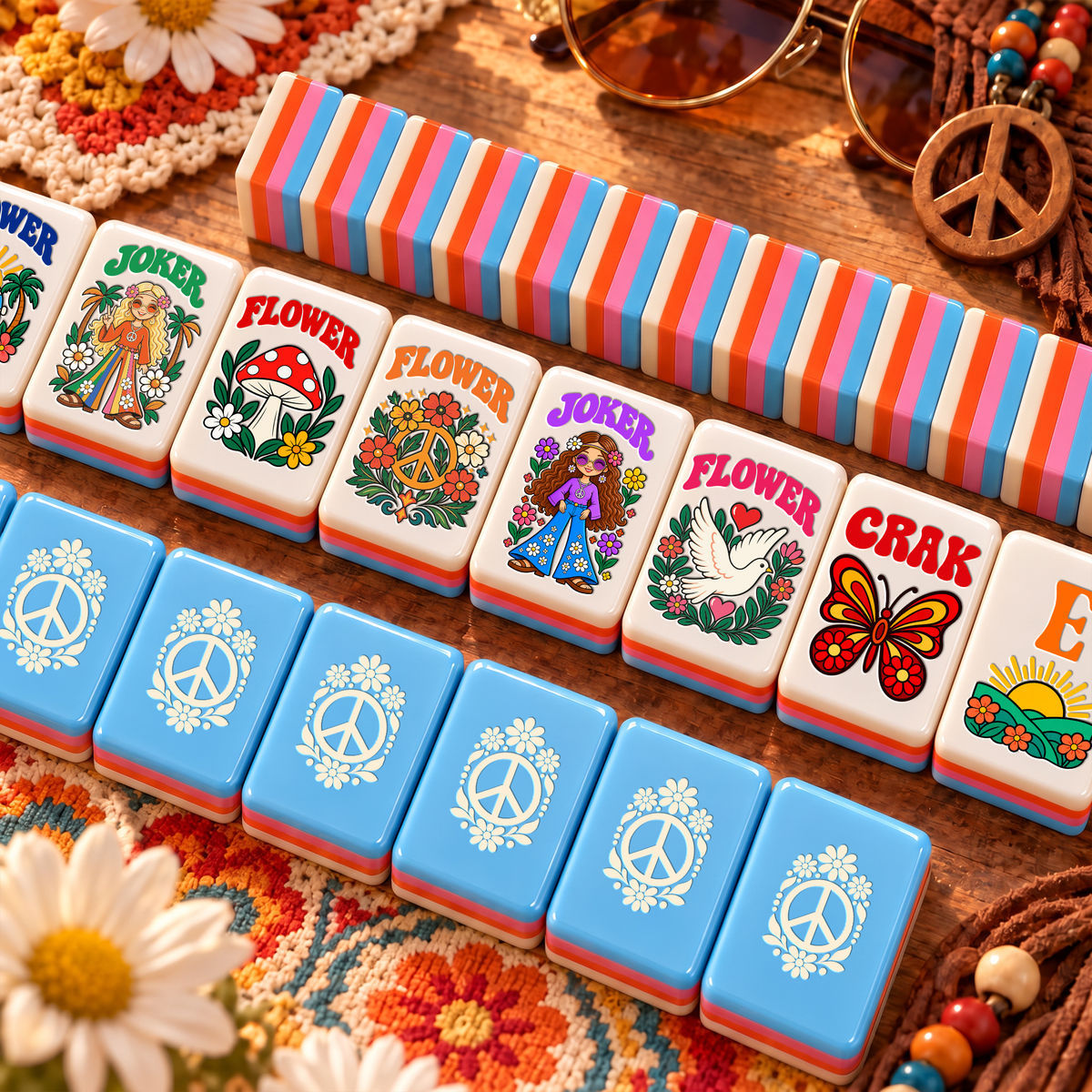
American competition mahjong is played exclusively from the current-year NMJL card, uses 152 tiles with 8 jokers, and permits only pungs (3), kongs (4), quints (5), and sextets (6)—never sequences or chows. Siamese mahjong (Thai mahjong) allows chows (1-2-3 sequences in one suit), exposes melds freely on the table, uses fewer jokers, and scores by rank and completion speed rather than hand pattern. In American play, your hand remains hidden until you declare ready; in Siamese, winning players reveal all melds immediately. Both are played four-handed over 30–45 minutes, but American rules are standardized nationally, while Siamese scoring and tile counts vary by region.
What is American competition mahjong?
American mahjong in a competitive setting follows the National Mah Jongg League ruleset published each spring. Players draw and discard from a 152-tile set, build hand patterns shown on the current card, and must complete exactly one listed hand to win. All melds remain hidden; exposures are only pung, kong, quint, or sextet—never chows. Jokers are wild but never fill a single tile or a pair. Winning is fastest when your hand matches a card pattern exactly; gameplay typically lasts 30–45 minutes per round.

How does Siamese mahjong differ in tile play?
Siamese mahjong permits chows (consecutive 1-2-3 sequences in one suit) as playable and exposable melds, fundamentally changing hand-building strategy. Where American players hunt for specific card patterns, Siamese players build toward completion by suit runs. Siamese sets often use fewer jokers and fewer flowers; tile counts and even suit designs vary by region and house rule. A Siamese player can lay a chow on the table during play; an American player cannot. This one rule opens the entire game to a different flow: American is pattern-matching; Siamese is run-building.
What are the key scoring and winning differences?
American competition mahjong scores by pattern only—the hand you complete matches one entry on the card, and your score is fixed (1 point, 2 points, 3 points, or limit). In Siamese mahjong, scoring depends on tile rank (Honors vs. Simples), when you won (self-draw vs. discard), and how quickly you completed your hand. American players win by declaring "mahjong" when their hand is complete and ready; Siamese players reveal all melds when they win and the hand is scored live. American play is standardized; Siamese scoring rules shift among clubs and regions.
How do exposure and concealment work?
In American competition, your entire hand stays private until you win—exposures (pungs, kongs, quints, sextets) are rare and strategic. In Siamese mahjong, players routinely expose melds face-up on the table during play, and opponents can see what you're building. This open visibility changes every decision: American players hide information; Siamese players broadcast intent. An American game builds tension through secrecy; a Siamese game builds tension through visible pressure and race. Neither approach is "better"—they reward different skills and table reading.

Which game should you learn first?
If you're in the United States and joining a weekly group, learn American mahjong using the current year's NMJL card. If you're traveling to Thailand or playing with a Thai club, Siamese rules will dominate. American competition is standardized, easier to find rulebooks for, and supported by national tournaments. Siamese is deeply regional and worth learning if you have access to experienced local players. Start with whichever matches your community; switching between them after learning one takes two or three sessions of table practice.
Side-by-side comparison
Feature | American Competition | Siamese |
Sequences allowed | No (pungs, kongs, quints, sextets only) | Yes (chows / 1-2-3 runs) |
Hand source | Current NMJL card only | Regional hand lists or freestyle |
Melds visible | Hidden until win | Exposed on table during play |
Joker count | Always 8 (in 152-tile set) | Varies by region; often 4–6 |
Scoring system | Fixed by pattern | Rank, speed, method (self-draw vs. discard) |
Winning declaration | "Mahjong" (hidden hand revealed) | All melds shown; score calculated live |
Standardization | Nationwide; NMJL sets standard | Regional; house rules vary widely |
Typical game length | 30–45 minutes per round | 30–45 minutes (similar) |
🀄 Shop best-selling mahjong sets →
What to check before you buy a set for competition play
If you're buying for American mahjong, ensure your set includes a current year's NMJL card—this is non-negotiable. A 152-tile American mahjong set supplies all you need: 108 numbered tiles (Bams, Craks, Dots), 16 Winds, 12 Dragons, 8 Flowers, 8 Jokers. Check that tiles are durable acrylic if you host weekly games; bamboo and bone crack under repeated handling. Verify joker count (8 always for American play); extra jokers and blanks in a 160-tile set are spares.
If you're buying for Siamese play, verify the dealer supplies joker count and confirm it matches your club's house rule. Siamese sets are less standardized in North America; buying blind is risky. Ask your Siamese club for a vendor recommendation before ordering.
For either variant, buy a quality mat and racks with pushers—they save your tiles from scratches and your hands from fatigue during multi-hour sessions. A padded mat protects acrylic tiles during play; racks keep your hand organized and quiet, letting you focus on card reading and tile flow.
🎁 See our most-loved mahjong sets & accessories →
Common mistakes when switching between variants
Mistake 1: Thinking Siamese is "easier" because sequences are allowed. Siamese is different, not simpler—you must memorize hand patterns by region, track visible melds, and adjust scoring on the fly. Neither game is beginner-friendly until you've played 5–10 rounds.
Mistake 2: Buying a 144-tile set for American competition. American mahjong requires exactly 152 tiles plus 8 jokers. Smaller sets won't work; you'll run out of tiles mid-game.
Mistake 3: Mixing Siamese scoring into American play or vice versa. The two games have no overlap once you introduce the other's scoring. Pick one ruleset per session and stick to it; switching mid-night will confuse the table.
Mistake 4: Assuming all Thai clubs play the same Siamese rules. Thai mahjong varies widely by club, region, and generation. Always ask the host for house rules before sitting down.
Mistake 5: Using jokers incorrectly in either game. American: jokers can fill any tile except a single tile or a pair. Siamese: joker rules vary by region—verify before the game starts. No guessing.
✨ Find your Mahstead set — free US shipping →
If you're hosting regular American competition games, our engraved sets let you personalize your group—names, logos, or inside jokes engraved on the tile case. If you need travel-ready gear, a padded bag keeps your set safe between sessions. Both are built for players who take their game seriously and play week after week.

FAQ
Can I use an American mahjong set to play Siamese mahjong?
No. American sets have 152 tiles and 8 jokers; Siamese sets often use fewer jokers (4–6) and regional tile layouts. The joker overload breaks Siamese balance. Ask your Siamese club for a proper set recommendation.
Is the National Mah Jongg League card required to play American mahjong?
Yes, for any standardized American play. Casual home games may invent hands, but competition and most weekly clubs use only the current year's card. This standardization is what makes American mahjong portable across clubs nationwide.
How long does it take to learn American mahjong vs. Siamese mahjong?
Both take 3–5 sessions to understand basics; 10–15 sessions to play confidently. American takes longer to memorize card patterns; Siamese takes longer to learn regional scoring. Neither is a weekend hobby—plan for a month of weekly play.
Do Siamese clubs in the United States use standardized rules?
No. Each Siamese club sets its own house rules for scoring, hand patterns, and joker use. Always ask the host before your first session. Regional Thai mahjong groups often vary even within the same city.
What's the biggest advantage of American competition mahjong for a new player?
Standardization. One card, one ruleset, nationwide consistency. You can learn in Dallas, move to Chicago, and sit down at a new club using the exact same hands and scoring. Siamese mahjong locks you into a specific club's house rules.


View More
View More
View More
