
Harbin Mahjong Strategy: Tile Recognition and Aggressive Play
Last updated: Nov 23, 2026
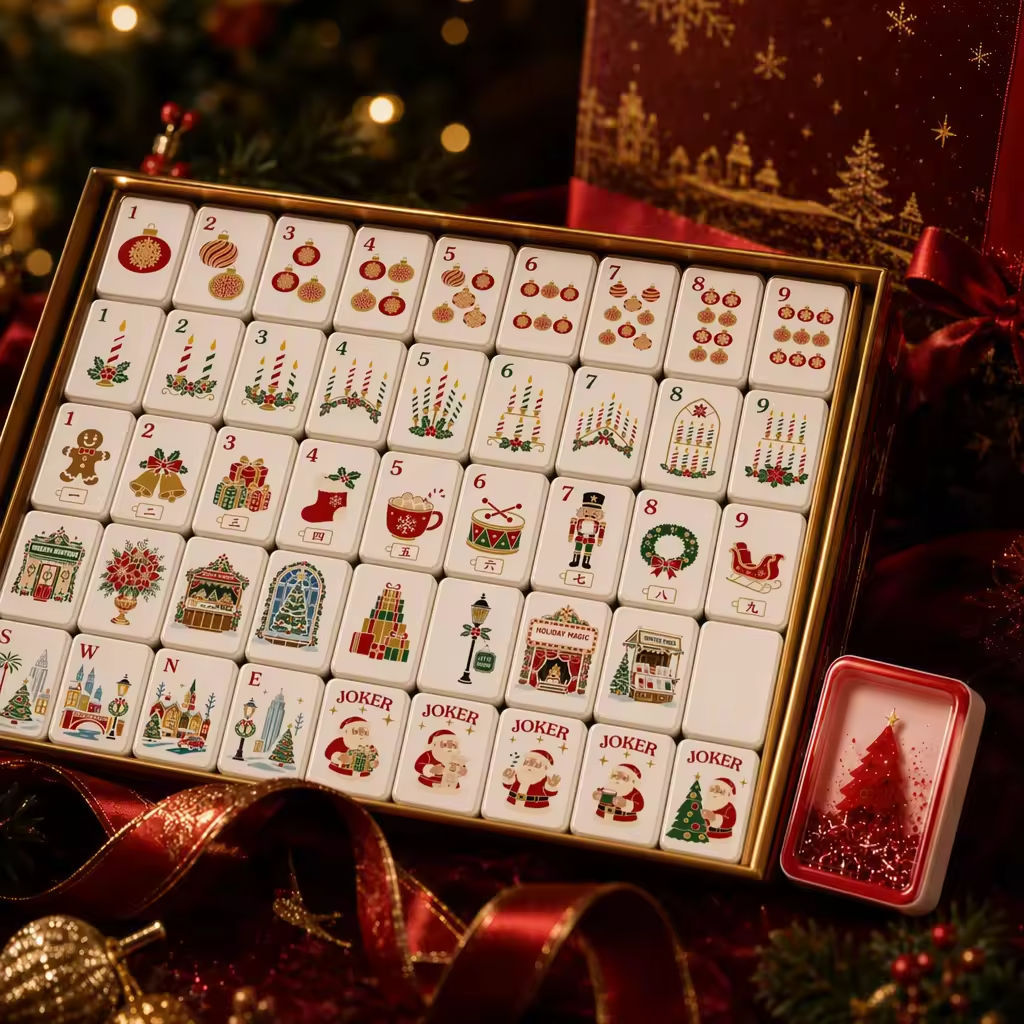
Harbin mahjong is a regional Chinese variant originating in Harbin, Heilongjiang Province, characterized by speed, simplified hand patterns, and scoring focused on quick completion rather than complex combinations. Players use 144 tiles (three suits, winds, dragons, flowers—no blanks or extended jokers), typically play to a preset points target, and call melded sets immediately on the table. Unlike American mahjong, which locks hands to a published yearly card and forbids sequences, Harbin allows chows (runs like 2–3–4 Dots), pungs, and kongs in any legal combination. Winning typically takes 10–20 minutes per hand; the game rewards hand-building speed and psychological pressure over the strategic patience of Western variants. We recommend starting with a standard mahjong tile set to practice recognition drills before joining live Harbin tables.
Harbin mahjong draws players who love urgency and pattern spotting over lengthy calculation. If you've played American mahjong and want to switch variants—or you're comparing regional styles to understand what to learn first—this guide breaks down Harbin's core tactics, common traps, and how it differs from the game you may know.
What makes Harbin mahjong faster than American play?
Harbin ditches the fixed yearly card and complex joker rules. Players build hands from any legal combination: one pair plus four melds (sets of three or four). Chows count, so 5–6–7 Bams is instantly valid. The lack of joker substitution and simplified hand structure mean fewer dead draws; most tiles have immediate utility. Hands resolve in a single sitting, encouraging aggressive early exposure. We've seen Harbin sessions run 15–20 hands per hour versus 6–8 for American play, shifting the psychology from defensive patience to active pressure.

How do you recognize winning tile patterns in Harbin?
In Harbin, you're not memorizing a year's card—you're learning four types: pairs, pung (three identical), chow (three consecutive, one suit), and kong (four identical). Scan your hand for two-tile gaps you can fill: if you hold 4 and 6 Dots, the 5 Dot creates a chow. Track opponent discards mentally; if three players have thrown Winds or one suit, the remaining tiles become safer. Beginners often wait too long for a "perfect" hand; instead, stay alert for partial completions and pivot when a pair emerges. Practice tile grouping: lay out a shuffled set and sort it by suit and number—speed here translates directly to table speed.
When should you declare an exposed meld instead of holding tiles?
Harbin strategy hinges on when to meld. Declaring a pung or chow removes pressure from your hand and signals your direction—but also reveals your strategy to opponents, who adjust discards accordingly. Expose early if: (1) you have a pair forming and need only one tile type to win; (2) you control a suit your opponents are abandoning; (3) you've already drawn deep into the deck with no winning pair yet. Hold tiles longer if you're one tile from win but your pair is still hidden—let opponents think you're chasing a different suit. The best Harbin players we know exploit this: they'll expose a marginal pung to lure an opponent into a dead-end suit, then draw the winning tile from a seeming non-threat. It's psychological warfare disguised as transparency.
What's the correct discard order when you have no immediate threat?
Your first discards (turns 1–3) should be outlier tiles: wind tiles that don't align with your suit focus, or isolated number extremes (1s and 9s in a hand building toward 4–5–6 sequences). These are "safe"—few opponents want them early. Move toward honor tiles (dragons, winds) next, then flow into your surplus from each suit. Never discard the same suit consecutively unless forced; it telegraphs your hand direction. If three opponents discard 2 Bams, stop discarding Bams immediately—at least one player is fishing for them. We call this "reading the silence": what isn't on the table matters as much as what is. A common Harbin mistake is discarding systematically (1, 2, 3, 4…); instead, randomize slightly to keep opponents guessing. Predicting the flow takes about 50–100 hands of live play.
How does Harbin scoring affect your strategy versus American play?
Harbin scoring is usually simpler: base points per win (often 1–5 points depending on local rules), multiplied by number of losing players or hand type (drawing your own win scores higher than waiting for an opponent's discard). Some variants add quick-win bonuses if completed within the first few turns. American mahjong, by contrast, has granular point values per hand type on the published card, rewarding specific patterns and making certain hands worth 30–40+ points. This means Harbin players chase any legal win fast, while American players calculate whether a hand type is worth holding for higher points. In Harbin, time is the resource; in American, points are the resource. Psychologically, Harbin breeds aggression and momentum shifts; one player's quick win tilts the table, and the next hand begins immediately. American play feels more like chess—deliberate, patient, and less forgiving of sloppy tile memory.
Aspect | Harbin | American |
Tile count | 144 | 152 + 8 jokers |
Sequences allowed | Yes (chows) | No |
Hand ref. | Any legal combo | Yearly card only |
Melds exposed | 3+ immediately | Up to 2 hidden, rest exposed at win |
Joker rules | None or limited | Jokers replace in melds; never in pair |
Avg. hand time | 12–18 min | 20–35 min |
Scoring | Simple base + multiplier | Hand-type-specific card values |
Winning pace | Fast, momentum-driven | Measured, calculation-heavy |

Why do Harbin players discard honor tiles so differently?
Honor tiles (winds and dragons) have no chow potential—they're only useful as pungs or kongs. A Dragon you can't complete immediately is deadweight. Harbin pros dump honor tiles from turn 2 onward unless they already have a pair or two tiles of that honor showing on the table (signaling opponents' discards). If you hold East and three East tiles are already visible, hold it; if East is hidden, treat it as low-priority. Many Western players keep honor tiles "just in case," clogging their hand. Experienced Harbin tables see this and read it: a hand holding high-honor counts usually lacks a winning pair and is a liability. The counter-strategy: occasionally bluff by holding an honor tile late into the draw, falsely signaling a hidden pair and luring others into discarding safely around you. Psychology beats probability in tight games.
🀄 Shop best-selling mahjong sets →
How do you avoid the most common Harbin beginner mistakes?
Mistake 1: Hoarding dangerous tiles. Holding a tile three of the four copies are already exposed wastes real estate. Once you see the fourth copy, it's locked out of the game forever.
Mistake 2: Exposing too early without a pair. If you meld a pung on turn 4 and still lack a pair by turn 8, you've broadcast your strategy to no payoff. Expose only when you've already got a winning pair forming.
Mistake 3: Ignoring the discard pile order. The sequence and timing of discards reveal hand urgency. A player dumping three suits in random order is panicking; someone discarding systematically has control.
Mistake 4: Staying for "just one more draw." Unlike American mahjong, Harbin rewards early exits. If you're eight tiles in with no pair and one suit heavily discarded, fold mentally and prepare for the next hand. Chasing costs energy and focus.
Mistake 5: Not adjusting to table speed. If three opponents are winning in 10 minutes and you're playing cautiously, you'll bleed points. Harbin forces you to shift tempo or get run over.
What to check before you buy a Harbin set
If you're ready to play Harbin seriously at a local club or online, confirm tile size (standard 28–32 mm) and suit clarity. Harbin tiles are typically simpler than American luxury sets; face marks are larger and cleaner, making rapid recognition possible. Choose sets with crisp bamboo engravings and high-contrast colors. Our best-selling collection includes standard-sized sets built for speed recognition and durability across dozens of hands. For travel to a Harbin game night, a padded mahjong bag protects tiles and keeps them organized. If you're hosting a Harbin table at home, a mahjong mat with clear marked zones helps multiple players track melded sets and the discard pile without confusion.
🎁 See our most-loved mahjong sets & accessories →
The path from American to Harbin: retraining your brain
If you're switching from American mahjong, expect a 20–30 hand adjustment period. Your tile recognition speed is already strong, but your hand evaluation logic will flip: you'll stop checking the card and start calculating "can I complete this in three draws?" Instead of "is this hand type worth 40 points?", you ask "am I 50% closer to a win than my neighbors?" Harbin reshapes risk tolerance; it rewards players who commit early and punish hesitation. Beginners often find this liberating—no card to memorize, no complex joker rules—but disorienting because every hand is novel and speed is penalized. We recommend playing 10 hands of Harbin against experienced players before judging your skill level; your American strategy will actively work against you initially.
✨ Find your Mahstead set — free US shipping →

FAQ
Can I use American mahjong tiles to play Harbin?
Yes. American sets have 152 tiles (including jokers and flowers); Harbin uses 144. Remove the 8 jokers and play normally. Tile size and markings are compatible.
How long does a Harbin game session typically last?
A session of 15–20 hands runs 3–4 hours for casual play, or 1.5–2 hours for experienced speed players. Scoring and betting are done between hands.
Is Harbin mahjong legal to play for money in the US?
It depends on local gambling laws. In most US states, mahjong for small stakes among friends is unregulated; check your local statutes. We don't advise wagering without legal clarity.
What's the difference between Harbin and other Chinese regional variants?
Harbin emphasizes speed and simpler hand patterns. Shanghai, Sichuan, and Cantonese variants have unique scoring systems, bonus multipliers, and tile counts (some use 108-tile sets or honor-only plays).
Do I need a mat or rack to play Harbin seriously?
Not required, but helpful. A mat organizes the discard pile and reduces table clutter; racks with pushers speed up tile management in fast-paced play. Many casual Harbin tables play without them.
How do you know when to "pass" on completing a hand and bet on the next one?
If you're 8+ tiles in with no pair and fewer than 10 tiles remain to draw, statistically you won't win; folding preserves focus. Most Harbin tables allow voluntary exits mid-hand, though penalties vary by house rules.


View More
View More
View More
