
Hangzhou Mahjong Winning Hands: Rules & Strategy
Last updated: Nov 23, 2026
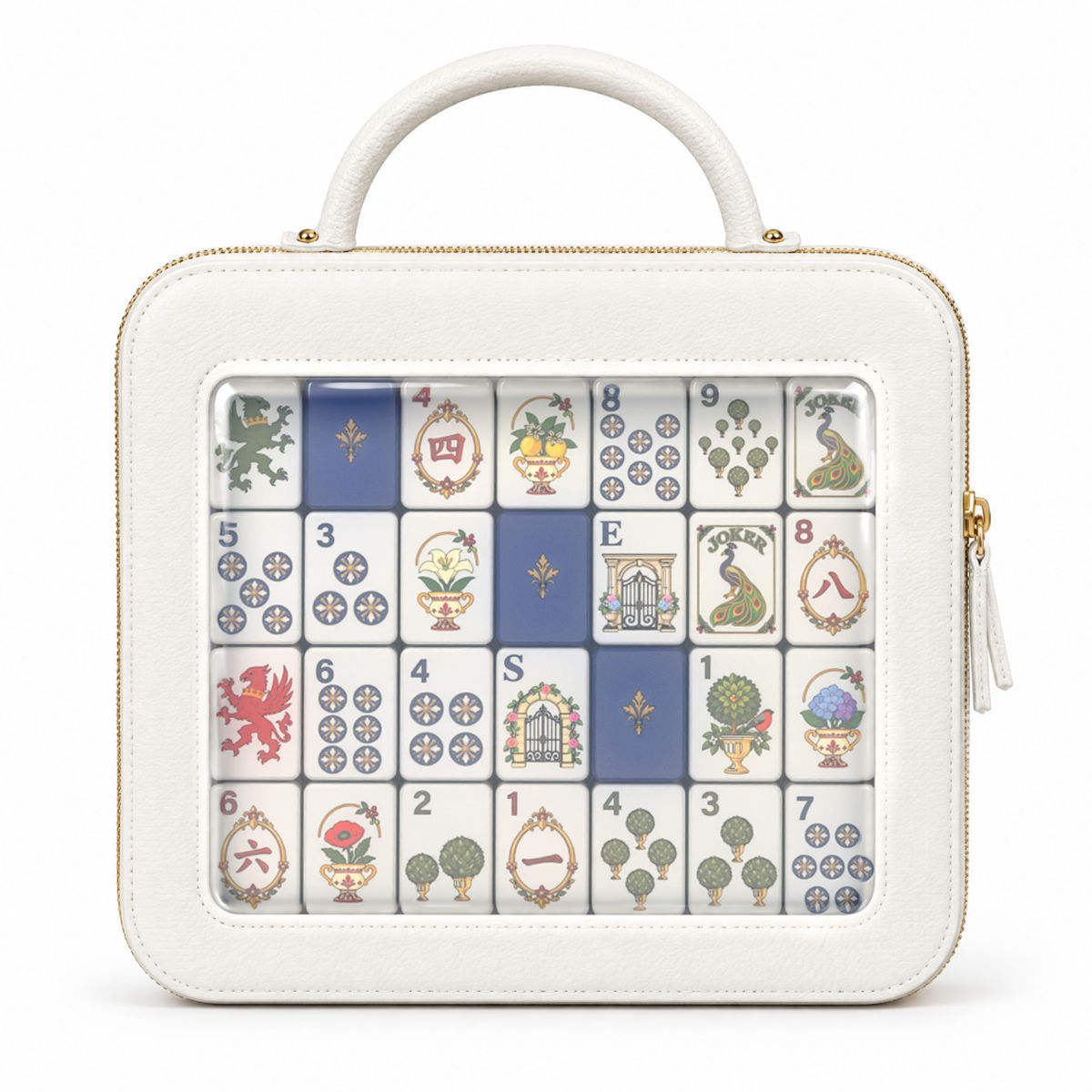
Hangzhou mahjong winning hands are combinations of sequences (chows: 1-2-3, 2-3-4, etc.), triplets (pungs: three identical), and pairs formed from Honor tiles, numbered suits, or flowers. Unlike American mahjong—which locks hands to the yearly National Mah Jongg League card—Hangzhou players build hands dynamically during play, drawing and discarding. A legal winning hand typically consists of four groups (melds) plus one pair, totaling 14 tiles; chows are sequences of three consecutive numbered tiles in one suit, pungs are three identical tiles, and kongs (four of one tile) are also allowed. Scoring varies by region and ruleset; common patterns include "all one suit," "mixed suit," and bonus points for flowers or specific tile combinations. The game plays faster than American mahjong because hands are not predetermined, making Hangzhou ideal for players who enjoy improvisation and reading opponents' discards.
Hangzhou mahjong (滑州麻将) is one of China's most popular regional variants, played across Zhejiang Province and beyond. It shares mahjong's core mechanic—combining sequences, triplets, and pairs—but strips away the rigid hand-matching that defines American play. If you've learned American mahjong from a National Mah Jongg League card, Hangzhou feels like liberation: you're building hands in real time, reacting to what's been played, and thinking several moves ahead.
We've hosted enough cross-variant players to know the confusion: American players often ask, "Wait, why can I make a chow here?" or "Is this hand worth points?" This guide walks you through Hangzhou winning hand structures, scoring logic, and the key rule differences so you can play confidently—or at least know why your opponents are smiling when you discard that middle dragon.
What counts as a winning hand in Hangzhou mahjong?
A winning Hangzhou hand consists of four melds (groups) plus one pair, totaling 14 tiles. A meld is either a chow (sequence), pung (triplet), or kong (quartet); the pair must be two identical tiles. You cannot win with five separate pairs or a hand that breaks this 4+1 rule. American mahjong never allows chows in exposed or called melds, but Hangzhou treats them as ordinary melds you can declare openly at any time—this is the single biggest rule shift. A legal chow is three consecutive numbered tiles of the same suit (e.g., 5–6–7 of Bams); a pung is three matching tiles; a kong is four matching tiles. Flowers and Honors (winds, dragons) typically serve as jokers or high-value triplets and cannot form chows. The pair must always be identical tiles, never a sequence.

How do chows, pungs, and kongs work differently from American play?
In American mahjong, chows (sequences) are forbidden entirely—you can only expose or call pungs, kongs, quints, or sextets. Hangzhou mahjong embraces chows as a core meld, meaning sequences are both discoverable and declarable mid-game. When you draw a tile that completes a chow, you can immediately declare it—or hold it concealed for later play, depending on your hand strategy. A pung works the same in both variants: three identical tiles, always exposed if called. A kong—four identical tiles—also behaves similarly, but in Hangzhou you often draw a replacement tile after declaring a kong, maintaining the 14-tile structure and extending play.
Jokers (wild tiles) exist in some Hangzhou rulesets but are less central than in American play. If used, they substitute for any tile in a meld, but never form a pair alone or replace a pair tile. The key difference: Hangzhou players are building hands step-by-step as tiles arrive, whereas American players are matching pre-printed patterns on a card.
🀄 Shop best-selling mahjong sets →
Which tile combinations score highest in Hangzhou rules?
Hangzhou scoring hinges on hand composition and rarity; common high-value patterns include all one suit (no mixed suits), all Honors (winds and dragons only), all terminals (1s and 9s), all simples (2–8 only), and "pure" hands with no wild tiles. Flowers often award bonus points—sometimes 2 to 4 points per flower, depending on house rules. A "self-drawn" win (drawing your own winning tile rather than claiming an opponent's discard) typically scores higher than a "discard win." Many regional versions also reward specific sequences: three or more kongs in a single hand, a pung of dragons, or a pung of the player's own wind (East for East player, etc.). Point multipliers are common; a hand scored as 8 points might be paid by all players (paying your hand value times three) or only by the player who discarded the winning tile (paying your hand value times one).
Because scoring is highly localized, always agree on your ruleset before play begins. Write down the agreed values for common hands (all one suit, all Honors, self-drawn, flower bonus) and post them so no one argues after the hand ends.
What are common winning hand patterns you should recognize?
Here's a practical breakdown of patterns you'll see repeatedly:
Pattern | Composition | Example Tiles | Notes |
All one suit | Four melds + pair in Bams, Craks, or Dots only | 1–2–3 Bam, 5–5–5 Bam, 7–8–9 Bam, 2–3–4 Bam, 8–8 Bam | Usually highest base score (6–8 points) |
All Honors | Four melds + pair from winds and dragons | E–E–E, S–W–N, Red–Red–Red, White–White, N–N–N | Rarer; high base score (6–10 points) |
Mixed melds | Melds span two or three suits; pair in any | 1–2–3 Bam, 5–6–7 Crak, 3–3–3 Dot, East–East–East, 2–2 Bam | Lower score (2–4 points); common winning hand |
All terminals | Only 1s and 9s in numbered suits, plus Honors | 1–1–1 Bam, 9–9–9 Crak, 1–9–East–East, 9–9 Dot | Mid-range score (4–6 points); tricky to build |
Self-drawn win | You draw the winning tile yourself, not from discard | Any legal 14-tile hand you complete from the deck | Multiplier: often +1 or +2 points, or pays ×3 instead of ×1 |
A "mixed suit" hand is your bread-and-butter win; it scores less but arrives far more often than a pure suit. Don't wait forever for all one suit if a mixed-suit win is within reach on the next draw or two.

How do flowers and special tiles affect your winning chances?
Flowers (and sometimes seasons, in expanded rulesets) are typically not part of your 14-tile meld structure; instead, they're drawn separately during setup and are "bought" (replaced) when drawn during play. When you draw a flower, you immediately draw a replacement tile from the back of the deck, and the flower is set aside in front of you as a scoring bonus. Each flower you collect usually scores 1 point; four flowers often grant a significant multiplier (2× or 3× your hand base score).
In some Hangzhou variants, flowers can be used as wild tiles within melds, but this varies widely by house rule. Always clarify whether flowers are standalone bonuses or playable tiles before the first hand.
Dragons and winds (Honors) usually cannot be part of a chow, only pungs, kongs, or pairs. A pung of your own wind (your seat wind) or a pung of red dragons often grants a bonus point or multiplier. Knowing your seat wind—and remembering that East (usually the first player) rotates after each hand—helps you spot high-value patterns early.
🎁 See our most-loved mahjong sets & accessories →
How does discarding strategy change when hands aren't fixed?
Because Hangzhou hands aren't locked to a predefined card, discarding is far more psychological. You're reading what melds your opponents are trying to build by watching their kept tiles, and you're gambling on which tiles are safe to throw. An opponent who's claimed two 5 Dots is likely chasing a 5-Dot pung or a chow involving 5s; throwing a 5 of any suit becomes risky.
Safe discards are typically Honors (winds, dragons) that no one has claimed recently, or numbered tiles you know three copies of have already been played. Dangerous discards are mid-range numbered tiles (4–6) and flowers early in the hand, when opponents still have room to build.
Keep track of which tiles have been discarded and claimed (melded). If all four 3s have appeared and three are already on the table, the last 3 is almost certainly safe. If only one 3 has appeared, assume at least one more player is holding 3s and avoid throwing yours.
The person closest to winning will often play the most aggressively, calling almost every useful tile; the player furthest behind may hold their tiles longer, hoping for a sudden high-value hand. Adjust your discard timing accordingly: if you're leading, be stingy; if you're behind, take calculated risks.
What should you check before learning a new Hangzhou ruleset?
Before sitting down, nail down these points in writing with your group:
Winning hand structure: Is it always 4 melds + 1 pair? Can you win on a pair alone, or with fewer melds? (Very rare, but some house rules allow it.)
Chow rules: Can you call a chow on anyone's discard, or only the previous player? (Most variants allow any discard.)
Kong rules: After you declare a kong, do you draw a replacement tile? (Usually yes.)
Flowers: Are they bonuses only, or playable tiles? How many flowers award a multiplier?
Scoring table: Write the base points for all one suit, all Honors, all terminals, mixed suits, self-drawn, and any flower multiplier.
Payments: Does only the discarder pay, or do all three non-winners pay? If self-drawn, do all three pay, or just one?
Dead man's tile: Can you call a discard if the hand isn't live (i.e., no one can win anymore)? (Varies widely.)
Misunderstandings over scoring stall games and sour friendships; 10 minutes of clarity upfront saves an hour of argument.
✨ Find your Mahstead set — free US shipping →
What's the fastest way to shift from American to Hangzhou play?
If you're coming from American mahjong, focus on these mental shifts:
Forget the card. No hands are predetermined. You're building in real time.
Learn chows first. A chow is three consecutive numbered tiles (1–2–3, 2–3–4, etc., all same suit). Practice spotting them in your hand.
Pung and kong stay the same. Three or four identical tiles.
Track discards obsessively. Write down every tile played for the first few hands; you'll spot dangerous patterns instantly.
Play simpler hands first. Aim for mixed-suit wins with common scores (2–4 points) until you feel comfortable reading Honors and calculating multipliers.
Play three full games before assuming you understand scoring. Scoring variants are region-specific, and your group may have house rules you haven't encountered yet.
The transition typically takes 3–5 hours of casual play. Hangzhou play is faster than American once you internalize the rule flow, so the learning curve flattens quickly.
What you'll need:
To host Hangzhou mahjong regularly, invest in a quality set and a mat that fits your table. Our best-selling collection includes classic 160-tile sets with clear tile faces, ideal for reading fast-moving hands. Pair your set with a durable mahjong mat to protect tiles and speed up melds. If you're hosting multiple players over months, mahjong racks with pushers reduce fumbling and keep hands organized during rapid play. For travel or storage, a mahjong bag or case ensures tiles stay intact and organized between sessions.

FAQ
Can I win on a hand that's not exactly 4 melds + 1 pair in Hangzhou?
No. A legal Hangzhou win is always four groups (chow, pung, or kong) plus one pair, totaling 14 tiles. Some variant house rules exist, but this 4+1 structure is universal. Always confirm your group's rule before play.
If I draw a tile that completes a chow, do I have to declare it immediately?
No. You can hold a completed chow concealed and declare it later. However, once you discard, your turn ends; you can't retroactively declare a meld. Declaring early can signal your hand to opponents and invite defensive discards.
Do Honors tiles (winds, dragons) ever form chows in Hangzhou?
No. Honors can only form pungs, kongs, or pairs. Chows are always three consecutive numbered tiles (1–9) of the same suit. This is consistent across all major Hangzhou variants.
What happens if two people try to claim the same discard?
Priority usually goes to the player claiming a win, then to the player calling a kong, then to the player calling a pung or chow (in that order). If two players call a win, the one closer to the discarder wins. House rules vary; agree upfront.
How is self-drawn different from a discard win in scoring?
A self-drawn win typically scores higher—often by +1 or +2 points, or by changing the payment structure (e.g., all three non-winners pay instead of just one). Some house rules double or triple the score. Always confirm your group's rule.
Can I use flowers as wild tiles in a meld, or are they only bonus points?
It depends on your house rules. Most traditional Hangzhou variants treat flowers as standalone bonuses (drawn and set aside), not playable in melds. Some modern or regional variants allow flowers as wild tiles. Agree before play.
What's the fastest way to spot a risky discard in Hangzhou?
Watch which tiles opponents have claimed or melded. If someone has a 5–6 Crak showing, avoid discarding a 4 or 7 Crak. If all three visible copies of a numbered tile are out, the fourth is usually safe. Track the discard pile carefully.
Is Hangzhou faster than American mahjong?
Yes. Hangzhou hands build dynamically and average 20–30 minutes per round, vs. American's typical 30–45 minutes due to Charleston and card-matching. Once players know the local scoring rules, Hangzhou games flow very quickly.


View More
View More
View More
