
Green Dragon Mahjong Tile: Symbol, Role & Why It Matters
Last updated: Nov 23, 2026
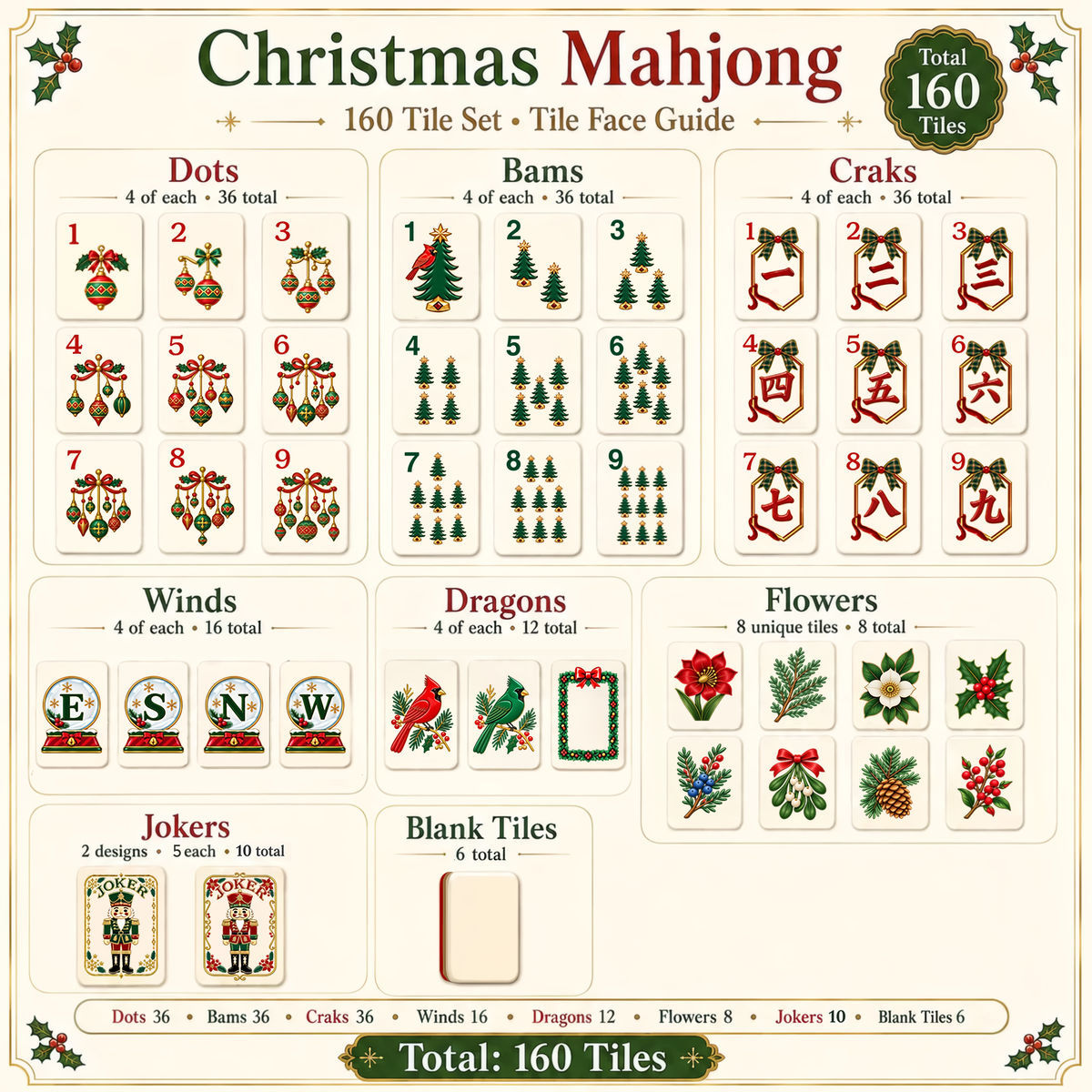
The Green Dragon is one of twelve dragon tiles in American mahjong, appearing four times in every standard set. It belongs to the honor suit (along with Red and White Dragons and winds) and is associated with the Bam suit—meaning Red pairs with Craks, Green with Bams, and White (also called "Soap") with Dots. In the game, dragons are used to form pungs (three identical tiles), kongs (four identical), or joker-substituted melds just like number tiles, and they appear on the current year's National Mah Jongg League card as part of valid hands. The Green Dragon has no special scoring bonus—it's simply a tile that must match its suit context when building exposable melds or pairs.
What does the Green Dragon symbol look like?
The Green Dragon tile displays a stylized green dragon character or emblem, distinct from the Red Dragon and White Dragon. On traditional tiles it's a single centered glyph; on modern acrylic sets the image is engraved or printed clearly so it reads the same from any angle at the table. The green color itself is the identifier—there's no mistaking it once you've seen one. Each dragon tile is the same size as number tiles and winds, making them easy to organize in your rack.

How does the Green Dragon differ from Red and White Dragons?
All three dragons are honor tiles with identical rules—they form pungs, kongs, or joker-substituted combinations—but they carry suit associations. Red Dragon pairs with the Craks suit, Green with Bams, and White with Dots. This matters only when reading the National Mah Jongg League card: some hands may call for a Green Dragon paired specifically with Bam numbers (e.g., Green Dragon + 5 Bam pung). White Dragon is unique because it also serves as zero in some hands and appears on Dot-related patterns. No dragon has bonus points or special powers—the suit pairing is purely organizational for reading valid hands.
Can you use a Green Dragon in any hand?
No. The Green Dragon appears only on the current year's card in patterns the card specifies. You cannot use a Green Dragon just because you have four of them; it must appear in a valid hand pattern on the card. If you're holding four Green Dragons and the card doesn't list a hand that includes Green Dragons, you cannot win with them. This is why understanding how to read the card before buying your set matters—beginners often assume all identical tiles can form a winning hand, leading to costly mistakes mid-game.
Dragon | Suit Pair | Role | When to Collect |
Green | Bams | Honor tile, pung/kong/quint/sextet | Only if card lists it |
Red | Craks | Honor tile, pung/kong/quint/sextet | Only if card lists it |
White ("Soap") | Dots + zero | Honor tile, pung/kong/quint/sextet | Only if card lists it |
Why do beginners confuse the Green Dragon?
New players often treat all dragons the same and forget that suit associations exist. They also assume they can mix a Green Dragon with number tiles (e.g., pairing it with 5 Bams automatically). In American mahjong, an honor tile like the Green Dragon stands alone—it does not combine numerically with Bams or any number. Beginners also sometimes expose a Green Dragon pung when the card doesn't call for it, leading to a dead hand. The remedy: always check the card first, then count which tiles you need, then expose. Taking three seconds to verify before calling "pung" saves the game.

What role does the Green Dragon play in winning?
The Green Dragon is a tool, not a guaranteed winner. On hands where it appears on the card, collecting four or five Green Dragons (using jokers as the fourth or fifth tile) creates an exposable meld that brings you closer to completing the hand. However, you still need all other melds and a pair to win—one Green Dragon meld alone won't win the game. Experienced players scan the card's honor-tile sections at the start of play, noting which dragons appear that week, and discard dragons that don't, freeing space to collect number tiles. This prioritization separates beginners from players who win regularly.
🀄 Shop best-selling mahjong sets →
What to check before you buy a mahjong set
When shopping for a new set, ensure tiles are large enough and clearly marked that you can spot each dragon instantly during fast-paced play. Our 160-tile acrylic sets use deep engraving or durable printing so Red, Green, and White Dragons remain legible even after hundreds of games. Avoid sets with faded or ambiguous dragon symbols—misreading tiles mid-game costs time and causes disputes. Check that your set includes exactly four copies of each dragon (twelve dragons total) and that all tiles match in size and thickness. If you're hosting weekly games, a mat with tile notation and a set of racks with pushers makes it faster for everyone to organize dragons and number tiles separately, reducing errors.
Why the Green Dragon matters in strategy
Skilled players treat the Green Dragon as either a target or a discard candidate depending on the week's card. If the card has zero hands with Green Dragons, you discard any Green Dragon you draw to avoid dead tile. If the card has three or four Green Dragon hands, you might collect them early. The Green Dragon also signals hand type to other players: if you're holding onto Green Dragons, skilled opponents infer you're chasing a honor-tile heavy hand and adjust their discard strategy. This interplay—reading what others are collecting and adapting—is part of mahjong's depth.
🎁 See our most-loved mahjong sets & accessories →
Once you grasp that the Green Dragon is an honor tile tied to the Bam suit and usable only in card-listed hands, you're ready to spot it instantly at the table and play confidently. The key is: check the card first, organize your tiles by type, and expose only what the card permits. Invest in a set with clear dragon markings and you'll never misread a Green Dragon again—and you'll host faster, smoother games from week to week.
✨ Find your Mahstead set — free US shipping →

FAQ
Is the Green Dragon the same as the Red Dragon or White Dragon?
All three are honor tiles with identical rules, but the Green Dragon pairs with the Bam suit specifically. Suit associations matter only when the card calls for a dragon in a numbered-suit context—pure dragon melds work the same for all three.
Can I use a joker as a Green Dragon?
Yes, jokers can substitute for any tile, including the Green Dragon. This lets you form a four-tile kong (Green Dragon pung plus one joker) or longer meld, though jokers carry restrictions—never used as a single tile or in a pair.
What happens if I expose a Green Dragon pung when the card doesn't list it?
You've created a dead hand. In American mahjong, you can only expose melds (three or more identical tiles) that appear on the current year's card. Exposing invalid melds forces you out of play for that round—there is no "take it back."
Does the Green Dragon give bonus points if I win with it?
No. American mahjong awards points based on hand pattern rarity, not which specific tiles you use. A Green Dragon hand is worth the same points as any other pattern of equal difficulty—the dragon itself adds no bonus.
How do I remember which dragon goes with which suit?
Red with Craks (sounds like "red crayon"), Green with Bams (green bamboo), White with Dots (white dot or zero). Many players use this mnemonic: Craks = Red, Bams = Green, Dots = White (a simple color rule).
If I have all four Green Dragons and four Red Dragons, can I use both in one hand?
Only if the card lists a single hand pattern that calls for both Green and Red Dragons simultaneously. Most hands feature one or two honors, not multiple dragon types—always check the card before dreaming up combinations.


View More
View More
View More
