
Flower Tiles in Chinese Mahjong: What They Are and How They Work
Last updated: Nov 23, 2026
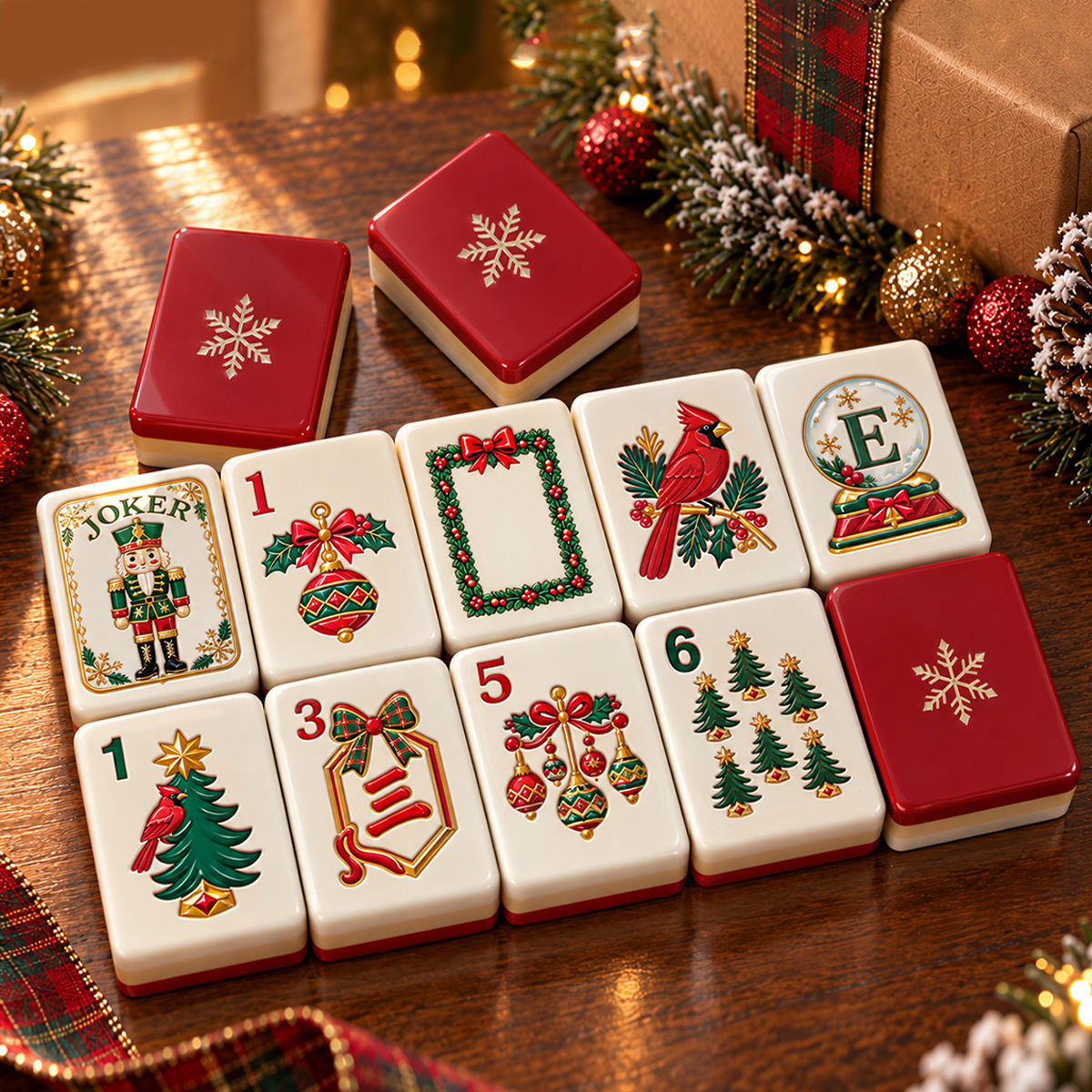
Flower tiles (also called "flowers" or "honours" in some variants) are special bonus tiles in traditional Chinese and Hong Kong mahjong. In Chinese mahjong, there are eight flowers—four seasonal tiles (Spring, Summer, Autumn, Winter) plus four flower tiles (Plum, Orchid, Bamboo, Chrysanthemum)—each worth bonus points when drawn. In Hong Kong mahjong, flowers work similarly but scoring differs. American mahjong, by contrast, does not use flower tiles in the traditional sense; the eight flowers in a standard American set are part of the what's in an American mahjong set but function only as replaceable tiles or bonus markers, not as playable hand components. Drawing a flower tile in Chinese variants typically grants an automatic bonus point and forces you to draw a replacement tile from the wall. They don't count toward melded sets (pungs, kongs, or sequences); instead, they're held separately and scored at the end of a hand. Understanding flower rules is crucial if you're switching between variants, as many casual players confuse American sets with rule systems they're not designed for.
Flower tiles are bonus tiles in many mahjong variants, but they work differently—or don't exist at all—depending on which game you play. Here's what you need to know.
Are flower tiles used in American mahjong?
No. American mahjong does not use flower tiles as playable components. While an American set includes eight flower tiles, they serve only as spare tiles or replacement markers—not as part of any legal hand. The National Mah Jongg League card (the official American rulebook, updated annually) contains no hands that include flowers. If you draw a flower during American play, you immediately set it aside, draw a replacement from the wall, and continue. This is one of the biggest differences between American and traditional Chinese variants.
🀄 Shop best-selling mahjong sets →

How do flowers work in Chinese mahjong?
In standard Chinese mahjong, drawing a flower tile triggers an automatic bonus—usually 1 point per flower—and you immediately draw a replacement tile from the back of the wall. This keeps your hand at 14 tiles. Flowers are displayed separately, never mixed into your melds. At the end of the hand, your score includes the flower bonus. Some regional variants (such as Sichuan or Cantonese mahjong) score flowers differently or combine them with "season" tiles. The key rule: flowers are never melded as part of a pung, kong, or sequence. They exist entirely outside the hand structure.
What's the difference between Chinese and Hong Kong flower scoring?
Chinese mahjong (mainland variants) and Hong Kong mahjong both use eight tiles—four seasons and four flowers—but scoring rules diverge. In Hong Kong mahjong, flowers are often tied to the "big three" dragons (Red, Green, White); matching your flower to your seat wind or the round's prevailing wind can double bonuses. Some Hong Kong houses award no points for flowers at all and instead use them only as cosmetic honours. Scoring also depends on local house rules. If you're playing casually with friends, always agree on flower scoring before the game starts. Standard mainland Chinese rules apply 1 point per flower; Hong Kong rules vary widely by venue and tradition.
🎁 See our most-loved mahjong sets & accessories →
Why do American mahjong sets include flowers if they're not played?
American sets include eight flowers to match the tile count and aesthetic of traditional Chinese sets—a legacy of American mahjong's origins in early 20th-century Shanghai. However, American mahjong, codified in the 1920s–1930s and standardized by the National Mah Jongg League in the 1960s, evolved into a completely different game with its own hand list. Flowers became "dead" tiles—included but unused in standard play. Some American players use flowers as decorative markers or for variant house rules, but official American mahjong ignores them entirely. This is why newer players switching from Chinese variants to American mahjong are often confused: the tile set looks familiar, but the rules are entirely different.

How do you choose a mahjong set if you play multiple variants?
If you play both Chinese and American mahjong, buy one set designed for each variant. American sets come in best-selling mahjong sets featuring engraved tiles and custom designs; these 160-tile sets contain all 152 playing tiles plus spares. For Chinese mahjong, look for sets explicitly labeled "Chinese mahjong" or "Cantonese mahjong"—these often use bamboo, wood, or acrylic tiles and include clear flower designations. The tile sizes, face designs, and even tile thickness differ between variants. Mixing sets is risky: Chinese flowers may not align with American tile mechanics, and tiles from one set may not fit racks designed for the other. A simple rule: one set per variant.
Variant | Flowers | Function | Scoring | American Set? |
American | 8 tiles | Spare/unused | None | Yes, unplayed |
Chinese | 8 tiles | Bonus draw | +1 point each | Not recommended |
Hong Kong | 8 tiles | Bonus/wind-tied | Varies by house | Not recommended |
Riichi | 0 tiles | N/A | N/A | No |
Taiwanese | 8 tiles | Bonus draw | +1 or +2 | Not recommended |
✨ Find your Mahstead set — free US shipping →
Common mistakes when mixing variants
Mistake 1: Using an American set to play Chinese mahjong. American tiles are optimized for American hand patterns and often feature Western-friendly designs (like engraved titles or initials). If you're playing Chinese, flowers need to be instantly recognizable and clearly distinct. An American set's flowers may be printed too small or in colours that don't match traditional Chinese convention.
Mistake 2: Forgetting to draw a replacement after drawing a flower. In Chinese variants, this is automatic—and critical. Forgetting leaves you with 13 tiles instead of 14, breaking the game.
Mistake 3: Trying to use American mahjong rules with a Chinese set. A Chinese set is "prettier" and cheaper than an American set, leading some beginners to buy Chinese sets thinking they can learn American mahjong. They can't. The hand list doesn't align, and players will be confused about which tiles count toward which hands.
Mistake 4: Assuming all regional rules are the same. Hong Kong mahjong can vary house to house; some score flowers, others don't. Always ask before playing in a new venue.
What to check before you buy
Which variant do you play most often? If American, buy an American set. If Chinese, buy a Chinese set.
Are the flowers clearly labeled or illustrated? In Chinese mahjong, seasons (Spring, Summer, Autumn, Winter) and flowers (Plum, Orchid, Bamboo, Chrysanthemum) must be instantly recognizable mid-game.
What tile material do you prefer? Acrylic sets like those in the best-selling mahjong sets are durable and customizable for American play. Bamboo or wood suits Chinese mahjong.
Do you need engraved or custom designs? American players often choose engraved American mahjong sets for personalization. Chinese players typically prefer traditional, unadorned tiles.
Will you play with a mat or table cover? American mats are sized for American sets and hand displays. Chinese mats differ.
Why the confusion exists
When American mahjong was standardized in the early 20th century, it borrowed the tile structure of Chinese mahjong—including flowers. But American mahjong removed flowers from active play, focusing instead on a fixed hand list that changes yearly. This created a perfect storm of confusion: American sets look like Chinese sets, so beginners assume they work the same way. They don't. The flowers are vestigial—historical echoes, not active rules.
If you're new to mahjong or switching variants, the golden rule is simple: match your set to the variant you're playing. An American mahjong set with custom designs and engraved tiles is built for American hands, American mats, and American racks. A Chinese mahjong set is optimized for Chinese hands, speed play, and flower scoring. Mixing them breeds frustration and errors mid-game.

FAQ
Can I use an American mahjong set to play Chinese mahjong?
Technically yes, but not advisably. American sets often have engraved or novelty designs that make flower tiles hard to read mid-game. American tiles are also optimized for American hand patterns, not Chinese melds. Buy a dedicated Chinese set for clarity and authenticity.
What happens if I draw a flower tile in American mahjong?
Set it aside. Draw a replacement tile from the wall. Repeat if you draw another flower. Flowers are never scored or played in American mahjong—they're spares only.
Do all Chinese regional variants score flowers the same way?
No. Mainland Chinese mahjong typically awards 1 point per flower. Hong Kong mahjong varies widely and may tie flowers to seat winds or award zero points depending on the house. Cantonese and Sichuan rules also differ. Always agree on scoring before play.
Why are there flowers in American mahjong if they're not used?
They're a historical artifact. Early American mahjong borrowed the Chinese tile set structure but evolved into a completely separate game with its own hand list. Flowers were retained for compatibility but removed from active play over time.
Can I buy just a flower tile set to add to my existing mahjong tiles?
Yes, but they won't align with either American or Chinese variants functionally. You'd be using them as decoration or house-rule components only. It's more practical to buy a complete set designed for your variant.
How do I know if a flower tile is "Spring" vs. "Plum"?
In traditional Chinese tiles, each flower and season is illustrated differently—Spring shows blooming plants, Plum shows the plum flower, etc. Tiles are also typically labeled with Chinese characters or symbols. Check the set description before buying to ensure labels are clear enough for your eyesight and play speed.


View More
View More
View More
