
Filipino Mahjong Hand Examples: Rules & Patterns
Last updated: Nov 23, 2026
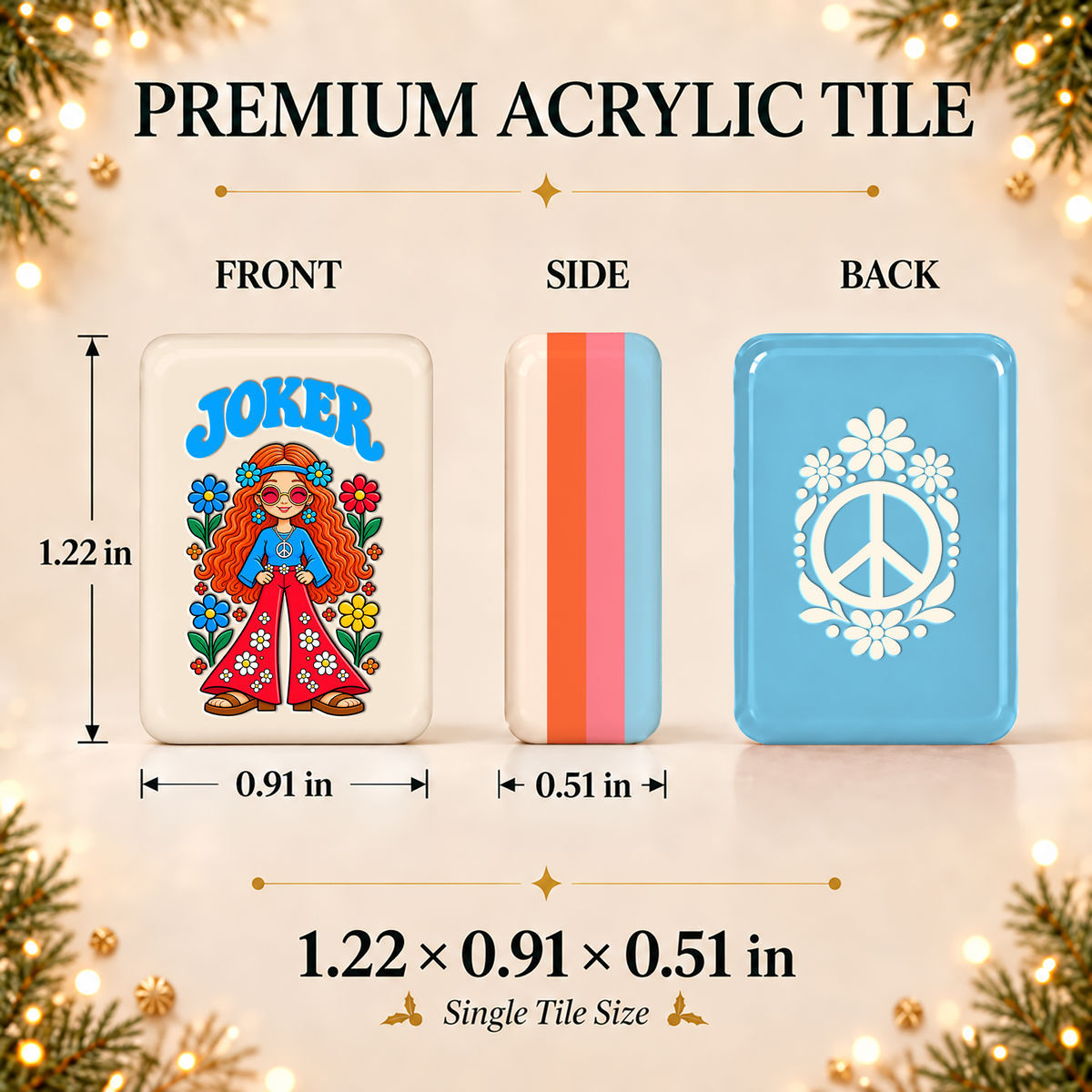
Filipino mahjong, also called Taiwanese or "Filipino style," plays with 144 tiles (not the 152 in American mahjong) using the three suits—Bams, Craks, Dots—plus Winds, Dragons, and Flowers. Hands are built by drawing and discarding, with winning combinations formed from melds: pungs (three identical), kongs (four identical), chows (three in sequence like 3-4-5 Bams), and pairs. Unlike American mahjong, chows are called and exposed during play. A winning hand requires one pair plus four melds (14 tiles total). Scoring varies by region; some versions use a point system, others count melds. You read the hand from left to right as a sequence of complete sets. The game takes 1–2 hours per round and requires all four players to recognize melds instantly. Mahstead's best-selling mahjong sets include American-style tiles; Filipino games typically use sets designed for that variant, which you'd source regionally. 🀄 Shop best-selling mahjong sets →
What tiles make up a Filipino mahjong hand?
Filipino mahjong uses 144 tiles total. Each suit (Bams, Craks, Dots) has tiles numbered 1–9 with four copies each (36 per suit, 108 total). Added are 16 Wind tiles (four each of North, East, West, South), 12 Dragons (four each of Red, Green, White), and 8 Flowers (one through eight, four copies total). A single winning hand contains 14 tiles: one pair and four melds of three or four tiles.

How do you read a Filipino mahjong winning hand?
Read left to right as four complete melds plus one pair. For example: 3-4-5 Bams (chow) | 7-7-7 Dots (pung) | North-North-North-North (kong) | 2-2 Craks (pair). Each meld must be contiguous in the hand layout. Chows are sequences of the same suit in numerical order; pungs are three identical; kongs are four identical. Flowers and Winds rarely form chows—they appear as pungs or kongs. Always count 14 tiles in a winning layout; if you see 13 or 15, the hand is incomplete or invalid.
Can you call a chow in Filipino mahjong like in Chinese?
Yes—that's the biggest rule difference from American mahjong, where chows cannot be called or exposed. In Filipino play, if another player discards the tile you need to complete a chow (for example, you hold 3-4 Bams and someone throws a 5 Bam), you call it, expose the meld on the table, and continue play. This creates faster, more open gameplay. American mahjong has no exposed chows, making it a more closed, card-reading game. Filipino chow calls must follow turn order and table direction rules, which vary by house rules in different regions.
How do scoring and winning differ in Filipino mahjong?
Scoring in Filipino mahjong varies widely by region and house rules. Some play with a fixed point table (e.g., a pung scores 2 points, a kong 4, a pair 1, etc.); others play for money with a payout per hand won. A winning hand is announced, verified by the table, and scored immediately. In contrast, American mahjong scores by hand type and year using the National Mah Jongg League card—far more complex and standardized. Filipino games are typically faster and more social; American play is more strategic and rule-intensive. Always agree on scoring before the first game.

What mistakes do beginners make with Filipino hands?
New players forget to count 14 tiles—many stop at 13 and think they're done. Others expose invalid melds (like a "chow" with gaps: 3-5 Bams skipping 4) or call a chow out of turn. A common error is mistaking a White Dragon for a blank tile—it's a Dragon and scores as a meld. Players also mix up Flower order; Flowers 1–4 often belong to one side of the table, 5–8 to the other (check your group's rule). Finally, beginners sometimes discard their winning tile by accident, then realize too late they had a hand. Play slowly at first, verbalize your melds, and ask the table before calling or discarding.
A quick hand-reading checklist
✓ Count all 14 tiles in the winning layout
✓ Verify one pair; the rest are melds of 3 or 4
✓ Check that each chow has consecutive numbers in one suit (no gaps)
✓ Confirm each pung is three identical tiles
✓ Ensure each kong is four identical tiles
✓ Lay them left to right in the order you'll announce
✓ Call "mahjong" only after the table agrees the hand is valid
Filipino vs. American mahjong hand comparison
Feature | Filipino Mahjong | American Mahjong |
Tile count | 144 | 152 |
Winning hand | 1 pair + 4 melds (14 tiles) | Hand from current year's card only |
Chows allowed? | Yes, called and exposed | No—never |
Scoring | Region-specific or house rules | National Mah Jongg League card only |
Meld types | Chows, pungs, kongs, pairs | Pungs, kongs, quints, sextets, pairs only |
Hand verification | Table votes | Must match card exactly |
Game speed | Fast, 1–2 hours | Medium, 2–3 hours |
🎁 See our most-loved mahjong sets & accessories →
How do you practice reading Filipino hands?
Start by laying out tiles in rows of four (like a hand in progress). Build one meld at a time—first a 5-6-7 Dots chow, then a 2-2-2 Craks pung, then a South-South-South-South kong, then a 1-1 Bam pair. Say each meld aloud as you place it. Next, scramble a complete hand and re-read it left to right, identifying each meld type. Play slow-motion practice rounds with friends: draw a tile, discard, repeat until someone makes 14. Don't count points yet; focus on recognizing valid melds and calling chows at the right moment. Once you spot meld patterns instantly, the game becomes instinctive and much faster.
What sets and accessories do Filipino players use?
Filipino mahjong traditionally uses tile sets made in Asia with smaller, lighter tiles and simplified Dragon imagery. American-style sets like those in our best-selling collection work for Filipino play too if you're comfortable with larger acrylic tiles and English numerals. Many Filipino players add a felt mahjong mat to protect tiles and improve tile control during fast play. Racks with pushers help organize melds cleanly on the table, especially in humid climates where tiles stick. A travel bag keeps everything portable for games at friends' homes or community centers.
What to check before you buy
Tile size & weight: Filipino traditional sets are smaller and lighter; American acrylic sets are larger and heavier.
Numeral style: Ensure you can read the numbers in your playing light (natural or overhead).
Dragon symbols: Some regional sets use Chinese characters; others use colored blocks (Red, Green, White).
Flower order: Check whether Flowers 1–4 and 5–8 are clearly differentiated for your region's seating rules.
Carrying case: If you travel to games, a padded bag saves tiles from chipping and makes transport easier.
✨ Find your Mahstead set — free US shipping →

FAQ
Is a Filipino mahjong hand always exactly 14 tiles?
Yes. One pair (2 tiles) plus four melds of three or four tiles (12 tiles) equals 14. If your layout has 13 or 15, the hand is invalid.
Can I call a chow on my own turn or only others' discards?
You call a chow when another player discards the tile you need. You cannot call your own discard. Most groups play that only the player to your right can call; check house rules before starting.
What happens if two players call the same discard?
The player whose turn is closest—usually the next player in rotation after the discarder—wins the tile. If tied, the table votes or re-deals.
Does a White Dragon count as zero or a wild tile in Filipino mahjong?
It's a Dragon tile (belongs to the Dragon family), not a blank or zero. It scores as a regular meld and is never wild. Some variants use actual blank tiles as wildcards; ask your group.
How do I score a hand if my group doesn't use money?
Use the meld-point method: assign points per meld type (pung = 2, kong = 4, chow = 1, pair = 1), add bonuses for all one suit or all Winds/Dragons, and keep a running tally. Write down each round's winner and points on paper.
Can I play Filipino mahjong with an American mahjong set?
Yes, but you'll have extra tiles (American uses 152 vs. Filipino's 144) and no chow sequences in the American rules, so the games play very differently. Consider a set designed for Filipino or Chinese play if that's your regular game.


View More
View More
View More
