
Filipino Mahjong Defensive Play: Core Tactics & When to Use Them
Last updated: Nov 23, 2026
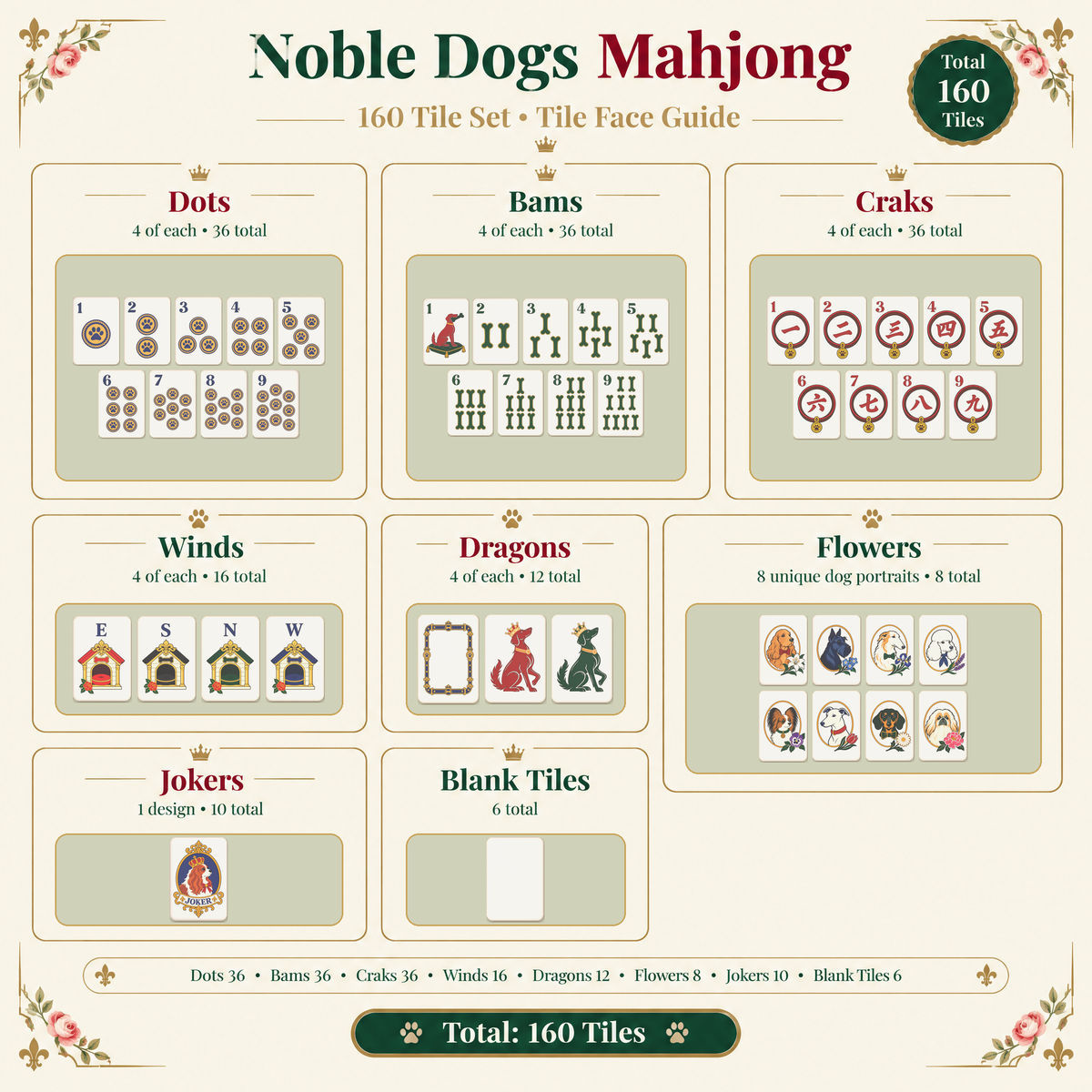
Filipino mahjong (also called "Mahjong Solitaire" in the Philippines, though distinct from the tile-matching game) plays closer to Hong Kong rules than American mahjong—sequences (chows) count, honor tiles rank lower, and melds expose more freely. Defensive play in Filipino mahjong means discarding "safe" tiles (those already visible in opponents' melds or discards), holding honor and terminal tiles longer to avoid completing others' sets, and reading the discard pool to infer what each player is collecting. Unlike American mahjong, where you can only expose certain combinations and the National Mah Jongg League card locks all legal hands, Filipino games allow more flexibility in which sets win—so defense focuses on blocking probable patterns rather than memorizing one year's card. A typical game lasts 10–20 minutes per hand. The core defensive skill: delay commitment to your own hand until you can safely discard without feeding opponents points.
What tiles are genuinely "safe" to discard in Filipino mahjong?
A safe tile is one already exposed in an opponent's meld, or discarded and no longer in the pool. If West has exposed a pung (three of the same) of 5 Craks, another 5 Crak cannot form a new set—so if you draw it, discarding it is low-risk. Terminals (1 and 9) and honor tiles (winds and dragons) stay safer longer because they don't form sequences easily. Never discard a 5 or 6 when nobody has exposed middle-rank sets yet; those numbers are statistically likely to extend sequences. Track every discard and exposed meld in the center of the table by glancing at the discard pile or using a mat with clear marking zones to keep the layout organized—this habit cuts decision time and reduces "I fed that tile" regrets.

How do you read an opponent's intent from their discard pattern?
Watch the order and timing of discards. If a player throws two numbers immediately (like a 3 Bam, then a 3 Dot), they're not collecting the 3 suit—they're building elsewhere. A player who holds and holds, then suddenly dumps four tiles in one turn was likely gathering a risky hand and abandoned it when you or another player blocked their progress. If someone picks a tile from the wall, pauses, and discards a terminal (1 or 9) within 10 seconds, they're not interested in that number. Conversely, a player who draws, hesitates, and keeps a tile is likely collecting that suit or rank. In Filipino mahjong, honor tiles (East, West, North, South, Red Dragon, Green, White) reveal intention more clearly than number tiles—if a player discards honor tiles early and safely, they're pursuing a number-heavy hand. Keep a mental note of which suit each player has melded; if North has exposed two Bam melds already, avoid discarding Bam unless it's a duplicate of one already exposed.
When should you block a win rather than pursue your own hand?
Block a win when a player is one tile away from victory (one clear, or they need only a pair). This is the highest-priority moment in defensive play. If you hear someone claim "ting" (one tile to win) or they announce it via convention, suspend normal play. In Filipino mahjong, a "ting" hand is a public warning—all other players shift instantly to defense. Discard only tiles that are already in the discard pile or exposed melds. If you cannot safely discard, pick from the wall and hold your breath; better to pass than feed a winning tile and lose big. Block before you need to win yourself; a player in fourth place (furthest from winning) sometimes forces the win by discarding recklessly, betting that someone else will finish first or that the hand exhausts—this is a valid but risky sub-tactic. A winning tile discarded by one player can shift points dramatically, so blocking costs less than allowing a quick win against you.
How does position at the table affect your defensive strategy?
Seating matters because the player who discarded the winning tile pays full points; all other players pay reduced amounts. If you are seated directly before the player closest to winning (your "right" in many rotations), your discard is most likely to feed them—play extra tight there. The dealer's seat and turn order vary by rule set; establish this before the hand begins. A player two seats away has more breathing room; you can discard slightly riskier tiles because they must reach the next player first. In Filipino mahjong, East (dealer) often goes first and has psychological advantage—opponents are more cautious. If you sit as dealer, you have the luxury of playing a tighter hand early because you see more discards before deciding. Conversely, if you sit last in the turn order, you draw after everyone else has exposed and discarded; you see the most information but have the fewest safe tiles left. Adjust your opening-hand aggression based on position: early seat = conservative; late seat = slightly bolder until someone declares ting.

What's the difference between defensive play in Filipino vs. American mahjong?
American mahjong is built around one card issued each spring by the National Mah Jongg League—all legal winning hands are on that card, so defense revolves around knowing which hands are possible and which players are pursuing which ones. You can only expose pungs (3 identical), kongs (4), and larger identical sets; no sequences show until the win. Filipino mahjong allows sequences (chows), and many more hands qualify as valid—defense must account for a much broader range of winning patterns. In American games, if you see a player exposing two Craks, they're collecting Craks for a specific meld; in Filipino play, that same player might be using those Craks to build sequences 2–4 Crak and 4–6 Crak simultaneously, so reading intent is more fluid. American mahjong emphasizes memorizing the card and recognizing hand structure early; Filipino mahjong emphasizes reading opponents in real time. Both require tracking discards and honor tiles, but Filipino defensive play is more improvisational and less rule-card dependent. A solid best-selling set works for both: clear, durable tiles and an organized mat or rack help you track game state instantly, which is the foundation of any defensive strategy.
Defensive Scenario | Best Approach | Why It Works |
Opponent is ting (one tile to win) | Discard only exposed or duplicate tiles; hold honors | Feeding a winner costs you full points; blocking delays their victory. |
Two players are building the same suit | Discard the suit's low numbers first, then terminals | Both players compete for limited tiles; you reduce the pool and slow both. |
You hold a winning tile but someone is closer | Block first, win second | One guaranteed block prevents two losses; winning later is worth less risk. |
Player in your left is collecting discards aggressively | Discard tiles from suits they've melded | Safe tiles move through the pool to them harmlessly; you control the tempo. |
You're unsure of a tile's safety | Hold it; draw from the wall instead | A wall draw is random and neutral; a risky discard is active danger. |
🀄 Shop best-selling mahjong sets →
How does equipment setup affect your ability to defend?
A clear, organized play area is not a luxury—it's a defensive tool. If discards pile haphazardly, you miss which tiles are safe. A quality mat with defined zones keeps your hand, discards, and opponents' melds visually separated; you read the game state instantly. Racks with pushers let you arrange your tiles in suit and number order, so you spot duplicates and safe discards without fumbling. Clear, high-contrast tiles (acrylic sets offer excellent contrast) reduce misreads—you don't discard a tile you thought was a 3 Dot when it was a 3 Bam, a mistake that feeds an opponent. Organizing your hand by suit and number rank also saves decision time; faster decisions mean fewer accidental reveals of your intent. In Filipino mahjong, where turns move quickly and ting can be called suddenly, a half-second lag in spotting a safe tile can cost the hand. If you play weekly or in tournaments, invest in a mat and a set with reliable tile visibility; the defensive advantage pays off immediately.
What's the most common defensive mistake Filipino players make?
Discarding from your hand's weakest suit too early. New players think: "I'm not building 5s, so I'll dump all my 5s first." But an opponent might be collecting 5s for a long sequence (like 3–4–5–6–7 Craks). By throwing 5s before anyone else has exposed, you feed an opponent who was waiting for that exact tile. Better approach: discard the 5s after someone else has exposed a 5 meld, or after your 5s have already appeared in another player's discard. Another error: holding an honor tile for too long hoping for a pung, when that tile is low-value and risky. Terminals and honors should be discarded by mid-turn unless you need them for a specific win. The worst mistake: discarding during ting without checking the discard pile and each player's exposed melds. This is a guaranteed loss. Slow down, verify the safe tile list (exposed, already discarded, or statistically irrelevant to the current board state), and then discard. If you cannot verify, take the wall draw penalty and wait.
🎁 See our most-loved mahjong sets & accessories →
What to check before you buy equipment for your Filipino mahjong games
Tile contrast: Ensure suits and numbers are instantly readable—avoid sets with dark or faded symbols.
Mat surface: A non-slip mat prevents tiles from sliding during rapid play; check that the surface has texture or grip.
Rack stability: If using racks, confirm they hold 13–14 tiles without wobbling or tipping when you add a 14th tile to draw.
Discard zone clarity: A mat should mark where discards go (usually center or a specific quadrant) so you never lose track of the pool.
Durability: Acrylic tiles withstand weekly play without chipping; ceramic or bone tiles are beautiful but fragile for defensive play that involves frequent draws and discards.
Storage: A bag or case with compartments keeps tiles sorted by suit, speeding up setup and reducing pre-game confusion.
✨ Find your Mahstead set — free US shipping →

FAQ
Can I use American mahjong tiles for Filipino mahjong?
Mostly, yes. American sets include all the suits, numbers, and honors you need. However, American rule sets do not allow sequences (chows), so the tile symbols are identical. Filipino mahjong uses the same tiles but allows chows—you must learn which number combinations form legal sequences (typically 1–2–3, 2–3–4, through 7–8–9 within a suit). The tiles themselves are fine; your hand-reading strategy changes.
What does "*ting*" mean in Filipino mahjong?
Ting is a one-tile-away-from-winning state. When a player declares ting, they announce they need only one more tile to claim the hand. All other players immediately shift to blocking defense and must discard only safe tiles. Feeding a ting player a winning tile costs you the most points.
Should I always discard honors (winds and dragons) before number tiles?
Not always. Discard honors early only if they are duplicates of exposed melds or already in the discard pile. If nobody has melded an honor, hold it longer—another player might need it for a pung. Terminals (1 and 9) and mid-rank honors are safer to hold early because they block fewer opponent patterns.
How many tiles should I track in the discard pile to play good defense?
Track all tiles in the current discard pile and all exposed melds. In a four-player game, roughly 30–40 tiles are visible at any given time; your brain can manage this if the mat organizes them clearly. Count on your fingers if needed—there's no shame in double-checking a safe tile before you discard.
What's the minimum skill level to use defensive play effectively?
You need to know the rules of Filipino mahjong (which melds are legal, when a hand wins, point values) and understand basic tile reading (which numbers form sequences, which honors are common). After that, defensive play is practice. Play ten games focusing only on tracking discards and exposed melds; by game five or six, reading opponents becomes automatic. New players can learn defensive tactics immediately—no special math or memory required.


View More
View More
View More
