
Easiest Mahjong Rules for Card Players: Start Today
Last updated: Nov 23, 2026
American mahjong is built on the same foundation as card games: collect matching sets, discard tiles you don't need, and race to complete a winning hand. You play with 152 tiles (Bams, Craks, Dots, winds, dragons, flowers, and jokers), draw and discard in rotation, and check each hand against the current year's National Mah Jongg League card—that's your rulebook. A winning hand requires 14 tiles: one pair plus groups of three (pungs, kongs, quints, or sextets). Unlike cards, you can only make groups of identical tiles—no sequences like 1-2-3. The beauty: if you've ever built a rummy hand or played dominoes, you already know 80% of mahjong. Your first game takes 30 minutes once you learn the tile names and the winning hand structure from the card. Shop our best-selling mahjong sets with clear tile markings so you spot patterns instantly.
If you play cards, you already understand sets, matching, and draw mechanics. Mahjong uses the same logic—just with tiles instead, and a handful of unique rules you'll memorize in minutes.
Why card players pick up mahjong so fast
Card games teach you pattern recognition: pairs, runs, three-of-a-kind. Mahjong reverses one rule—you'll never make sequences (no 1-2-3-in-a-row). Instead, every group you expose or use to win must be three, four, five, or six identical tiles: three Red Dragons, four 7 Dots, five 3 Bams. If you've sorted a rummy hand, you've already done the hard mental work. The discard mechanics feel natural: draw one, discard one, move to the next player. The real learning curve isn't the rules—it's memorizing tile names and learning to read the National Mah Jongg League card, which shows all valid winning hands for the current year. That card is your entire rulebook. Card players typically need one or two practice games to feel comfortable; by game three, they're competitive. The framework is so similar that many of our players transition from weekly poker or bridge games directly to mahjong without a stumble.
🀄 Shop best-selling mahjong sets →

What tiles replace your playing cards
A standard American mahjong set holds 152 tiles used in every game. Think of it like a deck: instead of four copies of each card rank, you have four copies of each tile. The tiles break into six types:
Bams (bamboo suit): numbered 1 through 9, four copies each—1 Bam usually shows a bird.
Craks (crack/character suit): numbered 1 through 9, four copies each.
Dots (circle suit): numbered 1 through 9, four copies each.
Winds: North, East, West, South—four of each.
Dragons: Red, Green, and White (called "Soap")—four of each.
Flowers and jokers: special tiles that either act as wild cards or complete bonus sets.
If card players understand a suit structure (hearts, diamonds, clubs, spades), they grasp this instantly. The Bams, Craks, and Dots are your three suits—just like cards. Winds and Dragons replace face cards. Jokers work like wilds in some card games. The tile count stays fixed at 152 for legal play; any extras in a set are spares. Look for sets with clear numbering and suit symbols so you don't confuse a 5 Crak for a 5 Bam mid-game.
How one game round works, step by step
A game begins with the Charleston—a three-pass ritual where players exchange unwanted tiles before the main draw. If you've ever drafted in a card game, you'll recognize this pacing. After the Charleston, players sit in order: East (dealer), South, West, North. East draws 14 tiles; others draw 13. On your turn, you draw one tile from the wall (the reserve), then discard one face-up tile to the center. Other players can call (claim) your discard if it completes one of their exposed groups—say you discard a 5 Dot and the player to your left has four 5 Dots already exposed; they can claim that discard, add it to their set, and discard one tile themselves. This keeps play moving. The goal: be the first to call "Mahjong!"—meaning your 14 tiles match one of the hands on the current year's card. That's a win. If no one wins before all tiles are drawn, the round is a draw and play shifts to the next dealer. A typical round lasts 15–20 minutes.
The Charleston exchange: what makes it different from cards
Before play starts, the Charleston passes tiles three times around the table. On pass one, each player passes three tiles right. Pass two: three tiles left. Pass three: one tile right, then one tile left individually (players can trade face-up). If you've played Secret Santa or drafted in any card game, you're familiar. The Charleston lets card players seed their hand with tiles they recognize, reducing the shock of an unfamiliar tile system. For card players, this exchange is a huge advantage: you can ditch tiles that don't fit patterns you understand and swap for suits or numbers you recognize. Some new players skip the Charleston in casual home games, but competitive play requires it—it's in the rules. The ritual also slows the game in a good way, giving you time to spot the tile names and begin building mental patterns before the real draw starts.

Hand matching: reading the card instead of memorizing hands
This is where mahjong differs sharply from most card games. You don't memorize winning hands. Instead, you and your opponents each hold a printed card—the official National Mah Jongg League hand card for that year—and you find valid patterns on it. The card shows hundreds of hands grouped by category (Consecutive numbers, Same suit, Dragon combinations, etc.). Each hand is one row. A row might read: "2 3 4 Bams, 2 3 4 Craks, 2 3 4 Dots, 5 5 Bams, pair of Red Dragons" (one example shape; real hands follow strict notation). Your 14 tiles must match one complete row exactly to win. No joker substitutions in the pair or a single tile. Jokers can fill gaps in groups only. This rule sounds rigid, but it's actually liberating for card players: you're pattern-matching against a visual reference, not doing mental math. Spend your first two games just scanning the card and saying aloud which hand you're building. By game three, you're reading the card like a cheat sheet—which it is, intentionally.
🎁 See our most-loved mahjong sets & accessories →
Card player rules: what's the same, what's not
Card game mechanic | Mahjong equivalent | Key difference |
Four of a kind | Pung (3 tiles) or Kong (4 tiles) | Must be identical tiles, never different numbers |
Three of a kind | Pung | Exposed groups don't need to stay hidden |
Draw-and-discard turns | Draw one, discard one | Jokers can't fill a pair or single tile ever |
Reading your hand | Reading the card | Your tiles don't need to be memorized—the card does |
Winning condition | Calling mahjong | 14 tiles: one pair + four groups of 3–6 tiles |
Wild cards (jokers) | Jokers (8 per set) | Limited uses; banned from pairs |
No sequences/runs | American mahjong rule | You'll only group identical tiles |
For card players, rows 1–3 feel like home. Rows 4–6 are the gear shift: you're not building from memory, you're matching. This is usually where a card player says, "Oh, that's the trick"—and suddenly the game clicks. The card removes memorization burden and makes mahjong feel less like chess and more like a collaborative scavenger hunt with opponents.
What to check before you buy
When you're ready to join a weekly game or host one yourself, invest in a quality set designed for mixed skill levels. American mahjong sets from our best-selling collection use clear tile markings, large numbers, and bold suit symbols so you won't squint during your first games. Look for:
Tile size: 1.25 inches is standard; anything smaller strains the eyes.
Suit symbols: Bams, Craks, Dots should be unmistakable—not abstract.
Joker clarity: Make sure jokers look visibly different from numbered tiles.
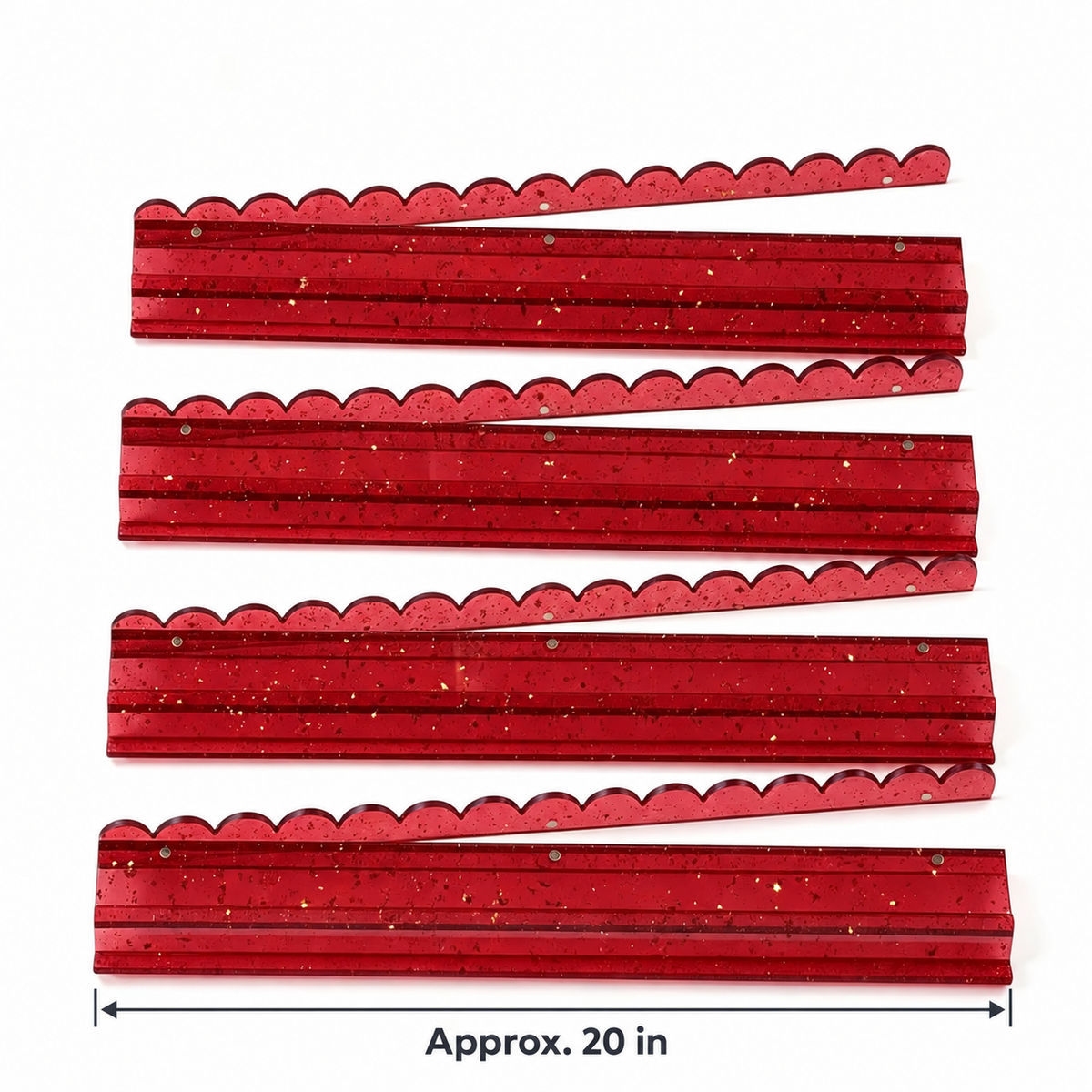
Racks with pushers: These keep your hand organized and help you stay focused on the game, not on tile management. Racks are essential for new players.
A sturdy carry bag: If you're joining a weekly game at a club or friend's house, you'll want protection for the tiles and a mat.
A mahjong mat with grid lines also helps newcomers. The grid organizes the discard pile visually, preventing the chaos of a messy center. For card players used to clean table setups, this is a small comfort that pays off.
✨ Find your Mahstead set — free US shipping →
Your first game: a realistic timeline
Week 1: Learn tiles (15 minutes). Sit with the set face-up. Name each Bam, Crak, Dot, wind, dragon. Repeat. You'll remember them.
Week 1: Play one practice round (30 minutes). Do the Charleston, deal, and play without scoring pressure. Read the card out loud. Laugh at your mistakes.
Week 2: Play two rounds. One round is muscle memory; by the second you'll spot patterns faster.
Week 3: Join a real game. By now, tile names feel natural. You'll lose the first few rounds—that's normal. Card players usually place second or third by week 4.
Card players often ask: "When do I stop needing the card?" The honest answer: never. Even seasoned players keep the card visible; it's not cheating, it's the game. You'll stop looking at every option and start trusting your pattern-matching instinct—that's the real skill, not memorization.

FAQ
If I know poker and rummy, will mahjong feel similar?
Yes—three-of-a-kind, four-of-a-kind, and draw-and-discard are identical. The main shock is that you can't make sequences (no 1-2-3 runs). You'll adapt in one game.
Do I have to memorize all the winning hands?
No. The National Mah Jongg League card shows every valid hand for the current year. You read the card during play—it's your rulebook, not a cheat sheet.
Can jokers be used anywhere?
Jokers can fill gaps in groups (three, four, five, or six tiles) but never in a pair or as a single tile. This is one of the firmest rules and the trickiest for new players to remember.
What's the Charleston and do I need it?
The Charleston is a three-pass tile exchange before play starts. Casual home games often skip it, but competitive play requires it per the National Mah Jongg League rules. It's fair and fun.
How long is a typical game?
One round (one complete hand) takes 15–20 minutes. A full game is usually four rounds, so plan 90 minutes total. Card players often find the pace comfortable because the draw-and-discard turn structure feels natural.
What's the biggest rule difference from card games?
Mahjong never allows sequences or runs (like 1-2-3). Every exposed group must be three or more identical tiles. If you're used to building straights in poker or rummy, this is the gear shift.


View More
View More
View More
