
Do You Need a Mahjong Mat? Real Reasons Players Buy Them
Last updated: Nov 23, 2026
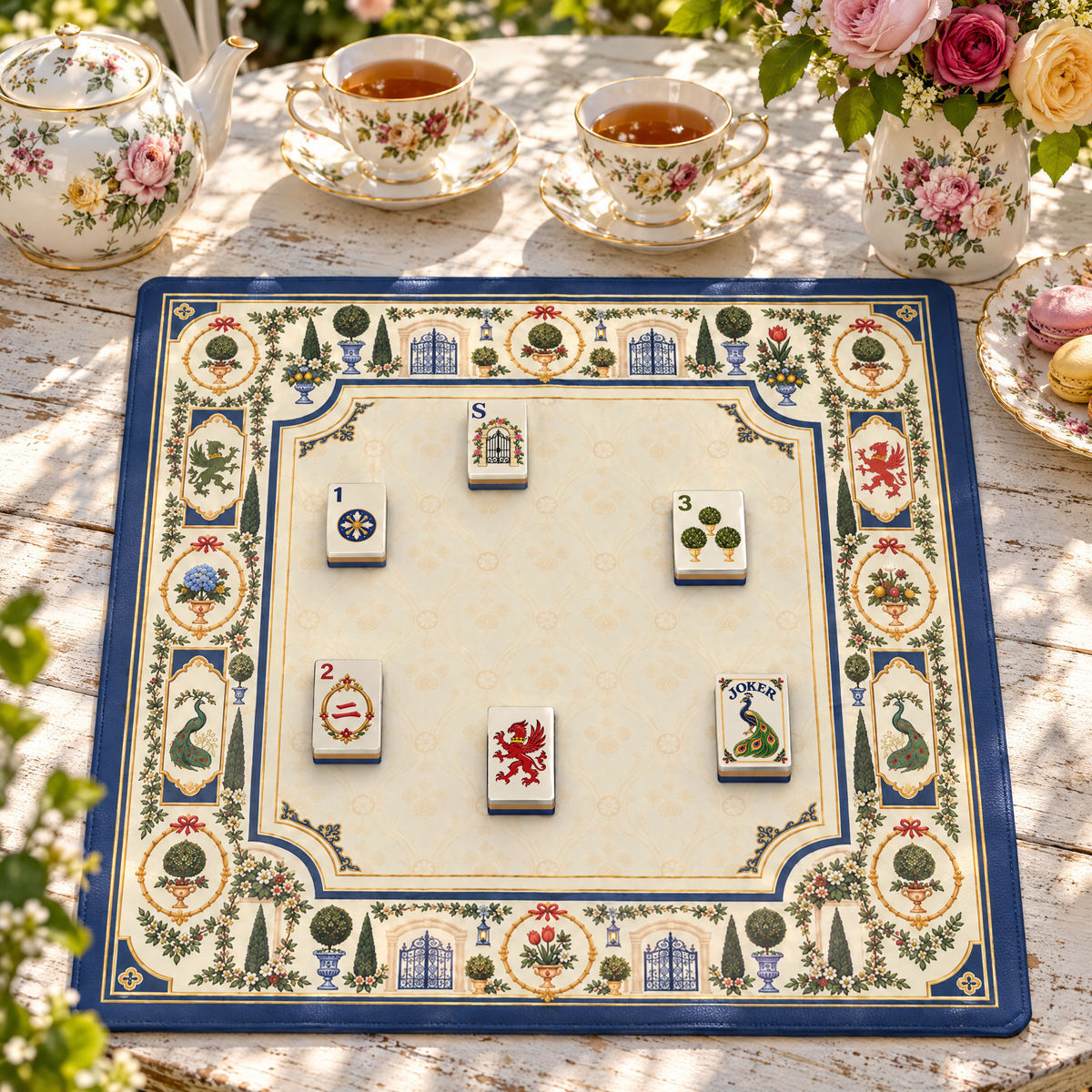
You need a mahjong mat if you play weekly or host regularly, value your table surface, or want tiles to stay put during shuffling. A mat is a felt or vinyl surface sized 34"–36" square, often with a dealer button, rack holders, and storage pockets. It sits on top of your existing table and lasts years with basic care. Cost depends on material and customization; many players start with a basic design and upgrade to engraved versions later. A mat isn't required to play—the rules don't care—but it transforms the game from "we're using the coffee table" to "this is our mahjong night." Mahstead makes mats in standard sizes with optional engraving, and you can pair one with our best-selling mahjong sets for a complete hosting setup.
A mahjong mat isn't mandatory, but it solves real problems: it protects furniture, creates grip for tiles, and marks the dealer position clearly. Most weekly players eventually get one.
What does a mat actually do during play?
A mat provides a stable, textured surface so tiles don't slide when you shuffle, draw, or discard. The felt or vinyl catches the bottoms of acrylic tiles and stops them skittering across a bare table. It also protects your dining table, coffee table, or borrowed card table from scratches and stains—essential if tiles are moving fast or drinks are nearby. The dealer button (usually sewn or printed on the mat) saves table space and makes rotation obvious. Many mats include built-in pockets for racks, score pads, and the card so everything stays within reach. For us, a mat is the difference between a relaxed game and frantically chasing tiles onto the floor.
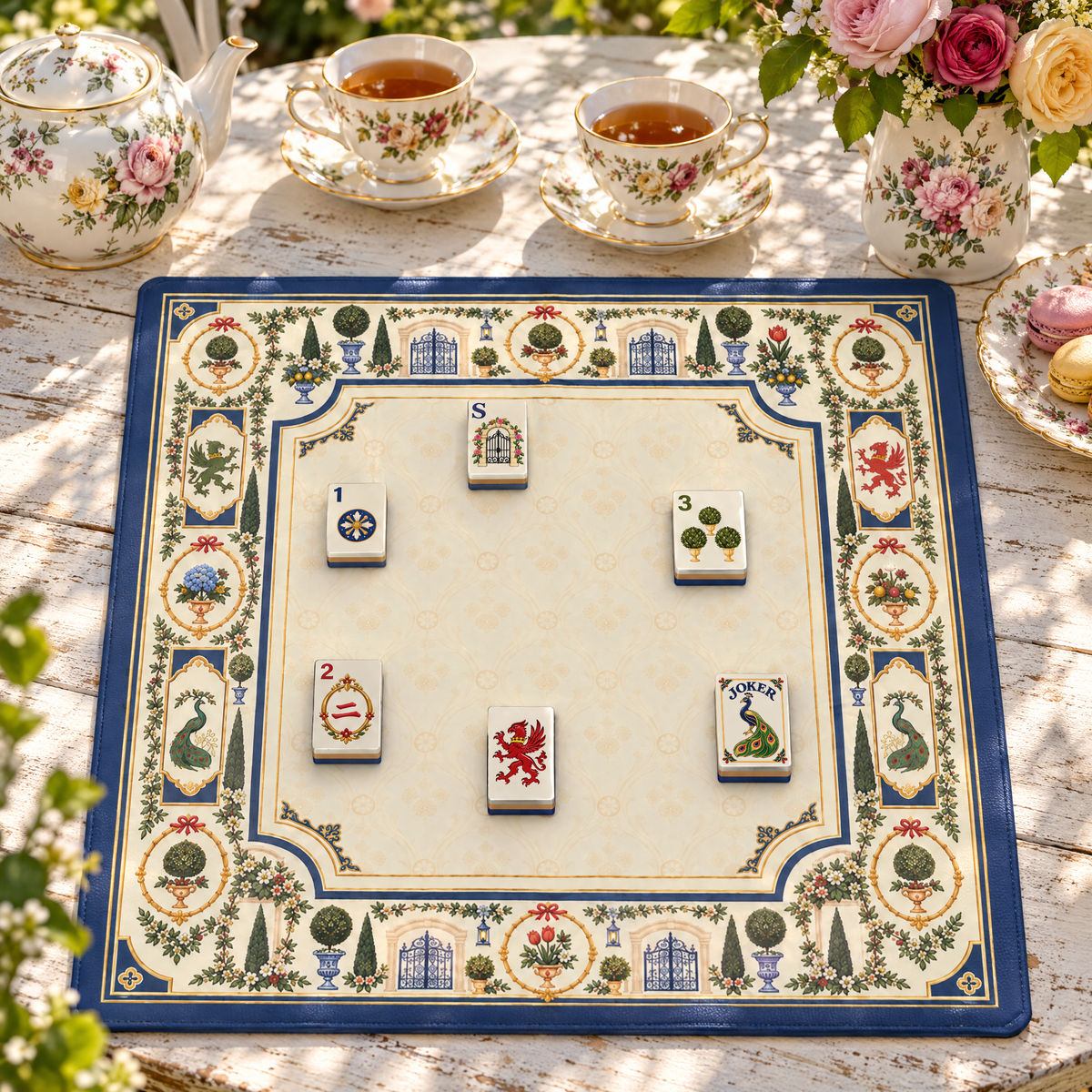
Will your table survive without one?
Yes, but with costs. Acrylic tiles sliding directly on wood, glass, or laminate can leave scratches, especially if tiles are moved quickly during Charleston passes or wall building. Over months of weekly games, a beautiful dining table gets visibly worn. A bare table also means tiles tip over, crack, or get lost under furniture. If you're using a cheap folding table you don't mind replacing, skip the mat. If it's a table you own and use for other purposes, a mat is cheap insurance—it pays for itself after one tile-on-hardwood incident.
How do you know if your game setup is ready for a mat?
Use this checklist before buying:
Frequency: Do you host or play in-home weekly? If yes, a mat pays dividends. If you play once or twice a year at different locations, it's less urgent.
Table type: Is it furniture you want to protect (dining, coffee, side table)? Mats shine here. Playing on a dedicated card table you don't care about? Less critical.
Tile quality: Do you own acrylic tiles? Mats protect both the table and the tiles by reducing friction wear. Bamboo tiles on a mat creates even more grip.
Space constraints: Do you have a dedicated game space, or does the table get repurposed? If dedicated, a mat stays in place. If it moves, you need one that's portable.
Players' experience: Are beginners in your group? New players often panic tiles will slide; a mat's grip reassures them. Veteran players are less bothered.
If three or more of these apply, a mat is worth it.
What's the difference between a basic mat and an engraved one?
A basic mat is solid-colored felt or vinyl with printed dealer markings. It works perfectly well, lasts years, and costs less. An engraved mat has your name, a phrase, or a design cut or embossed into the surface—it's a conversation piece and a gift-quality upgrade. Engraved mats often include extras like embroidered rack holders or zipper storage. The trade-off: engraved versions take longer to order and cost more. We see players start with basic mats, then upgrade to engraved ones as a gift to themselves after a season of weekly games. Explore custom mahjong mat designs to compare options side by side.
🀄 Shop best-selling mahjong sets →
Is a mat better than a table cover or tablecloth?
A table cover is fabric that goes under the tiles; a mat is a dedicated playing surface. Tablecloths slide around, bunch up, and don't create the same grip. For serious play, a mat beats both because it's designed specifically for mahjong—corners are angled or reinforced, pockets are sized for racks and score pads, and the surface texture is optimized for tile handling. A tablecloth might work in a pinch, but it's like playing on paper instead of felt. Once you use a real mat, you won't go back.
How to choose the right mat for your game
Scenario | Mat type | Why it works |
Weekly home game, mix of beginners & veterans | Standard felt with dealer button | Affordable, durable, enough grip for everyone |
Hosting tournaments or large groups | Engraved mat with storage pockets | Professional look, keeps supplies organized, memorable |
Traveling between homes or clubs | Compact rollup mat | Easy to pack, lightweight, still protects the host's table |
Gift for a mahjong-obsessed friend | Engraved mat with personalization | Personalized, long-lasting, shows you get the hobby |
Casual player, rare games | Basic vinyl mat | Entry price, easy cleanup, no regrets if unused |
Pick based on frequency and whether you're hosting or playing elsewhere. Start simple; you can always upgrade later.
🎁 See our most-loved mahjong sets & accessories →
What to check before you buy
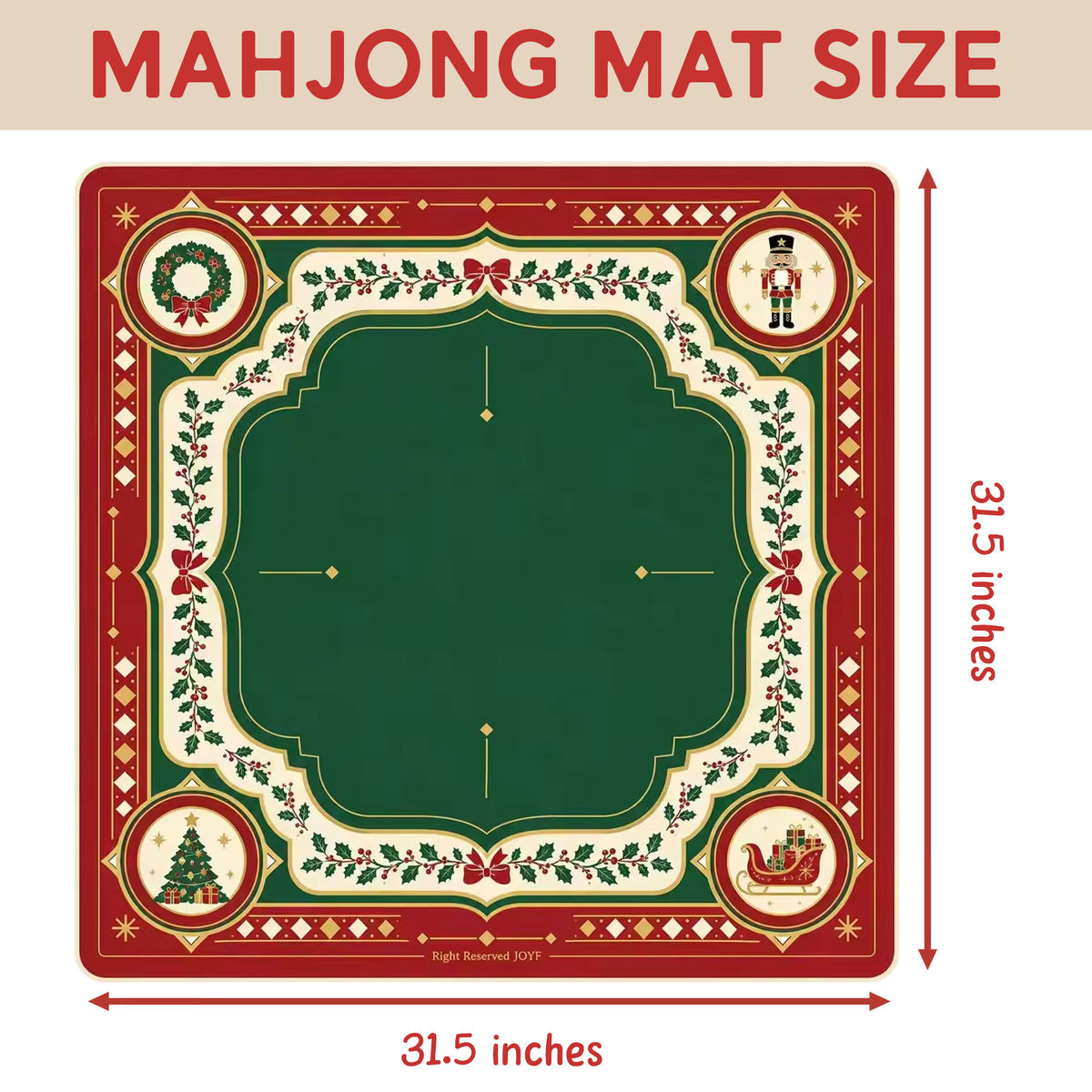
Size: Standard mats are 34"–36" square. Verify your table fits; a mat should hang 1"–2" over the edge on all sides. Too small and tiles still slide off.
Thickness: Thicker felt (¼"–½" padding) absorbs more sound and provides better cushioning. Thin vinyl mats are lighter but less protective.
Storage: Does it have pockets for your mahjong racks with pushers, score sheets, and the card? Handy if your game moves between homes.
Care: Can you wipe it clean or machine-wash it? Check the listing—some engraved mats require spot-cleaning to preserve detail.
Grip texture: Feel the surface before buying online if possible. Some felt is slick, others tacky. Ask other players what they use.
Dealer button position: Some mats mark it at the edge, others in the center. Both work; pick what feels intuitive to your group.
Why mat ownership signals serious play
Once you own a mat, you're hosting. Friends notice. The game shifts from "remember to bring dice and the card" to "when's game night at your place?" A mat tells everyone: this is a standing commitment, not just a one-off thing. It's also the first of the best-selling mahjong sets and accessories we see players collect over time—set, mats, racks, a nice travel bag for away games. A mat is the turning point where mahjong stops being borrowed equipment and becomes yours.
✨ Find your Mahstead set — free US shipping →
FAQ
Do I need a mat to play American mahjong by the official rules?
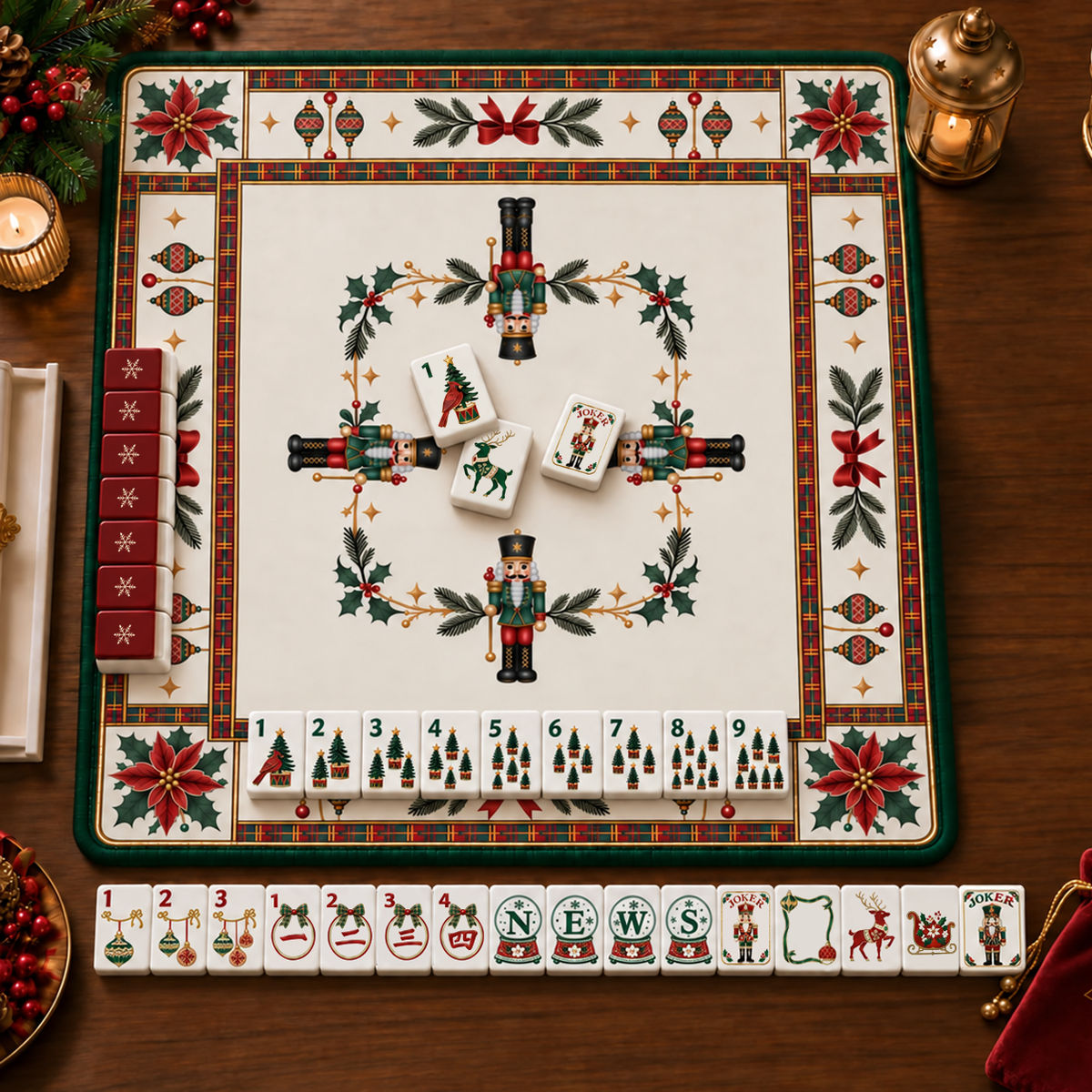
No. The rules have no requirement for a mat. Any flat surface works. A mat makes play smoother and protects your table, but it's optional.
Can I use a mat with someone else's table when I visit?
Yes. Most mats roll up or fold. Bring it to a friend's house, unroll it on their table, and play. It protects their furniture and solves the "tiles slide everywhere" problem instantly.
How long does a good mat last?
With care, 5–10 years or longer. Felt wears faster with heavy use; vinyl is more durable. Spot-clean spills immediately and store it flat or rolled, not crumpled.
What's the difference between a mat and the felt you see in casinos?
Casino felt is thicker, usually glued permanently to the table, and often has printed graphics all over. A mahjong mat is portable, sits on top, and has minimal design to avoid visual clutter.
Should I get an engraved mat or just a plain one?
Start plain if this is your first mat. If you love hosting and play weekly, upgrade to engraved later as a keepsake or gift. Engraved mats last just as long and become part of the game's memory.
Can a mat work for 2 or 3 player mahjong?
Yes. Mats are sized for 4 players but work fine for fewer. Everyone still gets a stable surface and the table stays protected.


View More
View More
View More
