
Cute Mahjong Case: Which Style Fits Your Game
Last updated: Nov 23, 2026
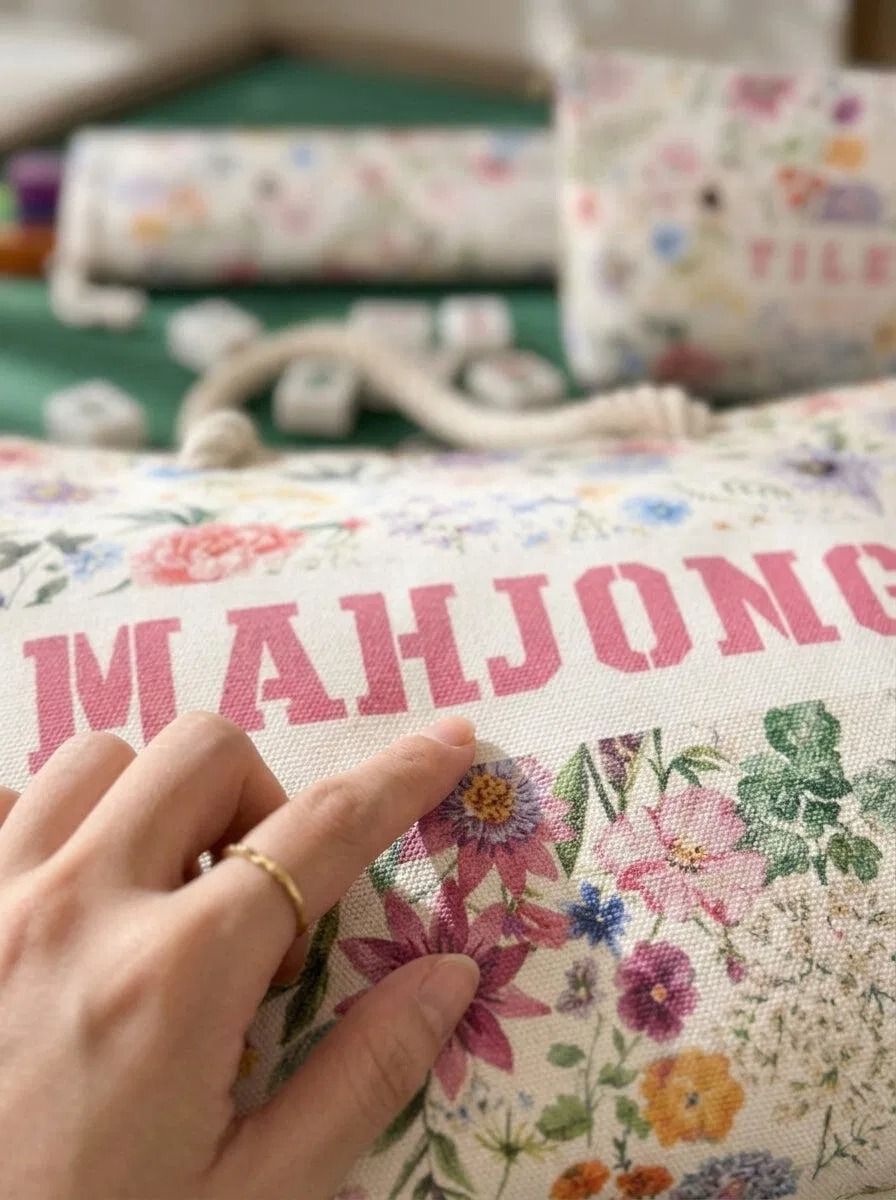
A cute mahjong case is a protective bag or hard carrier designed to hold a full American mahjong set (160 tiles with 152 playing tiles) plus racks, mats, and dice. Cases range from soft drawstring pouches with playful designs to structured carriers with compartments. Most players choose based on whether they transport their set weekly, store it long-term, or want a display piece—not just protection. Cases vary in interior capacity (some fit a set and mat together; others are tile-only), exterior material (canvas, synthetic, faux leather), and aesthetic (jokes, zodiac motifs, solid colors). Mahstead's travel bag collection pairs cases with matching racks, mats, and sets so everything coordinates. Before ordering, measure your set's box or assembled tiles to confirm fit, check whether the case has interior pockets for dice and cards, and decide if you want something washable or water-resistant for car storage.
What makes a case "cute" versus just practical?
Cute usually means the exterior has a personality—embroidered patterns, witty mahjong puns, zodiac animals, or bright colors that make you smile when you pull it from the car trunk. A purely practical case is often plain nylon or solid-colored canvas with basic construction. We've found that "cute" cases don't sacrifice durability; they simply add design detail without extra cost. The difference is whether you want a case that blends into your closet or one that announces "I'm a mahjong player" when you carry it into game night. Many players find that a case with a little personality makes them more likely to keep the set organized, not less—you actually care for something you enjoy looking at. Choose cute if you'll be carrying it visibly and storing it where guests see it; choose plain if space or discretion matters more.

Soft drawstring cases vs. structured carriers—which do you need?
Soft drawstring pouches are lightweight, compact, and ideal if your set already lives in its original box or if you're carrying tiles only. They typically cost less and pack flat in a closet. Structured cases with rigid walls, compartments, and handles protect tiles better during car travel and rough handling, especially if you move the set weekly between homes or take it to tournaments. Here's the decision point: if you play at the same home every week, a soft case works fine. If you transport across town, travel for holidays, or want everything (set, mat, racks, dice) in one grab-and-go vessel, a structured case pays for itself in peace of mind. Check the interior dimensions against your acrylic set's footprint; a 160-tile set in a box typically measures roughly 12 × 8 × 4 inches, so your case needs that clearance plus a little wiggle room for foam padding or compartment walls.
Style | Best for | Interior fit | Water-resistant? | Carry method |
Soft drawstring | Tiles only, home storage | Compact, snug | No | Shoulder strap |
Structured with pockets | Set + mat + racks | Generous, organized | Often yes | Handle + strap |
Hard shell / travel case | Frequent transport | Very protective, rigid | Yes | Wheeled or handle |
Faux leather zipper | Display or light use | Medium, stylish | Sometimes | Shoulder or hand |
The most common mistake we see: buying a case that looks spacious but doesn't account for the thickness of racks or the depth of a mat rolled inside. Measure your actual gear, not just the set box. A Mahstead engraved set in its protective packaging plus one of our mahjong racks with pushers will take up real volume, so check cubic inches, not just length and width.
🀄 Shop best-selling mahjong sets →
How do you pack a case to actually keep tiles safe?
Layer everything strategically: tiles on the bottom, racks upright or flat in the middle, mat rolled loosely (never creased sharply) on top, dice and cards in any zippered pockets. If your case has no padding, add a thin yoga mat, bubble wrap, or foam sheet at the base to absorb vibration. Never stack heavy items (like a wooden lazy Susan or another set) on top of a case carrying tiles—acrylic tiles crack if crushed. Keep the case out of direct sunlight in your car; acrylic can warp in heat over time. A soft case works best if you're driving in air conditioning and not leaving the set in the trunk for hours. If you live in a climate with extreme temperature swings or frequent sun exposure, a rigid case with insulation properties is worth the extra investment. We pack every Mahstead set in foam-lined packaging specifically to protect acrylic during shipping; when you move your own set, mimic that approach—think "this traveled 1,000 miles safely, so my 20-minute drive deserves the same care."

What exterior design matters beyond looks?
The material affects lifespan and maintenance. Canvas is soft and washable but absorbs spills; synthetic is easy to wipe clean and often water-resistant, making it better for car trunks or outdoor game nights. Faux leather looks elegant and cleans with a damp cloth, but it can crack with hard use over years. Color and pattern also matter: dark colors hide wear and dust, while bright or patterned exteriors make cases easier to spot at a friend's house (no mix-ups when three people bring sets). Embroidered designs are charming but can snag if you stuff the case into a crowded closet. Jokes or zodiac animals printed on canvas fade slightly with sunlight and washing, though that's rarely noticeable unless you're constantly in the sun. The smartest approach is to match your case material to how you'll actually use it—if it lives in a climate-controlled home, any fabric works; if it travels in a hot car trunk weekly, synthetic or hard-shell is smarter. We've seen players pick cases based solely on beauty and regret it after stains or fading; choose cute and practical.
🎁 See our most-loved mahjong sets & accessories →
How to match your case to your set and the rest of your gear?
Coordination isn't required, but it transforms a bunch of separate purchases into a cohesive setup. If you choose an engraved set with a specific motif—say, a Chinese zodiac design—a case with complementary colors or a matching theme makes game night feel intentional. A solid-colored case pairs with any set, so that's the safest choice. If you're buying as a gift, a coordinated case and best-selling set together send a message that you put thought into it; separate, they feel like two random items. Mahstead's travel bag collection groups cases with sets and accessories, so you can see which combinations work visually and functionally. Matching racks, mats, and dice to your case is optional—there's no rule—but a few players in your group will do it, and their setups always photograph better and feel more "serious" about the game. If you're hosting a Thursday night game, a coordinated case and mat in your group's favorite color or a shared joke design adds a professional touch.
What to check before you buy a cute mahjong case
Before ordering, ask yourself:
Will I carry this set, or does it live in one place? Travel cases need different features than home-storage cases.
What else goes inside? Just tiles, or also racks, mat, and dice? Measure all of it together.
How often does it travel in a car? Weekly exposure to sun and heat demands better protection than once-a-year use.
Do I want the case washable? Canvas yes, faux leather mostly no.
Does size matter for storage at home? Soft pouches fit under beds; hard cases need shelf or closet space.
Am I buying this as a gift or for myself? Gift buyers often lean cute; serious players lean practical and add cute as a bonus.
Can I return or exchange it if it doesn't fit my set? Check the return policy before committing.
Most of the mahjong bags and cases sold for American sets come in standard interior dimensions, so they fit a 160-tile set with some clearance. If you're buying a case without a set yet, or you have a vintage set in an unusual box, ask the seller for exact interior measurements before purchase.
✨ Find your Mahstead set — free US shipping →

FAQ
Can a cute mahjong case hold a full set with racks and mat together?
Most structured cases can fit a 160-tile set plus one rack and a rolled mat, depending on mat thickness. Measure your mat when rolled (usually 2–3 inches in diameter) and the footprint of your racks. If interior space is close, remove the mat and carry it separately in the case's zippered pocket, or invest in a larger case designed to hold everything. Soft drawstring pouches typically hold tiles only.
Do I need to remove tiles from their original packaging before using a case?
No. If your set came in a box with foam inserts, that packaging protects tiles perfectly well inside the case. You can transfer tiles to a compartmented tray for easier shuffling at the table, but the original box works fine for storage and transport. Removing tiles is personal preference, not a requirement.
What's the difference between a mahjong case and a mahjong bag?
Cases typically have rigid structure and protection (hard-sided carriers, padded compartments); bags are softer and more flexible (drawstring pouches, canvas totes). Cases are better for frequent travel; bags are better for lightweight storage or carrying as a secondary item. The terms overlap—many sellers use them interchangeably.
How do I clean a cute mahjong case without ruining the design?
For canvas, use a damp cloth and air-dry flat. For synthetic, wipe gently with a barely damp cloth and dry with a towel. Avoid washing machines, bleach, and direct heat. For embroidered or printed designs, test in a corner first. Most cases benefit from spot-cleaning rather than full washing, which fades colors and can damage stitching over time.
Can I use a regular travel case, like a jewelry or makeup organizer, instead of a mahjong case?
Yes, if it's large enough and has adequate padding. Measure your set and racks to confirm fit. Generic organizers sometimes have shallow compartments or slippery linings that aren't ideal for tile protection, but they work if you add your own padding. A dedicated mahjong case is designed with tile dimensions in mind, so it's usually the smarter choice.
Is it worth buying a case if I only play mahjong once a month?
If your set lives permanently in one room, probably not—a box works fine. If it travels even occasionally, a case keeps tiles safer and organized. Even once-a-month players often appreciate having everything ready to grab and go, so a case reduces setup friction. A soft drawstring case is affordable and takes minimal storage space if budget is tight.


View More
View More
View More
