
Crak suit history: symbols, evolution, and American mahjong rules
Last updated: Nov 23, 2026
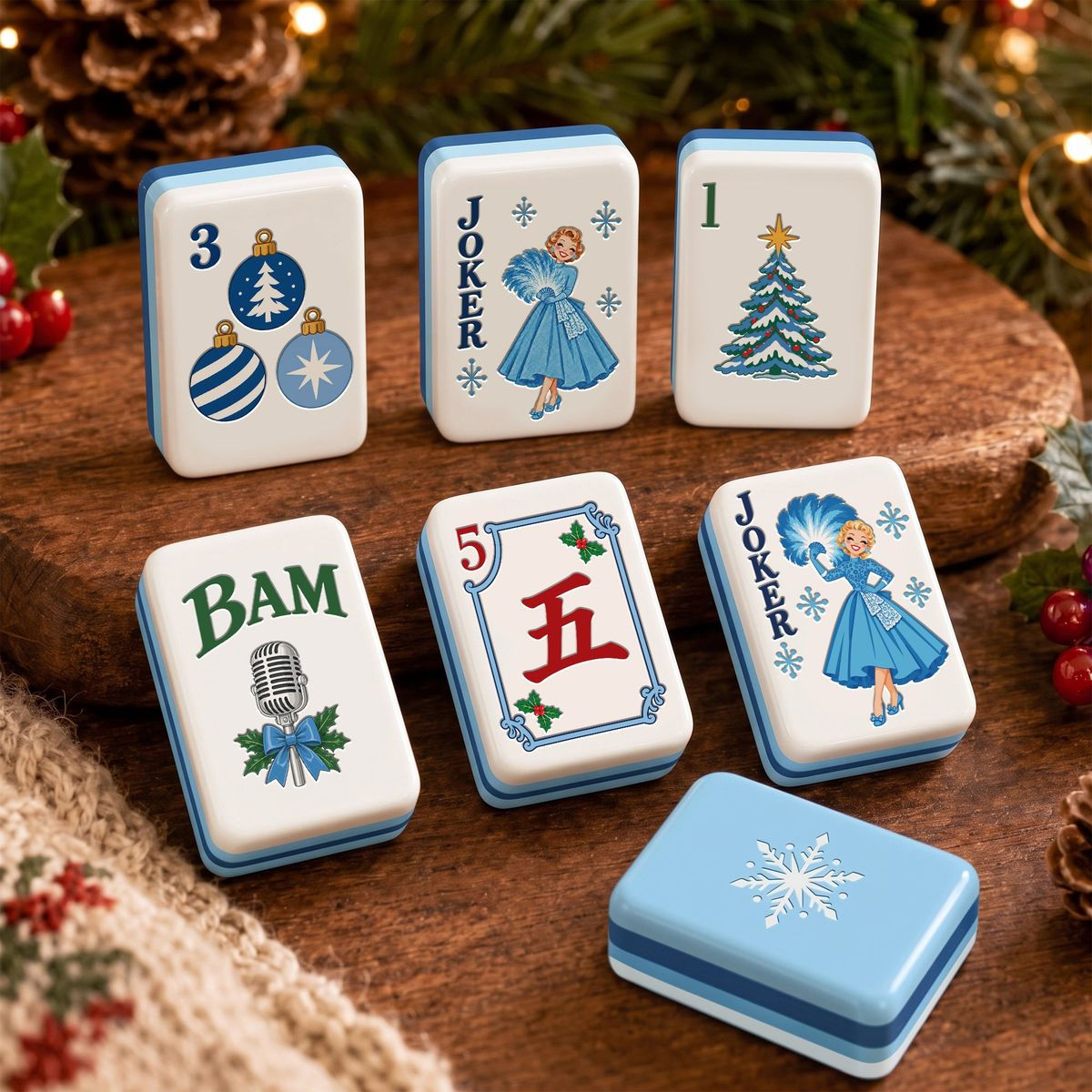
The Crak suit is one of three numbered suits in American mahjong (alongside Bams and Dots), containing tiles numbered 1–9, four copies each. The name derives from Chinese "萬" (myriad/ten-thousand), referring to traditional currency symbols printed on each tile. Historically, Chinese mahjong adopted Craks to represent wealth and trade; the suit features intricate character designs and geometric patterns that vary by region and manufacturer. In American mahjong, Craks behave identically to Bams and Dots—they form pungs (three identical tiles), kongs (four), and longer melds required by the current year's National Mah Jongg League card. Jokers can substitute for any missing Crak in exposed melds. Players at Mahstead and in weekly games nationwide rely on Crak tiles to complete the 108-tile core of a standard 160-tile set. Unlike sequences (chows) in Chinese variants, American rules forbid exposing consecutive Craks; only identical tiles and special combinations from the card are legal.
The Crak suit occupies equal footing with Bams and Dots in American mahjong. Yet its visual distinctiveness and rich heritage often intrigue new players. Below, we explore where Craks come from, how they look, and why they matter at the table.
What makes the Crak suit visually different from Bams and Dots?
Craks display stylized characters, often rendered as symbols of wealth, authority, or nature—dragons, birds, coins, or calligraphic marks—depending on the tile set's origin and artistic tradition. Bams, by contrast, show bamboo stalks arranged in patterns (notably, the 1 Bam features a single bird perched on one stalk); Dots are simple circles arranged like dice faces. These visual differences help players scan their racks at speed during play. When you're holding 13 tiles and the discard is flying, recognizing a Crak by its character shape—rather than counting dots or parsing bamboo—cuts cognitive load.
The 5 Crak in many traditional sets bears a particularly ornate design, sometimes called the "dragon" or featuring a plum blossom, which serves as a visual anchor. Mahstead's best-selling mahjong sets include Craks rendered in clear, modern silkscreen or engraving, preserving legibility while honoring these classical motifs.

Why did ancient Chinese mahjong makers choose to create the Crak suit?
The Crak suit emerged during China's Ming Dynasty (1368–1644) as mahjong evolved from card games. The name references "myriad," the highest unit in traditional Chinese currency systems. Tiles representing money made the game intuitive for merchants, scholars, and aristocrats—gambling on wealth was both literal and metaphorical.
Chinese mahjong originally had only Craks; Bams and Dots were added later to diversify gameplay and reduce dead hands. Over centuries, regional variants—Cantonese, Shanghai, Sichuan—developed distinct visual styles for Craks, reflecting local aesthetics and printing technology. When mahjong reached the West in the 1920s, American manufacturers adopted the three-suit system and standardized the character designs so non-Chinese players could distinguish them. Modern Craks often soften ornate characters into geometric shapes or simple glyphs, balancing tradition with clarity.
How do Crak tiles function in American mahjong hands?
In American mahjong, Craks are interchangeable with Bams and Dots from a functional standpoint—they form pungs (three identical Craks, like 3-3-3), kongs (four identical Craks), or longer melds. However, the current year's National Mah Jongg League card (reissued each spring) specifies which tiles and suits compose a winning hand. A hand might call for, say, "one pung of Craks, one pung of Dots, and a Kong of 7 Bams plus honors"—you cannot substitute; the suit matters.
American rules forbid exposed sequences (chows) entirely, unlike Chinese or Hong Kong variants. You may only call or expose identical Craks, never consecutive ones like "5-6-7 Craks." This constraint shapes strategy: players hoard melds and watch for discard patterns to complete their sets quickly. Jokers can replace any missing Crak in an exposed meld, but never alone or in a pair.
The pillar guide on what's in an American mahjong set explains how the 36 Craks (plus Bams and Dots) combine with honors and jokers to form the 152-tile core of play.
What regional variations exist in how Craks are illustrated?
Crak Design Traditions by Origin
Region | Typical Crak motif | Character style | Modern popularity |
Cantonese | Dragon, plum blossom | Ornate, flowing | High among Hong Kong players |
Shanghai | Coins, calligraphy | Geometric, centered | Common in mid-century Western sets |
Taiwanese | Birds, symbols of luck | Bright, varied colors | Growing in competitive play |
American (modern) | Simplified characters or glyphs | Silkscreen or engraved | Dominant in US casual & tournament play |
Mahstead's acrylic 160-tile sets draw from the modern American tradition, using clear engravings or screen-printed graphics that remain legible after thousands of hands. Many players who host weekly games prefer this clarity over ornate vintage tiles, which can blur or yellow over time. If you play frequently or gift sets to tournament players, our engraved American mahjong sets offer durability and a contemporary aesthetic.
🀄 Shop best-selling mahjong sets →

Why do some American players confuse Craks with other suits?
Confusion typically arises for three reasons:
Inconsistent color codes: Not all manufacturers use the same color for Craks. Some use green or teal; others use red or gold. A player trained on green Craks may hesitate when handed a red set, even though the character symbol is identical.
Worn tile legibility: Vintage or heavily played sets may show worn engravings, making it hard to distinguish a Crak character from bamboo or a dot arrangement. This slows the game and frustrates new players.
Monochromatic or minimalist designs: Budget sets sometimes render all three suits with nearly identical line weights or proportions, forcing players to rely on tiny detail cues.
We recommend inspecting a set's Crak tiles in good light before committing. Mahstead's acrylic tiles feature high-contrast engravings and come with clear product images so you see exactly what you're buying. If you're upgrading from an old set or playing in a home environment where lighting is dim, investing in modern tiles pays off immediately in table speed and enjoyment.
How do American mahjong rules handle mixed Crak and Bam combinations?
American mahjong does not permit a pung of "mixed" tiles (e.g., one 5 Crak + two 5 Bams). A pung must be three identical tiles—same number and same suit. Hands that call for "Craks only" in a section are common; hands requiring "mixed suits" in a single meld are not.
This rule differs sharply from Chinese variants, where you can form chows (sequences) like 5 Crak–6 Crak–7 Crak or 5 Bam–6 Bam–7 Bam—suits stay within each sequence. In American mahjong, you can never call a consecutive sequence at all, and any pung must be monolithic. The upside: games move faster and strategy focuses on watching discards and managing your concealed hand, rather than computing all possible suit combinations.
🎁 See our most-loved mahjong sets & accessories →
What to check before you buy a mahjong set with Crak tiles
When shopping for a new American mahjong set, use this checklist:
Crak tile legibility: Can you distinguish the character design from a Bam bamboo or Dot dots at arm's length? Take a photo under your home lighting.
Color consistency: Do all nine Crak numbers share a single, distinct hue that contrasts with Bams and Dots?
Engraving or printing durability: Is the design recessed (engraved) or raised? Recessed designs resist wear longer.
Set completeness: Does the set include 36 Craks (4 each of 1–9), plus 36 Bams, 36 Dots, 16 winds, 12 dragons, 8 flowers, and 8 jokers (152 tiles total)?
Spare tiles: A 160-tile set includes spares; confirm the product page shows what extras are included.
Our best-selling mahjong sets meet all these criteria and ship free across the US. If you're hosting weekly games or teaching mahjong, clear Crak tiles are non-negotiable.

FAQ
Why is the Crak suit called "character" in some old English books?
Early Western translations of Chinese mahjong referred to the 萬 suit as "character" because each tile displays a stylized glyph or symbol; "Crak" is an anglicization of the Cantonese pronunciation. Modern texts standardize "Crak" for clarity.
Can I use Chinese-made Craks in an American mahjong game?
Yes, provided the set contains 152 playable tiles (36 Craks, 36 Bams, 36 Dots, 16 winds, 12 dragons, 8 flowers, 8 jokers). American rules apply to any set with these tiles; the country of origin does not matter. However, ornate Chinese Craks may be harder to read at speed.
Do jokers ever count as a Crak in hand calculations?
Jokers substitute for any tile in an exposed meld (pung, kong, etc.), but they never "become" a Crak conceptually—they simply stand in. You cannot call a meld with a joker alone or pair a joker with a single tile. Mahstead's guide to how jokers work covers this in depth.
How do I teach a beginner to spot Craks quickly?
Have them sort a new set by suit into three piles, studying the visual distinctions. Then quiz them: hold up one tile at random and ask "Crak, Bam, or Dot?" Repeat 20 times. Speed comes after 2–3 games. Clear, modern tiles from our best-selling collection accelerate this learning.
Are Crak tiles more valuable in scoring than Bams or Dots?
No. All three suits have identical point values under American mahjong scoring rules. The National Mah Jongg League card determines hand difficulty, not suit rarity. Scoring depends on the specific hand pattern you complete, not which suit you use. ✨ Find your Mahstead set — free US shipping →


View More
View More
View More
