
Common Mistakes in Chinese Mahjong: Rules, Tips & How to Avoid Them
Last updated: Nov 23, 2026
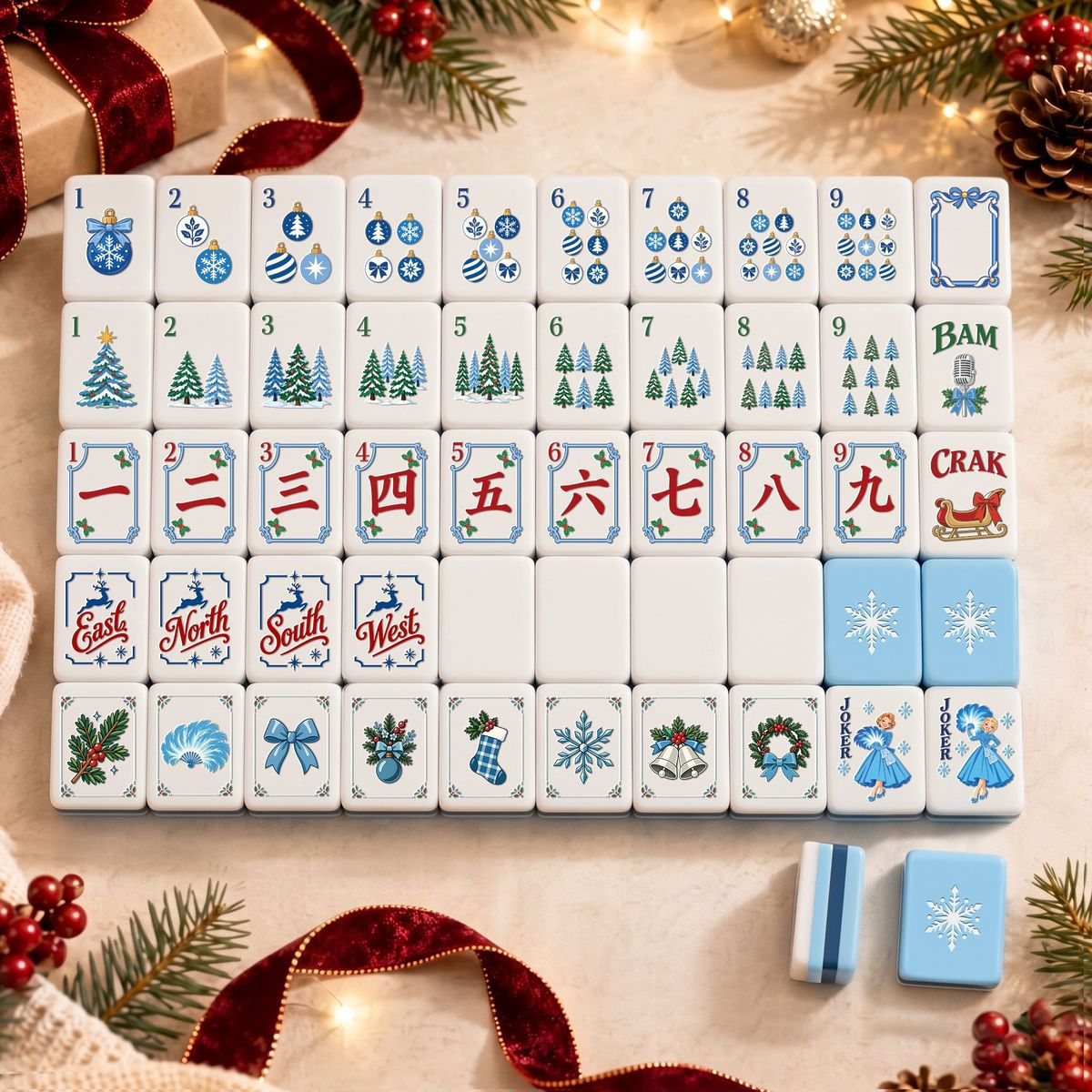
Chinese mahjong uses 144 tiles (three suits plus honors and bonuses), allows sequences called chows alongside pungs (triplets), and bans jokers entirely. Unlike American mahjong's annual card-based hands, Chinese uses patterns players learn by memory and regional variation. The most costly blunders: playing a dead hand (calling "win" on a tile set that can't legally complete), not tracking which discards are safe, and misunderstanding when to freeze the hand mid-game. Winners in Chinese mahjong form either a pung-only hand or mix pungs with exactly one chow, depending on regional rules. Learning the 14-tile structure (13 melds + 1 pair) and the honor-tile hierarchy before your first session saves hours of correction. Many online guides blur Chinese and American rules; our best-selling mahjong sets and regional guides clarify the differences so you play confidently.
🀄 Shop best-selling mahjong sets →
What is a dead hand in Chinese mahjong, and how does it happen?
A dead hand occurs when you call "win" on a tile combination that cannot legally complete under your region's rules. For example, declaring victory on a hand that requires two copies of the same tile when only one remains in play, or on a pattern the ruleset forbids. In Chinese mahjong, every winning hand must be structured: 13 melds (pungs, chows, or kongs) plus one pair. If your declared tiles don't form this structure, or if the tile you claim to have drawn is impossible, the call is invalid and often carries a penalty. We've seen players rush to declare after drawing, not verifying that their final pair actually closes a legal pattern. The fix: before shouting "win," count your melds, confirm your pair exists, and check that the winning tile wasn't already visible on the discard pile. Some regions also forbid winning on the very first round or on a tile drawn in certain conditions—learn your table's ruleset before play begins.

How do I track which tiles are safe to discard?
Safety depends on which tiles remain in play and which suits your opponents have built. In Chinese mahjong, watching the discard pile (the dead wall) tells you what's gone. If three copies of the 5 Bam have been discarded and no one is collecting Bams, the fourth is likely safe. Conversely, if an opponent just picked a tile and didn't discard it—they kept it or added it to a concealed hand—they're building toward a meld in that suit or rank. Track the honors (winds and dragons) closely: if East wind has appeared twice, the remaining two are high-risk discards late in the round. Risky plays include discarding tiles adjacent to ones your opponents have exposed (a sign they're collecting that suit), or honor tiles when an opponent sits in a "draw" posture, leaning forward—that's often a sign they're one tile away from winning. Our house rule: play the tile your opponents least expect, not the obvious discard. Before each session, you and your group should agree on the penalty for a discard that directly causes someone's win—usually the discarder pays double or triple the base penalty.
Why do sequences (chows) cause so much confusion?
Chows—sequences of three consecutive tiles in one suit—are the core difference between Chinese and American mahjong. American mahjong forbids chows entirely and allows only pungs, kongs, quints, and sextets; Chinese mahjong makes chows mandatory in many hand patterns. The confusion arises because a chow must be three consecutive numbers (like 4-5-6 Dots), never symbols from different suits or a wrap-around (9-1-2 is illegal in most regions). When an opponent discards a tile that completes a chow and they call "pung" or "chow" to claim it, you need to verify: (1) that the tile truly completes three in sequence, (2) that they've exposed the chow correctly, and (3) that the ruleset allows exposure at that moment. Some regions ban chow exposure before certain conditions are met. Common errors include declaring a 3-4-6 as a chow (missing number 5), or exposing a chow that violates the "unique tiles rule"—in most Chinese variants, your winning hand cannot contain two identical melds. If you're learning Chinese mahjong after years of American play, drill the suit sequences aloud: 1-2-3, 2-3-4, all the way to 7-8-9 in each suit. This trains your eye to spot legal and illegal combinations instantly.
What is the honor-tile hierarchy and why does it matter?
Honor tiles in Chinese mahjong include four winds (North, East, South, West) and three dragons (Red, Green, White). The hierarchy—which honors are "strong" and which "weak"—varies by region and sometimes by season. In many Cantonese variants, East wind (the player's own wind at the start of the round) is the strongest; South and West follow, with North as the weakest. Red and Green dragons are mid-rank; White dragon (sometimes the tile of "soap") is often the weakest honor. The practical reason: some honor melds score higher, so opponents focus on building them early. Understanding this hierarchy helps you predict what an opponent is collecting. If a player discards North wind but keeps East or Red, they're signaling their priority. Late-game discard patterns also follow honor rank: cautious players dump weak honors first, reserving strong ones until forced. Learning your group's regional ruleset means clarifying the exact hierarchy they use—no two tables are identical.
How do jokers and rule variants affect Chinese mahjong play?
Chinese mahjong has no jokers (unlike American, which uses eight jokers to substitute tiles). This changes strategy drastically: you cannot use a wildcard to complete a hand, so every meld and pair must use real tiles from the wall and your opponents' discards. Instead, some Chinese regional rules allow a tile called a "replacement" or use a "draw extra tile" mechanism on certain turns, which functions like a joker but operates differently—drawn, not substituted. Learning which regional variant your table plays is critical. Guangdong (Cantonese) mahjong, Shanghai mahjong, and modern online variants (Riichi, Hong Kong style) all differ on joker/replacement rules, which tiles can be named wild, and which patterns score. Before joining a group, ask: (1) Are replacements allowed, and if so, when? (2) Do honor tiles have a hierarchy? (3) Can you win on any draw, or only on certain conditions (like a non-discard draw, a self-drawn final tile)? (4) What is the scoring system—points, money, or honor only? A quick 15-minute conversation prevents hours of confusion. Many players skip this and assume their home-table rules apply everywhere—a recipe for dispute.

Common Mistake Comparison Table
Mistake | Chinese Rule | American Rule | Consequence |
Playing 8-9-1 as a chow | Illegal (no wrap) | N/A (no chows) | Dead hand, penalty |
Exposing four identical tiles | Valid kong | Valid kong | Hand proceeds (same both) |
Winning on a discard if you've exposed no melds | Regional (some allow, some don't) | Always valid if on card | Table mismatch if rules aren't clear |
Using a joker to fill a gap | Not possible (no jokers) | Invalid (jokers have strict rules) | Game halt, clarification needed |
Calling "win" with 12 tiles instead of 14 | Dead hand | Dead hand | Penalty, hand reset |
🎁 See our most-loved mahjong sets & accessories →
What tile tracker and reference tools help prevent errors?
The best insurance against mistakes is a written player agreement and a quick-reference card. Before your session, draft a one-page house rule sheet covering: which regional variant you're playing, honor hierarchy, chow legality, joker/replacement rules, winning conditions, and the penalty structure (who pays what, how much, for which infraction). Print it and keep it at the table. Many groups also use a tile tally—a paper or digital tracker marking which tiles have been discarded and which remain. This prevents the dead-hand error where you call win but the tile you need is already gone. We recommend keeping this tracker visible to all players; transparency cuts disputes. For serious groups, mahjong mats with labeled zones (discard pile, concealed tiles, exposed melds) help organize play and make it visually obvious which tiles are in circulation. A mat also protects your actual tiles from wear—critical if you own a hand-carved or personalized set. Some players also invest in racks with pushers to keep tiles upright and organized, reducing accidental tile flips or misreads.
Should I memorize winning patterns, or rely on a card?
Chinese mahjong does not use an annual card like American mahjong (which follows the National Mah Jongg League's yearly hand list). Instead, Chinese variants rely on pattern memorization or a fixed rulebook of approved hands. If you're playing Cantonese, Shanghai, or Hong Kong mahjong, winning patterns are standardized in books or reference apps—consult them early. Memorization takes months; most players carry a pocket reference guide or have one projected on a screen at home games. The advantage of memorization: faster play, less table friction, and deeper strategic thinking because you're not constantly checking a chart. The advantage of reference materials: accurate play and fewer disputes, especially in a mixed-skill group. Many groups blend both—experienced players lead, newer players reference. Our advice: invest the first 10 sessions in learning the most common patterns (like the "all pung" or "one chow" hands), then gradually expand. Reading the rulebook before your first game beats learning on the fly and making costly errors.
✨ Find your Mahstead set — free US shipping →
What to check before you buy a Chinese mahjong set
Tile count: Confirm your set has 144 tiles (or 152 if you want spares for practice). Many online retailers mix Chinese and American tile counts—Chinese is always 144 (36 per suit × 3 suits + 16 honors + 8 bonus tiles).
Suit symbols: Verify the sets use Bam (circles), Crak (characters), and Dot (bamboo) symbols, not flowers or other decorative substitutes. Mismatched suits lead to confusion mid-game.
Tile size and weight: Chinese mahjong tiles are often smaller and lighter than American tiles. If your table has mixed sets, confirm they match yours or you'll struggle with hand organization.
Joker count: Confirm the set does not include jokers—they're a Western addition. If jokers are in the box, you have a hybrid set unsuitable for traditional Chinese play.
Language on the box: If the box says "American mahjong" or "152 tiles," it's designed for American rules, not Chinese. Double-check before purchasing.

FAQ
Can I play Chinese mahjong with an American mahjong set?
Not easily. American sets include jokers and often exclude bonus tiles (flowers, seasons); Chinese play forbids jokers and requires them. You'd also lack the proper tile distribution for legal Chinese hands. Use the correct set for your game.
What happens if I discard the tile that wins for someone else?
In most Chinese variants, the discarder pays the winner a penalty—usually double or triple the base hand value. Some regions make the discarder liable to all three other players. Clarify your table's rule before play.
Are Hong Kong, Cantonese, and Shanghai mahjong the same game?
No. They share a 144-tile base and use chows and pungs, but differ on hand patterns, honor hierarchy, scoring, and special melds. Learning one variant doesn't automatically translate to another; ask experienced players which version your group plays.
How long does a round of Chinese mahjong last?
A round (east wind through north wind, one hand per player) typically runs 45 minutes to 1.5 hours, depending on skill and group pace. Experienced players move faster; new groups take longer.
Can I call "win" on a tile I draw myself, or only on a discard?
This varies by region. Cantonese mahjong often allows both; some Shanghai rules permit only discard wins or only self-drawn wins in certain rounds. Confirm your table's ruleset—it's a major rule and affects strategy entirely.
What's the easiest way to learn Chinese mahjong if I only know American mahjong?
Start with a written guide to your region's variant (Cantonese and online Riichi are most popular outside China). Play a practice hand slowly, referring to a rules sheet every move. Attend a group session and ask a patient player to explain each mistake in real time—that feedback sticks.


View More
View More
View More
