
Coastal Mahjong Case: Which Travel Bag Fits Your Game?
Last updated: Nov 23, 2026
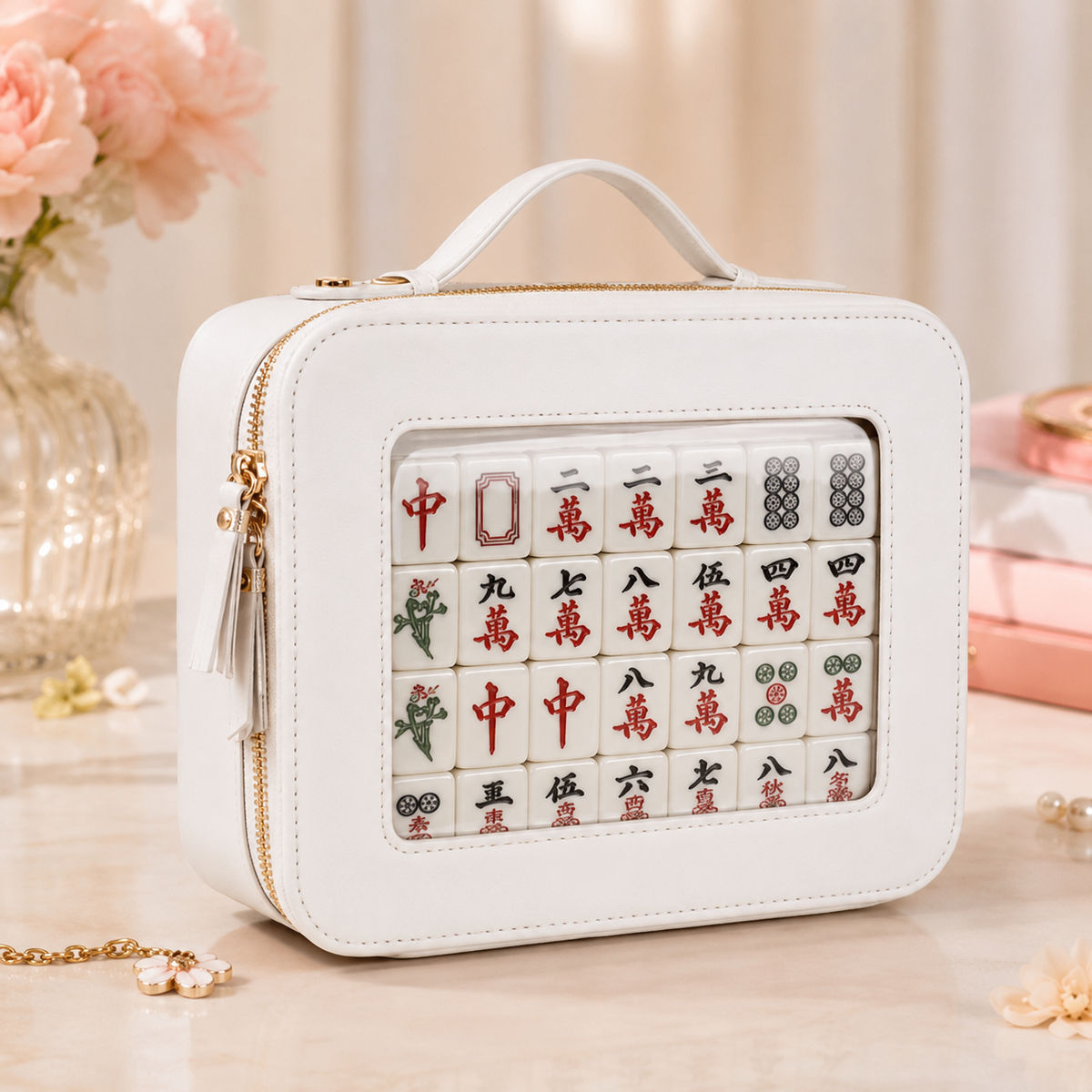
A coastal mahjong case is a protective bag or hard case designed to carry your American mahjong set—160 tiles, racks, mat, and dice—while traveling. We use them for road games, vacation trips to warmer climates, and everyday storage. Quality cases feature reinforced stitching, water-resistant materials, or rigid shells to shield tiles from salt spray, sand, and humidity. Soft padded bags cost less and pack flat; hard cases weigh more but offer maximum protection. Standard cases hold a full American set plus racks and mats. Check the interior dimensions before ordering—a 160-tile set with acrylic racks is bulkier than you'd expect. Mahstead offers mahjong bags and cases in several styles; compare what fits your travel frequency and climate exposure. 🀄 Shop best-selling mahjong sets →
What size case do you actually need?
Most American mahjong sets with racks and a folded mat require 16–18 inches width, 12–14 inches depth, and 4–6 inches height when packed. Measure your racks (including pushers) and mat rolled or folded to confirm. A soft travel bag saves space and fits under car seats; a hard case takes up more room but stacks on shelves. If you host road games weekly, a fitted case justified. Casual players tolerate a soft tote. Choose based on how often you travel and whether you car-pool.

Soft bag vs. hard case—which protects better?
Soft padded bags (often canvas or nylon with foam lining) cost less, weigh half as much, and fit cramped car trunks. They handle light humidity and shelf storage well. Hard cases resist drops, salt spray, and sand; they seal better against moisture but are heavier and more expensive. If you play at beach houses or travel monthly, hard justifies the cost. Weekly local games? Soft is fine. Neither waterproofs completely—remove tiles before a flood. Hard cases often outlast soft by years because zippers and stitching endure more stress.
How does coastal humidity damage tiles and racks?
Salt spray, sand, and high humidity warp acrylic tiles, corrode metal pushers, and fog bamboo racks if trapped inside a hot bag for weeks. Tiles absorb moisture and swell unevenly, causing fit problems in racks and jamming during shuffles. A case with ventilation holes or a removable silica gel pouch helps. Never seal a wet case immediately; air-dry your set first. Cases stored near air conditioning or dehumidified rooms last longest. If you live in a humid coastal town and play year-round, pick a case with removable inserts so tiles can off-gas, or invest in a hard case with a gasket seal—it's worth the premium for protection.
🎁 See our most-loved mahjong sets & accessories →

What features separate budget cases from premium ones?
Feature | Budget Soft Bag | Mid-Range Soft Bag | Premium Hard Case |
Material | Nylon tote, thin foam | Canvas, 1-inch padding | ABS plastic shell, rubber gasket |
Best for | Casual, occasional travel | Weekly road games, car storage | Monthly coast trips, long-term storage |
Durability | 1–2 years heavy use | 3–4 years | 5+ years |
Water resistance | Splash-resistant only | Water-resistant zippers | Sealed compartments, drain plugs |
Weight | 2–3 lbs | 4–5 lbs | 8–12 lbs |
Interior organization | Basic pockets | Padded dividers for racks & mat | Custom-molded trays |
Cost basis | Entry-level | Mid-tier | Professional/collector |
A budget soft bag works if you host one monthly game and park indoors. A mid-range bag suits weekly players who travel in dry seasons. Hard cases earn their place if you own multiple sets, play year-round at beach venues, or share equipment with a traveling group. We've seen soft bags fail after 18 months of humid storage; hard cases from the same era still seal tight.
Where should you buy a mahjong case—online or local?
Online specialty retailers like Mahstead ship nationwide with free US delivery and accept returns if the case doesn't fit your set. You inspect the interior dimensions before ordering and compare styles side-by-side. Local gift shops, travel stores, and mahjong clubs sometimes stock generic cases, but selection is limited and fit is uncertain. Online, you read customer feedback and see interior photos. Local, you can feel the fabric and test zippers. For a perfect fit, measure your set first, then order online where Mahstead's travel bags come with clear dimension specs. If you buy locally, get a written return policy.
✨ Find your Mahstead set — free US shipping →
How do you prep your set before packing for a coastal trip?
Clean tiles with a soft, dry cloth; wipe racks and pushers; ensure the mat is completely dry before rolling. Place a small cloth pouch of silica gel inside the case if humidity exceeds 60%. Store the case in a cool, shaded area—not in a hot car trunk all day or near a window. If you fly, pack your set as carry-on luggage if allowed (tiles are fragile and irreplaceable); check airline rules first. Leave joker tiles loose (not in the set) so you can recount them. After a coastal trip, open the case immediately and air-dry the set for 24 hours before sealing again. Never store a damp case in a closet; mold grows inside padded seams.
Choosing the right coastal mahjong case starts with measuring your set and asking yourself: Do I travel monthly or yearly? Is humidity my main worry or rough handling? Browse our travel bags to compare interiors and materials, then pick the style that fits your game rhythm and climate. A good case pays for itself in tile replacements avoided—especially if you play on vacation or rotate between homes.

FAQ
Can I fit a mahjong mat inside a travel case, or do I store it separately?
Most travel cases have room for a folded or rolled mat along with racks and tiles. Check the case depth (usually 4–6 inches when closed) against your mat rolled width. Tight cases force you to leave the mat out or store it in a separate flat bag. A premium hard case with custom trays is more likely to accommodate both.
Do I need a hard case for airline travel, or is a soft bag okay?
A soft bag works if the airline allows carry-on and you can pack it gently. Checked luggage is risky—hard cases protect better against baggage handlers. If checking, use a hard case with a sturdy handle and TSA-approved locks if available.
How often should I clean inside the case to prevent mold?
Before each multi-week storage, wipe the interior with a dry cloth. If you live in humidity above 70%, clean monthly even during off-season storage. A cloth with a tiny amount of white vinegar (wrung dry) kills mold spores; let it air-dry completely before closing the case.
Can I store spare joker tiles and blank tiles loose in the case?
Yes, many players keep extras in a small zippered pouch inside the main compartment. This keeps them separate and prevents them from mixing with playing tiles, which complicates hand counting.
What's the difference between a mahjong case and a generic game board case?
Mahjong cases are deeper (4–6 inches) to fit racks and tiles stacked; generic game cases are shallower (1–2 inches). Mahjong cases have padded dividers for racks and mats; game cases do not. Always buy case dimensions matched to American mahjong gear, not borrowed from other hobbies.
Do hard cases protect tiles if I accidentally drop the case?
Hard cases absorb impact and shield contents from direct shock. Tiles inside are unlikely to crack unless the case hits a corner with extreme force. Soft bags offer less protection; tiles closer to the outer fabric risk damage from a hard drop or crush.


View More
View More
View More
